Julia Chirkova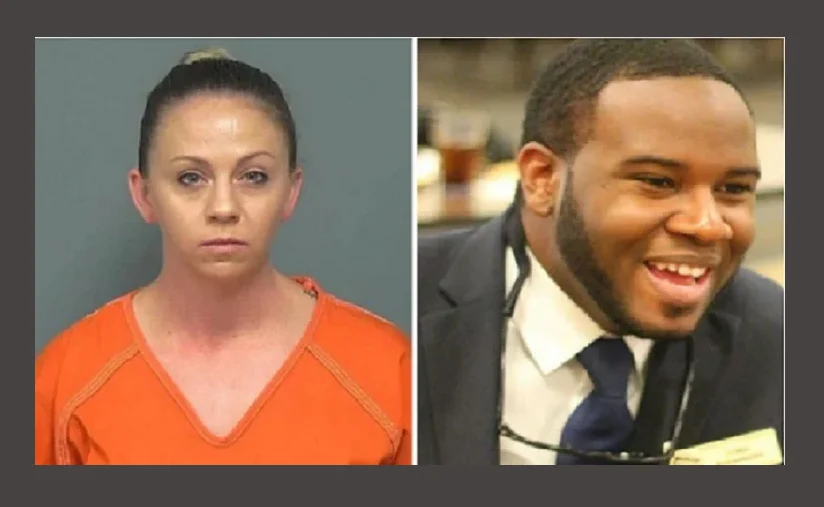
Amber Guyger, the former Dallas police officer convicted of murder for the fatal shooting of an unarmed Black accountant inside his own apartment, is scheduled for release from prison next week, according to records from the Texas Department of Criminal Justice. Guyger, 38, is slated to be discharged on October 16 from the Christina Melton Crain Unit in Gatesville. Her release comes after she served seven years of a 10-year sentence handed down in 2019 for the killing of Botham Jean.
The tragic incident occurred on September 6, 2018, when Guyger, who was off-duty but still in uniform, entered Jean’s fourth-floor apartment in the South Side Flats complex, believing it to be her own. She claimed she mistook Jean for a burglar when she encountered him inside. Jean, a 26-year-old PwC accountant who had recently relocated to Dallas from St. Lucia, was seated on his couch eating ice cream when he was shot and killed. Guyger lived in the apartment directly below Jean’s.
Guyger was granted parole on Thursday, a decision that has reignited a wave of profound grief and emotional turmoil for the Jean family. In an official statement released Friday, the family articulated the enduring pain of their loss. "The past eight years have been an incredibly traumatic and painful experience for Botham Jean’s family," the statement read. "The loss of Botham has left our family forever dismembered, and that is something we continue to live with every day."
A Timeline of the Botham Jean Case
The killing of Botham Jean by a Dallas police officer was a watershed moment that sent shockwaves through the community and the nation. The subsequent legal proceedings and the eventual parole of Amber Guyger have been closely scrutinized.
- September 6, 2018: Off-duty Dallas police officer Amber Guyger enters Botham Jean’s apartment and fatally shoots him. Guyger claims she believed she was entering her own apartment and that Jean was an intruder.
- September 7, 2018: Guyger is arrested and charged with manslaughter. The Dallas Police Department states the investigation is ongoing.
- September 10, 2018: The charge against Guyger is elevated to murder.
- September 20, 2018: The Dallas City Council votes to rename a section of South Lamar Street to Botham Jean Boulevard in his honor.
- 2019: A federal civil lawsuit is filed by the Jean family against Guyger and the City of Dallas.
- October 1, 2019: Amber Guyger is found guilty of murder by a jury.
- October 3, 2019: Guyger is sentenced to 10 years in prison.
- 2020: Texas lawmakers pass the Botham Jean Act, mandating that police body cameras be activated for the entirety of their involvement in an investigation.
- 2022: The federal civil lawsuit against the City of Dallas is settled for $100 million, with the family agreeing to use a significant portion of the settlement to establish the Botham Jean Foundation.
- 2024: Amber Guyger is initially denied parole.
- October 2024: Amber Guyger is granted parole.
- October 16, 2024: Guyger is scheduled for release from the Christina Melton Crain Unit.
Parole Decision and Family Reactions
The Texas Board of Pardons and Paroles granted Guyger parole after a review process that reportedly cited her "satisfactory institutional adjustment," a lack of documented violence, and the completion of a treatment plan deemed likely to enhance her job prospects. However, this decision has reopened deep wounds for the Jean family and their legal representatives.
Attorneys Ben Crump and Antonio Romanucci, who have been prominent figures in advocating for the Jean family, including their involvement in the federal civil suit that resulted in a substantial judgment, issued a joint statement expressing their disappointment and concern. "Freeing her after just seven years in prison reopens a wound the Jean family has carried since 2018," their statement read. "Botham Jean was an innocent man whose life was tragically taken in his own home. His family has been left to endure a lifetime of grief, and this decision only deepens the pain of a loss that can never be undone." They further added, "We cannot ignore the troubling message this sends about accountability when a law enforcement officer takes an innocent life."
Guyger’s former trial attorney, Robert Rogers, who no longer represents her, provided some insight into her post-release plans. He indicated to The Dallas Morning News that Guyger has secured employment that will keep her out of the public eye and a private living arrangement. Rogers described her as "hopeful, optimistic, tremendously remorseful," adding, "That’s probably something she’ll always live with." While Guyger’s specific parole conditions have not been publicly disclosed, such stipulations often include regular check-ins with a parole officer, restrictions on travel, and mandatory participation in programs aimed at rehabilitation.
The Broader Impact and Legacy of Botham Jean
The killing of Botham Jean by a law enforcement officer in his own home served as a stark reminder of the vulnerabilities faced by citizens and the critical need for accountability within policing. The incident immediately sparked widespread public outcry, fueling protests and demands for justice and systemic reform.
In the wake of Jean’s death, Texas lawmakers were moved to enact significant legislative changes. The Botham Jean Act, also known as "Bo’s Law," was passed, mandating that police officers activate their body-worn cameras for the entire duration of their involvement in an investigation. This legislation aims to increase transparency and provide a more accurate record of interactions between law enforcement and the public. The law has been lauded as a crucial step toward ensuring greater accountability and building trust between communities and their police departments.
The naming of a street in Jean’s honor by the City of Dallas was a symbolic gesture of remembrance and a commitment to acknowledging the value of his life. The substantial settlement in the federal civil suit, particularly the allocation of funds towards the Botham Jean Foundation, signifies a long-term effort to honor his memory through community service and support for initiatives that align with his values.
The circumstances of Guyger’s parole, particularly after serving a fraction of her sentence, are likely to reignite discussions about sentencing disparities and the perceived fairness of the justice system, especially in cases involving law enforcement officers accused of serious crimes against civilians. The decision also underscores the complex and often emotionally charged nature of parole decisions, which are made by a board tasked with balancing public safety, an offender’s rehabilitation, and the gravity of their offense.
As Amber Guyger prepares for her release, the narrative surrounding her case remains a potent symbol of the ongoing societal dialogue about race, policing, justice, and the enduring impact of tragic loss on families and communities. The legacy of Botham Jean continues to shape policy and inspire advocacy for a more just and equitable society. The details surrounding Guyger’s transition back into civilian life, including her parole compliance and her engagement with the community, will undoubtedly be observed with significant public interest.