Pevita Pearce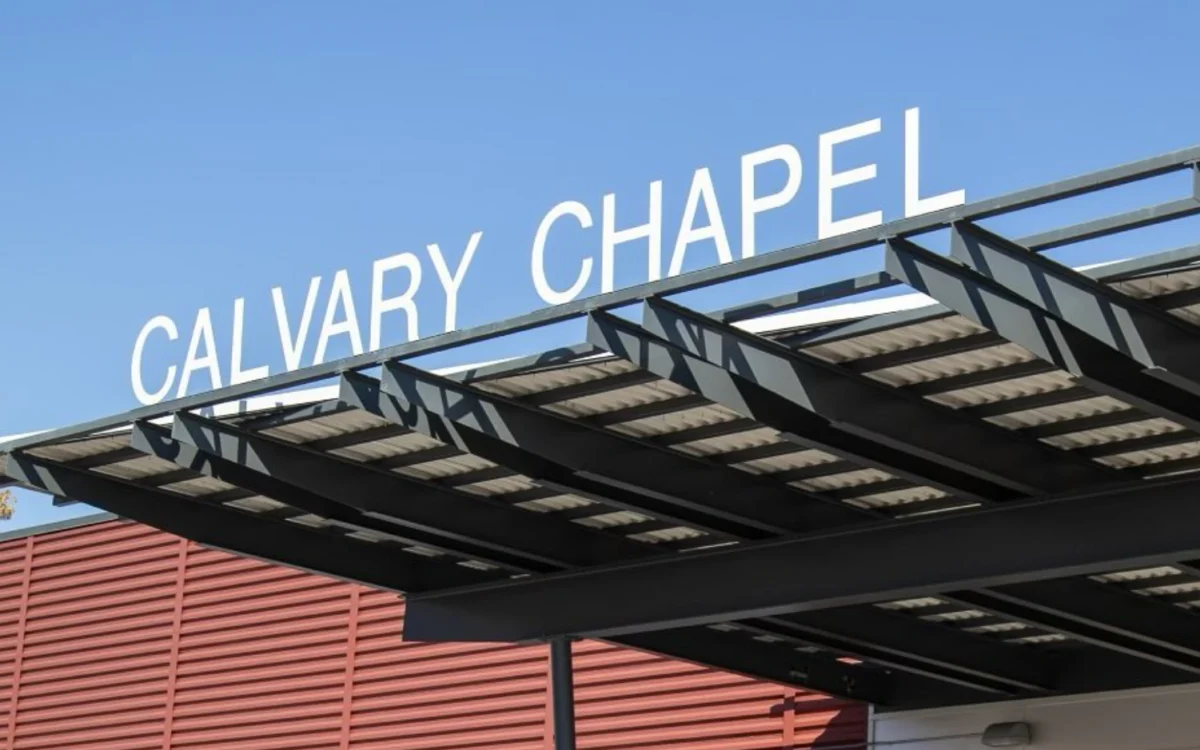
Chattanooga, TN – Calvary Chapel Chattanooga, a prominent megachurch located on Broad Street, has found itself at the center of a burgeoning controversy regarding its role in state and local politics. During a recent Sunday morning service, the non-denominational church hosted several Republican candidates, including those seeking seats in the Tennessee State House, Hamilton County Mayor, Hamilton County School Board, and the Republican State Executive Committee. Senior Pastor Frank Ramseur and civics and culture ministry leader Adam Calabrese openly encouraged congregants to support these candidates, a move that tax experts argue may violate long-standing federal tax law prohibiting political activity by tax-exempt organizations.
The event, which occurred just two days after early voting commenced for state and federal primaries and local general elections in Tennessee, saw candidates take the stage alongside church leadership. Adam Calabrese, who spearheads the church’s civics ministry, framed the political arena as a "mission field," asserting that the candidates presented were individuals who "love Jesus," possess "great marriages," and "love their kids." He explicitly stated, "We know them. We can vouch for them." The candidates invited to speak included Weston Wamp, seeking reelection as Hamilton County Mayor; Michele Reneau, running for reelection as a State Representative; Ashley Dillon, a candidate for the school board; and Derek Greene, vying for a position on the Republican State Executive Committee. Each candidate addressed the congregation, seeking their support.
This explicit endorsement and platform provided to political candidates by Calvary Chapel has drawn sharp criticism from tax law experts and political opponents alike. Samuel D. Brunson, a federal income tax expert and associate dean at Loyola University Chicago, specializing in nonprofit organizations and the intersection of religion and taxation, characterized the church’s actions as a "pretty blatant" violation of Section 501(c)(3) of the Internal Revenue Code. This section, amended in 1954 by then-Senator Lyndon B. Johnson, prohibits tax-exempt organizations, including churches, from endorsing or opposing political candidates. Brunson stated, "This is as explicit a violation as you could design. They have done literally everything they could possibly do to violate the Johnson Amendment part of Section 501(c)(3)—like they couldn’t have done a better job violating it if they had tried, and maybe they did try."
A History of Political Involvement
Calvary Chapel’s foray into explicit political endorsement is not unprecedented. In the 2024 election cycle, the church publicly supported Michele Reneau for the State House and Ben Daugherty for a local school board seat. Both candidates ultimately won their respective elections, with Reneau’s victory in the Republican primary notably unseating incumbent state Representative Patsy Hazlewood by a narrow margin of 137 votes. This history suggests a pattern of strategic engagement in local and state politics by the church.
The current event has reignited concerns among those who believe churches should remain separate from partisan politics. Tony Hullender, a candidate running against Michele Reneau in the Republican primary, expressed his dismay. "I think me and a lot of people feel like that’s not appropriate for a church to be that hyper-political," Hullender stated. "It’s mind-boggling to me, but you know, I was brought up in the era when you didn’t see that. I can’t ever remember one of my pastors talking about, you know, a political race." This sentiment reflects a traditional view held by some constituents, emphasizing a separation between religious worship and political campaigning.
The "Civics and Culture" Ministry: A Strategic Pivot
The political activities at Calvary Chapel are largely driven by its established "Civics and Culture" ministry, which has undergone a rebranding to "Issachar Institute, Civics and Culture 2.0." According to Adam Calabrese, the ministry’s leader, the objective is to integrate the "gospel of Jesus Christ and the truth of the word into the political arena," with a particular focus on local politics. During the service, Calabrese articulated a strong stance on political engagement for Christians, stating, "You may share the conviction, you may not. I just don’t think, as a Christian, as a church, you can really vote Democrat anymore." He explicitly acknowledged the absence of Democratic candidates at the event, noting, "We do have some incredible conservatives."
The ministry has also been involved in hosting discussions on topics such as COVID-19 vaccinations and regulations, communism, and critical race theory. Furthermore, congregants were encouraged to scan QR codes on bookmarks to access pre-filled election ballots, a partnership with Activate Hamilton, a local grassroots conservative group. Gail Greene, a member of Calvary Chapel and the current chair of the Hamilton County GOP, previously led Activate Hamilton. The organization is now reportedly led by Travis Flenniken.
This approach highlights a deliberate strategy to influence the political landscape by mobilizing the church’s congregation. Carol Grohn, a former member of Calvary Chapel who recently moved out of state, expressed her belief that politics and religion should be intertwined. She shared her experience door-knocking for Reneau and attending the chapel’s civics meetings, stating, "It’s a Christian church, truly Christian. There is an understanding that politics is part of our life, and we have to make sure that we have people who are Christians who are in place and help to get them elected."
Broader Trends and Expert Analysis
The actions of Calvary Chapel are reflective of a broader trend of increasing politicization of religion in the United States, particularly the alignment of conservative Christianity with the Republican Party. Brooklyn Walker, a professor at the University of Tennessee in Knoxville who studies religion and political attitudes, observes a significant tightening of this connection. "At this point, that tie between Christianity and Republican politics in the U.S. is pretty tight," Walker explained. She notes that in recent years, there has been an "uptick of assertiveness in terms of how some Christians, in particular, are thinking about politics." This trend, according to Walker, can lead to churches becoming less politically diverse, potentially diminishing their role as spaces for building social capital and fostering democratic health.
The Johnson Amendment: A Legal Tightrope
The legal framework governing political activity by tax-exempt organizations, particularly churches, is complex and has been subject to recent shifts and ambiguities. The Johnson Amendment, enacted in 1954, has historically prohibited all tax-exempt organizations, including houses of worship, from endorsing or opposing political candidates. Violations can jeopardize their tax-exempt status.
However, the landscape has seen recent challenges. In 2025, under the Trump administration, the IRS indicated in a court filing that churches could endorse political candidates as part of a settlement in a lawsuit filed by churches in Texas. This proposed carve-out for churches created significant confusion. Nevertheless, in March of the current year, a federal judge in Texas dismissed the case and the associated settlement, effectively rescinding the IRS’s proposed exception and restoring ambiguity regarding the amendment’s enforcement for churches. As of now, the IRS website continues to state that political campaign activity by churches is a violation of the law.
The IRS has historically exercised considerable discretion in enforcing the Johnson Amendment against churches, with enforcement actions being rare. Samuel Brunson notes that in the over 70 years of the law’s existence, the IRS has enforced it only "once or twice against churches." The Trump administration had previously signaled a stance against enforcement, with an executive order in 2017 directing against it and calls for the amendment’s repeal. However, Brunson cautions that a future administration could choose to enforce the law, potentially leading to significant consequences for churches that have violated its provisions, as the statute of limitations may not have expired.
Candidates’ Perspectives and Opponents’ Reactions
The candidates who spoke at Calvary Chapel generally framed their participation as an opportunity to connect with constituents and share their values. Michele Reneau urged the congregation, "I need your help. Not only do I need your vote, but I need some of your time, and then I need you to help me spread the word. Early voting is going on right now." She also mentioned a campaign information table set up at the church. Ashley Dillon, a school board candidate, emphasized the importance of having individuals on the board who "respect parents and love Jesus" and characterized her race as a "divisive" one against an opponent with an "opposing worldview." Weston Wamp, the county mayor, urged attendees to vote to assert control over their community, framing the opposition as a "left-wing movement" motivated by resentment.
Opponents of these candidates have voiced concerns about the church’s overt political involvement. Ruth Walker, the Democratic candidate challenging Dillon for the school board, stated, "My understanding is that churches aren’t supposed to be doing that kind of endorsements and telling people who to vote for." She expressed hope that voters would prioritize individual candidate stances over party affiliation. Sandy Pricer, an independent candidate running against Dillon, criticized Dillon’s remarks as a "scare tactic" and argued that providing a platform to select candidates is inappropriate for a place of worship. "It’s for prayer and worship and fellowship, not for politics and pushing agendas," Pricer stated.
Derek Greene, running for the State Executive Committee of the Tennessee Republican Party, used his platform to criticize the incumbent, David Queen, labeling him as part of the establishment and pledging to be a more assertive voice. Queen declined to comment on Greene’s remarks or the church’s support.
Broader Implications and Future Uncertainty
The engagement of Calvary Chapel Chattanooga with political candidates at its pulpit raises significant questions about the boundaries between religious institutions and political discourse in the United States. While some within the church community see this as a natural extension of their faith and civic duty, tax law experts and opponents point to potential violations of federal law and a blurring of the lines between church and state. The IRS’s enforcement approach remains a critical factor, and the future interpretation and application of the Johnson Amendment will continue to be closely watched. The incident at Calvary Chapel serves as a microcosm of the ongoing national debate surrounding the role of faith in public life and the legal and ethical considerations involved. The church leadership has not responded to requests for comment regarding the political goals of the church or the claims of tax law violations.