Candice Horbacz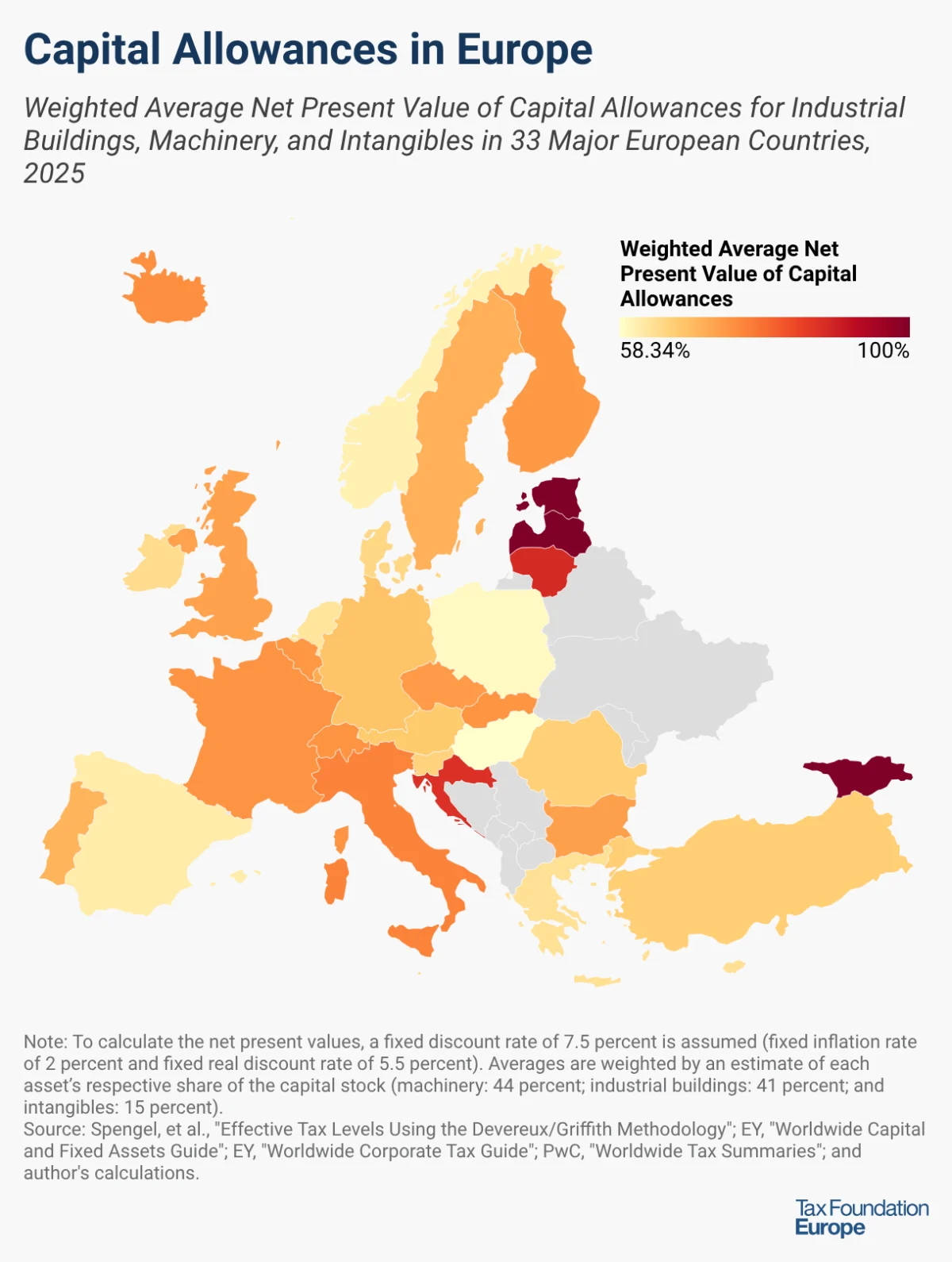
While often secondary in public discourse surrounding corporate taxation, capital allowances represent a fundamental pillar of a nation’s corporate tax base, wielding significant influence over business investment decisions and, by extension, broader economic prosperity. These mechanisms, which dictate how businesses can deduct the cost of their long-term capital investments, vary considerably across the European continent, leading to diverse competitive landscapes and varying incentives for growth. Understanding the intricacies of these policies is crucial for grasping the economic health and future trajectory of European economies.
Understanding Capital Allowances and Depreciation
The operational life of a business necessitates a range of expenditures, from immediate costs like wages and raw materials to substantial, long-term capital investments such as machinery, industrial buildings, and intangible assets like patents and proprietary knowledge. While direct operational costs are typically subtracted from revenue in the year they are incurred to determine taxable profits, capital investments are treated differently in most jurisdictions. Instead of immediate deduction, these investments are subject to "depreciation schedules," which spread the cost recovery over the asset’s "useful life." This means a business can deduct a portion of the asset’s initial cost each year until the entire original euro amount has been accounted for by the end of the depreciation period.
-
The Mechanics of Cost Recovery
The core principle behind depreciation is to match the expense of an asset with the revenue it generates over its lifespan. For example, if a piece of machinery is expected to last ten years, its cost might be spread over that decade. This accounting method aims to provide a more accurate picture of a company’s profitability in any given year. However, the practical application of depreciation schedules often falls short of a truly neutral tax treatment, particularly when considering the dynamic economic environment. The original cost is recovered, but the value of those deductions diminishes over time due to inflation and the inherent time value of money. -
The Time Value of Money Challenge
A significant shortcoming of conventional depreciation schedules, as implemented in many tax systems, is their failure to account for the time value of money and inflation. To illustrate, consider a machine purchased for €10,000, subject to a ten-year straight-line depreciation schedule. Under this system, the business would deduct €1,000 annually for ten years. However, a deduction of €1,000 in year five, or year ten, does not hold the same real purchasing power as a €1,000 deduction taken in the initial year of acquisition. Inflation erodes the value of future deductions, and the opportunity cost of capital means that money received or saved today is more valuable than the same amount received or saved in the future.This economic reality means that businesses cannot fully deduct the net present value of their capital investments. The consequence is an artificial inflation of taxable profits, which, in turn, increases the after-tax cost of capital investment. A higher cost of capital acts as a disincentive for businesses to undertake new investments, leading to a potential decline in overall business investment. This ripple effect can manifest as reductions in the productivity of capital, hindering innovation and efficiency, and ultimately contributing to lower wages across the economy. Economists widely recognize that an ideal tax system should be "neutral," meaning it should not distort investment decisions by making capital more expensive than it truly is.
-
Defining "Full Deduction" and Neutrality
A capital allowance rate of 100 percent signifies a business’s ability to fully deduct the present value cost of an asset. This ideal scenario can be achieved through two primary mechanisms: "full immediate expensing" or "neutral cost recovery." Full immediate expensing allows businesses to deduct the entire cost of an investment in the year it is made, eliminating the issues related to the time value of money and inflation. Neutral cost recovery, while not always immediate, employs mechanisms like inflation adjustments and discounting to ensure that the present value of deductions accurately reflects the present value of the investment, thus achieving a similar economic outcome to full expensing. These approaches aim to create a tax environment where the tax code does not impose an additional burden on capital investment, thereby encouraging businesses to invest optimally based on economic fundamentals rather than tax considerations.
European Landscape: A Comparative Analysis
The variation in capital allowance policies across Europe creates a complex and dynamic environment for businesses seeking to invest. These differences directly influence the attractiveness of countries as investment destinations.
-
Methodology of Comparison
To provide a comprehensive overview, the assessment of capital allowances typically involves a weighted average across three primary asset types: machinery, industrial buildings, and intangibles (such as patents and "know-how"). This weighting reflects the typical capital stock composition within an economy, with machinery accounting for approximately 44 percent, industrial buildings 41 percent, and intangibles 15 percent. The capital allowance rates are expressed as a percentage of the present value cost that businesses can effectively write off over the asset’s life, providing a standardized measure for cross-country comparison. -
Leaders in Capital Investment Treatment
In Europe, a distinct advantage is observed in countries operating "distribution-based tax systems," which fundamentally alter the treatment of capital investment. Estonia, Georgia, and Latvia exemplify this approach. Under their systems, corporate profits are only taxed when they are distributed to shareholders, while reinvested earnings remain untaxed. This policy effectively allows for a 100 percent write-off of the present value of all capital investment, positioning these nations as having the most attractive capital allowance regimes in Europe. By removing the tax burden on reinvested profits, these countries strongly incentivize businesses to retain earnings and fuel further growth and expansion.Among countries that do not employ distribution-based systems, Lithuania led the way in 2025, allowing businesses to recover an impressive 88.2 percent of their capital investment costs. Croatia followed closely at 87.2 percent, with Italy offering 76.3 percent. These nations provide more favorable tax treatment for capital investment compared to the European average, reflecting policy choices aimed at stimulating economic activity through investment.
-
Laggards in Capital Investment Treatment
Conversely, other European nations presented less favorable conditions for capital cost recovery in 2025. Businesses in Norway could write off only 60.7 percent of their investment costs, followed by Poland at 59.3 percent, and Hungary at 58.3 percent. These lower recovery rates indicate a higher effective tax burden on capital, which can deter investment and potentially slow economic growth within these countries. The policy choices in these nations may reflect different priorities, such as higher immediate tax revenue generation, or a less developed understanding of the long-term economic benefits of neutral capital cost recovery. -
Average European Performance
On average, in 2025, businesses across Europe could write off 72.1 percent of the present value cost of their investments in machinery, industrial buildings, and intangibles. A breakdown by asset category reveals distinct patterns: machinery received the highest capital allowances at 87 percent, followed by intangibles at 82.6 percent, while industrial buildings had significantly lower allowances at 52.3 percent. This disparity suggests that policymakers often prioritize certain types of investments, such as those in movable equipment and technology, over longer-lived assets like buildings. This could be due to a perception that machinery and intangibles drive innovation and immediate productivity gains more directly.
Global Context: The United States’ Approach
To put the European situation into a broader perspective, examining the United States’ approach to capital allowances provides a valuable comparison. In 2025, the U.S. allowed businesses to recover an average of 94.5 percent of their capital investment costs, significantly higher than the European average.
-
Evolution of US Policy
The U.S. tax landscape regarding capital allowances has undergone notable shifts in recent years. A temporary "bonus depreciation" policy, adopted in 2017, allowed firms to deduct a larger portion of certain short-lived investments in the first year. This policy, designed to stimulate investment, began phasing out in 2023. However, a significant development for 2025 was the return to permanent "full expensing" for qualifying investments. This move signals a long-term commitment to a more neutral tax treatment of capital, recognizing its role in driving productivity and economic growth. -
Specific US Measures
Beyond general full expensing, the U.S. has also introduced temporary measures for specific asset classes. For instance, it is providing 100 percent expensing for qualifying structures where construction began after January 19, 2025, and before January 1, 2029, and which are placed in service before January 1, 2031. While this covers only an estimated 10-15 percent of all buildings and structures in the U.S., it represents a targeted effort to encourage investment in specific sectors or types of infrastructure. These policy shifts underscore a growing global recognition of the power of capital allowances to influence investment behavior and economic outcomes.
Recent Policy Shifts and Notable Changes
The understanding that robust capital allowances are crucial for economic vitality has prompted several European countries to revisit and reform their policies, often in response to economic challenges or a desire to enhance competitiveness.
-
General Trend and Policy Stability
Countries like Finland and Germany have explicitly recognized the importance of capital allowances in supporting business investment. They have taken steps to prolong, renew, or modify policies that were set to expire, indicating a proactive stance on stimulating economic activity. However, a key challenge remains the temporary nature of many such policies. As these temporary measures expire, the after-tax cost of investment will inevitably rise, potentially creating uncertainty for businesses and hindering long-term planning. The goal for policymakers should ideally be to establish stable, permanent frameworks that provide consistent incentives for investment. -
Finland’s Extension
Finland, for example, had temporarily doubled the declining-balance depreciation rate for machinery during the period 2020-2023, a measure likely introduced to counter economic headwinds. Recognizing its positive impact, this policy was extended until 2025, demonstrating a commitment to supporting industrial investment through tax incentives. -
Germany’s Renewals and Increases
Germany has also shown a dynamic approach. Accelerated depreciation schedules for machinery, initially in place from 2020-2022, expired at the end of 2022. However, they were partially renewed for 2024, signaling a continued awareness of the need to incentivize machinery investment. This renewal was strategically paired with accelerated depreciation for dwellings, extended until 2029, indicating an effort to stimulate both industrial and construction sectors. Furthermore, the German government has increased and extended the accelerated depreciation schedules for machinery into 2027, highlighting an ongoing legislative effort to bolster business investment. -
United Kingdom’s Permanent Shift
Perhaps one of the most significant recent policy shifts occurred in the United Kingdom. In April 2023, the UK implemented full expensing for machinery and equipment, alongside a 50 percent first-year deduction for long-life asset investments. This bold move was accompanied by an increase in the corporate tax rate from 19 percent to 25 percent, suggesting a strategic trade-off where the government aimed to raise overall corporate tax revenue while simultaneously providing strong incentives for productive investment. Crucially, the 2023 Autumn Statement made both full expensing and the 50 percent first-year deduction permanent features of the UK tax code, providing businesses with much-needed certainty and a long-term framework for investment planning. This permanence is a critical factor in fostering sustained economic growth. -
Lithuania’s Permanent Full Expensing
Building on its already favorable position, Lithuania also implemented permanent full expensing for machinery and equipment, as well as for software and acquired rights, effective January 1, 2026. This forward-looking policy decision positions Lithuania as a highly attractive destination for businesses looking to invest in modernizing their operations and leveraging digital technologies.
Implications and Future Outlook
The diverse approaches to capital allowances across Europe carry profound economic implications. These policy choices are not merely technical adjustments to tax codes; they are fundamental levers that directly influence business investment, job creation, and a country’s overall economic competitiveness.
-
Economic Impact of Policy Choices
When businesses face a higher after-tax cost of capital due to non-neutral depreciation, they are less likely to invest in new equipment, expand facilities, or develop new technologies. This directly impacts productivity growth, which is the engine of rising living standards and higher wages. Countries with more generous or neutral capital allowance regimes inherently make themselves more attractive for businesses to locate, expand, and innovate, potentially drawing investment away from nations with less favorable tax treatments. The dynamic interplay between capital allowances and investment decisions underscores their role as critical components of national economic strategy. -
Policymaker’s Dilemma and Recommendations
Policymakers grapple with the delicate balance of generating sufficient tax revenue to fund public services while simultaneously fostering an environment conducive to private sector investment and growth. The recent actions in countries like the UK, Germany, and Finland suggest a growing awareness of the long-term benefits of more generous capital allowances, even if it means adjustments in other areas of the tax code.For Europe to collectively enhance its economic dynamism, a consistent policy direction is advisable. Policymakers should aim to permanently provide immediate deductions for investments in machinery and equipment, given their typically shorter lifespans and direct impact on productivity. For all other capital investments, particularly long-lived assets like industrial buildings, robust adjustments for inflation and the time value of money are essential to ensure a neutral tax treatment. Such measures would prevent the erosion of deduction values over time, effectively reducing the after-tax cost of capital and encouraging optimal investment decisions.
-
The Race for Investment
In an increasingly globalized economy, countries are in a de facto competition to attract and retain capital. Favorable capital allowance policies can serve as a powerful tool in this competition, signaling a country’s commitment to supporting business growth and innovation. The permanent shifts towards full expensing in the UK and Lithuania, alongside the ongoing adjustments in Germany and Finland, suggest that European nations are actively positioning themselves to secure future investment and drive economic recovery and resilience.
In conclusion, capital allowances are far more than an accounting detail; they are a critical determinant of a nation’s investment climate and long-term economic prospects. The varied landscape across Europe, from the 100 percent write-offs in distribution-based systems to the lower recovery rates in other nations, highlights the diverse policy choices and their potential economic ramifications. As European economies navigate future challenges and seek sustained growth, the evolution of these policies will remain a key indicator of their commitment to fostering a dynamic, investment-driven future. Establishing stable, neutral, and generous capital allowance regimes will be paramount for ensuring competitive economies, robust productivity, and ultimately, higher living standards for all.