Lana Rhoades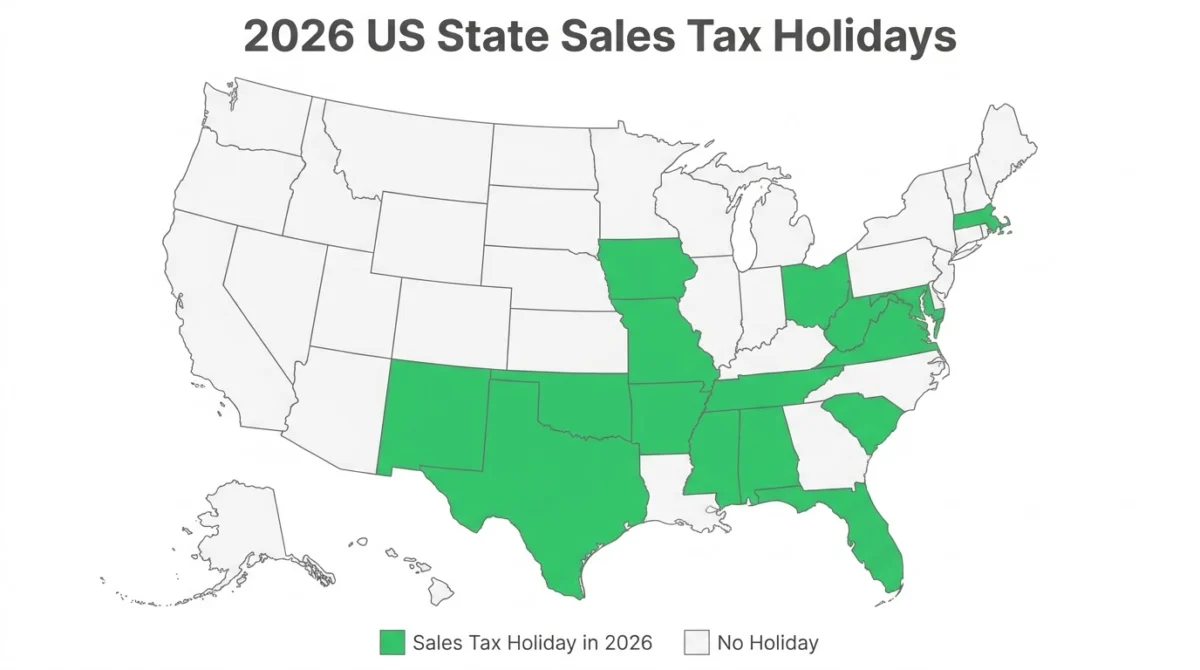
As the 2026 fiscal year approaches, state legislatures across the United States have begun finalizing their annual sales tax holiday calendars, a move that offers significant relief to consumers but presents a formidable challenge for multi-state retailers. While these "tax-free" periods are politically popular and designed to stimulate local economies, they introduce a high degree of administrative friction for businesses. For the 2026 season, more than 15 states and the territory of Puerto Rico have confirmed specific windows where sales taxes are waived on items ranging from school supplies and apparel to energy-efficient appliances and disaster preparedness gear.
The primary tension surrounding sales tax holidays lies in the disparity between consumer perception and operational reality. For a household, a sales tax holiday is a straightforward opportunity to save between 4% and 9% on essential purchases. For a retailer, however, these events represent a temporary suspension of standard tax law that requires precise software updates, inventory reassessment, and a deep understanding of local jurisdiction rules. As businesses increasingly operate in a post-Wayfair landscape—where physical presence is no longer required for tax nexus—staying compliant with a patchwork of varying dates and product exemptions has become a year-round technical requirement.
The Economic Context and Legislative Background
Sales tax holidays have evolved since their inception in the 1980s. Originally conceived as a way to help families manage the rising costs of back-to-school shopping, the scope of these holidays has expanded significantly. In 2026, the motivations behind these tax breaks are multifaceted. Proponents argue that the holidays encourage "cross-border" shopping, drawing consumers from neighboring states that may not offer similar incentives. Critics, including many fiscal policy analysts, suggest that these holidays do not create new economic activity but rather shift the timing of purchases that would have occurred anyway, potentially leading to a net loss in state revenue.
In 2026, many states are utilizing these holidays to address specific regional concerns. Florida and Texas, for instance, have institutionalized "Emergency Preparation" holidays to encourage residents to stock up on hurricane and severe weather supplies before the peak of the Atlantic storm season. Similarly, Missouri and Maryland continue to promote "Energy Star" holidays, aligning tax policy with environmental goals by incentivizing the purchase of high-efficiency appliances.
The 2026 Sales Tax Holiday Chronology
The 2026 calendar begins in mid-February and concludes at the end of the calendar year, with the highest concentration of activity occurring in late July and early August.
Q1 and Q2: Preparedness and Efficiency
The year opens with Maryland’s "Shop Maryland Energy" weekend from February 14–16, focusing on Energy Star-certified appliances. Alabama follows shortly after with its Severe Weather Preparedness holiday from February 21–23. This early-year focus on preparedness reflects a growing trend among state governments to use tax policy as a tool for public safety and resource conservation.
In April and May, the focus shifts to environmental sustainability and emergency readiness. Missouri’s "Show Me Green" holiday (April 19–25) allows for tax-free purchases of energy-efficient appliances up to a $1,500 limit per item. Texas leads the way in late May with a triple-threat of holidays: Emergency Preparation Supplies, Energy Star products, and Water-Efficient products, all scheduled for the weekend of May 23–25. Puerto Rico also holds its Hurricane Preparedness holiday from May 22–25, highlighting the critical nature of these items for the island’s residents.
Q3: The Back-to-School Surge
The third quarter represents the busiest period for tax compliance teams. Mississippi kicks off the back-to-school season from July 10–12, focusing on clothing and footwear priced under $100. By late July, a wave of states including Alabama, Florida, New Mexico, Tennessee, and West Virginia initiate their respective holidays.
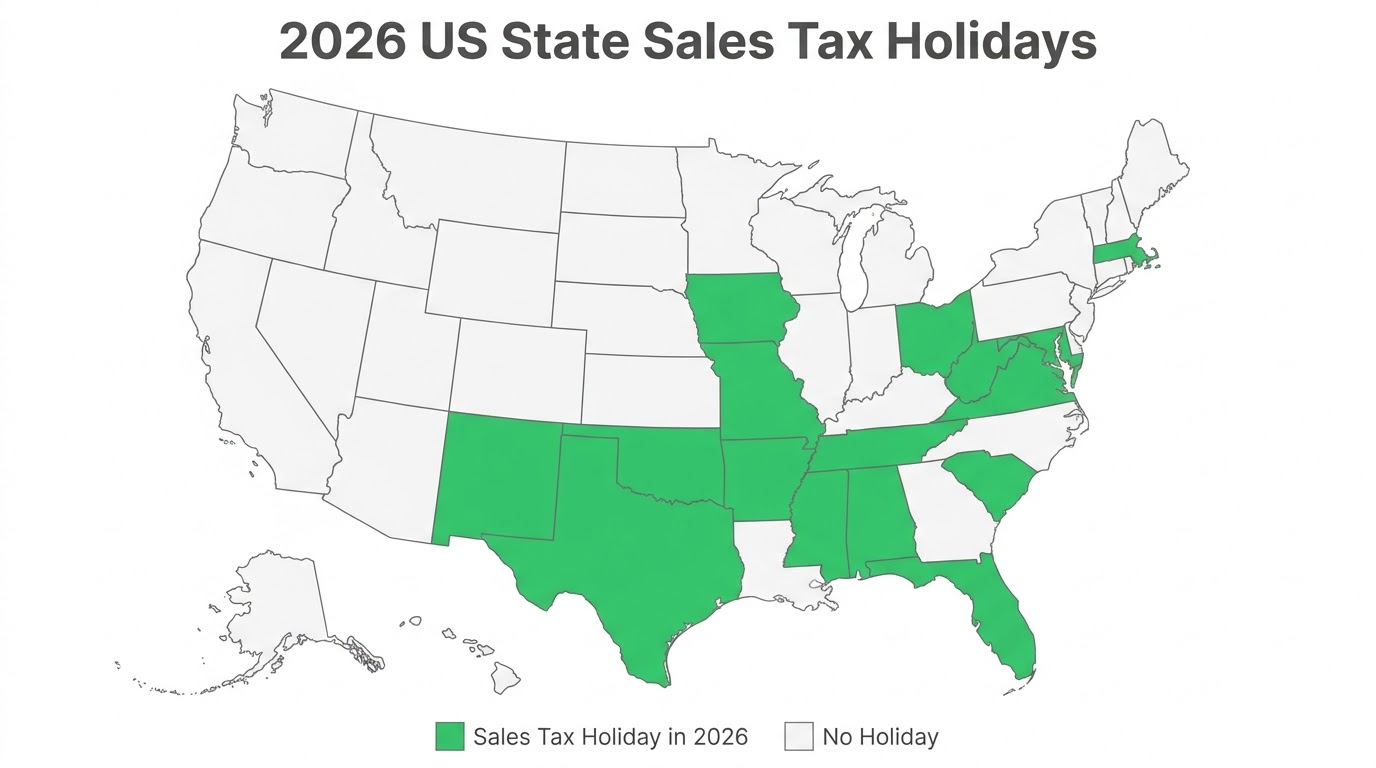
Florida’s 2026 back-to-school holiday is particularly expansive, running for a full month from July 20 to August 20. This extended window is designed to alleviate the pressure on retail infrastructure and allow families more time to budget for expensive items like computers, which are exempt up to a $1,500 threshold. In contrast, states like Ohio and Oklahoma maintain a more traditional three-day window (August 7–9), focusing on lower-cost items like clothing and basic school supplies.
Q4: Specialty and Outdoor Holidays
As the year winds down, a niche category of holidays emerges. Mississippi (August 28–30) and Louisiana (September 4–6) host "Second Amendment" weekends, where firearms, ammunition, and hunting supplies are exempt from state sales tax. Florida also implements a long-term "Hunting, Fishing, and Camping" holiday from September 1 through December 31, 2026, supporting its massive outdoor recreation industry during the autumn months.
The Compliance Burden: A Retailer’s Perspective
The complexity of these holidays is often hidden in the "fine print" of state revenue department bulletins. Retailers must navigate several layers of rules that vary significantly by state:
- Price Thresholds: Most states apply a "per-item" limit. For example, in Missouri, a computer is exempt only if it costs less than $1,500. If a consumer purchases a $1,600 laptop, the entire amount may be subject to tax, or in some jurisdictions, only the amount exceeding the threshold is taxed.
- Local Opt-Ins and Opt-Outs: This is perhaps the most significant "trap" for businesses. In states like Alabama and Missouri, local jurisdictions (cities and counties) have the choice to participate in the state’s sales tax holiday. A retailer must know not only the state-level exemption but also whether the specific delivery address for an e-commerce order is in a participating municipality.
- Product Categorization: Defining what constitutes a "school supply" versus a "luxury item" can be subjective. While a backpack is generally exempt, a briefcase or a sports bag may not be. Software automation becomes essential here, as manual categorization for thousands of SKUs is virtually impossible during a high-volume sales weekend.
- Destination-Based Sourcing: For e-commerce businesses, the tax rate is typically determined by the shipping address. If a customer in a "tax-free" state buys from a retailer in a "taxable" state, the retailer must ensure their system recognizes the holiday in the customer’s location at the exact time the transaction is processed.
Official Responses and Industry Impact
Industry groups, such as the National Retail Federation (NRF), generally support sales tax holidays as they drive foot traffic and online engagement. However, tax advocacy groups like the Tax Foundation often express skepticism. Their 2026 analysis suggests that while these holidays provide a temporary "feel-good" factor for voters, they do little to improve the overall competitiveness of a state’s tax code compared to permanent rate reductions.
From a corporate standpoint, the reaction is one of cautious preparation. Retailers often begin "stress-testing" their tax engines months in advance. "The hidden chaos of sales tax holidays lies in the granularity," notes one compliance expert. "Missing a single date or misinterpreting a local opt-in doesn’t just frustrate a customer at checkout; it creates a liability that can surface in an audit years later."
Strategic Implications for E-commerce
For e-commerce businesses, the 2026 sales tax holiday season is not merely a compliance task but a marketing opportunity. Companies that successfully automate their tax calculations can use these holidays as a lever for promotional campaigns. By guaranteeing a "tax-free" experience, retailers can improve conversion rates during traditionally slow periods.
However, the risk of "audit creep" is real. State revenue departments are increasingly sophisticated in their ability to track e-commerce transactions. If a business fails to collect tax on a non-exempt item or applies an exemption outside the approved dates, the resulting back taxes, penalties, and interest can quickly erode the profit margins gained from the increased sales volume.
Conclusion: The Necessity of Automation
As the list of 2026 sales tax holidays continues to be updated by state legislatures, the primary takeaway for the business community is the necessity of technological integration. The days of manually updating tax tables are over. To survive the "hidden chaos" of the 2026 season, retailers must rely on real-time API solutions that can handle the nuanced boundaries of destination-based tax, the specific thresholds of varying product categories, and the shifting dates of annual legislative approvals.
Ultimately, while sales tax holidays remain a complex puzzle for the back office, they are a permanent fixture of the American retail landscape. Success in 2026 will be defined by a retailer’s ability to turn these compliance challenges into a seamless, "tax-free" win for the consumer.