

 Candice Horbacz
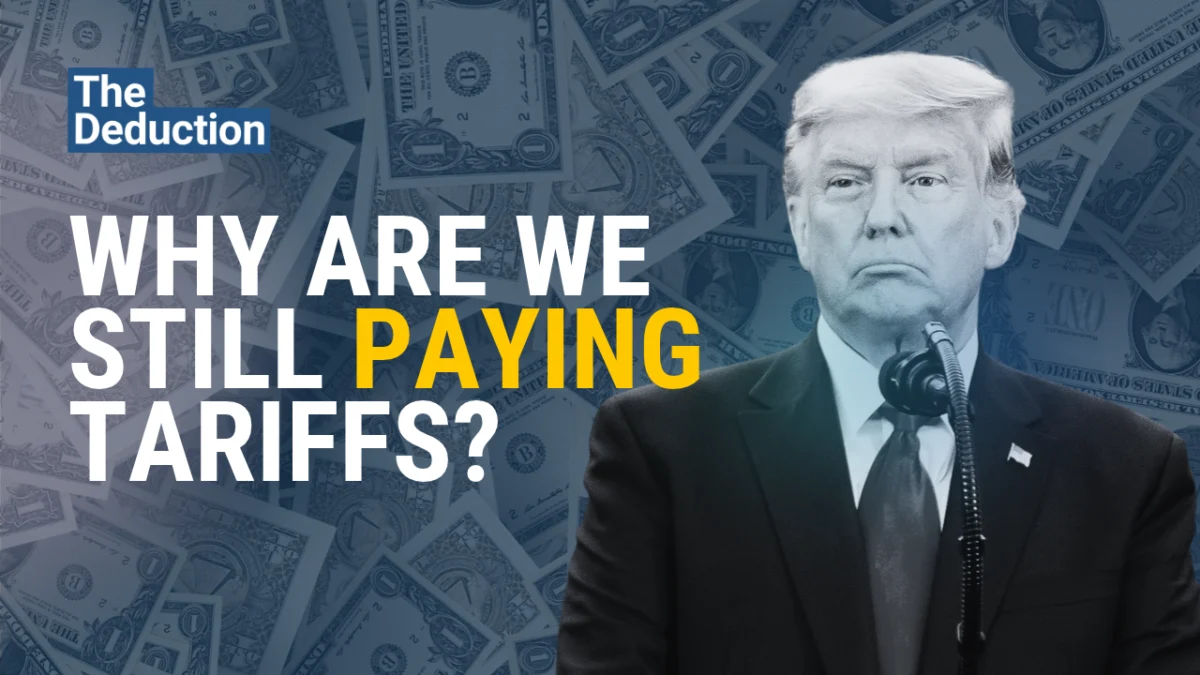
In a significant development in February, the Supreme Court delivered a decisive blow to the administration’s tariff policy by striking down the tariffs imposed under the International Emergency Economic Powers Act (IEEPA). This ruling was widely anticipated by legal and trade experts, who had questioned the executive branch’s expansive use of IEEPA for levying duties. However, the judicial setback did not lead to a cessation of tariffs for American consumers and businesses. Instead, the administration swiftly recalibrated its approach, first implementing temporary Section 122 tariffs, and subsequently rolling out a more comprehensive set of Section 301 tariffs, ranging from 10 to 12.5 percent, now impacting a vast array of goods from nearly every U.S. trading partner. This rapid succession of policy adjustments has created a complex and uncertain landscape for international trade, raising critical questions about executive authority, economic impact, and the consistency of domestic economic policy.
The evolution of U.S. tariff policy, particularly in recent years, has been characterized by frequent shifts and legal challenges. Tariffs, by definition, are taxes imposed by one country on goods imported from another country. They serve as trade barriers designed to raise prices of imported goods, thereby theoretically making domestically produced goods more competitive. However, the economic reality often involves increased costs for consumers, reduced availability of goods and services for U.S. businesses, and an economic burden ultimately borne by foreign exporters and, crucially, domestic importers and consumers. The recent saga began with the administration’s reliance on IEEPA, a statute primarily intended to address unusual and extraordinary threats to the national security, foreign policy, or economy of the United States, typically through financial sanctions or asset freezes during declared national emergencies. Its application to broad-based tariffs on a multitude of goods, ostensibly to address trade imbalances or specific foreign policy objectives, stretched its interpretation to a point that garnered significant legal scrutiny.
The Supreme Court’s IEEPA Ruling and Its Aftermath
The February ruling from the Supreme Court represented a culmination of several legal challenges mounted against the administration’s use of IEEPA for tariff imposition. While the specifics of the Court’s full opinion are extensive, the core of the challenge often revolved around whether the President’s authority under IEEPA, which grants broad powers during a national emergency, could legitimately be extended to impose tariffs that Congress traditionally authorizes through specific trade legislation. Critics argued that such an application bypassed congressional authority on trade, effectively creating a new avenue for executive tariff imposition without explicit legislative backing. The Court’s decision, therefore, affirmed the principle of congressional primacy in matters of trade policy, particularly concerning the levying of taxes or duties.
Immediately following the ruling, the administration found itself in a precarious position. The removal of the IEEPA tariffs would have created a sudden void, potentially impacting various industries and policy objectives. To mitigate this, a transitional measure was swiftly enacted: temporary Section 122 tariffs. Section 122 of the Trade Act of 1974 grants the President authority to impose temporary import restrictions to deal with certain balance-of-payments problems. While offering a stopgap solution, its temporary nature and specific scope meant it was not a long-term answer for the administration’s broader trade agenda. This temporary phase lasted for a relatively brief period, signaling a clear intention to establish a more permanent framework for the continued application of tariffs.
A Swift Transition: Section 122 and the Rise of Section 301 Tariffs
The transition from temporary Section 122 measures to the more robust and seemingly permanent Section 301 tariffs marked a pivotal shift. Section 301 of the Trade Act of 1974 is a powerful tool designed to address unfair trade practices by foreign countries that burden or restrict U.S. commerce. Historically, it has been primarily associated with targeted actions against specific countries, most notably China, to address issues like intellectual property theft, forced technology transfer, and market access barriers. The novel aspect of the administration’s current application of Section 301 is its broad scope, extending these tariffs to "nearly every US trading partner" at rates between 10 to 12.5 percent. This marks a departure from its traditional, more targeted use, transforming it into a general instrument of trade policy rather than a punitive measure against specific unfair practices.
This expansive application has raised eyebrows among trade policy experts globally. While the administration’s stated rationale often centers on fostering domestic production, protecting American industries, or rebalancing trade relationships, the broad brush stroke of the Section 301 tariffs implies a fundamental rethinking of U.S. trade strategy. The economic implications are substantial, as these tariffs now affect a significant portion of global trade flowing into the United States. For instance, according to recent trade data, the U.S. imported goods worth over $3.8 trillion in the past year, with a substantial portion originating from countries now subject to these Section 301 duties. This widespread imposition directly translates into higher costs for a vast array of imported goods, from raw materials and intermediate components to finished consumer products.
Understanding Tariffs: An Economic Burden
The economic impact of tariffs is a subject of continuous debate among economists, but there is a broad consensus on certain fundamental effects. As taxes on imports, tariffs directly increase the cost of goods for importers. These increased costs are often passed on, at least partially, to domestic businesses and ultimately to consumers in the form of higher retail prices. For example, a 10% tariff on imported steel means that a U.S. manufacturer buying that steel faces a 10% higher input cost. This can erode profit margins, force price increases on finished products, or lead to a search for more expensive domestic alternatives, if available.
Studies from various economic research institutions, such as the Tax Foundation, the Peterson Institute for International Economics, and the National Bureau of Economic Research, have consistently shown that tariffs lead to higher consumer prices. For instance, research on previous tariff rounds estimated that American households bore the brunt of nearly 100% of the tariff costs, translating to hundreds of dollars in increased annual expenses for the average family. Moreover, tariffs reduce the available quantity of goods and services in the market by making imports less competitive, limiting consumer choice, and potentially fostering monopolies or oligopolies in protected domestic industries. For foreign exporters, tariffs create an economic burden by making their products less attractive in the U.S. market, potentially leading to reduced sales, lower profits, and even job losses in their home countries. This, in turn, can invite retaliatory tariffs from affected trading partners, escalating into trade disputes that harm global economic growth and stability.
The Paradox of Policy: Tariffs vs. Full Expensing
One of the most intriguing aspects of the current policy landscape is the potential for these new tariffs to undermine other domestic economic initiatives, specifically the benefits of "full expensing." Full expensing is a tax policy that allows businesses to immediately deduct the full cost of certain investments in new or improved technology, equipment, or buildings. This policy is designed to alleviate a bias in the tax code that otherwise requires businesses to depreciate assets over many years, thus delaying the recovery of their investment costs. By allowing immediate deductions, full expensing incentivizes companies to invest more, which, in the long run, is expected to raise worker productivity, boost wages, and create more jobs.
For example, if a manufacturing company invests $1 million in new machinery, under full expensing, it can deduct that entire $1 million from its taxable income in the year of the investment, significantly reducing its immediate tax burden. This immediate tax savings provides a powerful incentive for capital expenditure. However, the imposition of broad tariffs, such as the 10-12.5% Section 301 tariffs, can directly counteract these incentives. If the new machinery, or its critical components, are imported and subject to a tariff, the cost of that investment immediately increases. A 10% tariff on a $1 million machine means the effective cost becomes $1.1 million. While full expensing still allows the deduction of the entire (now higher) cost, the initial hurdle of the increased capital outlay due to tariffs can deter or delay investment decisions. Businesses may face higher raw material costs, higher costs for intermediate goods, and increased uncertainty regarding supply chains, all of which can diminish the anticipated returns from new investments, effectively canceling out or significantly reducing the boost intended by full expensing. This creates a policy paradox where one arm of the government seeks to incentivize investment through tax cuts, while another imposes taxes on the very inputs that drive such investment.
Legal Challenges and the Future of Trade Policy
The legal battles surrounding the administration’s tariff policies are far from over. While the IEEPA tariffs were struck down, the new Section 301 tariffs are already facing their own set of legal challenges. These challenges are typically brought by affected businesses and industry groups, arguing that the administration’s broad application of Section 301 exceeds its statutory authority or violates administrative law procedures. The core arguments often revolve around whether the specific actions taken under Section 301 align with the original intent and scope of the statute, particularly when applied to a wide array of trading partners rather than in response to specific unfair trade practices.
These ongoing court cases introduce significant uncertainty into the trade policy environment. A ruling against the administration could again force a major recalibration of its tariff strategy, potentially leading to another scramble for alternative legal authorities or a complete cessation of some tariffs. The outcomes of these cases will not only determine the immediate fate of the tariffs but also set crucial precedents regarding the limits of executive power in trade matters, influencing how future administrations can wield trade policy tools. For businesses, this legal uncertainty makes long-term planning difficult, as the costs of imports and the stability of supply chains remain contingent on judicial decisions.
Reactions from Stakeholders and Global Implications
The administration’s broad Section 301 tariffs have elicited a range of reactions from various stakeholders, both domestically and internationally. Domestically, while some protected industries might express support, many business associations, particularly those representing manufacturers, retailers, and agricultural exporters, have voiced concerns. Groups like the U.S. Chamber of Commerce have historically argued that tariffs act as a tax on American businesses and consumers, disrupting supply chains and making U.S. companies less competitive globally. They often highlight the negative impact on export-oriented industries due to potential retaliatory tariffs and the increased cost of imported inputs for manufacturing. Consumer advocacy groups, similarly, point to the inflationary pressures that tariffs exert on household budgets.
Internationally, the imposition of broad Section 301 tariffs on "nearly every US trading partner" has been met with apprehension and, in some cases, outright condemnation. Major trading blocs and countries, including the European Union, Canada, Mexico, Japan, and South Korea, have expressed concerns about the potential for trade disputes and disruptions to the multilateral trading system. Many have reiterated their commitment to rules-based trade and may consider challenging these tariffs through the World Trade Organization (WTO) dispute settlement mechanism, although the WTO’s efficacy has been hampered by ongoing issues with its appellate body. The possibility of retaliatory tariffs from these partners looms large, threatening to escalate into a broader global trade conflict that would negatively impact all participants. Such actions could further strain international diplomatic relations and undermine efforts towards global economic cooperation.
Economic Outlook and Consumer Impact
The confluence of judicial rulings, executive policy shifts, and global trade dynamics creates a complex economic outlook. For consumers, the continued imposition of tariffs, particularly on a broad range of goods, means a sustained upward pressure on prices. This contributes to inflationary trends, eroding purchasing power and making everyday goods more expensive. Industries reliant on imported inputs, from automotive to electronics, face higher production costs, which they must either absorb, pass on to consumers, or attempt to offset through efficiency gains or domestic sourcing, which may not always be feasible or cost-effective.
The broader implications for the U.S. economy include potential slowdowns in investment due to increased uncertainty and costs, disruptions to established supply chains, and a potential reduction in overall trade volumes. While the stated goal of such tariffs often includes boosting domestic industries and job creation, the empirical evidence often suggests that the costs to the broader economy, particularly consumers and non-protected industries, can outweigh these localized benefits. The intricate dance between fiscal policies designed to stimulate growth (like full expensing) and trade policies that act as taxes (tariffs) highlights the challenges in achieving coherent and effective economic governance.
The current situation represents a critical juncture in U.S. trade policy. The administration’s rapid pivot from IEEPA to Section 122 and then to broad Section 301 tariffs demonstrates a firm commitment to using tariffs as a central instrument of economic policy, despite judicial setbacks and widespread economic concerns. The ongoing legal challenges and the reactions from domestic and international stakeholders underscore the contentious nature of this approach. As these policies continue to unfold, their long-term impact on the American economy, global trade relations, and the balance of power between the executive and legislative branches will be closely watched. The ultimate resolution of these legal and economic questions will shape the future trajectory of U.S. trade for years to come.








