

 Candice Horbacz
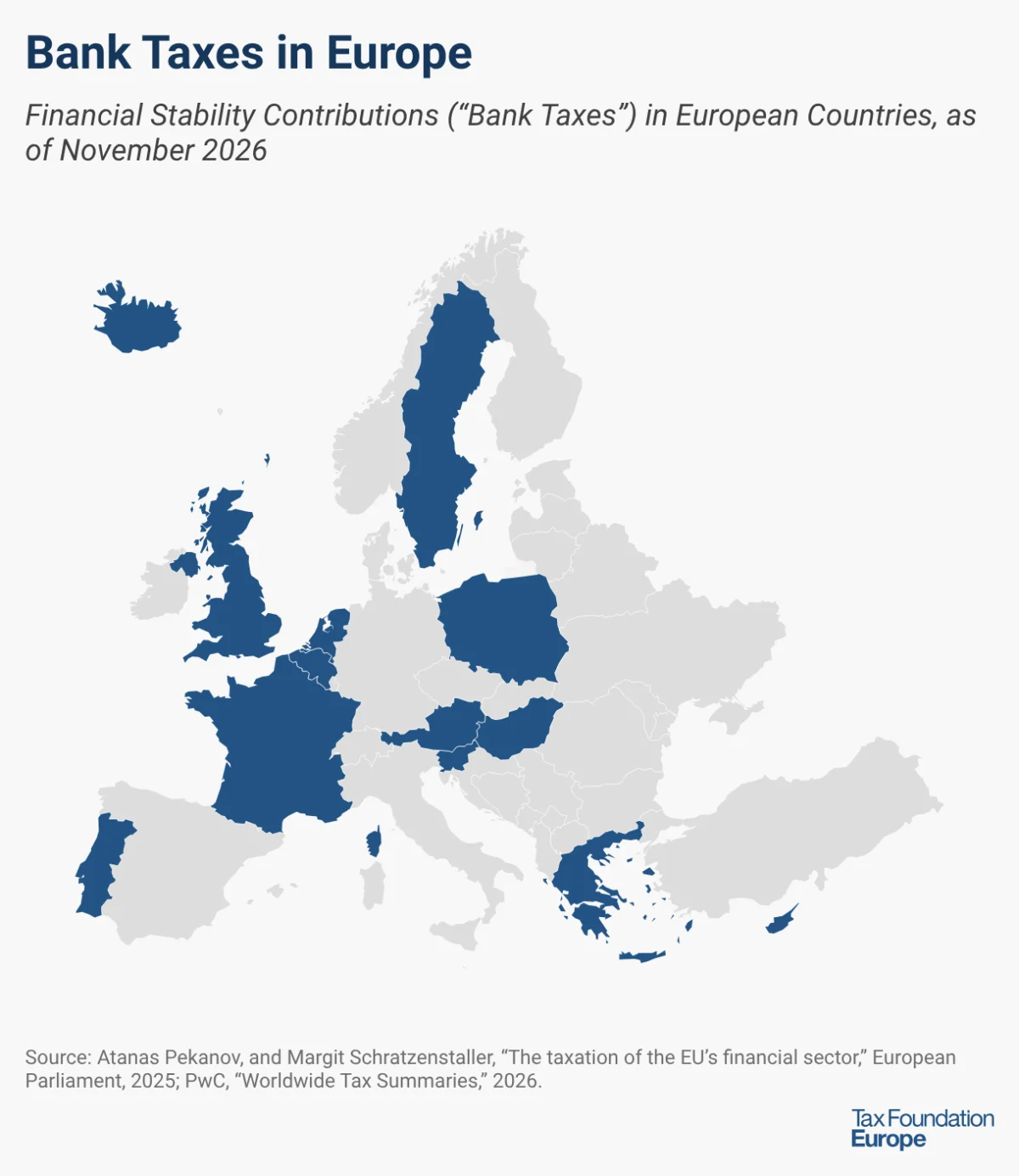
The 2007-2008 global financial crisis ignited a profound international discussion regarding the utility of taxation as a tool to bolster financial sector stability and generate revenue, particularly to offset the immense public costs associated with systemic financial breakdowns. This critical issue has forcefully re-entered the policy spotlight since 2023, driven by a confluence of factors: significant profitability observed within the banking sector, largely attributable to escalating interest rates, and the urgent need for governments to identify new revenue streams in the wake of the pervasive 2022-23 inflation shock. The debate now encompasses not only the established financial stability contributions but also calls for windfall profit taxes on banks, reflecting a broader public and political sentiment.
The Genesis of Bank Taxes: Learning from the 2008 Financial Crisis
The global financial crisis of 2007-2008, precipitated by the collapse of the subprime mortgage market in the United States, rapidly evolved into a full-blown international economic catastrophe. Major financial institutions faced insolvency, credit markets froze, and governments worldwide were compelled to intervene with unprecedented bailouts, nationalizations, and liquidity injections to prevent a complete systemic collapse. The estimated direct fiscal cost of these interventions ran into trillions of dollars globally, with figures from the International Monetary Fund (IMF) and other bodies suggesting that government support for financial institutions exceeded 20 percent of GDP in several affected countries. This immense public expenditure, coupled with the perception that taxpayers were footing the bill for risks taken by the private financial sector, created a powerful impetus for reform.
In the immediate aftermath, policymakers and international organizations, including the G20, the IMF, and the Financial Stability Board (FSB), embarked on a comprehensive overhaul of financial regulation. A key component of this reform agenda was the exploration of mechanisms to make the financial sector itself contribute to the costs of future crises and internalize some of the negative externalities it generated. This led to proposals for "financial stability contributions" (FSCs) or "bank levies," designed to create a buffer against future taxpayer-funded bailouts and, in some cases, to recoup past rescue costs. The core idea was that banks, benefiting from explicit or implicit state guarantees, should contribute to a fund or pay a tax that would reflect the systemic risks they posed and the benefits they derived from their ‘too-big-to-fail’ status.
A Resurgence of Interest: The 2023 Inflation Shock and Banking Profits
More than a decade after the initial wave of bank tax implementations, the debate has resurfaced with renewed intensity, fueled by distinct contemporary economic conditions. The 2022-23 period witnessed a dramatic surge in inflation across advanced economies, driven by a combination of post-pandemic supply chain disruptions, elevated energy prices stemming from geopolitical events, and robust consumer demand supported by fiscal stimulus. For instance, Eurozone inflation peaked at 10.6% in October 2022, a level not seen in decades.
In response, central banks globally, including the European Central Bank (ECB) and the Bank of England, initiated aggressive monetary policy tightening cycles, rapidly raising benchmark interest rates from near-zero levels. The ECB, for example, increased its main refinancing operations rate from 0.00% in July 2022 to 4.50% by September 2023. While these rate hikes were intended to curb inflation, they had a significant, and largely positive, impact on the profitability of the banking sector.
Banks typically benefit from rising interest rates because their lending rates (e.g., for mortgages, business loans) tend to reprice faster and often at a higher margin than the rates they pay on deposits. This phenomenon, known as an expanding net interest margin (NIM), has led to substantial increases in bank profits. Major European banking groups reported record or near-record profits in 2023. For example, some of the largest banks in the Eurozone saw net interest income surge by 20-30% year-on-year in the first three quarters of 2023. This financial boon for banks coincided with a period of severe cost-of-living crises for households and businesses, and heightened fiscal pressures on governments still grappling with post-pandemic debt burdens and the need to fund public services. This juxtaposition has created a powerful political narrative for taxing what some perceive as "windfall profits" in the banking sector.
Mapping Europe’s Financial Stability Contributions
Today, a significant number of European countries have implemented some form of financial stability contribution or bank tax. The practice is widespread, with variations in design, scope, and objectives. As of the latest analysis, the following European nations levy bank taxes: Austria, Belgium, Cyprus, France, Greece, Hungary, Iceland, the Netherlands, Poland, Portugal, Slovenia, Sweden, and the United Kingdom.
A striking observation is the timing of these implementations: almost all of these countries introduced their levies following the 2007-2008 financial crisis. This underscores the direct link between the crisis and the policy response to make the financial sector contribute more directly to its own stability. Greece stands as a notable exception, having implemented its bank tax as early as 1975, long before the modern concept of FSCs gained traction. This historical precedent in Greece suggests a different initial motivation, likely tied to general revenue generation or specific sectoral support rather than post-crisis stability concerns.
The design of these bank taxes varies considerably across jurisdictions, particularly regarding the tax base. The most common approaches involve levying the tax on a measure of a bank’s liabilities or a measure of its assets.
- Liabilities-based taxes aim to capture the funding structure of banks, often targeting non-equity liabilities to discourage excessive reliance on wholesale funding and encourage more stable funding sources. The idea is that larger, more interconnected banks with complex liability structures pose greater systemic risk.
- Assets-based taxes typically target a bank’s total assets, often with adjustments for certain risk-weighted assets or interbank exposures. This approach aims to capture the overall size and activity of the bank, implicitly linking larger asset bases to greater systemic importance.
Some countries, however, have opted for more unique approaches. France, for instance, taxes the minimum amount of capital necessary for banks to comply with regulatory requirements. This method directly links the tax to the regulatory burden and the capital buffers intended to absorb losses, aligning it closely with financial stability objectives. Other countries, particularly in the recent wave of proposals (e.g., Italy, Spain), have focused specifically on "windfall profits" derived from the rising net interest margins, often setting a threshold or a percentage of the excess profit above a certain average.
Design and Implementation Challenges
The implementation of bank taxes is fraught with technical and economic complexities. One of the primary challenges lies in defining the appropriate tax base and rate to achieve the desired policy objectives without causing unintended consequences.
- Defining the Tax Base: Whether to tax liabilities, assets, capital, or profits has significant implications. A liabilities-based tax might encourage equity financing but could also lead to banks restructuring their balance sheets in ways that obscure risk. An assets-based tax might be simpler but could penalize certain types of lending or investment necessary for economic growth. A capital-based tax might incentivize lower capital holdings, counter to prudential regulation. Windfall profit taxes, while politically popular, can be difficult to define accurately and might discourage future investment if seen as unpredictable.
- Regulatory Arbitrage: Banks are sophisticated institutions with global operations. Poorly designed national bank taxes could lead to regulatory arbitrage, where banks shift activities or balance sheet items to jurisdictions with more favorable tax regimes, undermining the effectiveness of the tax and potentially creating new risks.
- Competitiveness and Lending Capacity: Concerns are frequently raised by the banking industry and some economists that bank taxes could erode profitability, reduce banks’ capacity to build capital buffers, and constrain their ability to lend to the real economy. This could particularly affect smaller banks or those operating in highly competitive markets. If banks pass on the cost of the tax to customers through higher lending rates or lower deposit rates, it could dampen economic activity and consumer welfare.
- Distortion of Incentives: The specific design of the tax can inadvertently create perverse incentives. For example, taxing certain types of interbank lending could hinder liquidity management within the financial system.
- International Coordination: The lack of a harmonized international approach to bank taxation creates an uneven playing field. While the G20 and IMF have discussed the principles, national implementation varies widely, leading to potential competitive disadvantages for banks in countries with higher levies.
Official Reactions and Industry Perspectives
The renewed debate around bank taxes has elicited varied reactions from key stakeholders.
International Organizations:
The International Monetary Fund (IMF) has historically supported the concept of financial sector taxation, particularly for financial stability purposes, provided it is well-designed. In its 2010 report "A Fair and Substantial Contribution by the Financial Sector to Fiscal Consolidation," the IMF outlined various options, including a financial activities tax (FAT) and a financial stability contribution (FSC), emphasizing the need for robust frameworks to minimize distortions.
The European Central Bank (ECB) and the European Commission have expressed caution regarding national bank taxes, particularly those targeting windfall profits. ECB President Christine Lagarde, for example, has warned that such taxes, if not carefully designed, could undermine the resilience of the banking sector, reduce its lending capacity, or even make banks less attractive for investors. The Commission has emphasized the importance of a level playing field within the EU and the need for taxes to be consistent with broader prudential frameworks.
National Governments:
Governments in countries like Spain, Italy, and Hungary have been at the forefront of implementing or proposing new bank taxes specifically targeting windfall profits. Spanish Prime Minister Pedro Sánchez explicitly stated that the tax was aimed at ensuring that "big banks and energy companies contribute to the collective effort" to mitigate the impact of inflation on citizens. Similarly, Italy’s government announced a 40% windfall tax on banks’ net interest margin gains, though it later clarified options for banks to meet the requirement by increasing capital reserves. These moves reflect a political imperative to address public discontent over corporate profits during a period of economic hardship for households.
Banking Industry:
Unsurprisingly, the banking sector has largely reacted negatively to proposals for new or increased bank taxes. Industry associations, such as the European Banking Federation (EBF), and individual bank CEOs have argued that such taxes:
- Undermine financial stability: By reducing profitability, taxes can diminish banks’ ability to retain earnings and build capital buffers, making them less resilient to future shocks.
- Hinder economic growth: Reduced profitability can lead to less lending to businesses and households, impacting investment and consumption.
- Are discriminatory: Banks argue they are being singled out compared to other sectors that also benefit from economic conditions.
- Are retrospective/unpredictable: Windfall taxes, especially if introduced retroactively or without clear forward-looking criteria, can create uncertainty and deter investment in the sector.
Ana Botín, Executive Chair of Banco Santander, for example, has publicly stated concerns about the impact of such taxes on banks’ ability to support economic recovery.
Economists and Analysts:
Economists hold diverse views. Some support bank taxes as a necessary tool for financial stability, revenue generation, and addressing perceived inequities. They argue that banks, especially large ones, benefit from implicit state guarantees that lower their funding costs, justifying a specific levy. Others warn of potential negative consequences, such as reduced credit supply, higher costs for consumers, and the risk of capital flight or a less competitive banking sector. They often advocate for broader, less distortionary tax reforms instead.
Broader Economic and Political Implications
The ongoing debate and implementation of bank taxes carry significant broader implications:
- Public Finances and Revenue Generation: For governments facing constrained fiscal space, bank taxes offer a potentially substantial new revenue stream. Initial estimates for Spain’s and Italy’s windfall taxes, for instance, projected billions of euros in revenue over several years, which governments intend to use for social programs or deficit reduction.
- Financial Stability and Macroprudential Policy: Properly designed bank taxes can contribute to financial stability by discouraging excessive risk-taking, encouraging more stable funding, and building a financial buffer against future crises. They serve as a macroprudential tool, complementing other regulatory measures.
- Perception of Fairness and Public Trust: In an era of increasing wealth inequality and public scrutiny of corporate profits, especially during economic crises, bank taxes can address public perceptions of fairness. They can help rebuild trust in the financial system by demonstrating that the sector contributes its share to society, particularly when it benefits from favorable economic conditions.
- Competitiveness and Market Structure: The cumulative impact of various national bank taxes could affect the competitiveness of European banks globally and potentially lead to consolidation or restructuring within the sector. Banks in countries with higher tax burdens might find it harder to compete with those in jurisdictions with lower or no such levies.
- Investment and Innovation: Uncertainty around future tax policies, particularly windfall taxes, could deter investment in the banking sector and potentially stifle innovation, as banks might become more conservative in their strategies.
- International Harmonization: The divergent national approaches highlight the ongoing challenge of achieving international coordination in financial sector taxation. While some argue for a common EU-wide framework, national fiscal sovereignty often takes precedence, leading to a fragmented landscape.
In conclusion, the issue of taxing the financial sector remains a complex and politically charged topic. What began as a post-crisis measure to enhance financial stability and recoup bailout costs has evolved, in the current climate, into a broader discussion about fairness, fiscal necessity, and the distribution of economic benefits. As European economies navigate persistent inflationary pressures and seek sustainable growth, the design and impact of bank taxes will continue to be a critical point of contention, balancing the need for public revenue and financial stability with the imperative of maintaining a robust and competitive banking sector capable of supporting the real economy.








