Candice Horbacz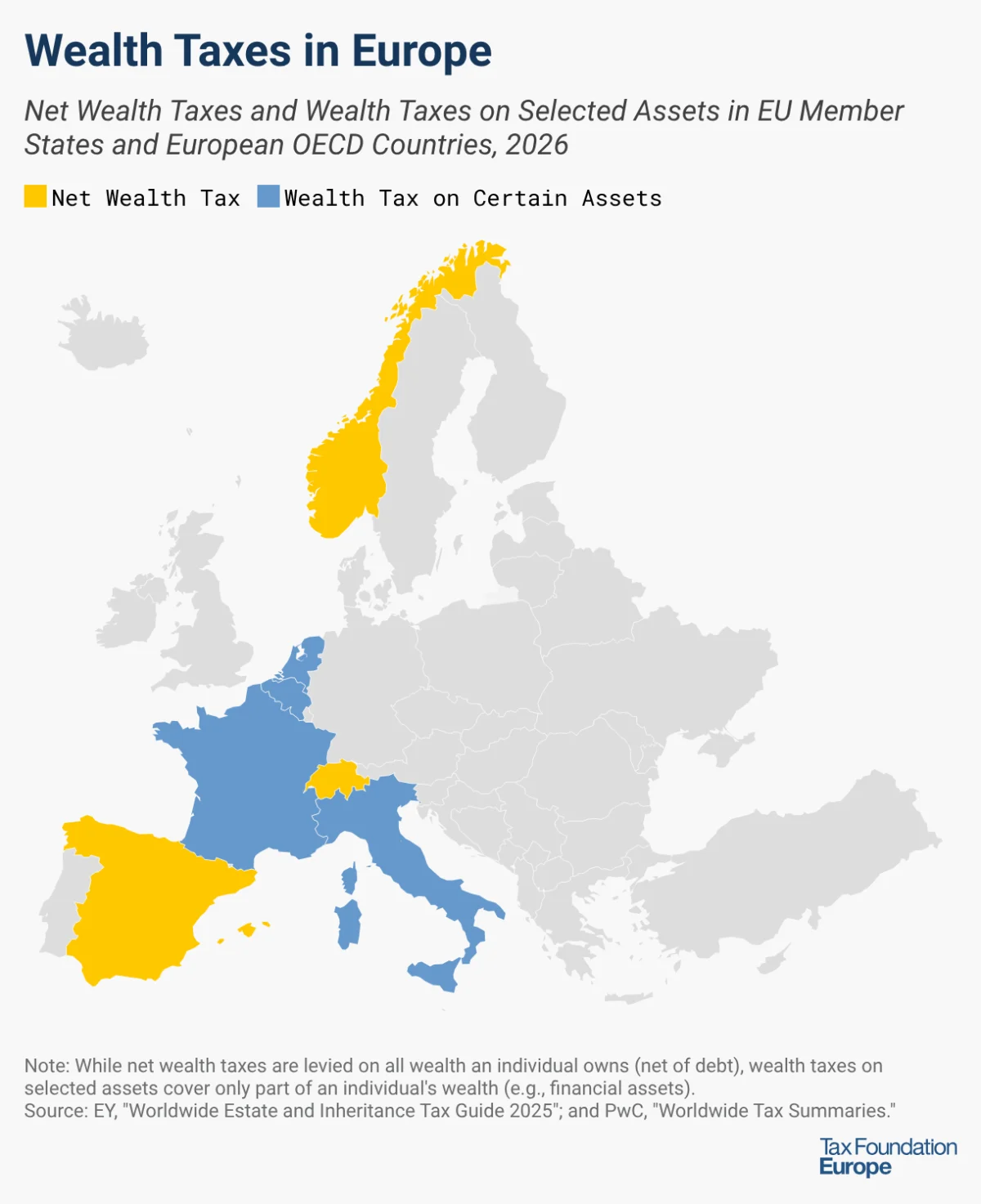
Across the European continent, the concept of taxing an individual’s accumulated wealth, net of debt, presents a varied and often contentious landscape. While the idea of a net wealth tax, distinct from a real property tax by encompassing all forms of assets, has seen a significant decline in popularity over the past few decades, it persists in a few nations and remains a subject of intense debate elsewhere. Currently, only three European countries – Norway, Spain, and Switzerland – maintain a broad-based net wealth tax. A closer examination reveals that several other nations, including France, Italy, Belgium, and the Netherlands, employ more narrowly defined wealth-related taxes targeting specific assets, reflecting diverse national fiscal philosophies and economic priorities. This nuanced approach highlights the ongoing struggle to balance fiscal equity, economic efficiency, and administrative feasibility in wealth taxation.
A Historical Perspective on Wealth Taxation in Europe
The concept of taxing wealth is not new; various forms of wealth levies have existed for centuries, often emerging during times of national crisis or significant social upheaval to fund state expenditures or address extreme inequalities. In the post-World War II era, many European nations, driven by socialist ideals and the need for reconstruction, implemented or expanded wealth taxes as a tool for redistribution and public finance. However, the late 20th and early 21st centuries witnessed a significant retreat from comprehensive net wealth taxation. Countries like Germany, Austria, Denmark, Finland, Sweden, and even France (before its 2018 reform) gradually abolished their net wealth taxes, primarily due to concerns about administrative complexity, capital flight, economic disincentives, and often, their limited revenue-generating capacity relative to their political and economic costs. The remaining European wealth tax regimes are therefore notable for their endurance and the unique national contexts that sustain them.
Nations Retaining Broad Net Wealth Taxes
Norway: A Long-Standing Pillar of Fiscal Policy
Norway stands as a testament to the enduring presence of a comprehensive net wealth tax, a policy instrument that dates back to 1892. This longevity underscores a deep-seated commitment within the Norwegian fiscal system to principles of social equity and shared responsibility. The Norwegian model levies a 1 percent tax on individuals’ net wealth exceeding NOK 1.9 million (approximately EUR 172,710 or USD 198,996). This rate is split, with 0.35 percent allocated to municipalities to support local services and 0.65 percent directed to the central government for broader national expenditures. For exceptionally high net wealth, specifically exceeding NOK 21.5 million (approximately USD 2.2 million), a slightly higher rate of 1.1 percent applies, reflecting a progressive element within the system.
The persistence of Norway’s wealth tax is often linked to its robust social democratic welfare state model and the broader economic context of its vast sovereign wealth fund, the Government Pension Fund Global. While Norway has significant state-owned assets, the wealth tax serves as a direct levy on private capital, contributing to public revenue and signaling a commitment to limiting extreme wealth concentration. Despite periodic debates and calls for reform or abolition, the tax has remained a stable component of Norway’s fiscal architecture, illustrating how it can be integrated into a system with high levels of public trust and robust administrative capacity. Critics, however, still point to potential disincentives for entrepreneurship and investment, particularly for owners of illiquid assets like private businesses, where the tax can create liquidity challenges for paying annual levies.
Spain: A Progressive and Regionally Varied Landscape
Spain’s net wealth tax is characterized by its progressive structure and significant regional variations, a reflection of the country’s decentralized governance. The tax ranges from 0.16 percent in regions like Navarra to a substantial 3.5 percent on wealth stocks above a general threshold of EUR 700,000 (approximately USD 805,330), though this threshold can be lower in some autonomous communities. This regional autonomy allows for considerable divergence in application; for instance, Andalusia, Cantabria, La Rioja, Madrid, and Murcia have historically offered 100 percent relief for individuals with net wealth below EUR 3 million, while Extremadura provides a full 100 percent relief, effectively nullifying the tax for many residents. Spanish residents are subject to the tax on their worldwide assets, while non-residents are taxed only on assets located within Spain.
The dynamics of Spain’s wealth tax have become particularly complex following the central government’s introduction of a "solidarity wealth tax" in 2022. This new levy, ranging from 1.7 percent to 3.5 percent, applies to individuals with net assets exceeding EUR 3 million (approximately USD 3.46 million). Its primary objective was to ensure that wealthy individuals in regions providing significant relief still contributed to national coffers. Under this scheme, the central government collects any additional revenue from the solidarity tax after deducting regional wealth tax collections. In a significant development in December 2023, the Spanish central government extended the solidarity tax’s application indefinitely. This move immediately prompted reactions from regions like Madrid and Andalusia, which subsequently restored their own regional wealth taxes. Their stated aim was to ensure that the revenues generated from the wealth tax remained within their respective regional budgets, rather than being captured by the central government via the solidarity tax. This ongoing fiscal tug-of-war highlights deep political divisions regarding fiscal autonomy, wealth redistribution, and regional competitiveness within Spain. The legal challenges and economic implications of this dual system are still unfolding, creating an environment of uncertainty for high-net-worth individuals and potential administrative burdens for tax authorities.
Switzerland: Federalism in Wealth Taxation
Switzerland offers a unique model of wealth taxation, deeply embedded in its federalist structure. Unlike centralized systems, the Swiss net wealth tax is levied at the cantonal level, meaning that tax rates, allowances, and specific rules vary significantly across its 26 cantons. This decentralized approach allows cantons to tailor their tax policies to local economic conditions and political preferences, fostering a degree of tax competition among them. The tax covers worldwide assets, with the notable exception of real estate and permanent establishments located abroad, which are typically taxed where they are situated. The Swiss net wealth tax, first implemented in 1840, is one of the oldest in continuous operation.
The cantonal discretion in setting rates and allowances means that a wealthy individual’s tax burden can differ substantially depending on their canton of residence. This system, while complex, is seen by proponents as a cornerstone of Swiss fiscal autonomy and a means to generate significant local revenue. However, critics sometimes point to the potential for "race to the bottom" scenarios among cantons seeking to attract wealthy residents, or the administrative challenges posed by such a fragmented system for both taxpayers and authorities. Despite these discussions, the cantonal wealth tax remains a stable and accepted feature of the Swiss tax landscape, reflecting the country’s strong tradition of local self-governance and direct democracy.
Nations with Targeted Wealth-Related Taxes
Beyond the three countries maintaining broad net wealth taxes, several other European nations have implemented more focused levies on specific categories of wealth, often in response to particular economic goals or social concerns. These targeted approaches allow governments to address perceived wealth disparities or generate revenue from certain asset classes without the complexities and potential economic disincentives associated with a full net wealth tax.
France: From Broad Wealth Tax to Real Estate Focus
France provides a prominent example of a country that abolished its comprehensive net wealth tax, the Impôt de Solidarité sur la Fortune (ISF), in 2018. The ISF had been a contentious tax for decades, frequently criticized for encouraging capital flight and disincentivizing investment. Under President Emmanuel Macron, the ISF was replaced with the Impôt sur la Fortune Immobilière (IFI), a real estate wealth tax. This strategic shift aimed to stimulate investment in productive assets by removing the tax burden on financial and business holdings, while still ensuring that significant wealth in real estate contributed to public finances.
Under the IFI, French tax residents whose net worldwide real estate assets are valued at or above EUR 1.3 million (approximately USD 1.5 million) are subject to the tax. Non-French tax residents are also subject to the IFI if their net real estate assets located in France exceed the same threshold. The tax rate can range up to 1.5 percent, depending on the net value of the real estate assets. While the IFI generates less revenue than the former ISF, proponents argue that its narrower scope reduces administrative complexity and discourages capital flight, thereby fostering a more dynamic investment environment. However, critics from the left continue to argue that the abolition of the broader wealth tax disproportionately benefits the wealthiest individuals and exacerbates wealth inequality.
Italy: Targeting Foreign Assets and Emerging Categories
Italy’s approach to wealth taxation is characterized by its focus on assets held abroad by resident taxpayers, a measure designed to ensure fiscal equity and prevent tax evasion through offshore holdings. Financial assets held abroad without Italian intermediaries are taxed at a rate of 0.2 percent, increasing to 0.4 percent for assets held in certain designated countries. This policy reflects Italy’s broader efforts to combat capital flight and enhance tax transparency.
A notable recent development in Italy’s wealth tax landscape is the inclusion of crypto assets. Since 2023, a tax of 0.2 percent per year has been applied to crypto assets held with a non-resident intermediary or stored on physical devices such as USB sticks or smartphones. This move positions Italy at the forefront of countries adapting their tax frameworks to emerging digital asset classes, addressing the challenge of taxing highly mobile and often intangible wealth. In addition to these, real estate properties held abroad by Italian tax residents are also subject to a tax of 1.06 percent, further cementing Italy’s strategy to ensure that all significant forms of foreign-held wealth contribute to its tax base.
Belgium: The Solidarity Tax on Securities Accounts
Since 2021, Belgium has implemented a "solidarity tax" or tax on securities accounts (TSA). This tax levies a 0.15 percent charge on securities accounts with an average value exceeding EUR 1 million (approximately USD 1.15 million). The introduction of the TSA was a politically driven initiative aimed at addressing wealth inequality and ensuring that those with significant financial assets contributed more to society, particularly in the wake of the economic challenges posed by the COVID-19 pandemic.
The TSA replaced an earlier, similar tax that had been largely invalidated by the Constitutional Court. The current version was carefully designed to mitigate legal challenges by focusing on the securities account itself rather than directly on the individual’s net wealth. While it is not a comprehensive net wealth tax, it functions as a targeted levy on a significant form of financial wealth, reflecting a political desire to increase the contribution of the wealthiest to public finances. Its implementation has, however, sparked debate about its effectiveness, potential for avoidance, and impact on financial market activity.
The Netherlands: Navigating Legal Challenges and Reforms
The Netherlands has a long-standing system where the value of net wealth, excluding the primary residence and substantial interests in companies, is included in the income tax framework under "Box 3." Rather than directly taxing wealth, Box 3 traditionally taxed a deemed return on assets, assuming a fixed percentage return regardless of actual investment performance. This system, while administratively simpler, faced significant legal challenges. In 2021, the Dutch Supreme Court ruled that this deemed return system violated European law regarding property rights and non-discrimination, as it could lead to situations where taxpayers were taxed on income they did not actually earn, especially in periods of low interest rates.
In response to this landmark ruling, the Dutch government proposed a new temporary alternative system for the years 2023 through 2027. Under this interim solution, each asset category (e.g., savings, debts, and other investments) would have its own deemed return rate, designed to more closely reflect actual market conditions. For 2026, a weighted average yield over all categories will be applied to total assets exceeding a personal exemption of EUR 59,357 (approximately USD 68,373) to determine the taxable benefit, which will then be subject to a flat tax rate of 36 percent. Looking further ahead, the government aims to implement a more fundamental reform by 2028, transitioning to a new system based on actual returns on assets. This ambitious reform seeks to create a fairer and more legally robust wealth tax system, but it presents significant administrative and technical challenges, including the valuation of diverse asset types and the complexities of tracking actual returns. The ongoing evolution of the Dutch system underscores the difficulties inherent in designing and implementing wealth taxes that are both equitable and legally sound.
Broader Economic and Social Implications: The Ongoing Debate
The debate surrounding wealth taxes in Europe, whether broad-based or targeted, is multifaceted, touching upon fundamental questions of economic efficiency, social equity, and fiscal sovereignty.
Arguments for Wealth Taxes:
Proponents of wealth taxes, often advocating for greater social justice, highlight several potential benefits. They argue that wealth taxes can:
- Address Wealth Inequality: In an era of growing wealth concentration, these taxes can serve as a direct mechanism to redistribute wealth and reduce disparities, fostering greater social cohesion.
- Fund Public Services: Wealth taxes can provide an additional revenue stream for governments, potentially funding essential public services such such as education, healthcare, and infrastructure, or allowing for reductions in other, potentially more regressive, taxes.
- Enhance Progressive Taxation: By taxing accumulated capital, wealth taxes can complement income and consumption taxes, ensuring that the wealthiest individuals, who often derive a significant portion of their income from capital, contribute their fair share to society.
- Promote Economic Stability: Some economists argue that extreme wealth concentration can lead to economic instability and reduce overall societal well-being. Wealth taxes, by mitigating this, could contribute to a more stable economy.
Arguments Against Wealth Taxes:
Conversely, critics raise significant concerns, often citing the experiences of countries that have abolished such taxes:
- Limited Revenue Generation: Historical data and studies, including reports from the OECD, often suggest that wealth taxes generate less revenue than anticipated. This is frequently due to high administration costs, legal loopholes, tax avoidance strategies, and capital flight. France’s ISF, for instance, often generated only a fraction of what was projected.
- Administrative Complexity: Valuing diverse assets annually (e.g., private businesses, art, intellectual property, illiquid investments) presents immense practical difficulties for tax authorities. This complexity leads to high compliance costs for taxpayers and administrative burdens for the state.
- Economic Disincentives: Wealth taxes can disincentivize entrepreneurship, savings, and productive investment. Imposing an annual tax on wealth, particularly on illiquid assets like family businesses, can force owners to sell parts of their enterprises or relocate, potentially harming innovation, job creation, and long-term economic growth.
- Capital Flight: The mobility of capital means that wealthy individuals may move their assets or even their residency to jurisdictions with more favorable tax regimes, leading to a loss of tax base and economic activity.
- Legal Uncertainty and Constitutional Challenges: As seen in the Netherlands and Spain, wealth taxes can face significant legal hurdles, particularly concerning property rights, non-discrimination principles, and the potential for double taxation (as assets may have already been taxed as income or capital gains).
- Double Taxation: Critics argue that wealth taxes constitute a form of double taxation, as the wealth being taxed has often already been subject to income tax or inheritance tax at an earlier stage.
The OECD report on "The Role and Design of Net Wealth Taxes" explicitly highlights these challenges, suggesting that while wealth taxes can contribute to revenue and address inequality, their design must be carefully considered to mitigate negative impacts on entrepreneurship and growth. Many economists and business associations, therefore, argue that rather than reforming and hiking wealth taxes, countries should consider repealing them, focusing instead on broader tax reforms that promote investment and economic activity.
Official Responses and Stakeholder Views
Governments that maintain wealth taxes, such as Norway, often frame them within a broader commitment to social welfare and progressive taxation. In Spain, the central government’s move to introduce the solidarity tax reflected a political desire to ensure a minimum contribution from the wealthiest, overriding regional exemptions, driven by concerns over fiscal fairness and national solidarity.
Conversely, governments that have abolished or reformed wealth taxes, like France under Macron, typically emphasize the need to enhance economic competitiveness, attract investment, and reduce the administrative burden on businesses and entrepreneurs. The Dutch government’s ongoing reforms are a direct response to a Supreme Court ruling, prioritizing legal compliance and fairness in the tax system.
From the perspective of stakeholders, business communities and taxpayer associations generally express strong opposition to wealth taxes, citing the disincentives for investment, administrative complexities, and the risk of capital flight. They advocate for tax systems that encourage capital formation and economic growth. Advocacy groups focused on inequality, however, often champion wealth taxes as crucial tools for achieving greater distributive justice and ensuring that the wealthiest contribute equitably to society. Academic economists offer a range of views, with some supporting wealth taxes for their redistributive potential under specific conditions, while others raise concerns about their efficiency and practical implementation challenges.
Conclusion and Future Outlook
The landscape of wealth taxation in Europe is a dynamic and complex mosaic, reflecting diverse historical legacies, political ideologies, and economic realities. While only a handful of countries maintain broad-based net wealth taxes, the ongoing debates in Spain and the Netherlands underscore the persistent challenges and evolving nature of these fiscal instruments. The trend among many nations has been to move away from comprehensive wealth taxes towards more targeted levies or to abolish them entirely, driven by concerns over economic efficiency, administrative burden, and international competitiveness.
However, in an era marked by increasing wealth inequality and pressing needs for public funding, the discussion around how to tax wealth effectively and equitably remains highly relevant. The future of wealth taxation in Europe will likely continue to be shaped by a delicate balance between fiscal needs, social demands for greater fairness, and the practicalities of designing and implementing taxes that do not inadvertently harm economic growth or lead to capital flight. The experiences of Norway, Spain, Switzerland, and those countries employing targeted approaches offer valuable lessons for policymakers globally, highlighting both the potential benefits and the significant pitfalls inherent in taxing accumulated wealth. The nuanced approaches observed across Europe demonstrate that there is no single, universally accepted model for wealth taxation, and national circumstances will continue to dictate the specific forms these levies take.