Pevita Pearce
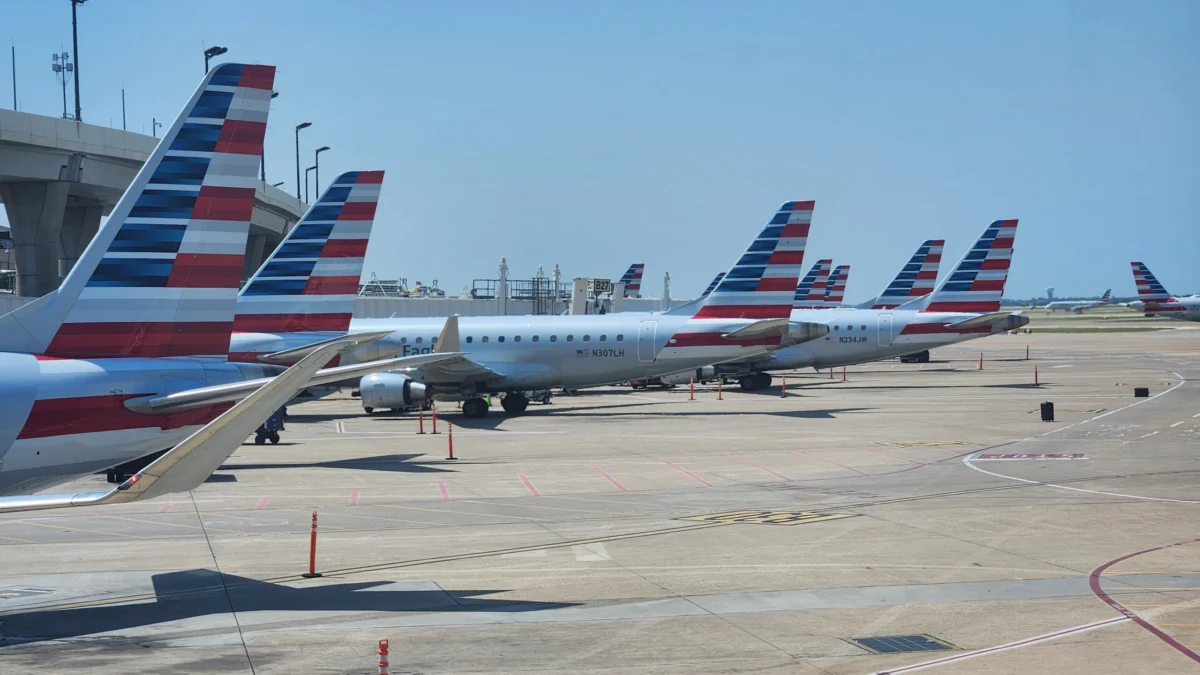
The Federal Aviation Administration (FAA) implemented an unprecedented four-hour nationwide ground stop on all flights across the United States on Friday, stemming from a critical communications issue that paralyzed air traffic control centers. This extraordinary measure, in effect from approximately 1:30 p.m. to 5:30 p.m. Pacific Standard Time, plunged airports nationwide into chaos, leading to thousands of flight delays and cancellations. While the immediate stoppage was lifted, its ripple effects are anticipated to cause significant disruptions to air travel for days to come.
Homeland Security Secretary Markwayne Mullin confirmed the nature of the incident, characterizing it as a telecommunications outage. Crucially, Mullin emphasized that the ground stop did not represent a national security threat. "There is no indication that we’ve had, no reason to believe, that as of right now this was a threat to the United States," Mullin stated to reporters at the White House, later reiterating there was "no indication as of yet that this was a nefarious attack against us."
This marks the second complete ground stop of U.S. air traffic in recent history, with the previous one occurring after the September 11, 2001, terrorist attacks. The most recent prior interruption, a roughly 90-minute grounding in 2023, was attributed to an issue with a pilot notification system. The FAA’s advisory, issued under the directive "Due to extraordinary circumstances and for reasons of safety," mandated that "all departing traffic should remain ground stopped until further notice." Inbound international flights were to be managed on a "case by case basis."
The widespread impact was immediately evident. Flight-tracking website FlightAware reported over 9,500 flights delayed and approximately 5,300 cancellations across the United States by Friday evening. At Los Angeles International Airport (LAX), one of the nation’s busiest hubs, the disruption was particularly acute, with over 600 flights delayed and more than 280 canceled. Airlines, including Hawaiian and Alaska Airlines, confirmed the resumption of West Coast flights following the lifting of the FAA’s order, according to the Hawaii Department of Transportation.
Background and Potential Contributing Factors
The outage occurred as L3Harris, a prominent technology company and defense contractor, is in the process of modernizing FAA facilities by replacing aging copper wire connections with high-speed fiber optic networks. Federal sources, speaking anonymously to the Los Angeles Times, indicated that the system experiencing the outage is overseen by L3Harris and is currently undergoing upgrades. While officials have not officially confirmed the cause, this connection to ongoing infrastructure improvements has drawn significant attention.
Adding another layer of complexity, the FAA had only recently announced the nationwide rollout of an artificial intelligence tool designed to mitigate flight delays. This system, named Strategic Management of Airspace, Routes, and Trajectories (SMART), is a cloud-based platform intended to enhance existing air traffic management by providing a unified, data-driven overview of the national airspace. Secretary Mullin acknowledged that officials were examining any potential links between SMART and the communications outage. However, Air Space Intelligence, the AI company behind SMART, issued a statement on social media asserting that the "current ground stop is not based on or a result of the SMART system, any product of ASI or our integration with FAA and ATC."
A Chronology of Disruption
The events of Friday unfolded rapidly, leaving travelers caught in a state of uncertainty.
- Early Afternoon (PST): Reports begin to emerge of air traffic control system disruptions impacting communication channels.
- Approximately 1:30 p.m. PST: The FAA issues a nationwide ground stop order for all departing flights, citing safety concerns due to a communications issue.
- Mid-Afternoon PST: Airports across the country begin to experience significant delays and cancellations. Passengers who had already arrived at terminals face confusion and frustration.
- Throughout the Afternoon PST: Federal officials, including Homeland Security Secretary Markwayne Mullin, confirm the incident as a telecommunications outage and rule out a national security threat. Investigations into the cause begin, with attention turning to ongoing infrastructure upgrades and potential links to new technology.
- Approximately 5:30 p.m. PST: The FAA lifts the nationwide ground stop order.
- Evening PST and Beyond: The process of resuming flight operations begins, but airlines warn of cascading delays and cancellations extending into the following days due to the backlog and residual congestion in the air traffic system.
Passenger Experiences Amidst the Chaos

The ground stop left thousands of passengers stranded and desperately seeking answers and alternative travel arrangements. Zack Richeimer, a 29-year-old traveler at LAX, described a scene of frantic activity as he attempted to rebook a flight to San Francisco. Initially facing only a delay, he received word from friends that he was effectively stranded. After securing a rebooking for the following day, Richeimer explored options for driving, only to find rental car companies unresponsive. "It’s a little overwhelming," he commented, reflecting the sentiment of many.
Maria Moye, 50, an Irvine resident, found her planned business trip to New York derailed at the Delta terminal at LAX. Arriving two hours early for her 3:40 p.m. flight, she discovered it was affected by the stoppage. Her attempts to cancel her ticket through Delta’s app and website were hampered by technical issues. Despite the inconvenience, Moye expressed a sense of relief, stating, "I feel better that I’m not getting on, just in case."
In audio recordings circulating online, a controller at San Diego International Airport could be heard announcing the ground stop to pilots, eliciting disbelief. Pilots speculated on the cause, with some suggesting a link to a recent Microsoft Outlook outage, a possibility that Secretary Mullin later dismissed.
Official Responses and Calls for Accountability
The incident triggered immediate reactions from elected officials, who voiced concerns about the reliability of the nation’s air traffic control infrastructure. U.S. Representative Ted Lieu (D-Calif.) characterized the FAA telecommunications outage as "completely unacceptable," urging the agency to develop systems that eliminate single points of failure. He called for congressional hearings to investigate the cause and ensure future improvements. "What just happened is enormously damaging to trust in our air system," Lieu stated, emphasizing the system’s critical role in the national economy.
Senator Tammy Duckworth (D-Ill.), the ranking Democrat on the Senate Subcommittee on Aviation, Space, and Innovation, announced her intention to demand answers from the FAA regarding the ground stop.
Broader Implications and Future Concerns
The four-hour grounding and its subsequent fallout underscore the fragility of complex technological systems that underpin critical national infrastructure. The FAA’s reliance on aging infrastructure, coupled with the integration of new technologies, presents ongoing challenges. The incident raises critical questions about system redundancy, cybersecurity, and the pace of modernization within the agency.
Airlines across the country scrambled to manage the unfolding situation. American Airlines spokesperson noted that while flights already in the air could continue, significant disruptions to their schedules were anticipated. "It will be all hands on deck across American to get customers on their way as soon as possible when the FAA lifts this ground stop," the spokesperson said. United and Delta airlines updated their websites to inform passengers of the situation, with United noting that while airborne flights would continue, diversions were occurring due to congestion and cancellations were being implemented.
Dylan Schroeder, who was already on board a flight from Charlotte, North Carolina, to Orlando, Florida, described the pilot’s announcement of air traffic control system issues. After waiting for over an hour, passengers were deplaned. While the mood on the plane remained relatively calm, Schroeder noted the disappointment of fellow travelers headed to popular tourist destinations.
The cascading effects of the ground stop are expected to persist, impacting flight schedules and passenger travel plans for the foreseeable future. The FAA’s response and its plans for infrastructure upgrades will be closely scrutinized in the coming weeks and months, as the nation grapples with the implications of this significant disruption to its air travel system. The incident serves as a stark reminder of the interconnectedness of modern infrastructure and the potential for widespread disruption when fundamental communication systems fail.