Pevita Pearce
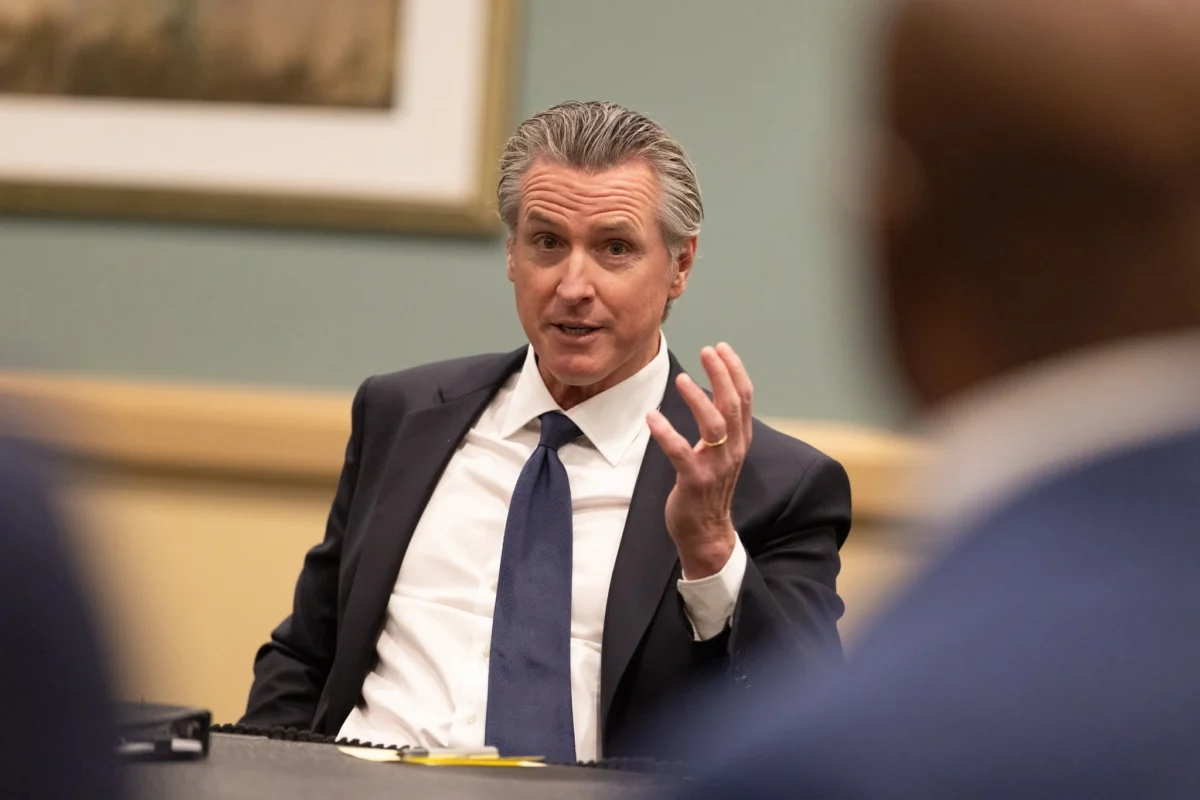
California Governor Gavin Newsom has thrown his considerable political weight behind Proposition 42, a ballot initiative poised to act as a decisive countermeasure to Proposition 40, the controversial proposed "billionaire wealth tax." This pivotal endorsement, announced mere weeks before the November election, underscores the deepening fissures within the Democratic Party over wealth taxation and its potential economic and political ramifications for the Golden State. The governor’s intervention injects significant momentum into the campaign to block Proposition 40, a measure that has sharply divided the party’s leadership and ignited a high-stakes battle of competing interests.
The governor’s statement, provided by the Proposition 42 campaign on Friday, articulated a clear rationale for his support: "We all agree that Californians deserve to have their retirement and life savings protected from new state taxes so those savings are there when they need them." This assertion positions Proposition 42 as a safeguard for working families and union members, a narrative that resonates with a significant segment of the electorate. The measure’s core tenet is to prohibit new taxes on assets such as stocks and other financial instruments, and crucially, to ban retroactive taxation, a direct challenge to the principles underpinning Proposition 40. However, it is important to note that Proposition 42 explicitly exempts real estate from its protections, a detail that may influence its appeal to different voter blocs.
The Mechanics of the Measures: A Clash of Propositions
At the heart of this electoral contest lies a unique ballot mechanism: if both Proposition 40 and Proposition 42 pass, the measure receiving more "yes" votes will prevail. This means that a vote in favor of Proposition 42 effectively serves as a vote against Proposition 40. This intricate interplay highlights the strategic maneuvering at play, with proponents of Proposition 42 aiming to overwhelm the support for the wealth tax through a direct appeal to broader economic anxieties.
Governor Newsom’s framing of Proposition 42 as a protector of "blue-collar unions" and workers’ savings directly addresses a key argument advanced by opponents of Proposition 40. They contend that a wealth tax, once enacted, could eventually be expanded to encompass the assets of ordinary Californians. However, an analysis by CalMatters suggests this concern may be largely unfounded. The outlet reported that Proposition 40, if enshrined in the state constitution, would likely necessitate another ballot measure for any future amendments, making it improbable that the tax would be easily broadened to include non-billionaires. Nevertheless, the perception of potential escalation remains a powerful talking point for Proposition 42’s supporters.
A Divided Democratic Party: Ideological and Economic Fault Lines
The governor’s endorsement marks a significant shift in the political landscape, particularly given the California Democratic Party’s official stance. In August, the state party, alongside the San Francisco Democratic Party, endorsed a "no" vote on Proposition 42, signaling their support for Proposition 40. This divergence from the governor underscores the deep ideological rifts within the party.
Proposition 40, championed by the Service Employees International Union-United Healthcare Workers West (SEIU-UHW), a powerful healthcare union representing approximately 120,000 workers, proposes a one-time 5% wealth tax on California’s wealthiest residents – those with fortunes exceeding $50 million. The union argues that this tax would generate crucial revenue to offset healthcare costs that have been reduced under the Trump administration, providing essential funding for public services and healthcare initiatives.
The measure has garnered support from prominent progressive figures, including Representative Ro Khanna, a Democrat representing Silicon Valley, and Senator Bernie Sanders, a long-time advocate for taxing the wealthy. Rep. Khanna has been a vocal critic of Governor Newsom’s opposition, suggesting that the governor’s stance is influenced by a desire to court wealthy donors for a potential presidential bid. "The governor, it’s no secret, wants to run for president. He doesn’t want to offend billionaires who could fund his campaigns," Khanna stated recently, accusing the governor of succumbing to "propaganda." He further suggested that billionaires are actively promoting Proposition 42 to "confuse voters" and undermine the chances of Proposition 40’s success.
The Economic Debate: Flight of Capital vs. Increased Revenue
Governor Newsom’s opposition to Proposition 40, first articulated in January, centers on the fear that a wealth tax would incentivize the state’s wealthiest residents to relocate their assets and businesses, thereby diminishing California’s tax base. This concern was seemingly amplified when prominent tech billionaires, including Google co-founders Sergey Brin and Larry Page, and former PayPal CEO Peter Thiel, publicly considered or announced plans to move their residences or businesses out of state in response to the wealth tax’s growing momentum. "This is my fear," Newsom told Politico at the time. "It’s just what I warned against. It’s happening."
This argument, often referred to as the "capital flight" or "mobility" argument, is a cornerstone of opposition to wealth taxes globally. However, the empirical evidence supporting this claim is subject to ongoing debate. A 2025 study from the progressive think tank Institute for Policy Studies examined the impact of wealth taxes in Massachusetts and Washington state. Contrary to the fears of capital flight, the study found that these taxes were associated with an increase in the number of high-income individuals and their net worth, rather than a decline. This suggests that the economic impact of wealth taxation may be more nuanced than often portrayed by opponents.
Campaign Finance and Strategic Funding
The financial backing behind each proposition provides a stark illustration of the stakes involved. Proposition 42 has been heavily financed by a Political Action Committee (PAC) named Building a Better California, which has reportedly spent nearly $98 million primarily to counter Proposition 40. This PAC, in turn, has received over $226 million in donations from a constellation of ultrawealthy individuals. Notable contributors include:
- Sergey Brin (Google co-founder): $102 million
- Eric Schmidt (former Google CEO): Approximately $15 million
- Chris Larsen (Ripple co-founder): Around $12.5 million
- John Doerr (venture capitalist): $30 million
- Patrick Collison (Stripe CEO): $22 million
These figures, sourced from the California Secretary of State’s office, underscore the significant financial resources being deployed by a coalition of tech titans and venture capitalists to defeat the billionaire tax. The sheer volume of funding directed towards Proposition 42 demonstrates the profound interest these individuals have in preventing the implementation of wealth taxation in California.
Conversely, while the original article doesn’t detail the funding for Proposition 40 as extensively, it is understood that SEIU-UHW and other labor organizations are its primary proponents, likely relying on union dues and smaller individual contributions to fund their campaign. The disparity in financial firepower between the two campaigns is considerable, highlighting the challenges faced by labor-backed initiatives against the vast wealth of the individuals they seek to tax.
Broader Implications and the Future of Taxation in California
Governor Newsom’s endorsement of Proposition 42, despite his past calls for a national wealth tax, signals a pragmatic approach to electoral politics and a clear prioritization of protecting his administration from potential political fallout. While he has publicly advocated for federal measures to tax the nation’s wealthiest, his stance on Proposition 40 reveals a cautiousness regarding state-level wealth taxation, perhaps influenced by concerns about economic competitiveness and the potential for alienating influential donors.
The outcome of this electoral showdown will have far-reaching implications for California’s fiscal policy and its political landscape. It will not only determine whether a wealth tax is implemented but will also offer a barometer of public sentiment regarding wealth inequality and the role of taxation in addressing societal challenges. The deep divisions within the Democratic Party exposed by this debate highlight the ongoing struggle to balance progressive ideals with pragmatic governance and the economic realities of a globalized economy.
Furthermore, the debate surrounding Proposition 40 and 42 is not merely a California-centric issue. It is part of a broader national and international conversation about how to ensure that the wealthiest individuals and corporations contribute their fair share to public services and societal well-being. The results of this California election could influence similar debates and policy proposals in other states and countries, making it a critical test case for the future of wealth taxation. The coming weeks will reveal whether the momentum behind taxing the ultra-wealthy can overcome the formidable financial and political opposition it faces.