Lina Irawan
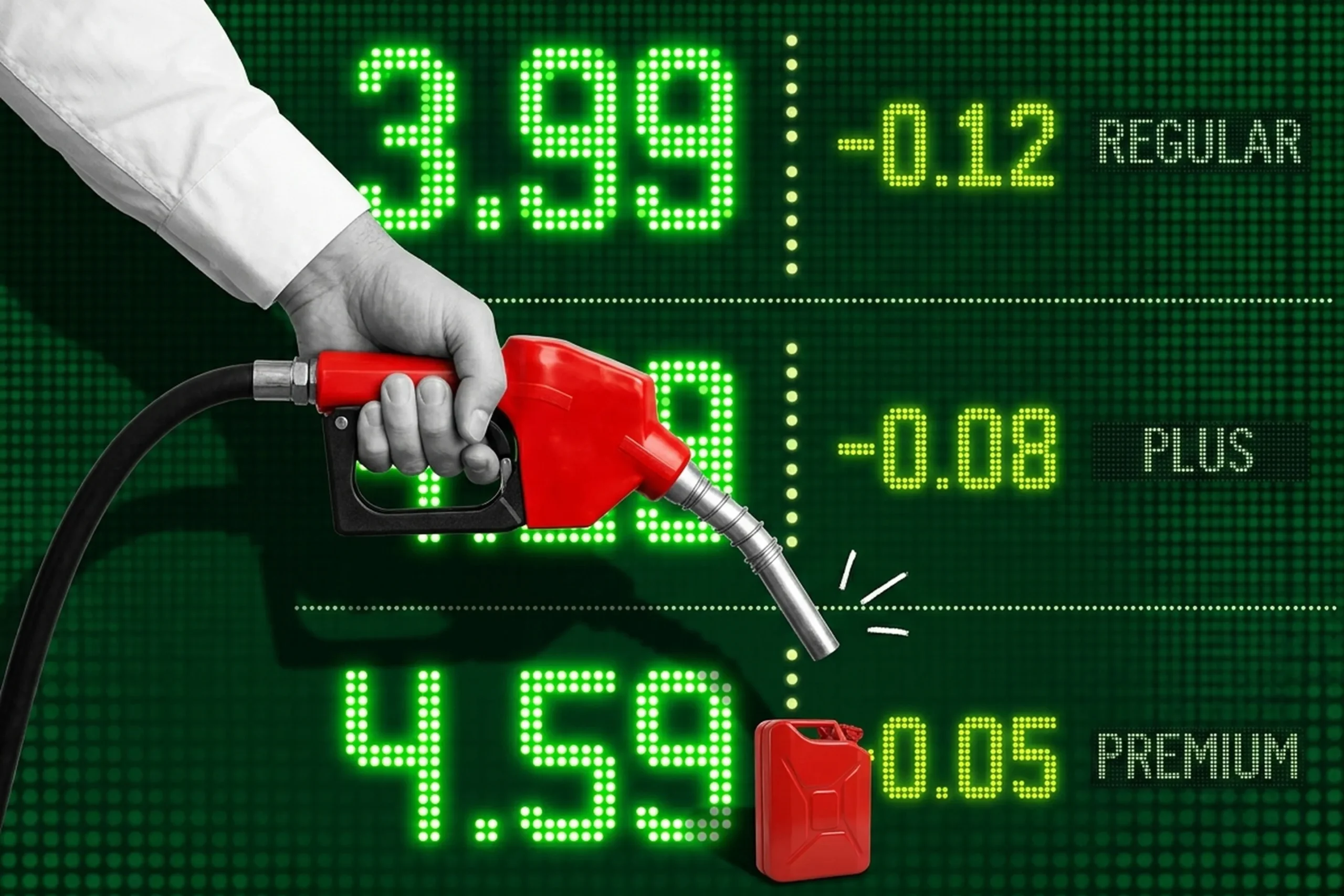
The national average for gasoline currently stands at approximately $4.33 per gallon, a figure that remains more than a dollar higher than prices observed a year ago. However, American drivers might finally see some respite at the pump before the close of the year, according to recent projections from the U.S. Energy Information Administration (EIA). In its October forecast, the EIA indicated an expectation for a gradual decline in gasoline prices over the coming months, with the national average potentially dipping below the $4 mark by December.
This anticipated easing of prices is largely attributed to a combination of seasonal factors and increased refining activity. Following the typical autumn maintenance season, refineries are expected to ramp up production, leading to a bolstered supply of gasoline. Concurrently, the onset of colder winter months usually ushers in a period of lower gasoline consumption as holiday travel patterns shift and fewer road trips are undertaken compared to the peak summer driving season. These factors collectively are projected to facilitate a rebuilding of gasoline inventories in December, thereby alleviating some of the upward pressure on prices.
Current Market Conditions and Recent History
The current average of $4.33 per gallon reflects a volatile year for fuel prices. This figure contrasts sharply with the pre-conflict national average of $2.98 per gallon for regular gasoline, recorded just before February 28th. Following this pivotal date, prices surged, peaking at $4.56 per gallon in May. A brief period of relief saw prices dip below $4 in June, largely in response to a tentative agreement that aimed to de-escalate tensions and ensure the smooth flow of oil shipments through critical waterways. Unfortunately, that agreement proved temporary, and the ensuing breakdown led to a resurgence of elevated prices, bringing us to the present situation. This backdrop underscores the inherent sensitivity of the global energy market to geopolitical developments, even those seemingly distant from the pump.
The EIA’s Projections for Relief
The EIA’s optimistic forecast hinges on several key assumptions regarding market dynamics in the final quarter of the year. Historically, the autumn season is marked by refineries undergoing planned maintenance to prepare for winter fuel blends and ensure operational efficiency. As these maintenance cycles conclude, refinery utilization rates typically increase, leading to a surge in gasoline production. This increased output is crucial for replenishing inventories that may have been drawn down during the summer’s high-demand period.
Furthermore, the demand side of the equation plays a significant role. The transition from the active summer and early autumn driving seasons to the colder winter months typically sees a reduction in gasoline consumption. Fewer leisure trips, alongside the general impact of colder weather on vehicle usage, contribute to this decline. The combination of higher supply from refineries and lower demand from consumers creates a more favorable supply-demand balance, which traditionally translates to downward pressure on prices. The EIA projects that this dynamic will be sufficient to push the national average below $4 per gallon by December, offering a tangible, albeit modest, financial reprieve for millions of drivers.
The Geopolitical Undercurrent: The Strait of Hormuz and Middle East Tensions
A major "wild card" in the global energy market, and a significant contributor to the current price volatility, is the ongoing geopolitical instability in the Middle East, particularly its impact on oil shipments through the Strait of Hormuz. While the original text refers to an "Iran war," it’s crucial to clarify the context: this refers to the broader regional tensions, primarily stemming from the Israel-Hamas conflict that erupted on February 28th. This conflict, and its associated ripple effects, has led to heightened concerns about the security of shipping lanes in the Persian Gulf, especially the Strait of Hormuz.
The Strait of Hormuz is one of the world’s most critical chokepoints for oil transit. Situated between Iran and Oman, it is the sole sea passage from the Persian Gulf to the open ocean, through which approximately 20% of the world’s total petroleum liquids consumption and roughly one-third of the world’s liquefied natural gas (LNG) passes daily. Major oil-producing nations such as Saudi Arabia, Iran, Iraq, Kuwait, Qatar, and the United Arab Emirates rely heavily on this strait for their exports. Any perceived threat or actual disruption to this vital passage sends immediate shockwaves through global oil markets, leading to price spikes due to supply uncertainty.
Chronology of Geopolitical Impact on Prices:
- Pre-February 28th: Before the escalation of the conflict, the national average for regular gasoline stood at a relatively stable $2.98 a gallon. Market expectations were focused on typical seasonal adjustments and global supply-demand fundamentals.
- February 28th – May: Following the onset of the Israel-Hamas conflict and the subsequent rise in regional tensions, concerns over oil supply disruptions mounted. Speculation about potential blockades or attacks on shipping in the Strait of Hormuz, coupled with increased risk premiums, caused crude oil prices to surge. This translated to a climb in U.S. gasoline prices, reaching a peak of $4.56 in May.
- June: A period of intense diplomatic activity led to a tentative agreement aimed at de-escalating the immediate threats to maritime traffic in the Persian Gulf. This perceived reduction in risk prompted a market correction, with crude oil prices easing and, consequently, U.S. gasoline prices dropping below $4 per gallon. This demonstrated the market’s immediate, albeit fragile, response to positive geopolitical signals.
- Post-June – Present: The initial agreement and resulting price relief proved short-lived. Renewed hostilities, persistent threats from various regional actors, and a lack of sustained diplomatic breakthroughs reignited fears of supply disruptions. This sustained uncertainty has kept crude oil prices elevated, directly contributing to the current gasoline prices hovering around $4.33 per gallon. The market has internalized a higher risk premium due to the ongoing volatility.
Underlying Market Dynamics: Inventories, Refining, and Supply Chains
Beyond the immediate impact of geopolitical events, several fundamental market dynamics are shaping the current and future outlook for gasoline prices. The EIA’s forecast, while anticipating relief, also highlights persistent challenges, particularly concerning U.S. gasoline inventories. The agency expects these inventories to remain tight, a condition that could limit the extent of price declines by year-end and potentially into early 2027.
Tight inventories are a symptom of several factors. Post-pandemic, investment in new refinery capacity has been limited globally. Existing refineries, particularly in the U.S., are aging, making them more susceptible to unexpected shutdowns or requiring more frequent, longer maintenance periods. When inventories are low, any disruption to supply, whether from a refinery outage, pipeline issue, or import delay, can have an outsized impact on prices. This creates a market environment where prices are highly reactive to even minor supply shocks.
Furthermore, tight inventories contribute to higher "refining margins." Refining margins represent the difference between the wholesale price of gasoline and the cost of the crude oil used to produce it. When gasoline supply is tight relative to demand, refiners can command higher prices for their finished product, leading to fatter profit margins. The EIA projects these refining margins to remain higher than usual into early 2027, indicating a sustained period of relatively strong profitability for refiners, but also a persistent cost burden for consumers.
Another critical factor is the transmission lag between wholesale price movements and pump prices. Even when wholesale gasoline prices decline, it often takes time for these decreases to fully filter down to the consumer at the pump. This lag is due to several reasons: gas stations typically sell off existing, higher-priced inventory before adjusting their prices; the cost of distributing and selling fuel, including transportation and labor, remains relatively stable; and various state and federal taxes are levied on each gallon, irrespective of the wholesale price. These fixed costs mean that even significant drops in wholesale prices may not always translate into equally dramatic reductions at the pump.
The EIA’s forecast also assumes a gradual increase in oil production and exports from the Middle East, predicated on the idea that alternative shipping routes and other logistical workarounds will bring more crude oil to market, even if the Strait of Hormuz remains a point of concern. This assumption implies a degree of stability in regional output and a successful adaptation to potential shipping risks, which itself carries "above-average uncertainty." The role of OPEC+ (Organization of the Petroleum Exporting Countries plus Russia and other allies) is also crucial here. Their decisions on production quotas directly impact global supply. If OPEC+ decides to maintain or reduce output, it could easily counteract the expected increase from other sources and keep prices elevated.
Expert Voices: Caution Amidst Volatility
While the EIA offers a glimmer of hope, other energy market analysts express a more cautious outlook, emphasizing the persistent uncertainties. Tom Kloza, chief energy advisor at Gulf Oil, is notably less bullish than the EIA. He estimates that the national average for gasoline will still be around $4.11 per gallon at the end of December, slightly higher than the EIA’s sub-$4 prediction.
Kloza’s skepticism stems from a recognition of the underlying market tightness and the enduring influence of geopolitical risks. He notes, "I think U.S. gas prices will stay above $4 a gallon through the midterms, but I wouldn’t be surprised to see something on either side of $4 a gallon by year’s end. If I had to bet, I’d bet on a U.S. average above $4 [per gallon] heading into 2027.” This perspective highlights that while seasonal dips are probable, a sustained return to significantly lower prices might be elusive.
Despite this guarded forecast, Kloza also points out the typical seasonal patterns that could offer temporary relief. Gasoline prices traditionally reach their seasonal lows between mid-December and the end of January. This period is characterized by colder weather across much of the U.S., leading to a natural reduction in discretionary driving and overall demand. He suggests that areas primarily supplied by Gulf Coast refineries, known for their large capacity and efficient distribution networks, may experience more substantial price relief. In contrast, Western states, particularly California, are likely to continue facing higher prices due to stricter environmental regulations requiring specialized fuel blends, higher taxes, and more isolated logistical challenges that inflate costs.
Patrick De Haan, head of petroleum analysis at GasBuddy, takes an even more circumspect stance, expressing reluctance to make a definitive year-end prediction at all. De Haan emphasizes that the ongoing geopolitical tensions involving not only the U.S. and Iran but also the broader conflict between Ukraine and Russia, have rendered gasoline price forecasting exceptionally difficult. These conflicts introduce unpredictable variables that can rapidly shift market sentiment and actual supply.
"Any escalation could push prices up and any de-escalation could push prices down," De Haan explains. "As a result, due to the current and ongoing geopolitical tensions, it looks like prices this year will be near record levels." His assessment underscores the profound impact that non-economic factors—war, sanctions, and political rhetoric—have on global oil supply and demand dynamics, making traditional forecasting models less reliable. The constant threat of supply disruption, whether real or perceived, acts as a perpetual upward pressure on crude oil benchmarks, which inevitably trickles down to gasoline prices.
Broader Economic Ramifications
Elevated gasoline prices carry significant broader economic ramifications, affecting various segments of the economy.
- Consumer Impact: For the average American household, higher fuel costs directly translate to reduced disposable income. This can force families to cut back on other spending, affecting retail sales and broader economic growth. For many, it means adjusting daily commutes, postponing travel plans, or making difficult choices in household budgeting, further contributing to inflationary pressures on overall living costs.
- Business Impact: Businesses heavily reliant on transportation and logistics, from trucking companies and airlines to local delivery services and ride-sharing platforms, face increased operational costs. These costs are often passed on to consumers in the form of higher prices for goods and services, exacerbating inflation across the supply chain. Agricultural sectors also feel the pinch through higher fuel costs for machinery and transport of produce.
- Inflation and Monetary Policy: Persistently high energy prices are a key driver of headline inflation, making the job of central banks, such as the Federal Reserve, more challenging. To combat inflation, central banks might be compelled to maintain higher interest rates for longer, potentially slowing economic growth and increasing borrowing costs for businesses and consumers.
- Government and Policy: Governments are often under pressure to address high gas prices through policy interventions. This can include drawing from strategic petroleum reserves, calls for increased domestic production, or even temporary suspensions of fuel taxes. However, such measures often have limited long-term impact and can be politically fraught. High prices also rekindle debates about energy independence and investment in renewable energy sources to reduce reliance on volatile global oil markets.
Outlook for Drivers and the Road Ahead
For consumers filling up their tanks, the outlook for the remainder of the year and into early 2027 points to a complex and nuanced situation. While the EIA’s forecast offers the possibility of some relief, with national averages potentially dipping below $4 per gallon in December, this is far from a guarantee. The realization of this forecast is heavily dependent on the global oil supply recovering as assumed, and critically, on the de-escalation of geopolitical tensions that continue to threaten key shipping routes.
Furthermore, even if the national average does see a decline, the persistent issue of tight gasoline inventories could significantly limit the extent of that decrease. The market remains sensitive to any supply shocks, meaning that a sudden event could quickly reverse any downward trend. Drivers should also be prepared for continued regional disparities in prices. Factors such as state taxes, local refining capacities, and specific fuel blend requirements mean that prices in certain areas, particularly on the West Coast, are likely to remain elevated compared to the national average, even during periods of broader price relief.
In essence, the road ahead for gasoline prices is paved with uncertainty. While seasonal factors and increased refinery output offer a prospect of modest relief, the overriding influence of global geopolitical conflicts and structural market tightness suggests that a return to consistently low prices may not be on the immediate horizon. Consumers will need to remain vigilant, adapting to a market that continues to be highly responsive to international events and underlying supply-demand dynamics.