Lana Rhoades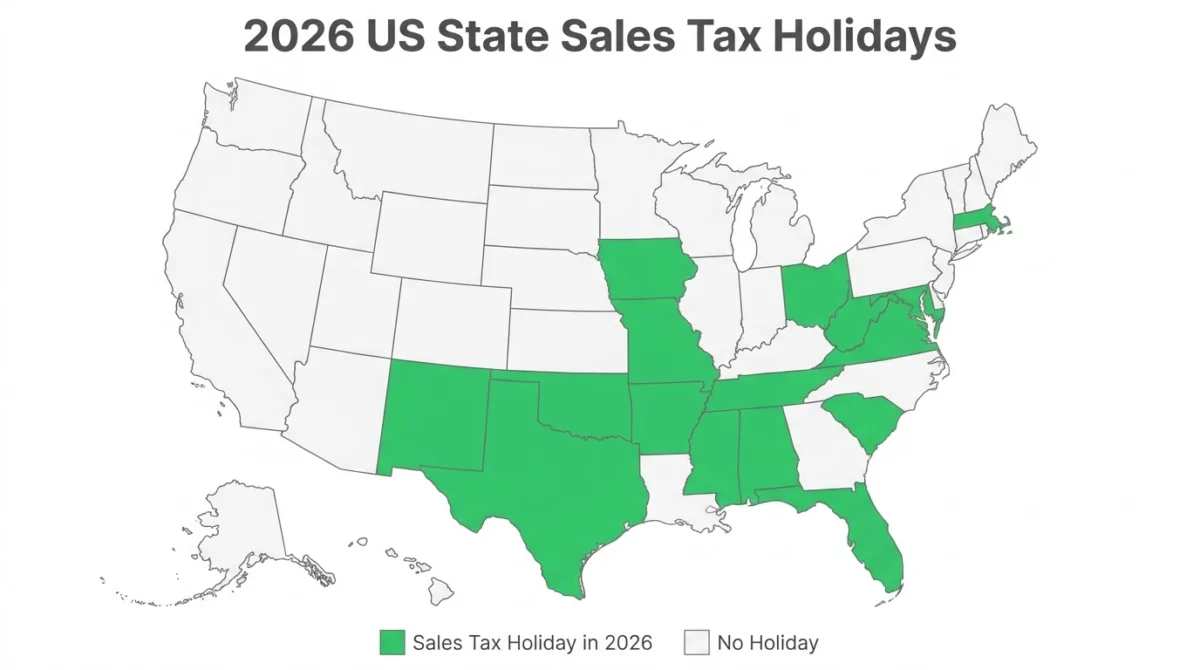
Sales tax holidays represent a recurring fiscal phenomenon in the United States, offering a temporary reprieve from state and local levies on specific categories of goods, ranging from school supplies and clothing to energy-efficient appliances and emergency preparedness gear. While these events are framed as a boon for consumer purchasing power, they present a multifaceted challenge for the retail sector, requiring rigorous compliance strategies and precise technological execution. As the 2026 fiscal year progresses, over a dozen states and territories have codified these tax-free windows, creating a patchwork of dates, thresholds, and eligible items that demand constant vigilance from business owners and tax professionals alike.
The Strategic Purpose and Economic Context of Tax Holidays
Sales tax holidays were first introduced in the late 20th century, with Ohio and Michigan among the early adopters in the 1980s. The primary objective is twofold: to provide financial relief to families during high-expense periods, such as the return to school, and to stimulate localized economic activity by incentivizing consumers to shop within state lines rather than through out-of-state e-commerce or neighboring jurisdictions.
From a macroeconomic perspective, the effectiveness of these holidays is a subject of ongoing debate among fiscal analysts. Some economists argue that tax holidays do not necessarily increase total consumer spending but rather shift the timing of purchases that would have occurred anyway. However, for retailers, the increased foot traffic and digital "cart additions" during these windows are undeniable. For the 2026 season, states are increasingly using these holidays to promote specific policy goals, such as environmental sustainability through Energy Star exemptions or disaster resilience via hurricane preparedness holidays.
Operational Hurdles and Compliance Risks for Businesses
For the modern retailer, particularly those operating in multiple jurisdictions (omnichannel or pure-play e-commerce), sales tax holidays are a significant administrative undertaking. Unlike a simple store-wide discount, a tax holiday requires the merchant to accurately identify which specific Stock Keeping Units (SKUs) qualify under state-specific definitions. For instance, a "backpack" might be exempt in one state but taxable in another if it is categorized as luggage rather than a school supply.
The risk of non-compliance is substantial. Under-collecting sales tax can lead to significant liabilities, penalties, and interest following a state audit. Conversely, over-collecting tax from customers during a designated holiday can result in consumer class-action lawsuits or reputational damage. Furthermore, many states allow local jurisdictions—such as cities or counties—to "opt-out" of the holiday. This creates a scenario where the state-level tax (e.g., 4%) is waived, but the local-level tax (e.g., 2%) must still be collected, requiring granular, destination-based tax calculation logic.
Chronological Overview of the 2026 Sales Tax Holiday Calendar
The 2026 schedule begins in the first quarter and intensifies during the late summer months. Below is a detailed breakdown of the confirmed and projected windows for the year.
First and Second Quarter: Energy and Emergency Preparedness
The early months of 2026 focus heavily on infrastructure and disaster readiness.
- Maryland (February 14–16): The "Shop Maryland Energy" weekend focuses on Energy Star-certified appliances. Consumers can purchase water heaters, furnaces, air conditioners, and refrigerators without the standard state sales tax.
- Alabama (February 21–23): The Severe Weather Preparedness holiday allows for the tax-free purchase of items such as batteries, portable generators (under $1,000), and first-aid kits.
- Missouri (April 19–25): The "Show Me Green" holiday exempts the first $1,500 of the purchase price of various Energy Star appliances.
- Texas (April 25–27 & May 23–25): Texas holds two distinct events in the spring. The first focuses on emergency preparation supplies, while the second covers Energy Star and WaterSense-labeled products, incentivizing water conservation and energy efficiency.
- Puerto Rico (May 22–25): Ahead of the Atlantic hurricane season, the territory waives taxes on essential emergency items.
Third Quarter: The Back-to-School Peak
July and August represent the busiest period for tax holidays, as states prepare for the 2026–2027 academic year.
- Mississippi (July 10–12): One of the earliest back-to-school windows, focusing on clothing and footwear priced under $100.
- Alabama (July 17–19): Covers clothing (up to $100), school supplies (up to $50), and computers (up to $750).
- Florida (July 20–August 20): Florida offers one of the longest windows in the nation. The 2026 holiday includes clothing up to $100, school supplies up to $50, and personal computers up to $1,500.
- Tennessee (July 31–August 2): Traditionally exempts clothing, school supplies, and computers within specific price ceilings.
- New Mexico (July 31–August 2): Provides exemptions for a wide array of electronics and apparel.
- West Virginia (July 31–August 3): Includes clothing up to $125 and laptops up to $500.
- Ohio, Oklahoma, and South Carolina (August 7–9): These states align their schedules for early August, with South Carolina being notable for having no price caps on many of its exempt categories, such as linens and school supplies.
- Illinois (August 7–16): Offers a 10-day window with a reduced tax rate rather than a full exemption, illustrating the diversity of state approaches.
Fourth Quarter: Specialized Interests
- Florida (September 1–December 31): Continuing its aggressive tax-incentive strategy, Florida’s "Freedom Summer" extension often includes hunting, fishing, and camping supplies, running through the end of the calendar year.
- Louisiana and Mississippi (September): Both states traditionally hold "Second Amendment" holidays, exempting firearms, ammunition, and hunting supplies from sales tax for a designated weekend.
Supporting Data and Threshold Analysis
A critical component of tax holiday compliance is the "price threshold." Most states do not offer a blanket exemption but rather a "per-item" limit. For example, in Connecticut’s "Sales Tax Free Week" (August 16–22, 2026), clothing and footwear are exempt only if the individual item is priced under $100. If an item costs $105, the entire amount is typically subject to tax, though rules vary by state on whether only the excess is taxed.
Data from previous years suggests that these thresholds are slowly rising to account for inflation. In 2026, we see more states offering exemptions on computers up to $1,500, a significant increase from the $750 limits common a decade ago. Retailers must ensure their Point of Sale (POS) systems are programmed to handle these "cliff" thresholds where a single dollar difference changes the taxability of the transaction.
Official Responses and Regulatory Perspectives
State Departments of Revenue (DOR) view these holidays as a significant logistical burden but a necessary political and economic tool. In Alabama, state officials have emphasized the importance of local participation. While the state sales tax is waived, cities and counties must pass their own resolutions to waive local taxes. This "local opt-in" model is a primary source of confusion for consumers who may see different final totals at stores just a few miles apart.
Consumer advocacy groups generally support these holidays, citing them as a progressive way to reduce the tax burden on lower-income households. However, tax policy think tanks, such as the Tax Foundation, often criticize them as "political gimmicks" that complicate the tax code without providing long-term economic growth. They argue that a permanent, slight reduction in the overall sales tax rate would be more beneficial than a highly complex, temporary exemption.
Broader Implications for E-commerce and Automation
The proliferation of sales tax holidays in 2026 underscores the necessity of automated tax compliance software. For e-commerce businesses, the challenge is amplified by "destination-based" sourcing rules. If a customer in Florida buys a laptop from a seller in California during Florida’s tax holiday, the seller must recognize the Florida exemption based on the shipping address.
As we move further into 2026, the trend toward "rolling" or "extended" holidays—like those seen in Florida—suggests that the traditional two-day weekend model may be evolving into month-long seasonal incentives. This shift requires retailers to move away from manual tax overrides toward robust, API-driven solutions that update in real-time as state legislatures finalize their dates.
In conclusion, while the 2026 sales tax holidays offer a strategic opportunity for consumers to save and for retailers to drive volume, they are fraught with "compliance traps." Success in this environment requires a combination of early planning, a deep understanding of state-specific thresholds, and the leveraging of technology to ensure that the "win" for the consumer does not become a "loss" for the business during audit season. Stakeholders are encouraged to monitor state DOR bulletins closely, as legislative changes can occur with little notice, altering the 2026 tax landscape overnight.