Pevita Pearce
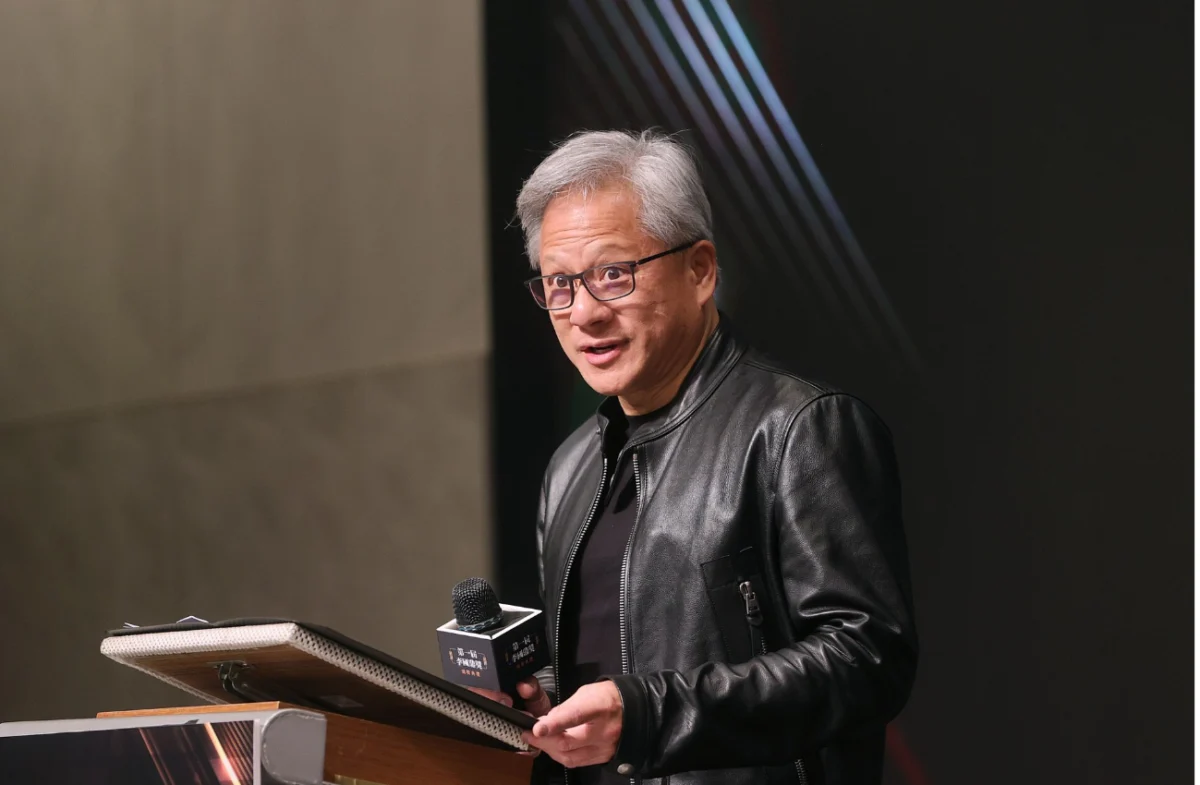
Nvidia Corp. Chief Executive Officer Jensen Huang, a pivotal figure synonymous with the artificial intelligence infrastructure boom, has been ousted from his leadership position following reports of multiple extramarital affairs, including one with an individual suspected of engaging in espionage for China. The abrupt departure marks a seismic shift for the chipmaking giant, sending ripples of uncertainty across the global AI landscape.
A Leadership Void and a Board’s Response
In a swift and decisive move, Nvidia announced on Thursday that Colette Kress, the company’s long-serving Chief Financial Officer, will assume the role of interim CEO. Huang, who has been the sole CEO in Nvidia’s three-decade history, will no longer have any affiliation with the company. The board, which had previously operated without a designated chair, has appointed director Harvey Jones to this newly established leadership position. Jones, a seasoned executive at 73, previously led Synopsys Inc., a company in which Nvidia acquired a substantial $2 billion stake last year, underscoring the board’s strategic financial acumen.
The resignation plunges Nvidia into a crisis that analysts suggest is partly self-inflicted, stemming from a perceived lack of a clear succession plan. Huang, 63, was not only the chief architect of Nvidia’s transformation from a graphics chip manufacturer to the dominant force in AI computing but also a fervent evangelist for the broader AI industry. His meticulous management of every facet of the business, coupled with his charismatic advocacy, had cemented his status as an indispensable leader.
From Graphics Pioneer to AI Kingpin
Huang’s tenure at the helm of Nvidia is a testament to visionary leadership and strategic execution. He masterfully steered the company from its origins as a niche provider of computer graphics components to become the world’s preeminent supplier of AI computing chips. These highly sought-after processors are at the heart of a global spending frenzy, fueling advancements across countless industries. Beyond his core business, Huang actively cultivated the AI ecosystem through strategic investments in emerging AI companies, offering equity stakes, chip credits, and other forms of financial and technical support. His advocacy extended to lobbying the U.S. government for more lenient chip export regulations to China, a stance that has drawn scrutiny in light of recent developments.
Asa Hiken, a senior analyst at Emarketer, characterized Huang’s resignation as a "watershed moment for Nvidia." He emphasized the company’s challenge in maintaining its AI dominance without the leader largely responsible for its ascendance. Hiken further noted that Huang’s departure introduces "uncertainty well beyond the company itself" due to the AI industry’s profound dependence on Nvidia’s silicon.
Market Reaction and Official Statements
Nvidia’s stock experienced significant volatility following the announcement. Shares initially plummeted by as much as 14% before recovering some ground. By the close of trading on Thursday, the stock was down 4.3% to $166.19, resulting in a market valuation erosion exceeding $180 billion.
In a formal statement, the Nvidia board acknowledged Huang’s "profound contributions," stating, "Nvidia is one of the most consequential technology companies in the world. The board and the company thank Jensen for his immeasurable contributions to the company and the industry." This statement, while expressing gratitude, offers little insight into the internal deliberations that led to Huang’s ouster.
The Unfolding Scandal: A Web of Relationships
The immediate catalyst for Huang’s departure appears to be a series of revelations concerning his personal life. The crisis began to unfold on Sunday when Huang admitted to a romantic relationship with Alice Huang, a former executive at Megaspeed International, a Singapore-based data center firm. The situation escalated on Wednesday with a New York Times report detailing another alleged affair, this time with an Nvidia employee. Adding further complexity, Reuters reported on Thursday that Huang was involved in an intimate relationship with a second unnamed employee.
In response to these allegations, the former CEO has reportedly retained the services of the law firm Paul Weiss, with litigators Melinda Haag and Walter Brown spearheading his defense. This move was first reported by The Times.
Government Scrutiny and Broader Economic Implications
Adding a layer of governmental concern, the U.S. Department of Justice is reportedly investigating whether entities connected to Alice Huang were involved in attempts to smuggle products manufactured by Super Micro Computer Inc. to China. This investigation, if substantiated, could have significant geopolitical and economic ramifications, particularly given the U.S. government’s ongoing efforts to restrict China’s access to advanced semiconductor technology.
The turmoil at Nvidia has not been isolated to the company’s stock performance. The ripple effect has been palpable across the entire artificial intelligence sector. Shares of other semiconductor companies, including Micron Technology Inc. and Marvell Technology Inc., experienced declines. Similarly, "neoclouds" such as CoreWeave Inc. and Nebius Group NV, alongside AI-adjacent firms like power equipment manufacturers Vertiv Holdings Co. and Bloom Energy Corp., also saw their stock prices dip. Conversely, competitors such as Advanced Micro Devices Inc. and Broadcom Inc. saw their share prices rise, signaling a potential shift in market dynamics.
Expert Analysis: The "Key Man" Risk and Ecosystem Uncertainty
Mandeep Singh, a Bloomberg Intelligence analyst, described the situation as a "tremendous loss of credibility for Nvidia overall." He cautioned that Huang’s departure could disproportionately impact companies heavily reliant on Nvidia’s AI computing infrastructure, particularly neoclouds and developers of open-source AI models, given Nvidia’s central role in the AI supply chain and its extensive deal-making activities.
The departure of Huang raises critical questions about the future of Nvidia’s extensive network of investments and financial support mechanisms within the AI ecosystem. Analysts like Stacy Rasgon of Bernstein have downgraded Nvidia’s stock rating to "market perform," citing "considerable uncertainty" surrounding future news flow and the ability of any successor to replicate Huang’s deeply ingrained influence. Rasgon suggested that the full extent of the implications may not yet be apparent, advising a cautious "watch from the sidelines" approach.
The Succession Conundrum and Potential Candidates
Nvidia’s board has been actively engaged in identifying potential replacements for Huang, reportedly working with an external executive search firm. Directors convened remotely on Wednesday to deliberate on Huang’s fate. Speculation about potential successors has included prominent figures in the semiconductor industry, such as Lisa Su, CEO of rival Advanced Micro Devices Inc.; Rene Haas, chief executive of Arm Holdings Plc; and Sanjay Mehrotra, leader of Micron. However, the sheer scale of Huang’s influence and his intimate involvement in every aspect of Nvidia’s operations present a formidable challenge for any incoming CEO.
Huang’s Management Style: A Double-Edged Sword
Jensen Huang was renowned for his intensely hands-on management style, often described as micromanagement. It is reported that as many as 60 leaders reported directly to him, and he personally reviewed employee task lists and compensation. This approach, while contributing to Nvidia’s remarkable growth, also meant that the company was heavily dependent on his direct involvement. Employees had reportedly noticed a decrease in Huang’s engagement in the days leading up to his departure, including delayed responses to his routine "top five" task emails. This level of personal involvement in operational details was a hallmark of his leadership.
In a previous interview with Bloomberg News, Huang himself articulated his management philosophy, stating, "My management style is what made it possible for the company to grow. I wanted an organization that was able to adapt to change, both in inventing change for itself and the rest of the industry, as well as reacting to change that’s coming toward us."
Geopolitical Tensions and China’s Role
The allegations involving Alice Huang and her business dealings with Chinese AI startups add a significant geopolitical dimension to the unfolding crisis. Megaspeed, a major Southeast Asian customer of Nvidia, has been under U.S. investigation for alleged smuggling of advanced AI chips into China. Alice Huang’s reported ties to DeepSeek, a prominent Chinese AI startup, and her alleged intent to supply them with advanced Nvidia chips, further fuel concerns about the potential diversion of U.S. technological prowess to a strategic competitor. Nvidia and Megaspeed have both denied any wrongdoing in these matters.
Congressional Inquiry and Independent Investigation
The gravity of the situation has attracted the attention of U.S. lawmakers, who have called for Huang to appear before congressional committees, threatening a subpoena if he failed to comply. In response to these escalating concerns, Nvidia’s board announced on Tuesday that it had retained Joon H. Kim, a former federal prosecutor and partner at Wachtell, Lipton, Rosen & Katz, to "conduct a thorough and independent investigation." This independent probe will likely be crucial in determining the full scope of any potential wrongdoing and rebuilding trust with regulators and the public.
A Legacy Under Scrutiny
Under Jensen Huang’s leadership, Nvidia’s stock has seen an astonishing surge of over 700,000% since its public debut in 1999. At its peak, the company’s market capitalization approached and occasionally surpassed $5 trillion, placing it among the world’s most valuable corporations. This extraordinary growth trajectory has historically dwarfed the achievements of tech titans like Steve Jobs, Bill Gates, and Jeff Bezos.
Huang’s influence extended beyond Nvidia’s balance sheet. He played a crucial role in fostering the growth of numerous AI ventures, including OpenAI and Anthropic PBC, through substantial financial backing. His investments and financing arrangements for cloud computing firms like CoreWeave Inc. were instrumental in building out the AI infrastructure. However, these complex and interconnected financial arrangements have also drawn criticism from some market observers, who warn of artificial inflation in AI demand.
Huang’s public persona, characterized by his signature leather jackets and enthusiastic engagement at industry events, contributed to a phenomenon dubbed "Jensanity." He also cultivated a close relationship with former President Donald Trump, attending White House meetings and state dinners, a level of access rarely granted to corporate leaders. Trump, prior to the full scope of the allegations emerging, had publicly described Huang as "a very honorable man."
The revelations about Huang’s personal conduct, particularly the affair with Alice Huang, an executive at a company under investigation for potential Chinese espionage, have undeniably raised serious questions about his judgment and ethical standards. This, combined with the affair with a senior Nvidia executive, Kimberly Powell, vice president of healthcare, has cast a long shadow over his legacy and the company’s reputation.
The path forward for Nvidia is fraught with challenges. The company must navigate a complex web of regulatory scrutiny, market volatility, and the immense task of finding a leader capable of filling the void left by Jensen Huang’s departure. The coming months will be critical in determining whether Nvidia can maintain its dominant position in the AI revolution without its iconic, albeit now tarnished, helmsman.