Pevita Pearce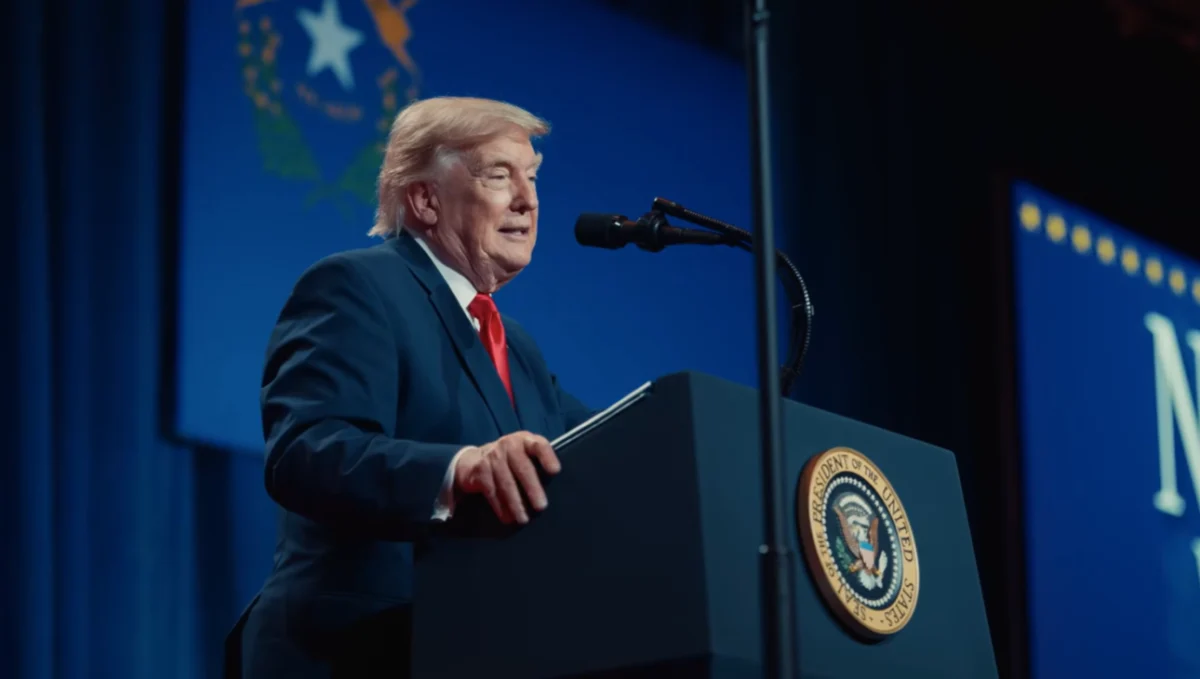
President Donald Trump visited Las Vegas on Wednesday, August 5, 2026, to champion his "no tax on tips" policy, a key tenet of his second-term economic agenda, asserting it has already delivered significant savings to Nevada’s service industry workers. During his address at the Red Rock Resort, Trump declared that the policy, part of the "One Big Beautiful Bill Act" signed into law on July 4, 2025, has saved over 440,000 tipped workers in Nevada an average of $10,000 this filing season. He further highlighted that Nevada ranked fourth nationally for average tax refunds in 2026, attributing this success to his administration’s tax reforms.
The visit, part of a broader swing through the Western United States aimed at bolstering Republican support ahead of the November elections, underscored Trump’s consistent focus on Las Vegas as a symbolic "birthplace" for his tax initiatives. He first proposed the no-tax-on-tips idea at a campaign rally in the city in June 2024. The "One Big Beautiful Bill Act" also includes temporary federal income tax deductions on qualified overtime pay, which the White House estimates have benefited approximately 20% of Nevadans who regularly work overtime.
However, the President’s optimistic portrayal is met with a contrasting analysis from the Institute on Taxation and Economic Policy (ITEP), a left-leaning nonpartisan research group. ITEP’s findings suggest that the cumulative effect of Trump’s tax and tariff policies during his second term has led to an overall tax increase for the average American across most income brackets, with the exception of the wealthiest 5%. This broader perspective challenges the narrative of widespread tax relief, particularly as the temporary deductions for tips and overtime are slated to expire at the end of 2028, coincident with the conclusion of Trump’s second term.
Trump’s Economic Message in Las Vegas
Addressing a crowd at the Red Rock Resort, Trump emphasized the direct financial benefits he claims his policies have provided to the local workforce. "You got to love me because you’re making all this overtime working on Saturdays and Sundays and late, and there’s no tax on overtime," he stated, directly appealing to the audience’s economic interests. He reiterated his administration’s claim that the tax cuts have benefited thousands of Nevadans, citing the specific figures for tipped workers and the state’s strong national ranking in tax refunds.
Beyond the "no tax on tips" provision, Trump also promoted his "Trump Accounts," tax-advantaged investment accounts designed for children under 18. The program includes an initial $1,000 deposit from the U.S. Treasury for children born between January 1, 2025, and December 31, 2028. This initiative, presented as a long-term investment in the younger generation, further illustrates the administration’s focus on fiscal incentives.
The choice of Las Vegas for this rally was strategic. The city, heavily reliant on the hospitality and service industries, provides a potent backdrop for Trump’s message on tipped income. His previous engagement with this demographic in the city during the 2024 campaign suggests a continued effort to solidify his support among a crucial segment of the workforce. The visit also served as a platform to rally support for Republican candidates on the November ballot, with several local Republican figures in attendance.
Democratic Counterarguments and Economic Concerns
The President’s visit and his economic pronouncements were met with sharp criticism from Nevada’s Democratic delegation and local officials. U.S. Representative Steven Horsford, representing Nevada’s 4th Congressional District, issued a statement emphasizing that "working people and families in Nevada don’t need another campaign stop, they need relief." He articulated the widespread economic anxieties prevalent in his district, citing concerns over the rising costs of housing, groceries, utility bills, and healthcare, as well as the precarious financial situations faced by small businesses and hospitality workers.
Horsford, along with fellow Representatives Susie Lee and Dina Titus, joined members of the Culinary Workers Union Local 226 for a counter-event aimed at highlighting what they termed the "Trump Slump" and its negative impact on Nevada’s economy. Their office’s statement questioned why Republican politicians were not challenging Trump’s policies, suggesting a broader economic downturn under his administration.
Democrats also pointed to the broader implications of the "One Big Beautiful Bill Act," citing a Congressional Budget Office (CBO) estimate that the legislation could lead to approximately 10 million Americans losing health coverage over the next decade. They specifically warned that roughly 30,000 residents in Southern Nevada could be affected, underscoring the law’s significant cuts to Medicaid funding – a program utilized by approximately 800,000 Nevadans, or about one in five residents.
Representative Susie Lee articulated this concern directly, stating, "Nevada Democrats have been fighting for tipped workers long before Trump came onto the scene. Southern Nevadans aren’t going to buy what he’s trying to sell, because we feel what he’s been doing to our pocketbooks." She accused Trump of enriching himself while citizens face increasing costs for essential goods and services, a sentiment echoed by concerns regarding a 7.5% decline in tourism in Nevada during 2025.
Broader Economic Context and Policy Implications
The "One Big Beautiful Bill Act," signed into law on July 4, 2025, represents a significant piece of legislation with far-reaching economic consequences. The temporary tax deductions on qualified tips and overtime pay were presented as a direct stimulus to workers in industries like hospitality, a cornerstone of Nevada’s economy. The White House’s assertion that these measures have already provided substantial financial relief to Nevadans, particularly tipped workers, is a central theme of Trump’s campaign rhetoric.
However, the analysis from the Institute on Taxation and Economic Policy provides a critical counterpoint. Their research suggests that while specific segments of the population may experience targeted benefits, the overall tax burden for most Americans could increase under Trump’s second-term agenda. This divergence in findings highlights the complex nature of tax policy and its differential impacts across various income levels and demographic groups. The temporary nature of the tip and overtime deductions also raises questions about the long-term sustainability of these perceived benefits, as they are set to expire before the end of Trump’s potential second term.
The debate over the "One Big Beautiful Bill Act" extends beyond tax implications to broader economic stability and healthcare access. The CBO’s projection of potential health coverage losses, particularly through Medicaid reductions, raises concerns about the accessibility and affordability of healthcare for vulnerable populations. For a state like Nevada, where a significant portion of the population relies on Medicaid, such cuts could have profound consequences.
The political landscape surrounding these economic policies is deeply polarized. Democrats, including prominent Nevada representatives, are actively campaigning against Trump’s economic platform, framing it as detrimental to working families and exacerbating existing economic inequalities. Their focus on issues like housing, healthcare, and everyday living costs contrasts sharply with Trump’s emphasis on tax reductions and business incentives. The upcoming November elections will serve as a critical juncture for voters to weigh these competing economic visions and their potential impact on the nation’s fiscal future.
The Role of Nevada in the Political Landscape
Nevada has emerged as a key battleground state in national politics, with its diverse economy and shifting demographics making it a focal point for both major parties. Las Vegas, in particular, with its large service sector workforce and significant tourism industry, is highly sensitive to economic policies affecting wages, tips, and consumer spending. Trump’s repeated visits and focus on tax policies tailored to these industries underscore the strategic importance of the state in his electoral calculations.
The presence of Republican Governor Joe Lombardo at the rally, who quipped about staying on script to avoid Democratic "clipping" of his comments, signals the alignment of state-level Republican leadership with the national party’s economic agenda. Similarly, the endorsement from figures like Marty O’Donnell, a challenger for a Congressional seat, reinforces the party’s commitment to Trump’s tax policies.
However, the unified opposition from Nevada’s Democratic congressional delegation, alongside labor unions like the Culinary Workers Union Local 226, demonstrates a strong counter-narrative. Their efforts to highlight perceived economic hardships and advocate for alternative relief measures reflect a commitment to addressing the concerns of their constituents, particularly those in lower and middle-income brackets. The union’s active role in this political discourse is particularly significant, given its substantial membership within the hospitality industry.
The contrasting narratives presented by both sides highlight a fundamental disagreement on the most effective path to economic prosperity. While Trump and his allies champion tax cuts and deregulation as drivers of growth, Democrats emphasize social safety nets, investments in public services, and a more progressive tax structure to ensure broader economic equity. The ongoing debate over the "One Big Beautiful Bill Act" and its associated policies will likely continue to shape the political discourse in Nevada and across the nation as the election cycle progresses. The long-term implications of these policies on national debt, economic inequality, and the well-being of average citizens remain a subject of intense scrutiny and debate.