Nila Kartika Wati
The rapid integration of artificial intelligence into the global economy has shifted from a speculative future to an immediate industrial transformation, forcing a confrontation between technological innovation and worker protections. As "physical AI"—the marriage of advanced generative models with robotics—begins to penetrate sectors once thought immune to automation, the United States finds itself at a critical juncture. The convergence of corporate warnings regarding job displacement, increasingly militant union demands, and a fragmented political landscape suggests that the nation is struggling to establish a cohesive national framework for AI regulation. While states like California and New York are moving aggressively to fill the legislative void, the lack of federal consensus creates a precarious environment for millions of workers across the service, transportation, and creative industries.
The Evolution of Automation: From Mechanical Repetition to Physical AI
To understand the current anxiety surrounding artificial intelligence, one must view it as the latest and most sophisticated chapter in a long history of industrial automation. Since the 1960s, automation has steadily eroded routine manual labor. The introduction of hydraulic arms on assembly lines and software-driven logistics transformed manufacturing and clerical work, primarily targeting repetitive tasks. However, the emergence of "physical AI" represents a paradigm shift. Unlike traditional robotics, which follow rigid, pre-programmed scripts, physical AI utilizes large language models (LLMs) and neural networks to allow machines to adapt, learn, and perform complex, non-linear tasks.
This technological leap means that machines are no longer confined to cages on factory floors. They are being designed to navigate unpredictable environments, such as hospital hallways, construction sites, and busy city streets. This evolution has expanded the scope of potential displacement from "blue-collar" manual labor to "white-collar" cognitive roles and "pink-collar" service positions. The integration of AI into physical forms allows for a level of autonomy that challenges the necessity of human oversight in sectors ranging from long-haul trucking to classroom instruction.
Labor’s Growing Resistance: A New Era of Collective Bargaining
The first significant wave of resistance to this new frontier of automation emerged in 2023, when Hollywood screenwriters and actors launched a historic strike. Their primary concern was the use of generative AI to produce scripts and replicate digital likenesses, a move that signaled to the broader workforce that creative and intellectual professions were no longer safe. Since then, the movement has expanded into a multi-industry coalition demanding transparency and human-centric guardrails.
According to a comprehensive poll conducted by the AFL-CIO, which surveyed over 1,500 workers across the United States, there is a near-unanimous consensus on the need for oversight. The data reveals that 95 percent of workers believe a human should be the final decision-maker in employment matters, while 92 percent support strict accountability for employers deploying AI. Despite this, the poll highlighted a staggering transparency gap: only seven percent of workers reported that their employers had disclosed how AI is used to monitor their productivity or work quality.
"What we don’t want is for AI to replace the hardworking people who make our workplaces run," stated Robert Gonzalez, communications coordinator of Teamsters Local 1932. The Teamsters have become a focal point of this struggle, particularly regarding the implementation of automated vehicles. In California, the union has initiated legal action against the Department of Motor Vehicles (DMV), arguing that the rushed implementation of driverless trucks poses a direct threat to public safety. Gonzalez emphasizes that a human driver provides a level of situational judgment and emergency response that current AI systems cannot replicate.
The Human Element in Education and Healthcare
The concern over AI is not limited to physical safety; it extends to the preservation of human connection in essential services. Vicki Kurzydlo, a veteran educator and recording secretary for the Chicago Teachers Union (CTU), argues that the conversation must shift from job replacement to the "loss of the human element." Kurzydlo, who has spent over three decades in Chicago Public Schools, notes that the CTU has formed an active AI working group to develop policies that protect the pedagogical relationship.
"AI can never teach a child the way a human being can," Kurzydlo remarked, noting that education is rooted in empathy, social-emotional learning, and connection—attributes that algorithms lack. The CTU is currently pushing for contract provisions that ensure AI is used as a tool to support teachers rather than a substitute for them. This mirrors efforts in the healthcare sector, where nurses and clinicians are warning against "de-skilling"—a phenomenon where reliance on AI leads to the erosion of independent clinical reasoning and professional judgment. A 2026 report in Frontiers in Medicine cautioned that over-dependence on technology could result in a pattern where human professionals lose the ability to perform crucial tasks without digital assistance.
The Federal Policy Seesaw: From Biden to Trump
The regulatory landscape for AI in the United States has been characterized by sharp ideological shifts at the federal level. In October 2024, the Biden administration, through the Department of Labor, issued a set of landmark recommendations. These guidelines urged companies to involve employees in the design and implementation of AI systems and provided a framework for protecting labor rights. The goal was to ensure that the "AI revolution" did not leave the working class behind.

However, this framework was short-lived. In January 2025, upon returning to the White House, President Donald Trump revoked the executive order that underpinned the Biden-era recommendations. In its place, the Trump administration issued a new policy focused on "Removing Barriers to American Leadership in Artificial Intelligence." This order emphasizes the removal of "regulatory barriers" and "ideological bias" to ensure that the U.S. remains the global leader in AI development, particularly in competition with China.
This pivot has left labor advocates concerned that federal protections are being sacrificed in favor of rapid corporate expansion. While the current administration argues that deregulation will foster innovation and economic growth, unions argue that without federal guardrails, the benefits of AI will be concentrated among tech giants while the risks are born by the workforce.
State-Level Laboratories: California, New York, and New Jersey
In the absence of a unified federal law, individual states have become the primary battlegrounds for AI regulation. Lauren McFerran, executive director of the AFL-CIO Tech Institute, notes that hundreds of bills have been introduced at the state level to address specific sectoral risks.
California has emerged as the leader in this space. Governor Gavin Newsom recently signed several significant pieces of legislation, including the "No Robot Bosses Act," which targets algorithmic management—the practice of using AI to hire, fire, and monitor employees without human intervention. Another bill, AB-1331, addresses workplace surveillance, ensuring that employees have rights regarding the data collected on them by AI systems.
Other states are following suit with targeted legislation:
- New Jersey: Lawmakers passed a temporary ban on electronic shelf labels in retail stores. This technology allows for "dynamic pricing" (similar to Uber’s surge pricing) but also threatens the jobs of tens of thousands of retail workers responsible for inventory management and pricing.
- New York: The FAIR News Act was introduced to protect the integrity of journalism. It requires the clear labeling of AI-generated content and establishes protections for journalists whose work might be used to train LLMs without compensation.
Corporate Accountability and Catastrophic Risks
The call for regulation is increasingly coming from within the tech industry itself. Dario Amodei, CEO of Anthropic, has issued stark warnings about the economic fallout of unchecked AI. Amodei has suggested that generative AI could lead to the disappearance of up to 50 percent of entry-level, white-collar jobs, potentially driving national unemployment rates up by 10 to 20 percent if safety nets are not established.
Beyond economic displacement, the "dual-use" risks of AI have become a matter of national security. Anthropic recently disclosed that it had to block attempts to use its AI models for the development of biological weapons. This revelation underscored the dangers of "moving too fast without responsibility," a sentiment echoed by Jacob Coxon, an Anthropic scientist who resigned in protest over the industry’s perceived lack of caution.
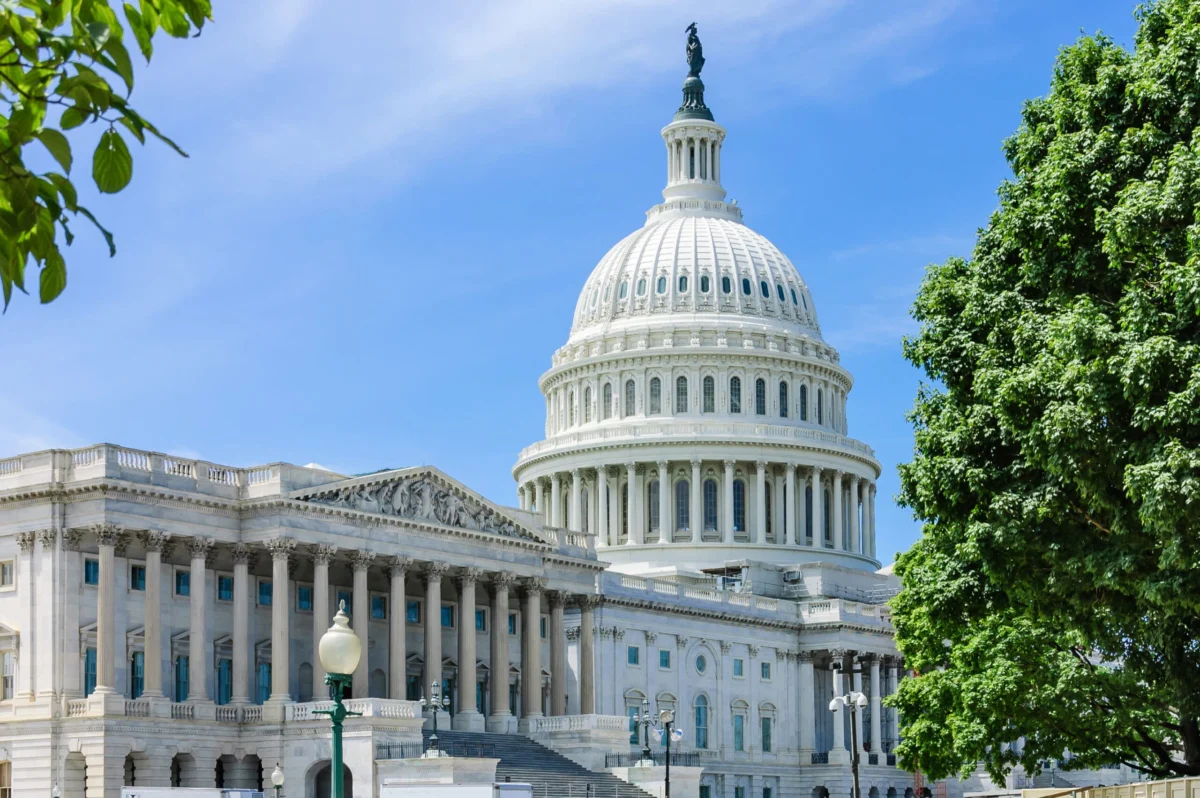
In the legislative sphere, Senator Amy Klobuchar, alongside Republicans Ted Cruz and John Thune, has pushed for a bill requiring independent audits of AI systems before they are deployed to the public. While the bill has faced delays due to partisan disagreements over the scope of regulation, the concept of independent auditing is gaining traction. California has already mandated such audits for high-risk AI products, setting a precedent that may eventually force a federal standard.
Implications for the Future of Work
The tension between AI development and labor rights is unlikely to dissipate. As companies continue to invest billions into physical AI and LLMs, the social and economic consequences will depend on whether the "human-in-the-loop" philosophy can be codified into law. The current trend suggests a fragmented future: workers in "blue" states may enjoy robust protections against algorithmic management and displacement, while those in states favoring deregulation may face the full force of automated competition.
Ultimately, the labor movement’s strategy is one of proactive organization. As Vicki Kurzydlo of the CTU noted, unions must "organize before decisions are made for them." Whether through collective bargaining agreements, state-level lobbying, or lawsuits against regulatory bodies, the goal remains the same: ensuring that the intelligence of the machine does not come at the expense of the dignity and security of the human worker. The path forward will require a delicate balance between maintaining American technological leadership and upholding the social contract that has defined the American workplace for decades.