Candice Horbacz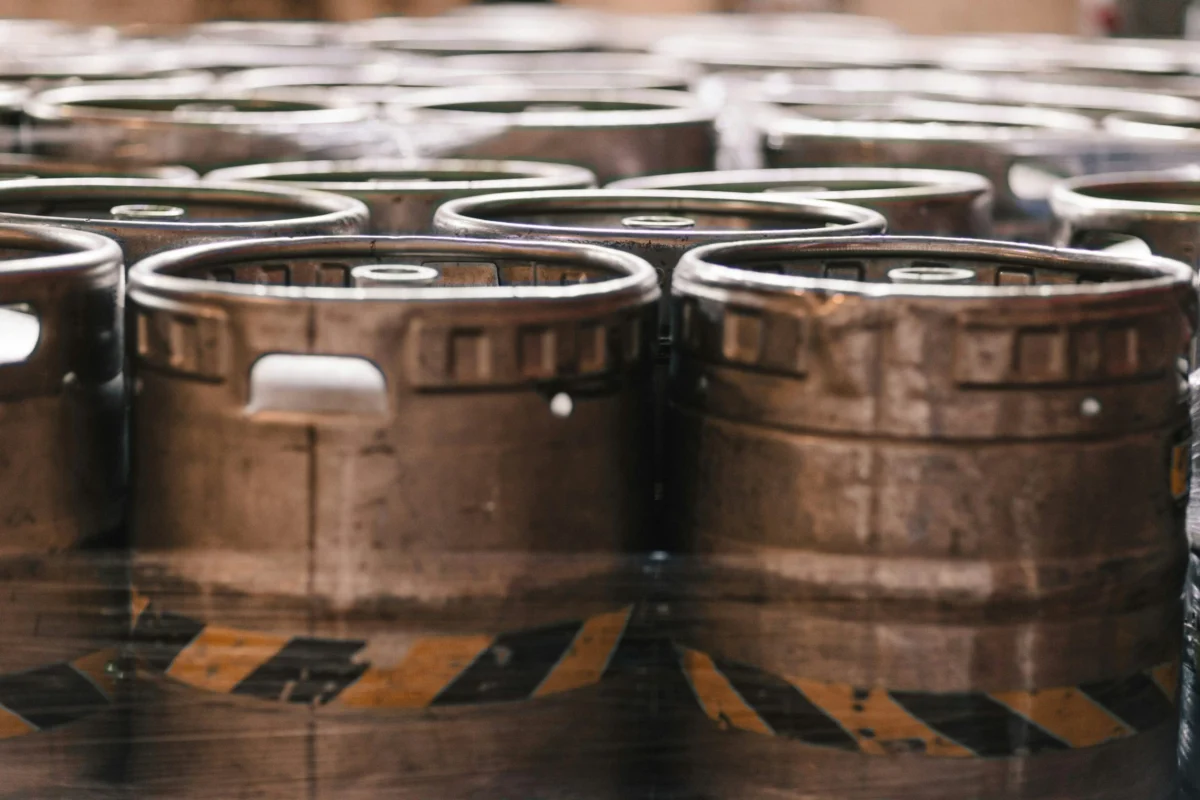
The seemingly straightforward question of how many gallons constitute a barrel reveals a surprising complexity within the United States, where the answer can fluctuate based on the liquid contained and the specific jurisdiction. This divergence from standardized measurements creates a labyrinth of compliance challenges for businesses operating across state lines, imposes unnecessary economic burdens, and potentially encroaches upon federally delegated powers. Far from being a mere academic curiosity, this unharmonious landscape of units introduces significant friction into interstate commerce and taxation.
A Legacy of Standardization: The Historical Imperative for Uniformity
The concept of standardizing units of measure is deeply rooted in the history of trade and governance. Prior to the establishment of universally accepted standards, commerce was often plagued by disputes, inefficiencies, and outright fraud. For bulk commodities like oil and beer, consistent measurement was paramount to fair pricing, transparent taxation, and efficient transportation. The federal government’s authority to "fix the Standard of Weights and Measures" is explicitly enshrined in Article I, Section 8, Clause 5 of the U.S. Constitution, underscoring its foundational importance to a unified national economy.
In the nascent days of the American oil industry, particularly in the prolific oil regions of Pennsylvania during the mid-19th century, the lack of uniform container sizes presented considerable obstacles. Producers, refiners, and transporters grappled with inconsistent volumes, making accurate accounting and equitable transactions nearly impossible. To address this chaos, a pivotal agreement was reached in 1866 among Pennsylvania’s petroleum producers. They collectively adopted the 42-gallon barrel as the standard for crude oil. This specific volume was chosen for practical reasons: it was manageable enough for a single worker to handle, yet sufficiently large to facilitate efficient bulk transport. This informal agreement gained official recognition in 1872 when the Petroleum Producers’ Association formally adopted the 42-gallon standard. This benchmark eventually found its way into federal regulation, with the Code of Federal Regulations explicitly defining a barrel of oil as 42 gallons, a standard upheld to this day.
Similarly, the taxation and trade of alcoholic beverages necessitated standardization. While duties on alcohol in the U.S. predate the Civil War, the issuance of the first federal tax stamps for beer in 1866 initially accommodated various barrel sizes. This early period, characterized by diverse local practices, gradually gave way to a push for uniformity as the industry grew and interstate commerce expanded. Standardization was crucial not only for simplifying trade but also for ensuring consistent and reliable tax collection. Over time, consensus emerged, leading to the federal definition of a standard beer barrel in the U.S. as 31 gallons, also codified within the Code of Federal Regulations.
These federal standards for both oil and beer barrels were intended to lay a clear foundation for smooth transactions and consistent taxation across the nation. They represent a fundamental agreement designed to remove ambiguity and facilitate a predictable commercial environment. However, a closer examination reveals that not all states adhere to these established norms, thereby undermining the very purpose of standardization.
The Patchwork Problem: State Nonconformity in Practice
Despite the clear federal definitions and the historical impetus for uniformity, a handful of states have opted to define "barrels" differently within their own statutes. This divergence affects both the oil and beer industries, creating a complex and often contradictory regulatory landscape that significantly impacts interstate businesses. Currently, six states – Indiana, Kansas, Missouri, Arkansas, Connecticut, and Virginia – deviate from the standard measurements for either oil or beer barrels, or both.
For crude oil, Indiana, Kansas, and Missouri each define a barrel as 50 gallons in certain contexts, rather than the federally recognized 42 gallons. This 19% increase in volume for a "barrel" within these states immediately creates a disconnect for businesses accustomed to the federal standard. For instance, Indiana, while adhering to the 42-gallon standard for its petroleum severance tax, bewilderingly defines a barrel as 50 gallons for the purpose of its petroleum products inspection fee. This means a single state applies two different definitions for the same unit, depending on the specific tax or fee being levied. Kansas and Missouri similarly levy their gasoline inspection fees on a per-barrel basis, defining that barrel as 50 gallons. This discrepancy means that a "barrel" of gasoline inspected in Kansas or Missouri is not the same volume as a "barrel" of crude oil traded on international markets or even taxed for severance within Indiana.
The situation is equally convoluted for beer barrels. Arkansas, Connecticut, and Virginia have enacted statutes that diverge from the 31-gallon federal standard. Arkansas, for example, levies taxes per barrel of 32 gallons of beer, a slight but nonetheless significant deviation. Compounding this, other sections of Arkansas’s state statutes correctly define a beer barrel as 31 gallons, creating internal inconsistencies. This contradictory legal framework can lead to confusion and potential compliance errors for breweries and distributors. For instance, specific taxes for beer festivals in Arkansas are levied at a precise $7.507808 per barrel for each 31-gallon barrel, highlighting the exactitude required in taxation while simultaneously maintaining a non-standard general definition.
Connecticut presents another variation, defining a beer barrel as having a volume of "at least 28 but not more than 31 gallons." While this range allows for the use of standard 31-gallon barrels without requiring special accommodation, it implicitly permits smaller containers to be taxed as full barrels. This could, in certain scenarios, result in manufacturers using smaller-than-standard containers bearing a slightly higher tax burden per gallon, effectively penalizing efficiency or specific packaging choices.
Virginia’s approach is perhaps the most ambiguous. Its code defines any container exceeding 43 ounces (approximately 0.336 gallons) as a "barrel," while anything smaller is a "bottle." This exceptionally broad definition renders the term "barrel" almost meaningless as a unit of measurement for taxation. The state’s alcoholic beverage taxes are therefore levied "per gallon per barrel," or "per bottle" based on specific ounce ranges. While this effectively translates to a per-gallon tax, making the "barrel" definition less relevant for tax calculation, it complicates other regulatory aspects. For example, brewery license fees in Virginia are directly tied to the number of "barrels" a brewery produces annually, where "barrel" here refers to the state’s ill-defined measure, introducing potential disparities and complexities in licensing costs.
Economic and Operational Impact: The Cost of Complexity
These seemingly minor variations in barrel definitions carry substantial economic and operational implications for businesses engaged in interstate commerce. For companies like national breweries, fuel distributors, or petroleum transporters, navigating this patchwork of definitions requires significant additional resources and creates measurable compliance costs.
Firstly, businesses must invest in specialized accounting and enterprise resource planning (ERP) systems capable of tracking and reporting volumes according to multiple, non-standard state definitions. This necessitates custom software configurations, manual adjustments, or specialized training for personnel, all of which add to operational overhead. A company shipping a standardized 42-gallon oil barrel from Texas to Missouri, for example, must account for it as a 42-gallon unit for federal purposes but then re-calculate its volume as 0.84 of a 50-gallon "Missouri barrel" for state inspection fee purposes. This seemingly simple conversion introduces opportunities for error and requires dedicated administrative effort.
Secondly, the non-uniformity complicates tax remittance and audits. Businesses must maintain meticulous records, demonstrating adherence to each state’s unique definition, even when the underlying physical product is identical. This increases the risk of inadvertent non-compliance, which can lead to penalties, fines, and costly legal disputes. The necessity of engaging legal and tax counsel to interpret and navigate these state-specific nuances further inflates compliance expenditures.
Moreover, these discrepancies hinder the ability to accurately compare tax burdens across states. When one state taxes a "barrel" of 50 gallons and another taxes a "barrel" of 42 gallons, direct comparison of per-barrel tax rates becomes misleading. To achieve an apples-to-apples comparison, analysts and businesses must undertake additional calculations to normalize the data to a common per-gallon basis. This extra step consumes resources and obscures transparency, making it difficult for businesses to assess the true cost of operating in different jurisdictions and for policymakers to evaluate the fairness and efficiency of their tax regimes.
Challenges to Data Integrity and Federal Authority
The ripple effects of state nonconformity extend beyond individual businesses, impacting federal data collection and potentially challenging constitutional principles. Federal agencies like the Energy Information Administration (EIA), tasked with collecting, analyzing, and disseminating critical energy-related data, have directly encountered these state-level inconsistencies.
In a notable instance, the EIA was compelled to revise previously published fuel tax figures due to its initial oversight of Kansas’s non-standard 50-gallon "Kansas barrel" for petroleum inspection fees. Such revisions underscore the difficulty even for sophisticated federal entities to track and account for these deviations, highlighting the systemic challenges posed by a fragmented measurement system. If a federal agency dedicated to energy data struggles, the burden on interstate businesses, which often lack comparable resources, is exponentially greater. This demonstrates how state-level nonconformity directly impedes the accurate assessment of national economic trends and policy impacts.
Beyond the practical challenges, the practice of states unilaterally defining measurement units raises significant constitutional questions. The U.S. Constitution, in Article I, Section 8, Clause 5, explicitly grants Congress the power "to fix the Standard of Weights and Measures." This provision was designed to ensure national uniformity, foster fair trade, and prevent the very kind of commercial friction that arises from disparate state standards. By defining barrels of oil or beer differently from federally established norms, states appear to be legislating in an area explicitly delegated to the federal government.
While states retain broad powers, the "Weights and Measures" clause suggests a clear intent by the framers to centralize this authority to facilitate a common market. There is no discernible need, nor likely any constitutional authority, for states to deviate from federal standards for basic units of commerce. This situation echoes historical legislative missteps, such as Indiana’s infamous 1897 attempt to legally redefine the mathematical constant pi to 3.2 – a misguided endeavor that would have enshrined a scientific inaccuracy into law. While defining a barrel differently is less fundamentally absurd than redefining pi, both represent instances of state legislatures overstepping into areas of established, uniform standards, to the detriment of broader consistency and economic rationality.
The Path Forward: Embracing Uniformity
The current landscape of non-standard barrel definitions in several U.S. states is a relic of fragmented regulation that serves no beneficial purpose in modern interstate commerce. Instead, it generates unnecessary complexity, inflates compliance costs for businesses, distorts data analysis, and raises constitutional questions regarding federal authority over weights and measures.
For the sake of economic efficiency, regulatory clarity, and adherence to constitutional principles, states should align their statutes with federally recognized definitions for barrels of oil and beer. Harmonizing these standards would:
- Reduce Compliance Costs: Businesses would no longer need to maintain complex, state-specific accounting systems, freeing up resources for productive investment.
- Enhance Transparency: Tax burdens and licensing fees would be more easily understood and compared across jurisdictions, promoting a fairer and more predictable business environment.
- Improve Data Accuracy: Federal agencies and industry analysts would have access to more consistent data, leading to better-informed policy decisions and market analyses.
- Strengthen Interstate Commerce: A unified system of measurement would remove artificial barriers to trade, making it smoother and more efficient for goods to flow across state lines.
Ultimately, the answer to "how many gallons are in a barrel?" should not depend on the geographical coordinates of the inquiry. Embracing federal standards would represent a tangible step towards a more rational, efficient, and cohesive national economic system, benefiting businesses, consumers, and governments alike.