Dwi Wanna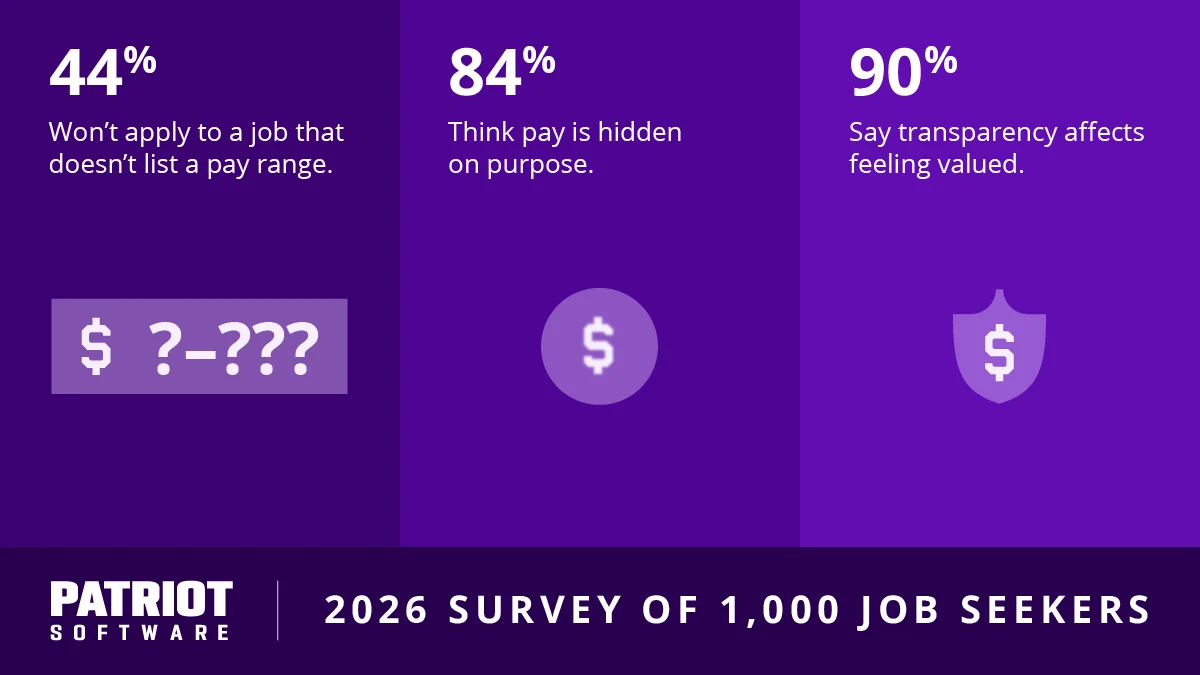
The American labor market is currently undergoing a fundamental transformation in how compensation is communicated, as a significant portion of the workforce now views salary transparency as a prerequisite for engagement. According to a comprehensive new study released by Patriot Software, a leading provider of accounting and payroll solutions based in Canton, Ohio, approximately 44% of U.S. adults who applied for a job in the past year indicated they are unlikely to apply for any position that fails to disclose a salary range. This finding suggests that nearly half of the active talent pool is effectively invisible to employers who maintain traditional "pay secrecy" policies, marking a definitive shift in the power dynamics of the modern recruitment landscape.
The survey, which analyzed responses from 1,000 Americans across diverse industries, age demographics, and income levels, highlights a growing friction between legacy corporate hiring practices and the expectations of a digitally native, data-driven workforce. As economic uncertainty and inflation continue to influence household decision-making, job seekers are increasingly unwilling to invest the time required for the application and interview process without a guarantee that the eventual offer will meet their financial requirements. The research underscores that what was once considered a courtesy—listing a pay range—has evolved into a critical filter that determines whether a company can even begin to compete for top-tier talent.
The Shift Toward Radical Transparency
For decades, the standard operating procedure for many American businesses was to keep compensation figures guarded until the final stages of the hiring process. This practice was often rooted in a desire to maintain a competitive advantage during negotiations or to prevent internal friction among existing staff. However, the Patriot Software study indicates that this lack of disclosure is now viewed with significant skepticism. When companies omit salary ranges, job seekers do not simply assume the pay is competitive; instead, many infer that the company is attempting to hide low wages or lacks a structured compensation strategy.
The research found that the demand for transparency is not limited to a specific niche but is a broad-based expectation. Younger workers, particularly those in the Millennial and Gen Z cohorts, have shown an even higher propensity to bypass non-transparent listings. These generations, having entered the workforce during periods of high economic volatility, prioritize clarity and equity, often viewing pay secrecy as a "red flag" for a potentially toxic or outdated corporate culture.
A Chronological Evolution of Pay Transparency Laws
The current sentiment among job seekers is not occurring in a vacuum; it is being bolstered by a rapidly changing legislative environment across the United States. To understand the findings of the Patriot Software study, one must look at the timeline of legal shifts that have normalized salary disclosure:
- 2021: The Colorado Pioneer. Colorado became the first state to implement a rigorous pay transparency law, the Equal Pay for Equal Work Act. It required employers to include compensation ranges in every job posting, a move that initially faced pushback from some national corporations but eventually set the blueprint for the rest of the country.
- 2022: New York City Joins the Movement. Following Colorado’s lead, New York City implemented its own transparency ordinance. Given the city’s status as a global financial and commercial hub, this move forced thousands of major employers to rethink their national hiring strategies.
- 2023: The West Coast and Beyond. California and Washington state implemented their versions of transparency laws in early 2023. These laws were particularly impactful because they covered the tech and entertainment sectors, industries where pay disparity and "negotiation bias" had long been points of contention.
- 2024-2025: Expanding the Map. States like Illinois, Hawaii, and Massachusetts have recently passed or are in the process of implementing similar requirements. As of mid-2024, nearly a quarter of the U.S. workforce lives in a jurisdiction where some form of pay transparency is mandated by law.
This legislative momentum has created a "spillover effect." Even in states without such mandates, job seekers are seeing salary ranges on national job boards like LinkedIn and Indeed, leading them to expect the same level of honesty from local employers. The Patriot Software study confirms that this expectation has now reached a tipping point, where the absence of data is interpreted as a deliberate omission.
Analyzing the Data: Why Job Seekers Walk Away
The Patriot Software research provides a deeper look into the psychology of the modern applicant. Beyond the headline figure of 44%, the data suggests that transparency serves as a proxy for trust. Respondents across various income brackets indicated that they perceive transparent companies as being more "honest" and "fair."
From a practical standpoint, the refusal to apply to non-transparent roles is a matter of efficiency. The modern job application process has become increasingly arduous, often involving multi-stage interviews, skills assessments, and personality tests. For an applicant to commit 10 to 20 hours to a single company’s process, only to discover in the final stage that the salary is 20% below their current earnings, represents a significant loss of personal resources. By filtering out non-transparent ads, job seekers are performing a form of "pre-interview due diligence."
Furthermore, the study touched upon the issue of pay equity. Transparency is widely recognized as one of the most effective tools for closing gender and racial wage gaps. When salary ranges are public, it reduces the reliance on aggressive negotiation—a process that research has shown often disadvantages women and minority candidates. By demanding transparency, job seekers are not just looking for a number; they are advocating for a more equitable hiring ecosystem.
Professional Reactions and Industry Impact
While the study highlights the candidate’s perspective, the implications for Human Resources (HR) departments and small business owners are profound. Industry analysts suggest that companies failing to adapt to this "transparency era" may find themselves struggling with a "talent desert."
"The message from the market is clear: if you want the best people, you have to be upfront about what you’re willing to pay," says content manager Rachel Blakely-Gray of Patriot Software. "This isn’t just about compliance with state laws anymore; it’s about brand reputation and recruitment efficiency. Companies that hide their pay ranges are essentially telling 44% of their potential workforce to look elsewhere."
Recruiters have also noted that providing salary ranges improves the quality of the applicant pool. When the pay is listed, the candidates who apply are, by definition, those who are comfortable with that compensation level. This leads to fewer "declined offers" at the end of the recruitment cycle, saving companies thousands of dollars in wasted administrative time.
Challenges for Employers: The Internal Friction
Despite the clear demand for transparency, the transition is not without challenges for employers. The Patriot Software study highlights a lingering hesitation among some businesses, particularly those with up to 500 employees. The primary concern is often "pay compression" or "internal equity."
If a company lists a salary range for a new role that is higher than what current employees in the same position are making, it can lead to significant internal morale issues. To move toward transparency, companies must first conduct internal audits to ensure their current staff is being paid fairly. This requires a level of financial maturity and administrative overhead that some smaller businesses find daunting. However, as the study suggests, the cost of remaining opaque—losing out on nearly half of the candidate market—is becoming higher than the cost of fixing internal pay structures.
The Broader Economic Implications
The shift toward pay transparency is more than a HR trend; it is a macroeconomic adjustment. By making salary data more accessible, the labor market becomes more efficient. Workers can move more easily to roles where their skills are valued at market rates, which in turn can drive productivity.
From a regulatory standpoint, there is growing discussion about a federal Salary Transparency Act. While currently a patchwork of state laws, a federal standard would simplify operations for multi-state employers who currently have to navigate a complex web of different requirements. The findings from Patriot Software provide strong evidence that such a federal standard would be welcomed by a significant portion of the American public.
Conclusion: The Path Forward for American Business
The research conducted by Patriot Software serves as a wake-up call for employers nationwide. In a competitive and uncertain job market, the "black box" approach to compensation is no longer sustainable. As 44% of job seekers actively avoid listings without salary ranges, the competitive advantage belongs to the transparent.
For businesses, the path forward involves more than just adding a number to a job description. It requires a holistic approach to compensation that includes market benchmarking, internal equity reviews, and a commitment to open communication. As worker expectations continue to evolve alongside state and local regulations, the standard for a "standard job posting" has been permanently raised. Transparency is no longer a perk or a differentiator; it is the price of entry for any company looking to build a talented, motivated, and loyal workforce in the 21st century.
The full findings of the survey, which include detailed breakdowns by age and income level, are available on the Patriot Software website, providing a roadmap for businesses looking to navigate this new era of recruitment. As the data shows, in the modern hunt for talent, silence is not just golden—it is costly.