

 Layla Zulfa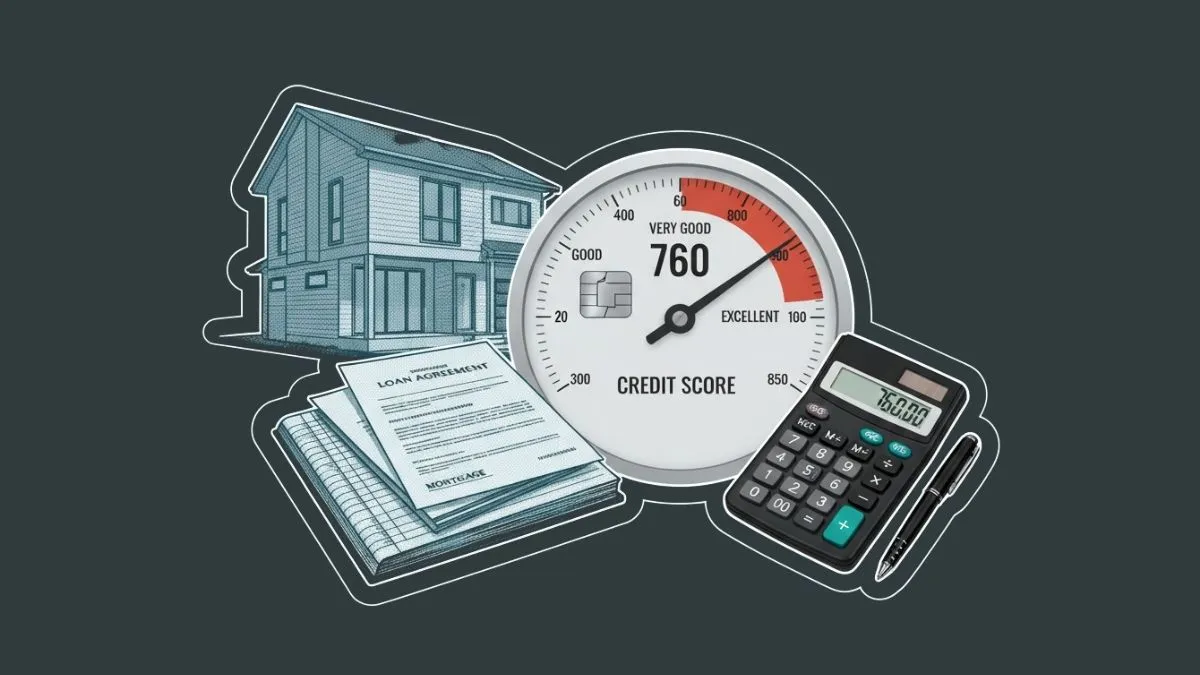
A groundbreaking nationwide study released by AD Mortgage on Thursday has illuminated a crucial, yet often underestimated, factor in homeownership affordability: the credit score. The analysis, titled "Credit Score vs. Mortgage Cost: How Long It Takes to Improve and How Much It Can Save, State by State," reveals that even modest improvements in a borrower’s FICO score can translate into substantial savings on mortgage interest, potentially tens of thousands of dollars over the life of a loan. This research underscores the critical importance of credit preparation for prospective homebuyers, particularly in today’s dynamic housing market.
The comprehensive study employed a rigorous methodology, combining publicly available data with sophisticated modeled scenarios. The core objective was to estimate the financial benefit of elevating a credit score to the benchmark of 760 – a threshold widely recognized for unlocking the most favorable mortgage interest rates. Furthermore, the analysis aimed to quantify the typical timeframe required for borrowers to achieve this score improvement, offering a state-by-state breakdown of both the effort and the reward.
The Credit Score Threshold: A Gateway to Savings
For decades, mortgage lenders have utilized credit scores as a primary indicator of a borrower’s creditworthiness. A higher score signals a lower risk to lenders, translating into more attractive loan terms, most notably a lower interest rate. The FICO score, developed by the Fair Isaac Corporation, remains the most widely used credit scoring model in the United States. While various FICO score ranges exist, achieving a score of 760 or above is generally considered the gateway to prime mortgage rates. This means borrowers with scores in this range can expect to pay significantly less in interest over the 30-year life of a typical mortgage compared to those with lower scores.
The AD Mortgage study specifically focused on the financial impact of reaching this 760 FICO score. This target is not arbitrary; it represents a significant demarcation point in pricing for mortgage lenders. For borrowers who fall below this benchmark, even by a relatively small margin, the increased interest rates can accumulate to a substantial financial burden. The study’s findings provide concrete data to illustrate this disparity, moving beyond anecdotal evidence to offer quantifiable proof of the savings achievable through credit improvement.
Timelines for Improvement: A State-by-State Landscape
One of the most compelling aspects of the AD Mortgage study is its detailed examination of the time it takes to improve credit scores across different states. The analysis assumes a consistent annual improvement of approximately 20 FICO points. Under this assumption, the study found that in most states, it takes between 18 to 36 months to raise an average FICO score to the desired 760 prime threshold.
However, the study also highlights significant geographical variations. Mississippi and Louisiana stand out as states where achieving a 760 FICO score requires the longest commitment. Borrowers in Mississippi, on average, would need approximately 4 years of consistent progress, while those in Louisiana would require about 3.5 years. These longer timelines suggest that the average credit profiles in these states may present more challenges for rapid improvement, potentially due to a variety of socioeconomic factors that influence credit habits and access to credit-building tools.
Conversely, Minnesota emerges as the state with the swiftest path to a prime credit score. With a high statewide average FICO score of 742, Minnesotans can, on average, reach the 760 threshold in just 0.9 years. This suggests a generally stronger credit culture or more accessible pathways to credit improvement within the state. Wisconsin, Vermont, and New Hampshire also demonstrate relatively short improvement timelines, all falling below 1.2 years, indicating a favorable environment for credit score enhancement.
Other states fall within the middle range of improvement timelines. For instance, Florida, a state with a large and dynamic housing market, shows an average improvement timeline of 2.65 years. Texas, another major economic hub with significant housing activity, has an estimated timeline of 3.25 years. These figures provide potential homebuyers in these states with a realistic understanding of the preparation time needed to optimize their mortgage eligibility.
The Magnitude of Savings: Absolute Dollars and Proportional Penalties
The financial implications of reaching the 760 FICO score are profound and vary considerably by state, primarily driven by differences in median home values and mortgage interest rates. While the 760 threshold for the best mortgage rates is a nationwide standard, its impact on affordability is not uniform.
California, a state notorious for its high housing costs, presents the most striking examples of savings. Borrowers in California who successfully raise their credit score to 760 could potentially save an astonishing $42,753 over the 30-year term of a mortgage. This substantial saving underscores how, in high-cost markets, even seemingly small improvements in interest rates can compound into life-changing financial benefits.
In Texas, the savings are also significant, reaching approximately $26,881. However, the study also points to Texas as a state where borrowers face one of the highest proportional penalties for scores below 760. This means that the extra interest paid on a mortgage due to a lower credit score can represent a substantial percentage of the total loan amount, exceeding 10% in some cases. This highlights that the impact of credit scores isn’t just about absolute dollar savings, but also about the relative burden it places on borrowers.
Nationwide, the study estimates that borrowers can save between $10,000 and $46,000 in mortgage interest by improving their credit score to 760. The states with the highest median home values generally exhibit the largest absolute-dollar savings. Hawaii, with its exceptionally high property values, leads the nation in potential savings. The AD Mortgage study found that borrowers in Hawaii who achieve a 760+ score could save up to $46,206. This is followed closely by California ($42,753) and Massachusetts ($36,022).
At the other end of the spectrum, borrowers in West Virginia, a state with lower median home values, could see savings of approximately $9,547 by improving their credit score to 760. While this figure is lower in absolute terms, it still represents a meaningful sum for individuals and families in that region, especially when considered in proportion to household incomes.
The study also draws attention to the impact of these savings relative to household income. In high-cost states like Hawaii and California, the savings realized from achieving a 760 credit score can equate to more than 40% of a household’s annual income. This demonstrates that in expensive markets, credit improvement is not just about saving money; it can be a significant factor in making homeownership accessible in the first place.
Furthermore, the study identifies Alabama, Mississippi, Georgia, Louisiana, and Texas as states where sub-760 borrowers face the steepest proportional rate penalties. This suggests that in these regions, a lower credit score can disproportionately affect a borrower’s financial capacity to purchase a home, beyond just the absolute dollar amount of interest paid.
Expert Commentary: The Centrality of Credit Preparation
Max Slyusarchuk, CEO of AD Mortgage, emphasized the critical role of credit preparation in his commentary on the study’s findings. "This data reinforces just how central credit preparation is to homebuying affordability," Slyusarchuk stated. "Two borrowers with similar incomes can experience dramatically different buying power depending on their credit score and the state in which they purchase. Even a 20- or 30-point difference in FICO can mean tens of thousands of dollars over the life of a mortgage."
Slyusarchuk’s remarks highlight a key takeaway from the research: creditworthiness is as impactful as income in determining a homebuyer’s purchasing power. This is a crucial insight for aspiring homeowners, as it suggests that focusing on credit improvement can be a highly effective strategy to enhance affordability, often with a more direct and immediate financial return than solely focusing on income growth. The notion that a seemingly small change in a FICO score can lead to such substantial long-term savings is a powerful motivator for individuals to prioritize their credit health.
Methodology and Assumptions: A Foundation for Understanding
The AD Mortgage study’s methodology is designed to provide a robust and reliable analysis. By combining publicly available data, which includes information on housing prices, income levels, and general credit trends, with modeled scenarios, the researchers were able to create a comprehensive picture. The modeled scenarios allowed them to simulate the impact of credit score changes on mortgage payments and estimate the time required for such changes.
Crucially, all calculations within the study are based on specific assumptions to ensure consistency and comparability across different states. These assumptions include:
- Loan Type: A 30-year fixed-rate mortgage. This is the most common type of mortgage in the U.S., making the results highly relevant to the majority of homebuyers.
- Down Payment: A 15% down payment. This percentage is significant enough to impact loan-to-value ratios and, consequently, interest rates, while also being a realistic target for many buyers.
- Home Price Basis: State median home prices. Using median prices grounds the calculations in the typical market conditions of each state, making the savings figures more representative of the average homebuyer in that region.
These carefully defined parameters allow for a clear understanding of the context in which the savings figures are presented. They also serve as a baseline against which individual homebuyer situations can be compared, enabling them to gauge their potential savings more accurately.
Broader Implications: Credit Health as a Foundation for Financial Well-being
The implications of the AD Mortgage study extend beyond simply facilitating homeownership. The findings underscore the broader importance of financial literacy and proactive credit management. In an economy where housing costs continue to be a significant barrier for many, understanding and leveraging credit scores can be a powerful tool for economic mobility.
For financial institutions and housing counselors, the study provides valuable data to inform their guidance to clients. It offers a concrete, data-driven argument for the benefits of credit improvement, which can be used to motivate individuals to take positive steps towards better financial health. This research can also inform policy discussions related to housing affordability and financial inclusion, highlighting the need for accessible resources and education to help consumers improve their credit scores.
The study’s emphasis on state-level variations also suggests that strategies for credit improvement and homeownership support may need to be tailored to local market conditions and borrower demographics. What works in a high-cost, high-income state like California might require adaptation for a lower-cost, lower-income state like West Virginia.
In conclusion, the AD Mortgage study serves as a vital wake-up call and a valuable resource for anyone considering homeownership. It quantifies the significant financial rewards of achieving a strong credit score, demonstrating that investing time and effort in credit preparation can yield substantial long-term savings, making the dream of homeownership more attainable and financially sound. The message is clear: a higher credit score is not just a number; it’s a powerful financial asset that can unlock considerable savings and enhance home affordability across the nation.