Nila Kartika Wati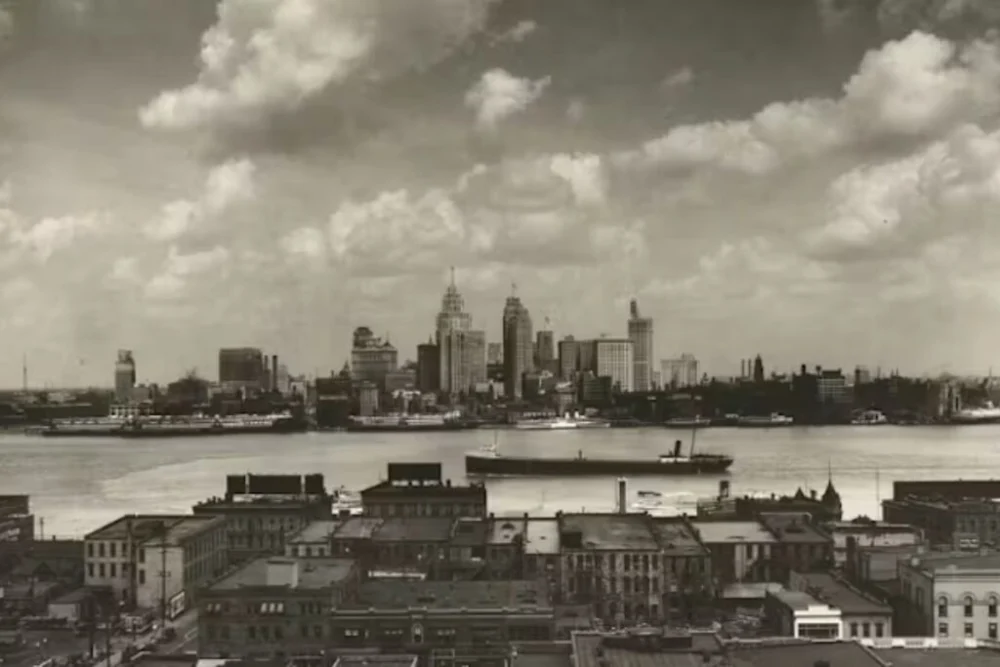
The history of healthcare in Detroit is inextricably linked to the seismic demographic shifts of the early 20th century, a period during which the city became a primary destination for African Americans fleeing the Jim Crow South. At the heart of this transformation stood Dunbar Memorial Hospital, founded in 1918 not merely as a clinical facility, but as a radical manifestation of racial uplift and institutional autonomy. As researchers and historians from the University of Michigan-Dearborn and Wayne State University continue to document this era, it becomes clear that the rise of Detroit’s 18 Black-led hospitals was a direct response to systemic exclusion, while their eventual decline serves as a complex case study in the unintended consequences of federal integration policies.
The Great Migration and the Industrial Catalyst
The catalyst for Detroit’s rapid demographic expansion was primarily economic. In 1914, Henry Ford revolutionized the industrial labor market by offering a five-dollar-a-day wage—nearly double the national average for manual labor at the time. This announcement triggered a massive influx of workers, including millions of African Americans participating in the Great Migration. Between 1910 and 1930, Detroit’s Black population surged from fewer than 6,000 residents to over 120,000, a twentyfold increase that redefined the city’s social fabric.
By the mid-20th century, the Black population had reached 300,000, making Detroit one of the most significant urban centers for African American life in the North. However, this growth was met with fierce resistance from the white establishment. While white residents enjoyed geographic mobility, Black Detroiters were systematically confined to overcrowded districts through restrictive covenants and redlining. These policies, enforced by real estate boards and federal housing guidelines, funneled the growing population into neighborhoods like Black Bottom and Paradise Valley.
The resulting environmental conditions were dire. Overcrowding, inadequate sanitation, and neglected infrastructure created a breeding ground for infectious diseases. Historically, mortality rates for tuberculosis, influenza, smallpox, and dysentery were significantly higher in Black districts. Public health data from the era suggests these disparities were not the result of behavioral choices but were the direct outcome of structural racism and the deliberate withholding of municipal resources.
A System of Medical Apartheid
The necessity for Black-led hospitals was born from a rigid system of medical segregation. During the early 1900s, Detroit’s major medical institutions were largely closed to Black patients and professionals. White-controlled hospitals that did accept Black patients often relegated them to substandard basement wards or segregated wings, where they received inferior care.
The exclusion extended to the professional sphere. Black physicians and nurses, many of whom were graduates of prestigious institutions like Howard University College of Medicine and Meharry Medical College, were barred from internships, residencies, and staff privileges at white hospitals. This meant a Black surgeon could not follow their patient into a hospital to perform a procedure, effectively stripping them of their professional autonomy and livelihood.
In response, the Black medical community adopted the philosophy of the "Talented Tenth," a concept popularized by W.E.B. Du Bois. This cadre of educated professionals viewed their medical practice as a form of social activism. They recognized that to secure the health of their community, they had to build their own institutions from the ground up.
The Founding and Architecture of Dunbar Memorial Hospital
In 1918, a group of 30 Black physicians and allied health professionals founded Dunbar Memorial Hospital. Named after the celebrated poet Paul Laurence Dunbar, the institution was housed in a three-story Romanesque Revival-Queen Anne residence at 580 Frederick Street. The conversion of a private home into a 25-bed medical facility was a feat of community engineering, reportedly overseen by Cornelius Langston Henderson, a pioneering Black structural engineer known for his work on the Ambassador Bridge.
Dunbar Memorial served as a beacon of opportunity. It offered a comprehensive suite of services, including:
- Inpatient and Outpatient Surgery: Providing a space where Black surgeons could practice without racial restrictions.
- Nursing Training: Establishing a pipeline for Black women to enter the healthcare profession at a time when white nursing schools were closed to them.
- Preventive Care and Education: Launching hygiene campaigns and nutrition programs to combat the "structural" diseases of the slums.
- Professional Networking: Serving as the headquarters for the Allied Medical Society, which later became the Detroit Medical Society.
By 1924, the demand for services was so great that the hospital expanded into the adjacent building at 584 Frederick Street to house its growing nursing staff and administrative offices. This expansion marked the beginning of a golden age for Black medicine in Detroit.
Chronology of the Black Hospital Movement in Detroit
The success of Dunbar Memorial paved the way for a network of institutions that provided a safety net for the city’s Black population. The following timeline highlights the evolution of this movement:
- 1910-1917: Initial wave of the Great Migration; Black doctors begin organizing informal clinics.
- 1918: Dunbar Memorial Hospital opens as the first Black-run non-profit hospital in Detroit.
- 1920s-1930s: Rise of proprietary (physician-owned) hospitals. Institutions like Mercy General and Parkside Hospital are established to meet the needs of a population that had surpassed 100,000.
- 1940s: The peak of the movement. Detroit is home to approximately 18 Black-owned or Black-operated hospitals, ranging from small clinics to larger general hospitals.
- 1950s: Increasing pressure from civil rights organizations to desegregate white hospitals begins to shift the medical landscape.
- 1962: The Simkins v. Moses H. Cone Memorial Hospital case begins the legal dismantling of "separate but equal" in healthcare.
- 1965: The passage of the Social Security Act (Medicare) mandates hospital desegregation as a condition for receiving federal funds.
- 1970s-1980s: Most of Detroit’s Black hospitals close or merge with larger systems as patients and physicians move toward integrated facilities.
The Double-Edged Sword of Integration
The decline of Detroit’s Black hospitals was not a failure of management, but rather a result of significant shifts in federal policy and civil rights progress. The passage of the Civil Rights Act of 1964 and the subsequent implementation of Medicare in 1965 fundamentally altered the economics of American healthcare. Under Title VI of the Civil Rights Act, any institution receiving federal financial assistance was prohibited from discriminating on the basis of race, color, or national origin.
For the first time, Black patients had the legal right to seek care at the city’s best-funded and most technologically advanced hospitals. Simultaneously, Black physicians were finally granted the staff privileges that had been denied to them for decades. While this was a monumental victory for civil rights, it created a crisis for Black-led institutions.

These hospitals, which had operated on thin margins and served a largely low-income patient base, could not compete with the massive capital and infrastructure of white-led university and municipal hospitals. As the middle-class Black patient base migrated to integrated systems, the community-based hospitals lost their primary source of revenue. By the late 20th century, nearly all of the 18 original institutions had closed their doors.
Legacy and Contemporary Implications for Health Equity
The history of Dunbar Memorial Hospital and its counterparts offers critical lessons for the modern healthcare landscape. According to Dr. Charles H. Wright, the founder of the museum that bears his name and a former Detroit physician, the "Negro Hospital Movement" was a necessary survival strategy in a segregated society. Today, researchers argue that while the legal barriers to care have been removed, the "structural" causes of health disparities identified by the founders of Dunbar—such as housing instability, environmental hazards, and institutional bias—remain prevalent.
Contemporary analysis of Detroit’s health outcomes reveals that Black residents still face disproportionate rates of chronic illness and maternal mortality. Historians and medical professionals suggest that the loss of Black-led institutions resulted in a decrease in community-based accountability and culturally competent care.
The lessons derived from this era suggest three primary pillars for advancing health equity today:
- Institution Building: Representation in existing systems is insufficient; there is a continued need for community-controlled health assets that prioritize marginalized populations.
- Professional Autonomy: The ability of minority physicians to lead and innovate within their communities is essential for building trust in medical systems.
- Policy Accountability: Just as Medicare was used as a lever for desegregation in 1965, modern federal and state funding must be tied to measurable outcomes in closing the health equity gap.
Dunbar Memorial Hospital, now a historic site, stands as a testament to a time when Detroit’s Black community took the lead in solving its own crises. It serves as a reminder that healthcare is not merely a clinical service but a fundamental component of civil rights and social justice. As Detroit continues to navigate its post-industrial recovery, the legacy of its Black hospitals provides a blueprint for a more equitable and resilient public health future.