Lana Rhoades
The United States Bureau of Economic Analysis (BEA) has unveiled its latest comprehensive report on the nation’s outdoor recreation economy, revealing a significant economic powerhouse that contributed $704.2 billion to the current-dollar Gross Domestic Product (GDP) in 2025. This figure represents a substantial 2.3 percent of the total U.S. GDP, underscoring the sector’s vital role in national economic health. The data, which encompasses all 50 states and the District of Columbia, paints a detailed picture of how outdoor pursuits, from vigorous adventures to leisurely pastimes and the supporting infrastructure, fuel jobs, output, and economic value.
A Robust and Growing Sector
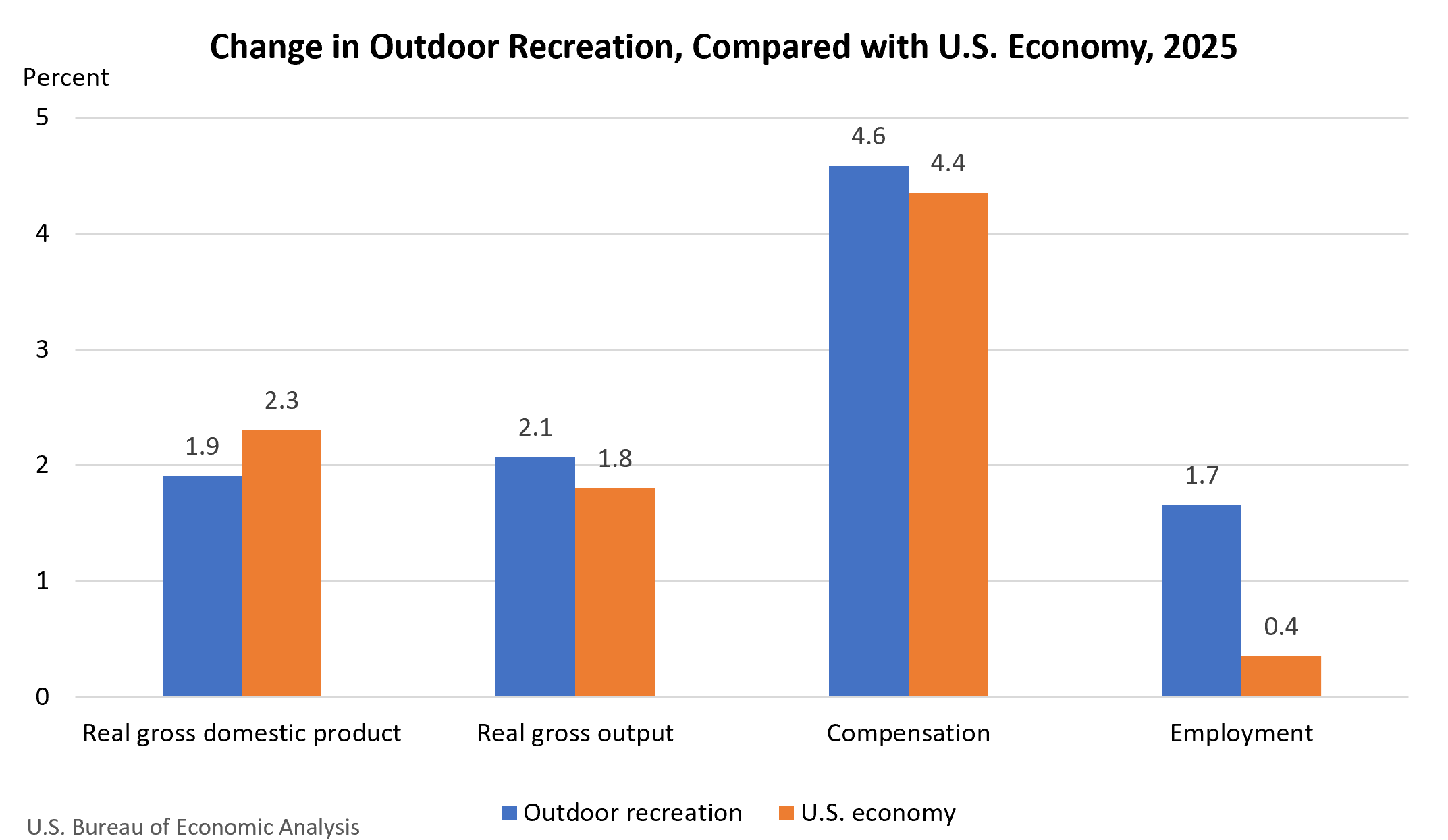
The report indicates that the value added by the outdoor recreation economy experienced a 1.9 percent increase in real terms (adjusted for inflation) in 2025. While this represents a slight deceleration compared to the 2.3 percent growth of the overall U.S. economy in the same year, it builds upon a strong foundation. The previous year, 2024, saw a more robust 2.5 percent real GDP growth for the outdoor recreation sector, demonstrating a consistent upward trajectory.
Further national-level insights from the BEA’s findings highlight the sector’s dynamism. In 2025, real gross output for outdoor recreation saw a healthy increase of 2.1 percent. Compensation within the industry surged by an impressive 4.6 percent, indicating rising wages and increased economic security for workers. Employment in the sector also expanded, growing by 1.7 percent, reflecting a sustained demand for goods and services related to outdoor activities.
State-Level Disparities and Strengths
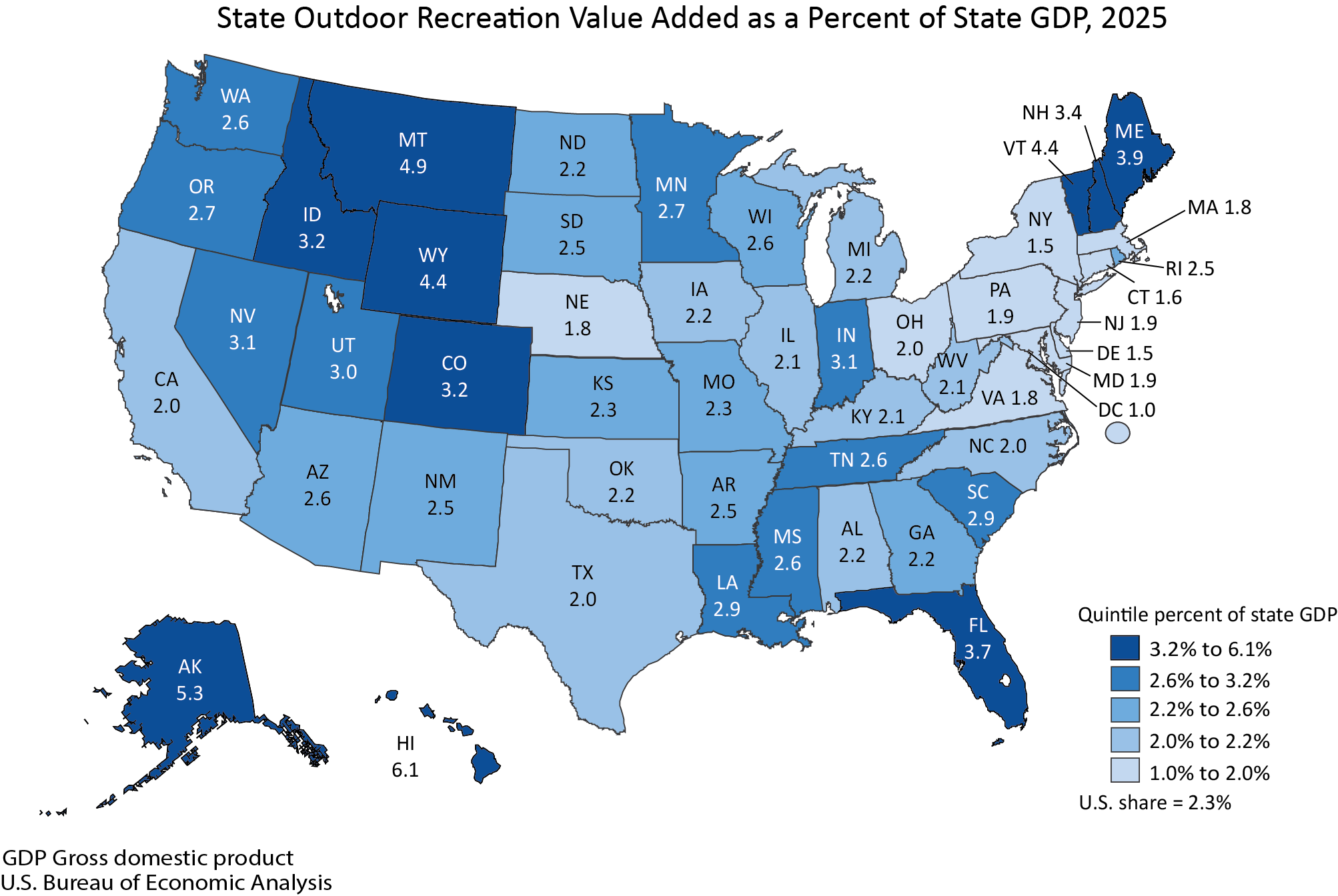
The BEA’s granular analysis at the state level reveals a diverse landscape of outdoor recreation’s economic impact. The share of state GDP attributed to outdoor recreation varied significantly, with Hawaii leading the nation at 6.1 percent. This suggests a strong dependence on and integration of outdoor activities within Hawaii’s broader economic framework. In stark contrast, the District of Columbia registered the lowest share at 1.0 percent, reflecting its unique economic structure primarily driven by government and services.
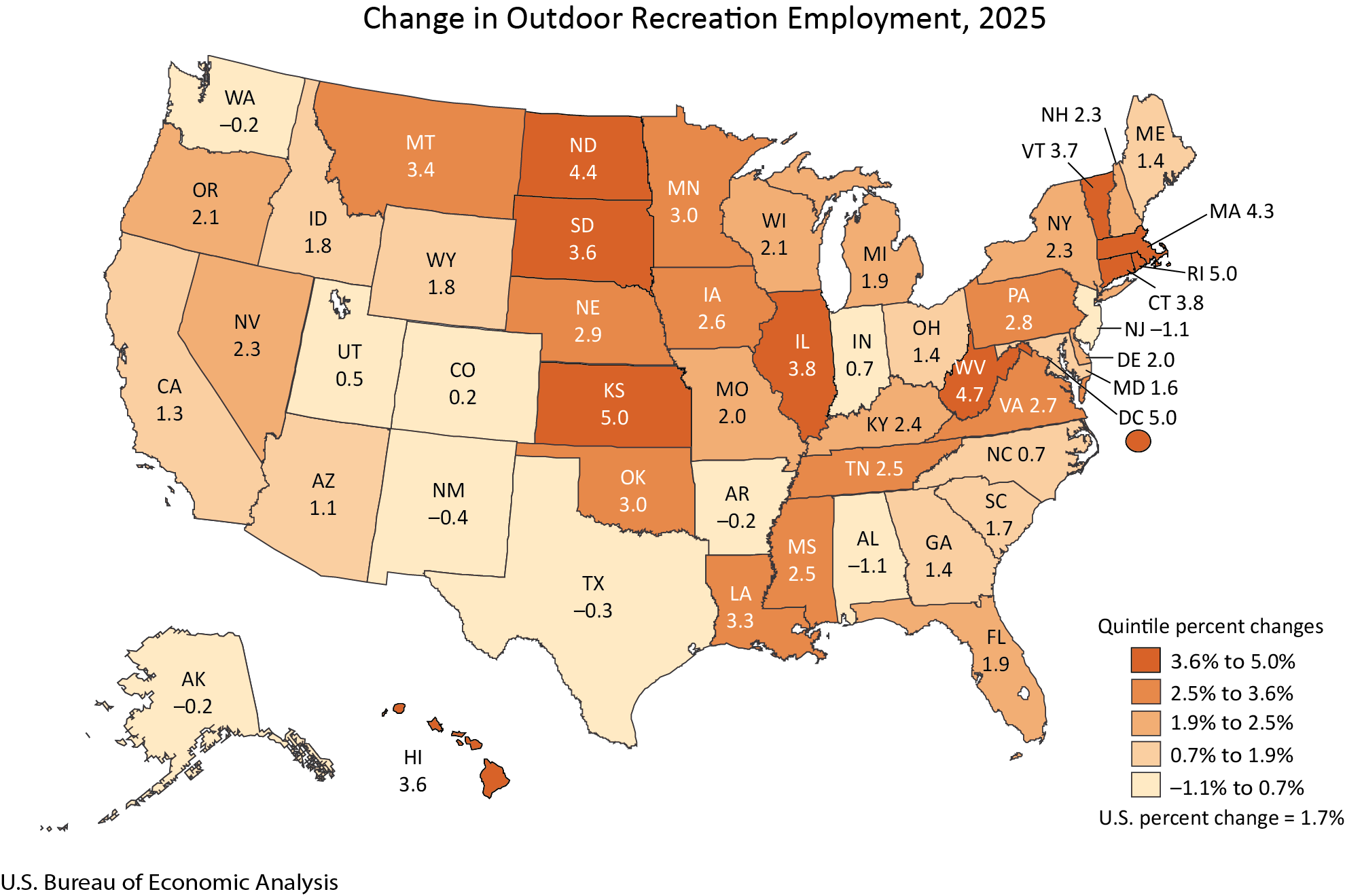
A significant majority of states and the District of Columbia saw an increase in outdoor recreation employment in 2025. Forty-three states and the District of Columbia experienced positive growth in this crucial metric. Rhode Island, Kansas, and the District of Columbia stood out with the highest percentage increases in outdoor recreation employment, each reporting a 5.0 percent rise. This indicates a robust expansion of job opportunities in these regions, directly linked to the outdoor recreation industry. Conversely, New Jersey and Alabama experienced a slight contraction in outdoor recreation employment, with declines of 1.1 percent, suggesting localized challenges or shifts within their respective economies.
Understanding the Pillars of Outdoor Recreation
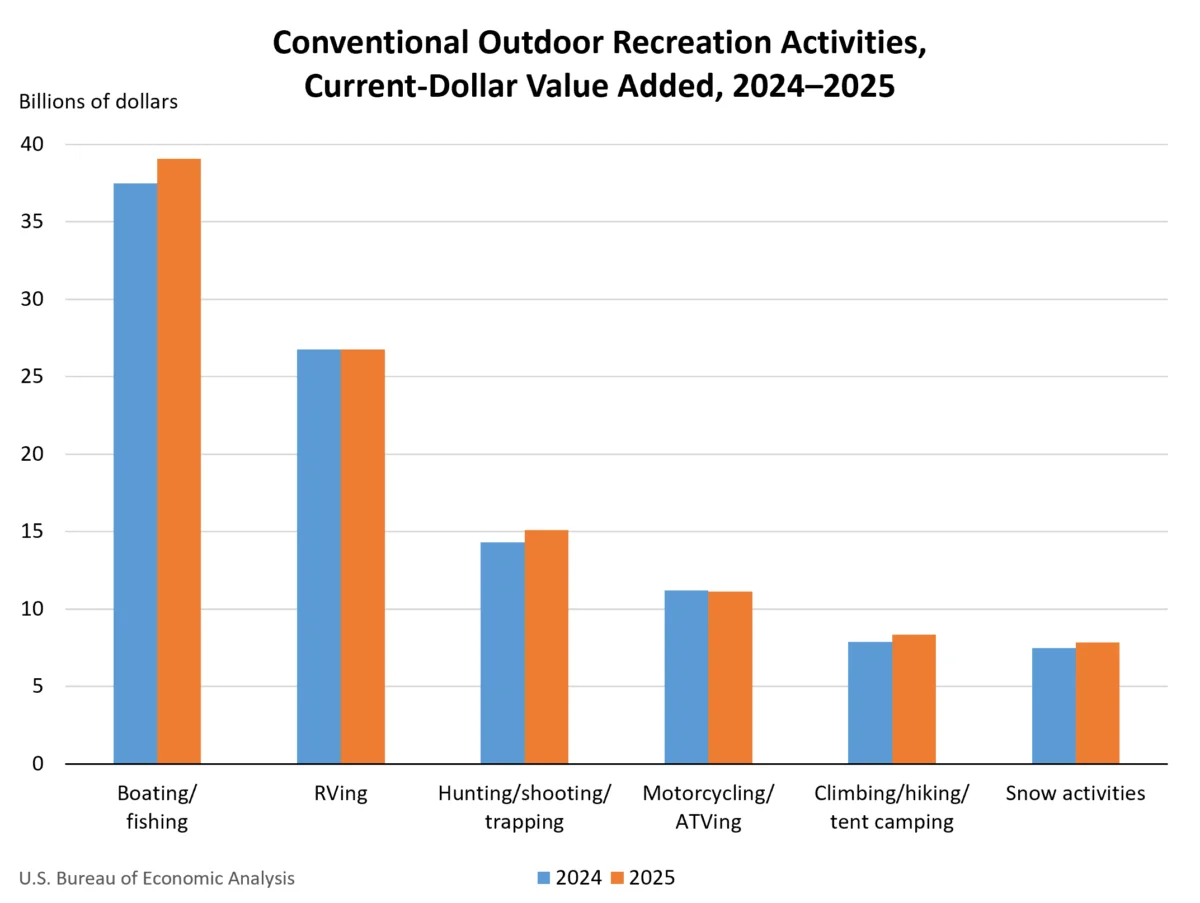
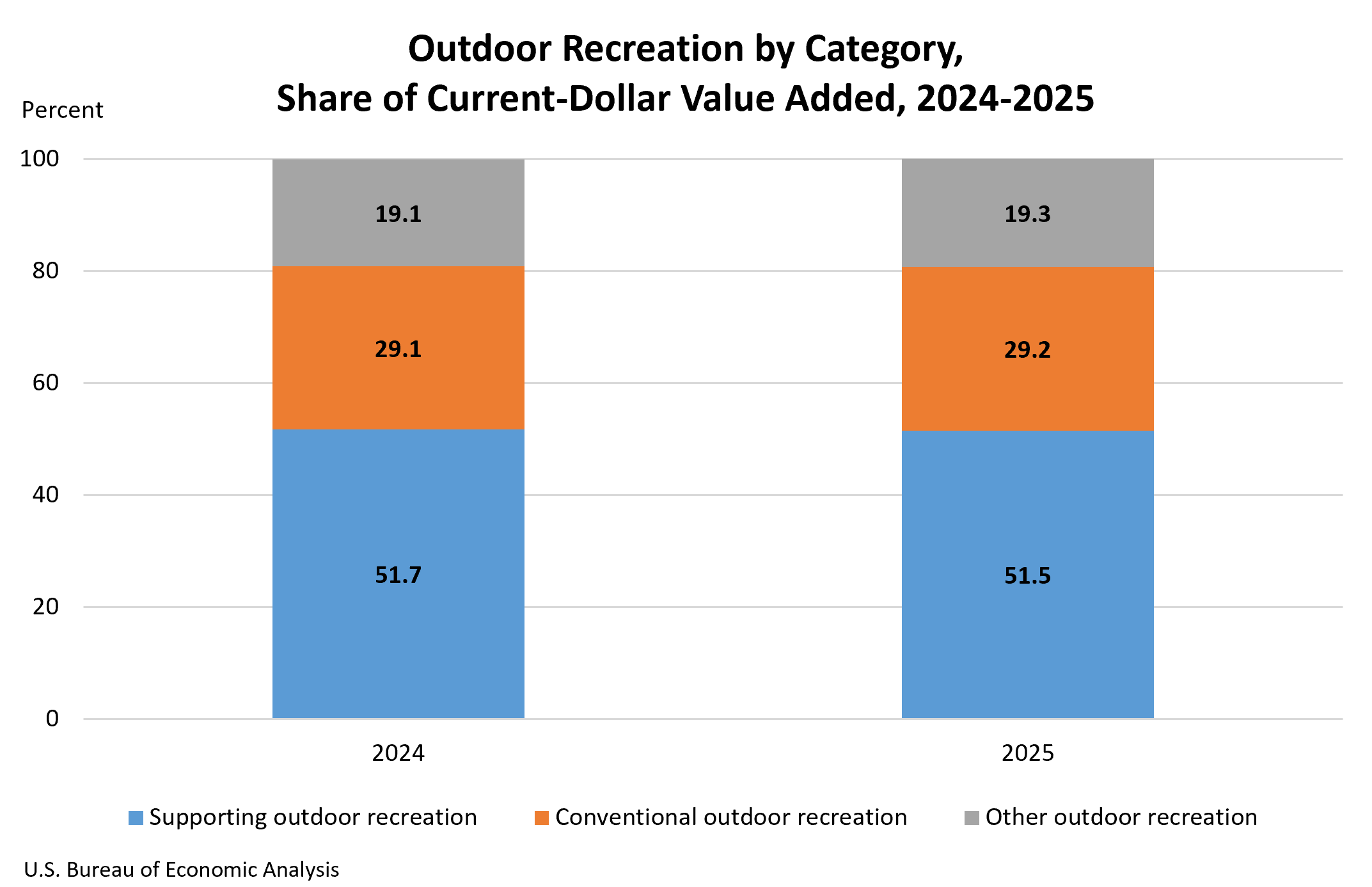
The BEA categorizes outdoor recreation activities into three broad segments: conventional activities, other activities, and supporting activities. Conventional activities encompass well-established pursuits such as bicycling, boating, hiking, and hunting. "Other outdoor recreation" includes a broader range of activities like gardening and outdoor concerts, while "supporting activities" represent the essential infrastructure and services that enable outdoor recreation, such as construction, travel and tourism, local trips, and government expenditures.
In 2025, conventional outdoor recreation activities accounted for 29.2 percent of the total U.S. outdoor recreation value added, a slight increase from 29.1 percent in 2024. "Other outdoor recreation" also saw a marginal rise, contributing 19.3 percent of value added in 2025, up from 19.1 percent the previous year. The largest segment, however, remains "supporting outdoor recreation," which comprised 51.5 percent of value added in 2025, a marginal decrease from 51.7 percent in 2024. This distribution highlights that while direct participation in outdoor activities is crucial, the broader ecosystem of services and infrastructure plays an equally, if not more, significant role in the sector’s overall economic contribution.
Industry Contributions to the Outdoor Recreation Economy
The BEA’s analysis by industry provides further insight into the diverse economic engines powering outdoor recreation. The "arts, entertainment, recreation, accommodation, and food services" industry group emerged as the leading contributor to the U.S. outdoor recreation economy in 2025. This sector accounted for a substantial $179.5 billion, representing 25.5 percent of the current-dollar value added. This underscores the interconnectedness of leisure, hospitality, and outdoor pursuits.
At the state level, this industry group was the largest contributor to outdoor recreation value added in 25 states and the District of Columbia. California, with $23.5 billion, Florida with $23.4 billion, and New York with $11.6 billion, led the nation in this category, demonstrating the significant economic impact of these service-oriented industries in major tourist and recreational destinations.
Following closely, "retail trade" secured its position as the second-largest industry group nationally, contributing $166.5 billion, or 23.6 percent of value added. Retail trade was the dominant industry in 22 states, indicating the widespread importance of businesses selling outdoor gear, apparel, and related equipment. California again led in this sector with $19.5 billion, followed by Texas at $14.6 billion and Florida at $13.3 billion.
The "transportation and warehousing" industry group ranked third nationally, contributing $86.4 billion, or 12.3 percent of value added. This sector was the largest contributor to outdoor recreation value added in Alaska, highlighting the critical role of logistics and movement in accessing and supporting outdoor activities in remote or geographically diverse areas. Florida ($12.8 billion), California ($10.8 billion), and Texas ($7.1 billion) also demonstrated significant contributions within this industry.
Methodological Enhancements and Future Outlook
The BEA’s annual update of outdoor recreation economic statistics is a critical process that ensures the accuracy and relevance of its findings. For the 2025 data, estimates from 2021 to 2024 have been revised to incorporate newly available and updated source data. This meticulous revision process includes the integration of results from the 2026 annual update of the National Economic Accounts, encompassing both the National Income and Product Accounts and the Industry Economic Accounts. Similarly, state-level statistics have been refined to reflect these updated national figures and the 2026 annual update of the Regional Economic Accounts, alongside newly accessible regional source data.
These continuous updates are vital for providing policymakers, businesses, and the public with the most reliable and current understanding of the outdoor recreation economy’s performance. By refining its methodologies and incorporating the latest data, the BEA ensures that its statistics serve as a robust foundation for economic analysis and decision-making.
The BEA has also announced that previously published estimates are available in its Data Archive, offering valuable historical context and a resource for tracking long-term trends. The next release of Outdoor Recreation Economic Statistics, covering data for 2026, is anticipated in the Fall of 2027, promising further insights into this dynamic and ever-evolving sector.
Implications for Policy and Investment
The comprehensive data released by the BEA carries significant implications for various stakeholders. For policymakers, the consistent growth and substantial contribution of the outdoor recreation economy underscore the importance of supporting policies that promote access to public lands, invest in recreational infrastructure, and foster sustainable tourism. The sector’s role in job creation, particularly in areas with strong outdoor recreational assets, suggests opportunities for targeted economic development initiatives.
Businesses within the outdoor recreation ecosystem, from gear manufacturers and retailers to tour operators and hospitality providers, can leverage these statistics to inform strategic planning, market analysis, and investment decisions. Understanding which activities and industries are driving growth at both national and state levels can help businesses identify emerging opportunities and optimize their operations.
Furthermore, the data highlights the economic benefits of preserving natural resources and investing in conservation efforts. The strong performance of conventional and other outdoor recreation activities is intrinsically linked to the availability and quality of natural landscapes, emphasizing the economic imperative of environmental stewardship.
The BEA’s detailed reporting not only quantifies the economic power of outdoor recreation but also provides a granular understanding of its multifaceted nature. As the nation continues to recognize the physical, mental, and economic well-being derived from outdoor pursuits, this data will serve as an indispensable tool for shaping a sustainable and prosperous future for this vital sector. The continued annual updates by the BEA will be crucial in tracking its evolution and ensuring that its economic contributions are fully appreciated and strategically leveraged.