Candice Horbacz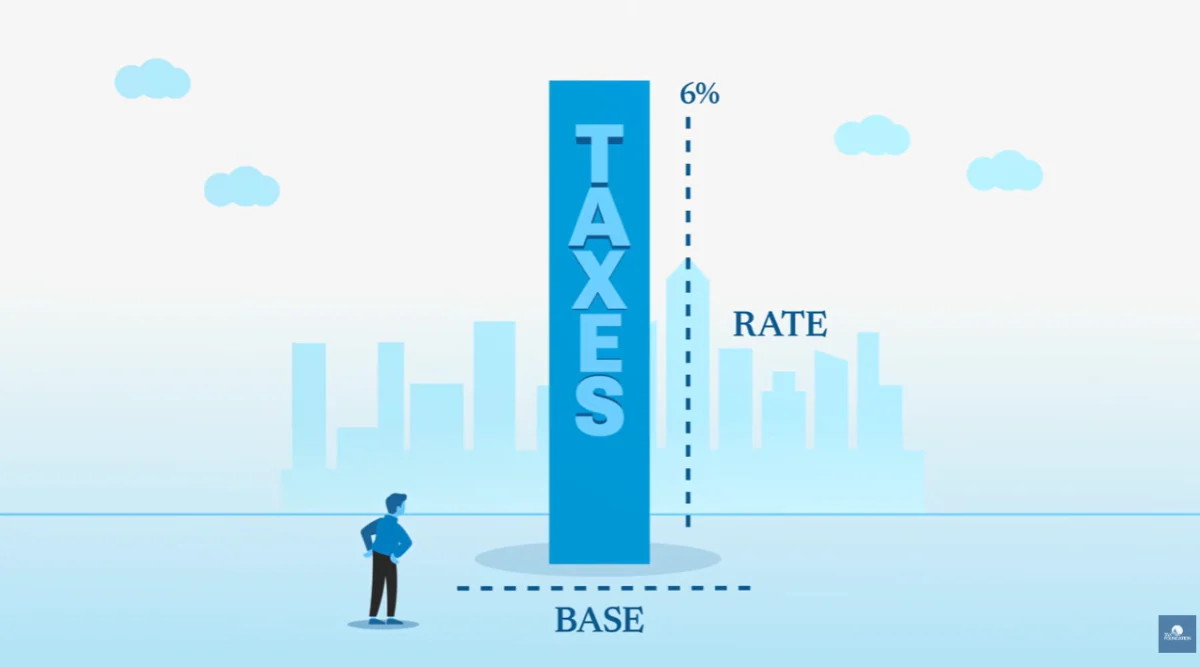
When individuals and businesses ponder the weight of their tax obligations, the immediate focus often gravitates towards the tax rate—the percentage levied on a given transaction or income stream. However, this singular perspective overlooks a foundational element equally, if not more, critical to a tax system’s efficiency, equity, and overall economic impact: the tax base. The tax base defines what is subject to taxation—be it income, property, consumption of goods and services, or capital gains. A robust understanding of how the tax base interacts with the tax rate is essential for comprehending the true burden of taxation and its far-reaching consequences for individuals, businesses, and the broader economy.
Deconstructing Taxation: Rate vs. Base
At its core, taxation involves two primary components: the rate and the base. The tax rate is the prescribed percentage or fixed amount applied to the tax base. For instance, a 7% sales tax rate applied to a $100 purchase means $7 in tax. The tax base, in this scenario, is the $100 purchase itself. While seemingly straightforward, the design of the tax base holds immense power to shape economic behavior and determine the overall health of a fiscal system.
A poorly designed tax base, characterized by arbitrary exemptions, carve-outs, and preferential treatments, can lead to significant economic distortions. These distortions occur when tax considerations, rather than pure economic efficiency or market demand, drive decisions. For example, if certain investments are untaxed while others are heavily taxed, capital may flow towards the untaxed assets, even if they are less productive. Similarly, if specific consumer goods or services are exempt from sales tax, consumers might alter their purchasing habits to avoid taxation, leading to sub-optimal allocation of resources. Such tax-induced choices—like businesses hiring fewer workers due to high payroll taxes, or individuals saving less because investment income is heavily taxed—ultimately harm productivity, suppress economic growth, and diminish overall societal welfare.
The Mechanism of Tax Distortions
Tax distortions, often referred to by economists as "deadweight loss," represent the economic inefficiency caused by taxation. When a tax is imposed, it alters the relative prices of goods, services, or activities. This alteration can change consumer and producer behavior, leading to a reduction in the total surplus (the sum of consumer and producer welfare) that is greater than the revenue collected by the government. The wider the array of exemptions and the higher the rates on a narrow base, the more pronounced these distortions become.
Consider the example of a sales tax. A broad sales tax base would encompass nearly all consumer goods and services. However, many jurisdictions frequently exempt categories such as groceries, prescription medications, certain clothing items, and a wide range of services (e.g., legal, accounting, healthcare, personal care like haircuts, digital streaming). While often enacted with noble intentions—such as making necessities more affordable for lower-income households—these exemptions can inadvertently narrow the tax base significantly. When the base narrows, the jurisdiction must compensate by imposing a higher tax rate on the remaining taxable items to generate the same amount of revenue. This higher rate then makes the taxed purchases disproportionately more expensive, further encouraging consumers to shift spending towards exempt goods or services, or to forgo purchases altogether, exacerbating the distortion.
The Economic Principle of Neutrality
The concept of a "neutral tax system" is a cornerstone of sound fiscal policy, closely tied to the design of the tax base. A truly neutral tax system would minimize its influence on economic decisions, allowing market forces to guide resource allocation efficiently. This ideal is best approached through a broad tax base coupled with a low tax rate. By taxing a wide array of activities, goods, or income uniformly, the system avoids creating artificial incentives or disincentives for specific behaviors. When the tax rate is also kept low, the financial incentive to alter behavior to avoid taxation is reduced, further minimizing distortions.
Leading economic organizations, such as the Organisation for Economic Co-operation and Development (OECD) and the International Monetary Fund (IMF), consistently advocate for tax reforms that broaden tax bases and lower marginal rates. This approach is lauded for its potential to foster economic growth, enhance competitiveness, and create a more equitable and stable revenue stream for governments. Studies by think tanks like the Tax Foundation in the United States routinely highlight how states with broader sales tax bases can afford lower rates, making their overall tax climate more attractive to businesses and consumers alike. For instance, states that have expanded their sales tax to include more services or digital goods often find themselves in a stronger fiscal position, capable of lowering their headline sales tax rate without sacrificing essential public services.
Historical Context and Evolution of Tax Policy
Discussions surrounding the optimal design of tax rates and bases are not new; they have been central to fiscal policy debates for centuries. In the United States, significant tax reforms, such as the Tax Reform Act of 1986, were predicated on the principle of broadening the tax base and lowering rates, particularly for income taxes. This bipartisan effort aimed to simplify the tax code, reduce loopholes, and encourage economic efficiency by reducing the incentive for tax-motivated investments. Although subsequent legislation has reintroduced many complexities, the 1986 act remains a benchmark for base-broadening reform.
More recently, many state governments have grappled with the challenge of modernizing their sales tax systems. The traditional sales tax model, largely developed in the mid-20th century, was designed for an economy dominated by tangible goods. However, as the U.S. and global economies have shifted dramatically towards services and digital products, the traditional sales tax base has become increasingly outdated and narrow. Services now account for a substantial and growing portion of economic activity—over 70% of GDP in many developed nations—yet many remain untaxed at the state sales tax level. This structural mismatch means that a significant portion of economic transactions escapes taxation, forcing higher rates on the shrinking goods base.
States like South Dakota, Hawaii, and New Mexico, which have historically taxed a broader range of services, often maintain lower overall sales tax rates compared to states that heavily exempt services. This ongoing evolution highlights a critical policy challenge: adapting tax systems to contemporary economic realities to ensure revenue stability and economic neutrality.
Diverse Perspectives on Tax Base Reform
The debate over broadening the tax base elicits varied reactions from different stakeholders:
- Economists and Fiscal Policy Experts: Generally advocate strongly for broad bases and low rates, citing principles of efficiency, neutrality, and reduced deadweight loss. They argue that exemptions create market distortions, complicate tax administration, and often fail to achieve their intended equity goals efficiently.
- Business Associations: Their reactions are often mixed. While many businesses would welcome lower overall tax rates, specific industries heavily reliant on currently exempt services (e.g., legal, healthcare, accounting, personal services) often lobby intensely against broadening the sales tax base to include their offerings. They argue it would increase costs for consumers and make their services less competitive. However, businesses selling taxed goods often support broadening the base to level the playing field and potentially lower the overall sales tax rate.
- Consumer Advocacy Groups: Frequently argue for exemptions on necessities like groceries and medicine, viewing them as progressive measures that alleviate the burden on lower-income households, for whom sales taxes are often regressive (i.e., they consume a larger percentage of their income on taxed goods). However, some acknowledge that if a broad base allows for a significantly lower rate, the net effect on lower-income households might be negligible or even beneficial, especially if accompanied by targeted tax credits.
- Policymakers: Face the complex task of balancing economic efficiency with political feasibility and public perception. Implementing base-broadening measures, especially taxing previously exempt items or services, can be politically challenging and unpopular, often labeled as "new taxes" even if overall rates are reduced. The political will to enact such reforms often requires strong leadership and effective communication about the long-term benefits.
Broader Implications for Economic Growth and Equity
The design of the tax base carries profound implications for both economic growth and equity.
Economic Growth: A broad tax base supports economic growth by:
- Minimizing Distortions: Reducing the incentive for individuals and businesses to make tax-driven decisions, allowing resources to flow to their most productive uses.
- Enhancing Competitiveness: Lower rates resulting from a broad base can make a jurisdiction more attractive for investment and business location, fostering job creation and innovation.
- Simplifying Compliance: A simpler, broader tax code with fewer carve-outs can reduce administrative burdens for businesses and tax agencies, freeing up resources for productive activities.
- Revenue Stability: A broad base provides a more stable and predictable revenue stream, as it is less susceptible to fluctuations in specific sectors of the economy. This allows governments to plan and fund public services more effectively.
Equity Considerations: The equity implications of a broad tax base, particularly for sales taxes, are often debated:
- Regressivity of Sales Taxes: Sales taxes are generally considered regressive because lower-income households tend to spend a larger proportion of their income on consumer goods and services compared to higher-income households, who save or invest more. Exempting necessities aims to mitigate this regressivity.
- Counterarguments for Broadening: Proponents argue that if broadening the base allows for a sufficiently low sales tax rate, the regressive impact might be less significant than a high rate on a narrow base. Furthermore, some economists suggest that direct cash transfers or targeted tax credits for low-income households are more effective and transparent ways to address equity concerns than distortive tax exemptions.
- "Fairness" of Exemptions: Critics of exemptions argue that they create an unfair playing field, as some consumers and businesses bear a disproportionate share of the tax burden while others avoid it. Taxing all consumption equally, they contend, is inherently fairer.
The Path Forward: Challenges and Opportunities
The journey toward a more efficient and equitable tax system, characterized by a broad tax base and low rates, is fraught with challenges. Political resistance to taxing previously untaxed items, the powerful lobbying efforts of specific industries, and public perception of "new taxes" often hinder reform efforts. However, the economic benefits of such reforms—increased efficiency, enhanced competitiveness, and more stable revenue—present compelling opportunities.
Policymakers must engage in transparent dialogue, educating the public on the long-term advantages of a modernized tax system. This involves demonstrating how broadening the tax base can lead to lower overall tax rates, reduced economic distortions, and a more robust foundation for public services. As economies continue to evolve, with services and digital transactions playing an ever-larger role, adapting tax systems to these realities becomes not just a matter of fiscal prudence, but an imperative for sustained economic prosperity. The fundamental lesson remains: the question is not just how high taxes are, but what gets taxed, and how that design shapes the economic landscape for everyone.