Candice Horbacz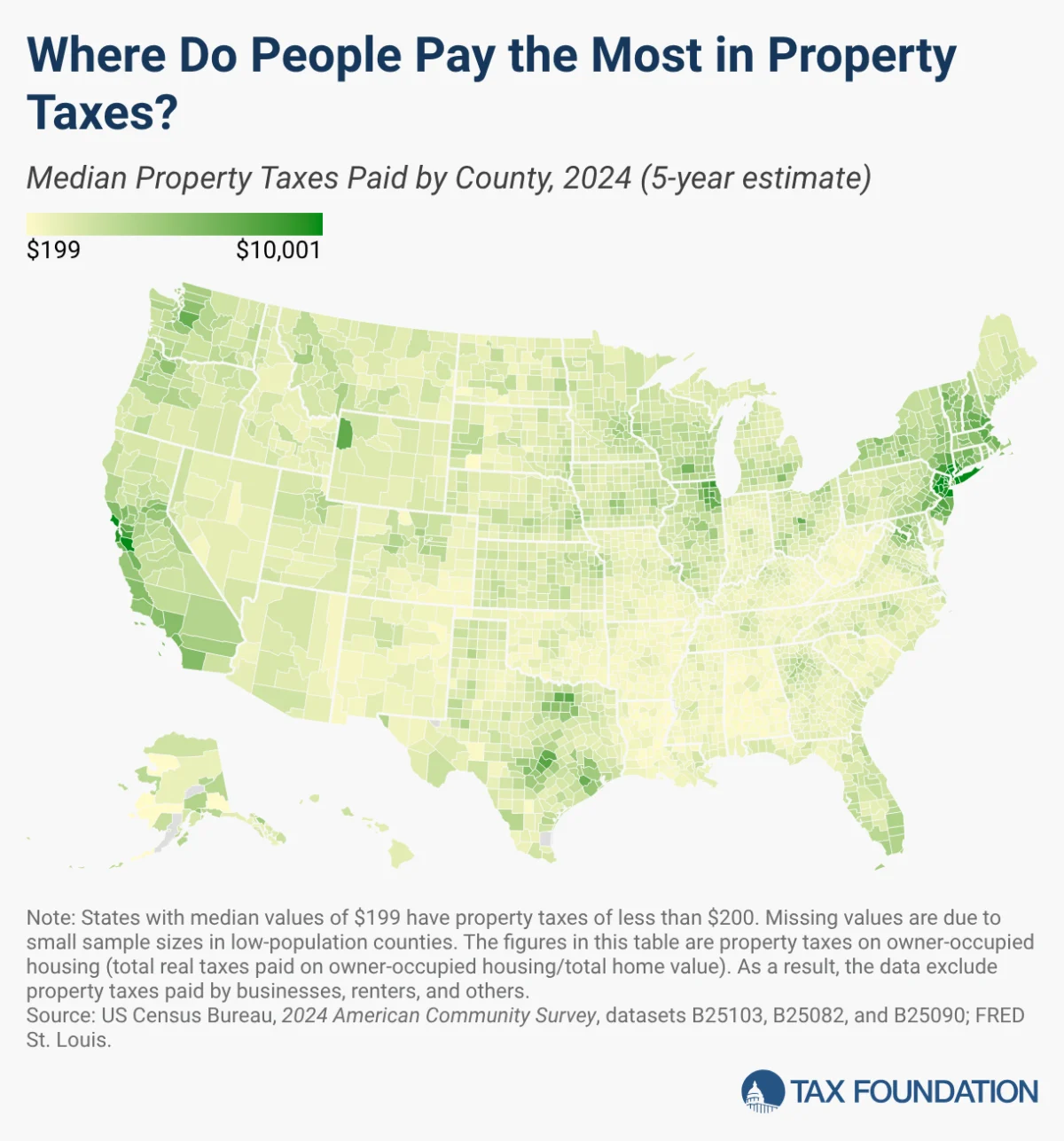
Property taxes stand as the foundational pillar of local government finance in the United States, providing the essential revenue streams that underpin communities from bustling metropolises to serene rural towns. In fiscal year 2023, these levies constituted a significant 28.9 percent of all state and local tax collections nationwide, distinguishing them as the single largest source of tax revenue, despite being almost exclusively administered and collected at the local level. Their importance is further magnified within local budgets, where they accounted for a commanding 70.0 percent of total local tax collections, illustrating an unparalleled reliance on this form of taxation for vital public services. These funds are indispensable for financing schools, maintaining roads, supporting police and fire departments, providing crucial emergency medical services, and funding a myriad of other public amenities directly tied to residency and property ownership within a given jurisdiction.
Historical Evolution and Fiscal Significance
The concept of property taxation in America dates back to colonial times, rooted in the agrarian economies where land ownership was a primary indicator of wealth. Initially, taxes were often levied on physical assets like land and buildings, evolving over centuries into the sophisticated "ad valorem" (according to value) system prevalent today. This system mandates that taxes are assessed based on the market value of real property. This historical trajectory underscores a consistent principle: those who benefit most directly from local public services, typically property owners, contribute to their upkeep. The enduring nature of property taxes as a primary revenue source reflects their stability and direct link to the local economic base, offering a predictable income stream for municipalities that often face fluctuating state or federal aid.
Diverse State-Level Approaches to Property Taxation
The landscape of property taxation is far from uniform across the fifty states, reflecting diverse policy philosophies and historical contexts. Some states, notably New Hampshire and Texas, exhibit a pronounced reliance on property taxes as a substitute for other major tax categories, such such as statewide income or sales taxes. This approach often correlates with a greater devolution of authority to local governments, empowering them with broader responsibilities for delivering public services compared to their counterparts in states with more centralized revenue collection. This decentralization often means that local residents in these states have a more direct say in how their tax dollars are allocated, fostering a strong sense of community accountability.
Conversely, states like New Jersey and Illinois present a different model, characterized by high property taxes existing concurrently with high rates across other significant tax categories, including income and sales taxes. This combination can lead to a higher overall tax burden for residents, often reflecting extensive public service provisions or significant state-level expenditures that require multiple robust revenue streams. These varying strategies highlight a fundamental tension in state fiscal policy: how to balance the need for adequate public services with concerns about overall tax burden and economic competitiveness.
The "Good Tax" Argument: Efficiency and Transparency
Despite being a frequent target of political debate and taxpayer frustration, property taxes are often championed by fiscal experts as embodying several principles of sound tax policy. The "benefit principle of taxation" is central to this argument: individuals paying property tax bills are typically the direct beneficiaries of the services funded by these taxes, whether it’s K-12 education, local road maintenance, police and fire protection, or public parks.
As articulated by Joan Youngman, a well-designed property tax can be considered a "good tax" due to its inherent transparency, simplicity, and stability. Its transparency stems from the clear assessment process and the visible nature of the taxed asset. Simplicity is found in its relatively straightforward application compared to more complex income tax codes. Stability is a key advantage, as property values, while subject to market fluctuations, tend to be less volatile than sales or income tax receipts, providing a more consistent revenue base for local governments. Furthermore, property taxes are often considered more economically efficient than alternative sources of tax revenue. Economists frequently argue that attempts to repeal property taxes and replace them with other revenue streams are often less conducive to economic growth, as they can introduce greater distortions into the economy or create more volatile funding mechanisms for essential services. This efficiency often arises because property taxes, particularly on land, can be difficult to shift, meaning the burden largely stays with the property owner and does not unduly discourage productive economic activity in the same way some other taxes might.
Challenges in Cross-State Comparison and Measurement Nuances
The decentralized nature of property tax administration—almost invariably levied at the local level—presents significant challenges for comprehensive state-level comparisons. Millages, the rates at which property taxes are assessed, are not directly comparable across states or even between counties within the same state due to variations in assessment practices, exemptions, and valuation methodologies. To overcome this, organizations like the Tax Foundation employ a multifaceted approach, utilizing both median property tax bills and effective property tax rates to provide a more nuanced understanding. The effective tax rate, calculated as the median property tax paid divided by the median value of owner-occupied housing units, offers a more standardized metric for comparison, allowing for a clearer picture of the actual burden relative to property value.
County-Level Variations: A Microcosm of National Disparities
The granular data reveals immense variations in property tax burdens at the county level, reflecting diverse economic conditions, public service demands, and local tax policies. In 2023, the average countywide median property tax paid across the U.S. was $1,889, but this national average masks a wide spectrum, with a standard deviation of $1,426.
At one end of the spectrum, certain counties and county equivalents report remarkably low median property tax bills, often falling below $250 annually. These areas typically include significant parts of Alaska, where large, sparsely populated regions often have no property taxes, though many are excluded from federal surveys due to small populations. Additionally, counties such as Bibb and Sumter in Alabama, Bienville, Catahoula, and East Carroll parishes in Louisiana, and McDowell County in West Virginia, all reported median property taxes between $250 and $300. These low-tax jurisdictions often correspond to areas with lower property values, fewer public services, or a reliance on other forms of local revenue.
Conversely, the highest median property tax payments, exceeding $10,000 annually, are concentrated in 16 counties, with a strong geographical clustering. The vast majority of these high-tax jurisdictions, with the notable exceptions of Falls Church City, Virginia, and Marin County, California, are situated in close proximity to New York City. This includes counties such as Essex, Bergen, and Morris in New Jersey; Nassau, Westchester, and Rockland in New York; and Fairfield County in Connecticut. Additionally, Hudson and Middlesex counties in New Jersey; San Francisco, San Mateo, and Santa Clara counties in California; and the Western Connecticut Planning Region all reported median property taxes above $9,000. These high-tax areas are typically characterized by exceptionally high property values, robust public service expectations, and often, higher costs of living and doing business.
Urbanization and the Property Tax Premium
A clear trend emerges when analyzing property tax payments: higher median payments are predominantly concentrated in urban and suburban areas. Major metropolitan centers like Manhattan (New York County), San Francisco, Chicago (Cook County), and Miami (Miami-Dade County) report median property taxes two to three times higher than their respective state averages. This phenomenon is partly attributable to the significantly higher home prices prevalent in urban centers. Since property taxes are assessed as a percentage of home values, it naturally follows that areas with more expensive housing stock will generate higher tax bills.
However, the "urban premium" in property taxes is not solely a function of home values. It also reflects an overall higher cost of government services in densely populated areas. Urban environments typically require more extensive infrastructure (public transit, complex utility networks), higher staffing levels for public safety, and a broader array of social and cultural services. While more expensive homes might correlate with higher service demands, they do not necessarily cause higher government costs. Instead, local governments in these areas adjust millages and assessment ratios to capture the necessary revenue from a robust property tax base to meet these elevated service demands.
Effective Tax Rates: A More Equitable Comparison
To account for the significant variability in home values, comparing effective tax burdens—the median property tax paid divided by the median value of owner-occupied housing units—provides a more accurate picture of the real tax burden. In 2023, the five counties with the highest effective property tax rates all exceeded 2.95 percent. These included Allegany and Orleans counties in New York, Camden and Salem counties in New Jersey, and Menominee County in Wisconsin. These rates indicate that residents in these areas are paying a relatively high percentage of their home’s value in property taxes, irrespective of the absolute dollar amount.
Conversely, the five counties with the lowest effective property tax rates, all below 0.18 percent, included the Copper River Census Area and Northwest Arctic Borough in Alaska, Choctaw County in Alabama, East Feliciana Parish in Louisiana, and Maui County in Hawaii. These low effective rates reflect a combination of lower millages, significant exemptions, or exceptionally high property values relative to tax assessments.
State-Level Effective Rates: A National Overview
Examining state-level effective rates on owner-occupied property provides a crucial benchmark for inter-state comparisons. In calendar year 2023, New Jersey held the unenviable distinction of having the highest effective rate at 2.23 percent, followed closely by Illinois (2.07 percent) and Connecticut (1.92 percent). These states often face a combination of high public service costs, limited alternative revenue sources, and historical reliance on property taxes to fund local government.
At the other end of the spectrum, Hawaii boasted the lowest effective rate at a mere 0.27 percent, a figure often attributed to a strong tourism economy, significant state-level revenue from other taxes, and a historical preference for lower property tax burdens. Following Hawaii were Alabama (0.38 percent), Nevada (0.49 percent), Colorado (0.49 percent), and South Carolina (0.51 percent). These states often benefit from lower costs of living, a greater reliance on sales or tourism taxes, or state constitutional limitations on property tax increases.
Diving Deeper: The Mechanics of Property Taxation
The practical implementation of property taxes involves a complex interplay of state law and local administration. Governments employ a variety of methods to tax real property. Some impose a millage directly on the fair market value of the property, while others apply it to a percentage (known as the assessment ratio) of the market value. While property values are frequently determined by comparable sales data, jurisdictions vary in their specific methodologies for calculating assessed values, leading to further complexity.
State laws typically establish the fundamental framework for property taxation, even though the taxes are primarily levied at the local level. Some states enforce equalization requirements to ensure uniform assessments across the state, aiming for fairness and consistency. Property tax limitations, such as caps on assessment increases or tax rate growth, are common mechanisms designed to prevent rapid escalation of tax bills. Moreover, rate adjustments are sometimes mandated after reassessments to maintain revenue stability or ensure uniformity.
Abatements, which are reductions or exemptions from property taxes, are often available to specific taxpayer groups, such as veterans, senior citizens, or low-income homeowners, serving as a form of targeted tax relief. Another common distinction is the preferential taxation of residential property at a lower level than commercial property. This distinction, however, can have significant implications for renters, as apartment complexes are typically classified as commercial property, meaning that tenants often indirectly bear a substantial portion of the economic incidence of higher property taxes through increased rents.
The complexity is further compounded by the multitude of local entities empowered to levy property taxes. Beyond cities and counties, school boards, fire departments, utility commissions, and other special districts often have the authority to impose their own property tax rates, contributing to the overall tax bill paid by property owners.
Stakeholder Perspectives and Policy Debates
The ongoing debate surrounding property taxes involves a diverse array of stakeholders. Local government officials consistently emphasize the critical role of property taxes in funding essential services. They often express concern that radical tax cuts could jeopardize public safety, educational quality, and infrastructure maintenance, leading to a decline in community well-being. They advocate for predictable revenue streams to facilitate long-term planning and investment.
Homeowners and taxpayer advocacy groups, particularly those representing seniors on fixed incomes, frequently voice concerns about rising property tax burdens. They often push for property tax relief measures, such as homestead exemptions, circuit breakers (which limit taxes as a percentage of income), and assessment caps, to ensure affordability and prevent displacement. Their statements often highlight the perceived regressivity of property taxes, arguing that they disproportionately affect lower-income households.
Economists and policy analysts often reiterate the economic efficiency arguments for property taxes, particularly when compared to other forms of taxation. They caution against hastily conceived reforms that might destabilize local government finance or replace property taxes with less efficient or more volatile revenue sources. They frequently point to the fiscal challenges faced by states that have enacted severe property tax limitations, leading to strains on local services.
State legislators find themselves at the nexus of these competing interests. They grapple with the political pressure for tax relief while simultaneously needing to ensure local governments have adequate funding. This often leads to a complex legislative dance involving state aid to local governments, mandate relief, and the creation of various property tax abatement and exemption programs.
Broader Impact and Future Outlook
The impact of property taxes extends beyond mere revenue collection; they influence housing markets, regional economic development, and even migration patterns. High property taxes in certain areas can deter potential homeowners and businesses, while lower taxes can act as an incentive. The ongoing tension between the need for robust local services and the desire for tax affordability will continue to shape property tax policy.
As demographics shift, housing markets evolve, and the demands for public services change, property tax systems will undoubtedly continue to adapt. The debate will likely focus on finding equitable and sustainable ways to fund local governments, balancing the stability and efficiency of property taxes with concerns about fairness, affordability, and economic competitiveness. Understanding this complex system is not just an academic exercise; it is fundamental to comprehending the fiscal health and service delivery capacity of communities across the United States.