Nila Kartika Wati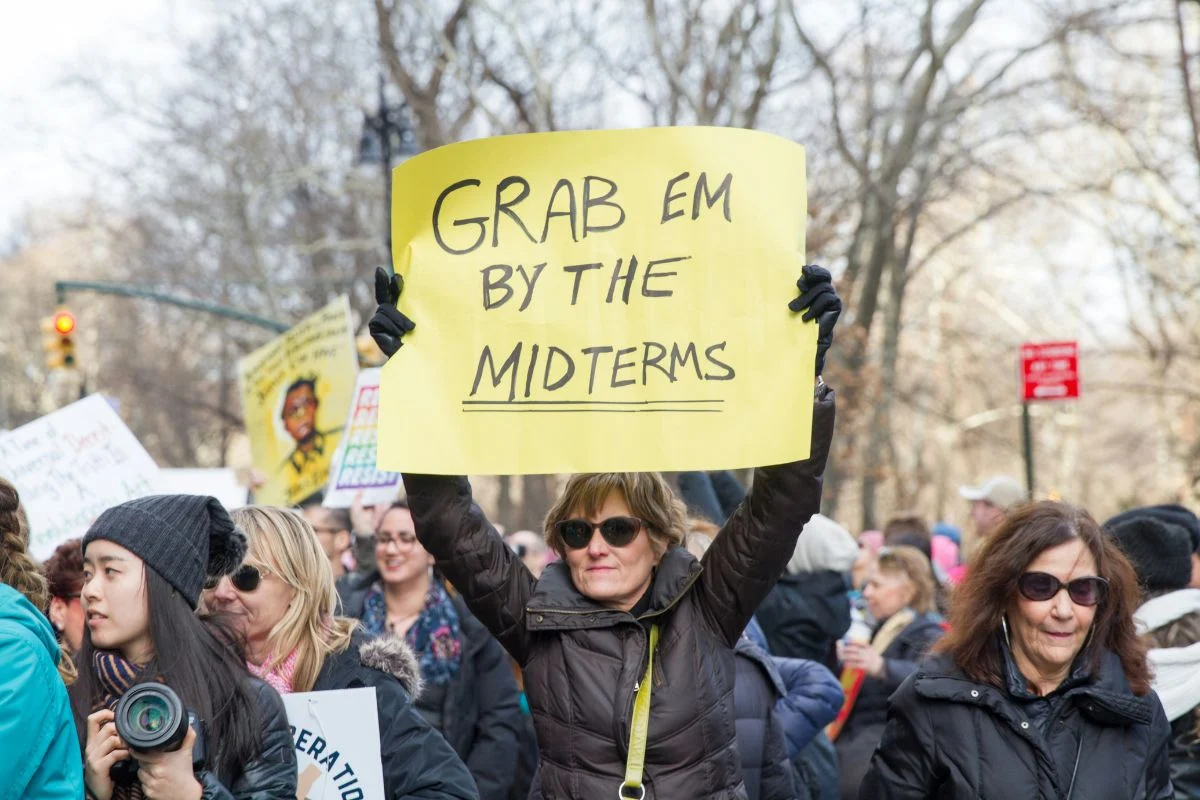
As the United States approaches the 2026 midterm elections, the political landscape is defined by an unprecedented tension between the executive branch and voting rights organizations. Since Donald Trump assumed his second presidential term, his administration has moved with significant speed to implement the policy goals of the Heritage Foundation’s Project 2025. Recent reports indicate that over half of the recommendations within the 900-page conservative blueprint have already been enacted through executive orders and departmental shifts. This aggressive policy overhaul, which advocates suggest could take decades to reverse, has set the stage for a high-stakes congressional election cycle. Historically, the party of the sitting president loses seats during the midterms—a pattern that has held for nearly 80 years. However, the current administration’s rhetoric and actions have raised alarms among civil rights watchdogs regarding the integrity and accessibility of the upcoming vote.
President Trump has been vocal about his concerns regarding the potential loss of Republican congressional power. In a January 2026 interview with Reuters, he questioned the necessity of the biennial process, stating, “When you think of it, we really shouldn’t even have an election.” While the executive branch lacks the constitutional authority to cancel federal elections, legal experts and advocacy groups warn that the administration is leveraging federal agencies to influence the electoral process in ways previously unseen in American history.
The Federal Push for Voter Data and the Legal Response
The Department of Justice (DOJ) has become a central figure in the escalating conflict over election administration. Under current leadership, the DOJ has launched a concerted effort to compel states to surrender comprehensive voter rolls, including sensitive personal information such as Social Security numbers and driver’s license data. While the administration frames these requests as necessary measures to ensure "election integrity" and to purge ineligible voters, nonpartisan watchdogs describe the move as a federal overreach into state-managed processes.
Dan Vicuña, the senior policy director for voting at Common Cause, characterized the administration’s actions as an "unprecedented power grab." According to Vicuña, no prior administration has requested such granular data, and no court has historically authorized such a federal mandate. Despite this, at least 10 states have complied with the DOJ’s demands. In response, the administration has filed lawsuits against more than 20 states that have refused to turn over their records, citing privacy concerns and state sovereignty.
Common Cause and other voting rights groups have filed counter-lawsuits across the country. A primary concern is the potential targeting of recently naturalized citizens. Advocates argue that the Trump administration intends to cross-check state voter rolls against federal databases that are often outdated regarding citizenship status. This discrepancy could lead to the mass disenfranchisement of eligible voters who are incorrectly flagged as non-citizens. Early legal challenges in California and Oregon have already resulted in setbacks for the DOJ, with judges dismissing the federal government’s arguments for data seizure.
Chronology of Escalating Tensions: From 2025 to the 2026 Primaries
The current atmosphere of distrust is rooted in a series of events that began shortly after the 2024 inauguration.
- Early 2025: Implementation of Project 2025 begins, focusing on the restructuring of the DOJ and the Department of Homeland Security.
- Late 2025: Policy organizations, including the Brennan Center for Justice, release expert briefs outlining potential strategies the administration might use to subvert the 2026 midterms. These include the weaponization of the DOJ to intimidate election officials and the use of federal power to challenge local results.
- January 2026: President Trump publicly suggests the suspension of elections during a high-profile media interview, sparking nationwide protests and legal filings.
- February 2026: The FBI conducts a raid on the election office in Fulton County, Georgia, seizing records from the 2020 and 2024 cycles. Local officials denounce the move as an attempt to undermine local control.
- March 2026: Primary elections in Texas and North Carolina are marred by confusion, equipment issues, and significant changes to polling locations.
Systematic Challenges in Texas and the Impact of Partisan Policy
The Texas primary elections held in early 2026 serve as a stark case study for the challenges facing voters. Despite record-high turnout—exceeding 2.5 million participants in early voting—voters in Dallas and Williamson counties faced significant obstacles. Historically, these counties utilized a countywide voting system, allowing residents to cast ballots at any polling location. However, citing unverified claims of potential fraud, local Republican officials opted out of this system for the 2026 primary. Under Texas law, both major parties must agree to use the countywide system; if one party dissents, voters are restricted to their specific precinct on Election Day.
The NAACP reported that this change led to "documented confusion and interference," particularly affecting Black voters. The confusion was compounded by the Texas Secretary of State’s failure to provide updated precinct maps on the official state website in a timely manner. NAACP President and CEO Derrick Johnson issued a statement warning that the events in Texas are a "warning to the entire nation," suggesting that partisan officials are prioritizing conspiracy theories over established, functional voting systems.
North Carolina and the Legacy of Voter Suppression
North Carolina remains a primary battleground for voting rights, with a history of legislative efforts aimed at restricting ballot access. Following the 2013 Supreme Court decision in Shelby County v. Holder, which gutted sections of the Voting Rights Act, North Carolina passed what was known as the "monster voter suppression bill." Although that law was eventually struck down for targeting minority voters with "surgical precision," new efforts to restrict access have emerged in the 2026 cycle.
Forward Justice, a nonpartisan policy organization, has highlighted recent tactics used to discourage participation. In the lead-up to the North Carolina primary, the State Board of Elections mailed letters to over 240,000 voters asking them to verify their identity. Ashley Marshall, co-founder of Forward Justice, noted that the wording of the letters led many to believe their registrations had been canceled, creating a chilling effect.
Furthermore, student voters have been disproportionately affected by the removal of early voting sites on college campuses. North Carolina Agricultural and Technical State University (A&T), the nation’s largest Historically Black College or University (HBCU), lost its on-campus voting site following a vote by the Republican-led state Board of Elections. Despite student protests and legal challenges, the courts declined to intervene, citing the potential for "confusion" if sites were reopened so close to the election. This move is seen by analysts as a strategic effort to lower turnout among young voters, who often lean toward the opposition party but face logistical hurdles such as lack of transportation.
The SAVE Act and the Future of Federal Voting Requirements
The legislative fight has also moved to the halls of Congress with the introduction of the Safeguarding American Voter Eligibility (SAVE) Act. This proposed legislation would require all Americans to provide documentary proof of citizenship to register to vote in federal elections. While proponents argue the bill is a common-sense measure to prevent non-citizen voting, which is already illegal and statistically rare, opponents highlight the practical barriers it creates.
Research from the Brennan Center indicates that millions of eligible American citizens do not have immediate access to passports or birth certificates. The SAVE Act, which recently passed the House of Representatives, is expected to face a contentious debate in the Senate. Civil rights organizations argue that the bill is designed to create administrative hurdles that will disproportionately affect low-income voters, students, and the elderly.
Safety, Security, and the Threat of Intimidation
Beyond the legal and legislative battles, the physical safety of voters and election workers has become a paramount concern. During the 2026 primary cycle, an incident in Aberdeen, North Carolina, underscored these fears when a flash-bang device was detonated near an early voting site. While no injuries were reported, the act was widely interpreted as an attempt at voter intimidation.
The sentencing of Tina Peters, a former Colorado elections clerk, to nine years in prison for her role in a 2024 voting data scheme has also been cited as a cautionary tale. Peters was convicted of allowing unauthorized access to her county’s election system, a move linked to proponents of election denialism. Advocacy groups like Common Cause emphasize that maintaining the "chain of custody" for election equipment and data is essential to preventing internal tampering.
Fact-Based Analysis of Electoral Implications
The convergence of executive pressure, state-level legislative changes, and federal litigation suggests a transformative period for American democracy. The 2026 midterms will serve as a litmus test for the resilience of local election administration in the face of federal scrutiny.
If the administration’s efforts to seize voter rolls and implement the SAVE Act are successful, the demographic makeup of the active electorate could shift significantly. Conversely, the intense focus on voting rights has galvanized grassroots organizations, leading to record-breaking mobilization efforts. The outcome of these legal battles will likely determine not only the control of Congress for the remainder of Trump’s term but also the procedural standards for the 2028 presidential election.
As the general election approaches, the role of public education and legal vigilance remains critical. Voting rights advocates continue to stress that while the administration’s influence is substantial, the constitutional authority over elections remains largely with the states. The ability of nonpartisan organizations to navigate this complex legal landscape will be the deciding factor in whether the 2026 midterms are remembered for their participation or their suppression.