Nila Kartika Wati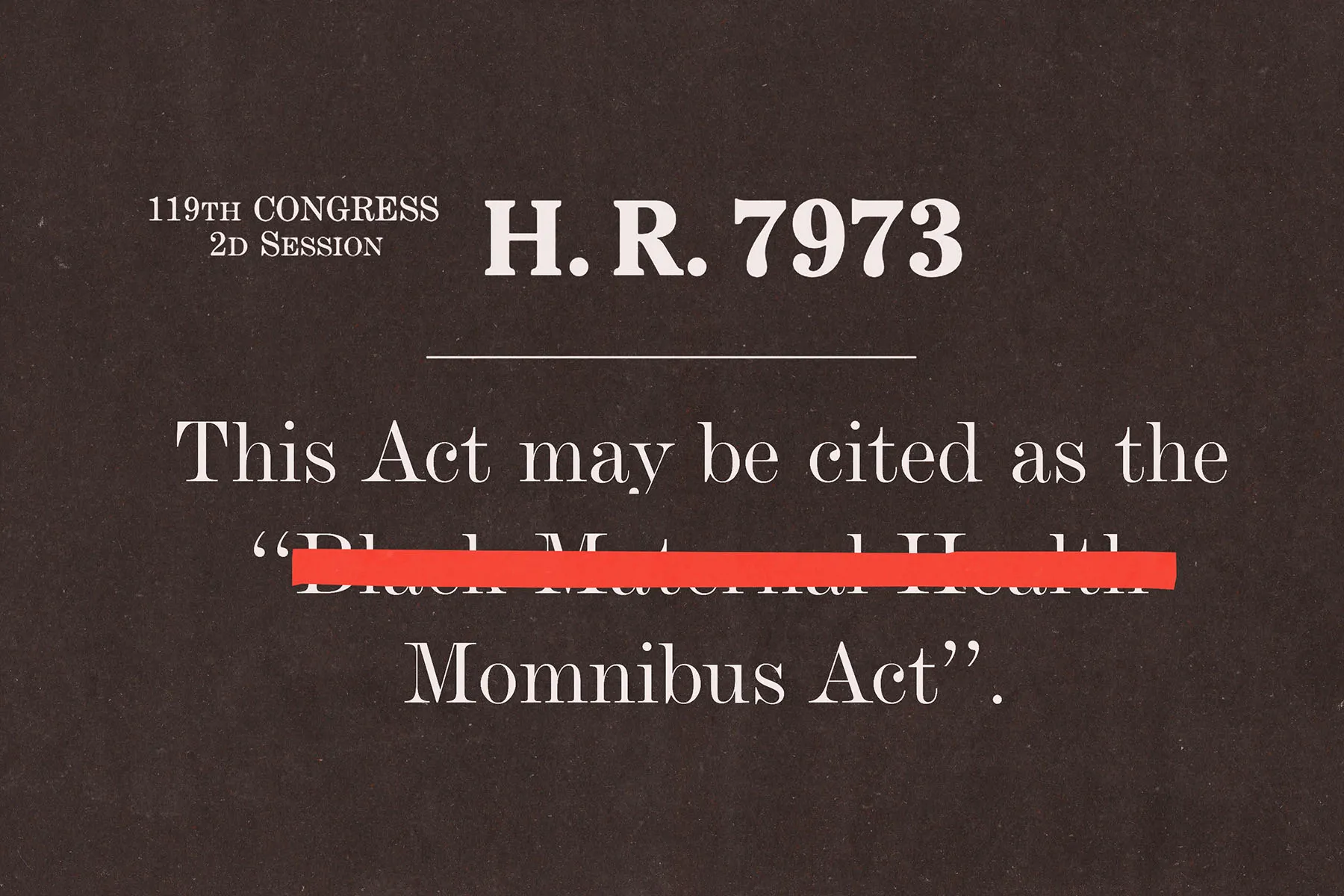
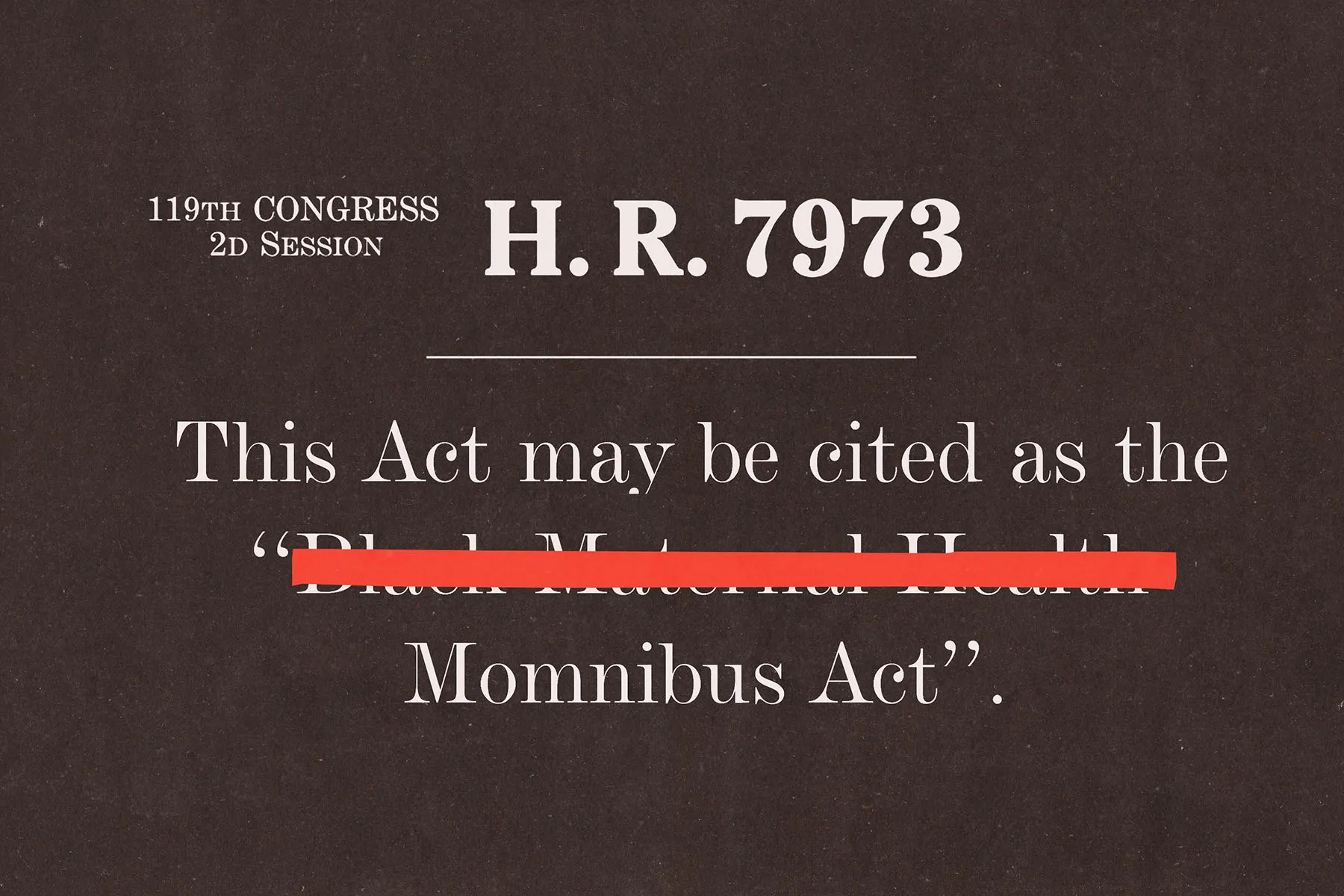
The word Black has been almost entirely excised from a sweeping package of federal bills designed to address the maternal mortality crisis in the United States, a legislative shift that has sparked significant friction between policymakers and the advocates who have spent years championing the cause. Historically known as the Black Maternal Health Momnibus Act, the latest iteration of the package, filed in mid-March, has been rebranded simply as the Momnibus Act. This change in nomenclature is not merely cosmetic; it reflects a broader trend of linguistic neutrality within the federal government that critics argue erases the very population most at risk of dying from pregnancy-related complications.
For nearly half a decade, the Momnibus has served as the primary legislative vehicle for addressing the abysmal maternal health outcomes in the U.S., where mortality rates are higher than in any other developed nation. However, as the political climate has grown increasingly hostile toward initiatives focused on diversity, equity, and inclusion (DEI), the bill’s language has undergone a systematic transformation. What began as a bold, race-conscious effort to save Black lives has evolved into a document that largely avoids naming the racial disparities it was created to solve.
Legislative Evolution and the Removal of Identity
The transformation of the Momnibus Act provides a clear window into the shifting priorities and pressures within the halls of Congress. When the package was first introduced in 2020 by the Black Maternal Health Caucus, the legislative text contained more than a dozen specific references to "Black women." By 2021, the language was updated to be more inclusive of gender identity, using the phrase "Black pregnant and postpartum individuals" nearly a dozen times.

However, by 2023, a drastic shift occurred. In that year’s version of the bill, the word "Black" appeared only once in the entire legislative package, and only in the context of referencing historically Black colleges and universities (HBCUs) or other minority-serving institutions. This linguistic scrub has carried over into the current 2024/2026 version. The specific descriptions of the people the bill was intended to help have been replaced with broader, more clinical terms such as "demographic groups with elevated rates of maternal mortality" or "racial and ethnic minority groups."
Representative Lauren Underwood of Illinois, a lead sponsor of the package and a co-chair of the Black Maternal Health Caucus, has defended the changes as a matter of practical communication and technical alignment. Underwood noted that the term "Momnibus" has become the common shorthand for the legislation and that the title change reflects how the public and lawmakers already refer to the bill. She emphasized that the substance of the legislation remains focused on the same goals and that the caucus has successfully secured hundreds of millions of dollars for maternal health policies that center Black women through other funding avenues.
A Chronology of Linguistic Erasure
To understand the current tension, it is necessary to look at the timeline of the bill’s development and the political environment surrounding each iteration:
- 2019: The Black Maternal Health Caucus is launched by Reps. Lauren Underwood and Alma Adams to address the racial disparities in maternal outcomes.
- 2020: The Black Maternal Health Momnibus Act is introduced for the first time. It is explicit in its focus on Black women and racial justice.
- 2021: The bill is reintroduced with updated language to include "postpartum individuals," maintaining its focus on the Black community. Several components of the bill receive vocal support from the Biden-Harris administration.
- 2023: Under a shifting political landscape, the word "Black" is largely removed from the text. A spokesperson for Rep. Underwood cited "technical edits" intended to align the bill with language used by the Office of Minority Health (OMH) to avoid regulatory hurdles.
- 2024-2026: The bill is reintroduced as the "Momnibus Act." The removal of "Black" from the title and text becomes a point of public contention as advocates begin to withdraw their support.
The Statistical Reality of a Racialized Crisis
The removal of race-specific language comes at a time when the data regarding Black maternal health remains staggering. According to the Centers for Disease Control and Prevention (CDC), the maternal mortality rate in the United States in 2023 was 18.6 deaths per 100,000 live births. However, for Black women, that rate was 50.3 deaths per 100,000 live births—nearly three times higher than the rate for white women.
Research from the National Bureau of Economic Research further highlights that these disparities persist regardless of socioeconomic status. Even the wealthiest Black women face higher risks of maternal mortality than the poorest white women, suggesting that the issue is deeply rooted in systemic racism and the quality of care provided to Black patients rather than just income or education levels.
Furthermore, Medicaid plays a disproportionate role in the lives of Black families. While Medicaid covers approximately 40 percent of all live births in the U.S., it covers 65 percent of births to Black mothers. Recent federal efforts to trim Medicaid rolls and target offices dedicated to minority health have raised alarms that the safety net for Black pregnant individuals is being systematically dismantled.
Strategic Pragmatism vs. Advocacy Principles
The decision to neutralize the language of the Momnibus Act has created a rift in the advocacy community. Some leaders, such as Angela D. Aina of the Black Mamas Matter Alliance (BMMA), have expressed a sense of "painful irony." The BMMA, which supported the bill in previous years, is not publicly supporting the current version. Aina noted that while the bill includes important provisions for Hispanic and Indigenous populations—which the group supports—the "asymmetry" of removing specific mentions of Black women is troubling.
Other organizations, including the National Partnership for Women & Families and the Institute for Women’s Policy Research, have also stepped back from endorsing the full package. Jocelyn Frye, president of the National Partnership, stated that addressing a crisis effectively requires "clearly naming the problem." She argued that at a time when the administration and certain political factions are denying the existence of racial disparities, it is more important than ever to center the people most affected.

Conversely, some advocates remain supportive of Rep. Underwood, viewing her as a champion who is making difficult choices in a hostile legislative environment. Aza Nedhari, CEO of Mamatoto Village, questioned why a Black congresswoman should be forced to make such a choice in the first place, pointing to the broader systemic pressures that penalize race-conscious policymaking.
The Broader Political Context: The War on DEI
The linguistic shift in the Momnibus Act cannot be viewed in isolation. It occurs amidst a broader national campaign against diversity, equity, and inclusion initiatives. The Trump administration has signaled a desire to eliminate the Office of Minority Health and has targeted various federal grants that prioritize racial equity.
Reports have surfaced that the Department of Health and Human Services (HHS), under the leadership of Secretary Robert F. Kennedy Jr., has instructed organizations applying for federal funding to remove terms like "Black" and "DEI" from their applications. During a congressional hearing in April, Rep. Summer Lee challenged Secretary Kennedy on this point, asking how the government could solve the Black maternal mortality crisis if it was forbidden from even using the word "Black."
This environment has led many lawmakers to preemptively "word-smith" their legislation to protect it from being defunded or discarded. However, scholars like Deva Woodly of Brown University argue that this approach is fundamentally flawed. Woodly posits that there is "no race-neutral way to address Black maternal mortality" and that cloudy language allows for the law to be "misapprehended and deliberately misused" by those in power.

Implications for Policy Efficacy and Future Advocacy
The primary concern among critics of the renamed Momnibus Act is that vague language leads to vague results. If a bill does not explicitly name Black women as the target beneficiaries, there is no guarantee that the funding and programs it creates will actually reach the communities with the highest mortality rates.
Elizabeth Dawes of the Black Maternal Health Federal Policy Collective expressed concern that this sets a dangerous precedent for grassroots advocacy. She noted that general conversations about policy often "go nowhere" and that the future of advocacy depends on being specific about the "ask."
As the federal bill remains stalled in a divided Congress, the focus has shifted toward state-level action. Several states have successfully passed their own "mini-Momnibus" bills, extended postpartum Medicaid coverage, and implemented doula reimbursement programs. These state-level victories are often led by Black women who are unwilling to wait for a federal consensus that requires the erasure of their identity.
The debate over the Momnibus Act highlights a fundamental tension in American governance: the struggle between the pragmatic need to pass legislation in a polarized environment and the moral necessity of naming and confronting systemic racism. While the sponsors of the bill maintain that their commitment to Black mothers remains unchanged, the disappearance of the word "Black" from the text serves as a stark reminder of the political costs of visibility in the current era. For the advocates on the front lines, the message is clear: a solution that cannot name the victim is unlikely to stop the crime.