Pevita Pearce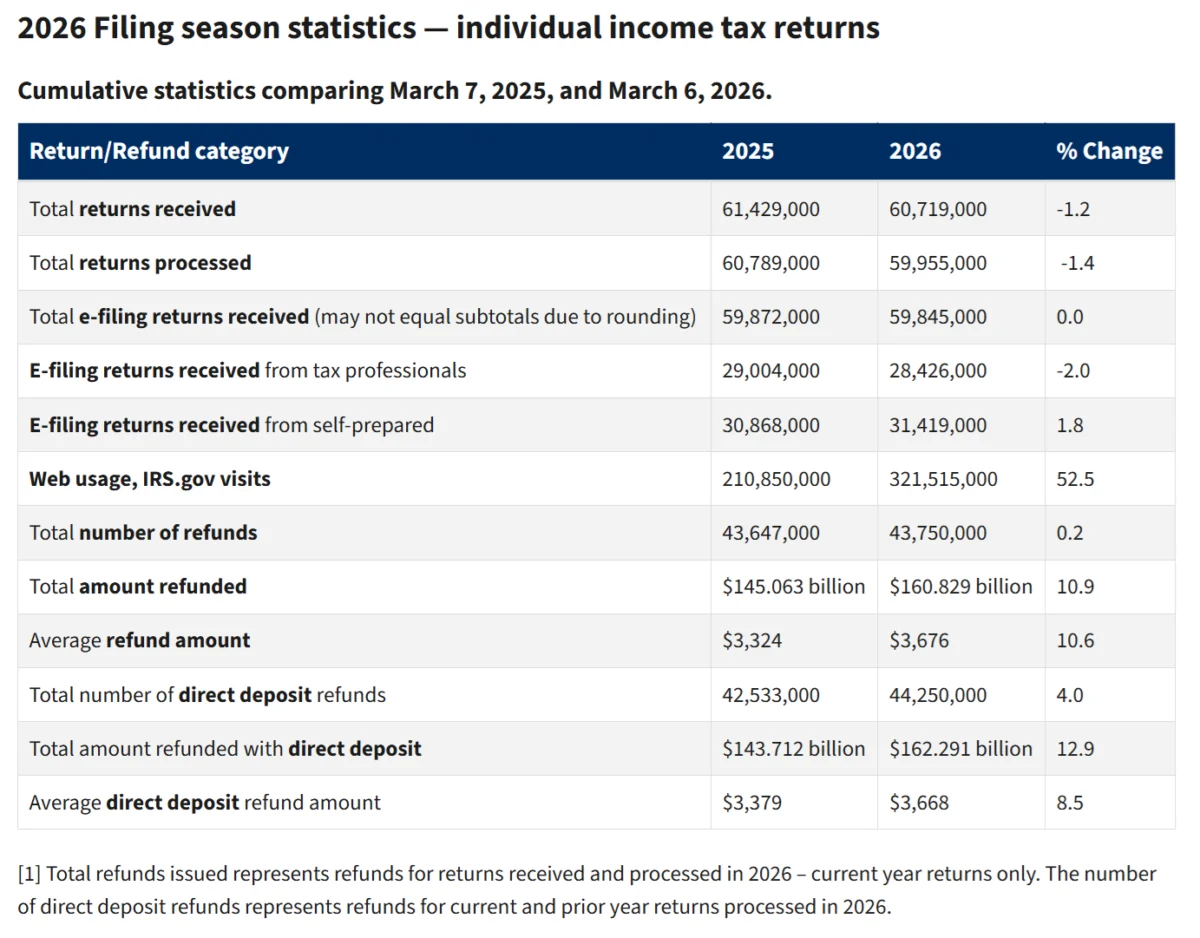
By Matt Durr, mlive.com (TNS)
The Internal Revenue Service (IRS) has released compelling data for the 2026 tax filing season, indicating a substantial increase in the average tax refund compared to the previous year. For the week ending February 28, 2026, the average refund has surged by more than $350, marking a significant 10.6% year-over-year jump. This upward trend suggests a more financially beneficial outcome for many taxpayers as they navigate the annual process of filing their federal income taxes.
A Deeper Dive into the Numbers
As of the reporting period, the average refund stands at an impressive $3,676, a notable increase from the $3,324 average recorded during the same timeframe in 2025. Even for taxpayers who opt for direct deposit, a method generally associated with slightly lower average refunds due to faster processing and potentially different timing of refund issuance, the figures show positive growth. The average direct deposit refund in 2026 is $3,668, an 8.6% increase over the $3,379 average seen in 2025.
The overall volume of refunds issued also reflects this positive momentum. The IRS has distributed a total of $160.8 billion in refunds so far in 2026, a substantial rise from the $145 billion disbursed by the same date in 2025, representing a 10.9% year-over-year increase. This growth in total refund dollars is occurring despite a slight dip in the number of tax returns filed and processed. As of the reporting date, the IRS had received 60.7 million returns and processed 59.9 million, a decrease of 1.2% and 1.4% respectively, compared to the same period in the previous year. This divergence between the number of returns and the total refund amount underscores that individual refunds are becoming larger on average.
Factors Driving the Refund Increase
Several key factors are contributing to this notable surge in average tax refunds. One significant driver is the delayed release of refunds for taxpayers claiming certain tax credits. Federal law mandates that refunds for individuals claiming the Earned Income Tax Credit (EITC) or the Additional Child Tax Credit (ACTC) cannot be issued until mid-February. This provision is in place to allow for additional scrutiny and verification of these credits, which are designed to benefit low-to-moderate-income families. As these refunds begin to be distributed, they contribute to a higher overall average refund amount.
The IRS typically releases weekly updates on tax return and refund data throughout the filing season. Historically, these early-season figures often show an inflated average refund. This is because the initial wave of refunds tends to include those with more complex tax situations or those who are eligible for specific credits that are processed later. As the April 15th tax deadline approaches, the average refund amount typically stabilizes.
Legislative Impact and Policy Changes
The increased refund amounts are also directly linked to significant changes in the tax code enacted through legislation, notably the "One Big Beautiful Bill" passed in the preceding year. This comprehensive tax reform introduced several key provisions aimed at stimulating the economy and providing financial relief to taxpayers. Among the most impactful changes are the elimination of federal income tax on overtime pay and tips for many workers. This means that income previously subject to taxation is now retained by the wage earner, potentially leading to larger refunds if taxes were withheld based on the assumption of taxation.
Furthermore, the legislation introduced deductions for interest paid on auto loans for vehicles manufactured in the United States. This provision incentivizes domestic automobile purchases and provides a financial benefit to consumers who finance their vehicle purchases. These, along with other adjustments to tax brackets and deductions, collectively contribute to a scenario where more taxpayers are experiencing larger refunds.

The White House has projected that these legislative changes will lead to an average refund increase of over $1,000 for the entire 2026 tax season. This projection builds on a trend of increasing average refunds in recent years. For the full 2025 tax season, the average refund was approximately $3,800, a considerable jump from the $3,052 average in 2024 and $3,004 in 2023. Increases to the standard deduction, a fundamental component of tax calculations that allows individuals to reduce their taxable income, also play a crucial role in boosting refund amounts by reducing the overall tax liability.
Navigating the Tax Season and Beyond
For taxpayers eager to track their refund status, the IRS offers several convenient methods. Those who file their tax returns electronically and opt for direct deposit typically receive their refunds within 21 days of their return being accepted by the IRS. The agency’s "Where’s My Refund?" online tool is a reliable resource for monitoring progress. According to IRS guidelines, the refund status is usually available approximately 24 hours after an e-filed current-year return is submitted, three to four days after an e-filed prior-year return, and about four weeks after a paper return is filed.
It is crucial for taxpayers to remember that the deadline for filing their 2025 tax returns is April 15, 2026. Failure to file by this date, or to obtain an extension, can result in penalties and interest charges. The IRS encourages taxpayers to file accurately and on time to avoid any potential complications.
Context and Historical Perspective
The IRS’s consistent release of weekly filing season statistics provides valuable insights into the nation’s tax landscape and the financial well-being of its citizens. These reports serve as a barometer for economic activity and highlight the impact of tax policies. The current trend of increasing refunds is particularly significant, as it suggests that a substantial portion of the population may be receiving a welcome financial boost, which can be used for savings, debt reduction, or discretionary spending, potentially stimulating the broader economy.
The legislative changes leading to these increased refunds represent a deliberate effort by policymakers to influence taxpayer behavior and provide economic relief. The "One Big Beautiful Bill" signifies a broader shift in tax policy, with a focus on simplifying the tax code and offering more direct financial benefits. The impact of these changes will continue to be observed throughout the tax season and beyond, as taxpayers adjust to the new provisions and their financial implications.
Future Outlook and Broader Implications
While the early-season data paints a rosy picture, the IRS’s projection that average refund numbers may decline as the season progresses is a standard observation. This initial surge is often influenced by the timing of specific refund releases and the types of returns processed earliest. As the filing deadline nears, a more representative average for the entire season is expected to emerge.
The sustained increase in average refunds over multiple years, amplified by recent legislative reforms, suggests a potentially positive impact on consumer spending and household financial stability. For many Americans, tax refunds represent a significant lump sum of money that can be crucial for managing financial obligations or pursuing financial goals. The government’s intention with such policies is often to provide a direct economic stimulus through increased disposable income.
The IRS’s role in this process is critical, not only in efficiently processing millions of returns and distributing refunds but also in providing transparency through its data releases. This information is invaluable for economists, policymakers, and the public alike, offering a clear view of the effectiveness of tax policies and the financial health of the nation. As the 2026 tax season unfolds, continued monitoring of IRS data will provide further clarity on the long-term implications of these policy changes and their impact on the American taxpayer.