Nila Kartika Wati
On March 13, 2026, United States Secretary of Defense Pete Hegseth addressed the media in a press conference that transcended traditional military updates, signaling a profound shift in the relationship between the federal government and the fourth estate. Hegseth utilized the platform to criticize CNN’s recent investigative reporting regarding the administration’s military operations against Iran, specifically an unauthorized conflict that has drawn intense domestic and international scrutiny. During the briefing, Hegseth openly expressed his desire for a change in the network’s leadership, explicitly naming David Ellison—the son of billionaire Oracle co-founder and prominent political donor Larry Ellison—as the preferred future steward of the organization.
The Secretary’s remarks were a direct rebuttal to a CNN report published on March 12, 2026, which alleged that the Pentagon and the National Security Council had significantly underestimated the strategic consequences of military strikes, particularly Iran’s capacity and willingness to blockade the Strait of Hormuz. Hegseth dismissed the report as "fundamentally unserious" and stated, "The sooner David Ellison takes over that network, the better." This public endorsement of a specific corporate takeover by a sitting Cabinet member has raised alarms among press freedom advocates, who view the comments as an overt signal that the administration expects a more favorable editorial line once the Ellison family completes its acquisition of Warner Bros. Discovery (WBD).
The $111 Billion Merger: A Chronology of Consolidation
The pending acquisition of Warner Bros. Discovery by David Ellison’s Paramount Skydance represents one of the most significant media consolidations in modern history. The path to this moment began in August 2025, when David Ellison successfully merged his startup, Skydance Media, with Paramount Global. Building on that momentum, Skydance recently outbid competitors, including streaming giant Netflix, to secure a $111 billion deal for WBD.
This merger is the culmination of a decade-long trend of extreme consolidation. In the early 1980s, approximately 50 companies controlled the vast majority of American media; by 2011, that number had plummeted to six. The Ellison-WBD deal threatens to narrow that bottleneck even further. Upon regulatory approval, the Ellison family will hold a controlling stake in an empire that encompasses CNN, HBO, Max, and the Warner Bros. film studios, alongside the existing Paramount portfolio, which includes CBS News, MTV, Nickelodeon, and Comedy Central.
The timeline of this acquisition is inextricably linked to political developments. In July 2025, just one month before the Skydance-Paramount merger was finalized, Paramount settled a $10 billion lawsuit filed by Donald Trump against CBS News for $16 million. The lawsuit stemmed from a 60 Minutes interview with Kamala Harris. Legal analysts at the time suggested the settlement was a strategic move to clear the path for the merger by removing a litigious obstacle involving a powerful political figure.
The Scale of the Ellison Portfolio and Tech Integration
The influence of the Ellison family extends far beyond traditional broadcast media. Larry Ellison, whose net worth is estimated at $175 billion, remains a pivotal figure in the technology sector through Oracle. This creates a vertical integration of information that is unprecedented. Oracle provides the backend infrastructure for various data-driven enterprises, including a significant stake in TikTok’s U.S. operations. According to Pew Research, approximately 40 percent of U.S. adults use TikTok, with more than half of those users reporting that they regularly consume news on the platform.
The integration of media and technology under a single family’s control introduces risks associated with algorithmic manipulation and surveillance. At an Oracle financial analyst meeting in late 2024, Larry Ellison detailed a vision for a future powered by artificial intelligence where "citizens will be on their best behavior" because of constant recording and reporting by AI-monitored cameras. When this surveillance capability is paired with the ownership of major news networks and social media platforms, the potential for comprehensive narrative control becomes a tangible reality.
Editorial Precedents and the Rise of "Corporate Capitulation"
Evidence of shifting editorial priorities has already emerged within the Ellison-controlled landscape. In December 2025, CBS News, operating under the editorial leadership of Bari Weiss, pulled a completed 60 Minutes segment just hours before its scheduled broadcast. The segment featured interviews with Venezuelan men who had been deported by the Trump administration to El Salvador’s notorious Centro de Confinamiento del Terrorismo (CECOT).
Internal reports indicated that the deported individuals were highly critical of U.S. immigration policy. Weiss justified the decision by claiming the story "did not advance the ball," but the move was widely condemned by staff and external observers as a "political" decision designed to avoid friction with the administration. This incident serves as a primary example of what media advocacy groups call "corporate capitulation"—the tendency of large media conglomerates to suppress dissent to protect their regulatory and financial interests.
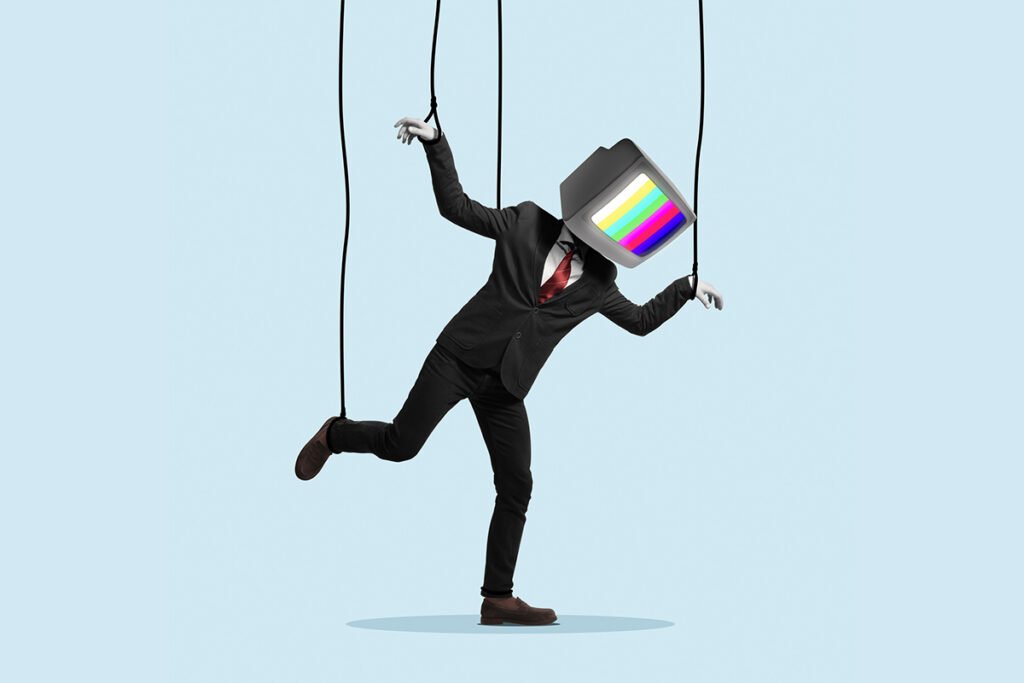
Nora Benavidez, author of the Chokehold report for the media advocacy group Free Press, identifies corporate capitulation as a primary method through which democratic discourse is undermined. Benavidez argues that the top 35 corporate media companies in the U.S. are increasingly incentivized to trade journalistic independence for political favors. The "Media Capitulation Index" currently tracks these trends, noting that as media owners align themselves with political power, the information environment suffers a top-down degradation.
The Orbán Parallel and the Authoritarian Playbook
Political scientists and international journalists have drawn parallels between the current U.S. media landscape and the strategies employed by Hungarian Prime Minister Viktor Orbán. In Hungary, the consolidation of media ownership among a small circle of government-aligned oligarchs effectively neutralized independent journalism without the need for formal state censorship.
András Pethő, a prominent Hungarian journalist, noted in early 2025 that the tactics of verbal bullying, legal harassment, and the "buckling" of media owners in the United States mirrored the erosion of the free press in Hungary. At a 2022 meeting of the Conservative Political Action Conference (CPAC), Orbán explicitly advised American conservatives that the path to sustained power required "having their own media outlets." The Ellison acquisition of WBD and CNN is seen by many as the fulfillment of this strategic objective, creating a de facto nationalized media apparatus that operates under the guise of private enterprise.
The Crisis of News Deserts and Information Vulnerability
The impact of this consolidation is amplified by the ongoing collapse of local journalism. The State of Local News Project at Northwestern University’s Medill School reported in late 2025 that 212 U.S. counties currently have no locally based news sources, and over 1,500 counties have only one. This means that approximately 50 million Americans live in "news deserts."
In the absence of reliable local reporting, these populations are increasingly reliant on social media platforms like TikTok and X (formerly Twitter) for information. When these platforms are controlled by the same interests that oversee national news networks, the ability for citizens to find vetted, independent information is severely compromised. In news deserts, 51 percent of residents report getting their news from social media influencers or family members, creating an environment where unverified information and state-aligned narratives can proliferate without challenge.
Regulatory Responses and Official Statements
The Federal Communications Commission (FCC) has signaled a shift in its regulatory posture under the current administration. FCC Chairman Brendan Carr has recently suggested that the commission may review the broadcast licenses of networks based on their coverage of the war with Iran. This move, combined with Hegseth’s comments, suggests a coordinated effort to use regulatory power to enforce editorial compliance.
In response to Secretary Hegseth’s recent criticisms, a CNN spokesperson issued a brief statement: "We stand by our reporting." However, industry analysts suggest that the internal morale at the network is strained. With David Ellison’s takeover looming, long-time anchors and investigative journalists who have been traditionally critical of the administration—such as Anderson Cooper and Jake Tapper—face an uncertain future.
Implications for the Independent Media Sector
The consolidation of the "narrative ecosystem" has placed a renewed emphasis on the role of non-commercial and independent media. Organizations such as ProPublica, NPR, and various non-profit newsrooms are increasingly viewed as the final holdouts of independent inquiry. However, these entities face significant challenges, including a precarious funding model and potential legal threats from an administration that has openly expressed a desire to "reshape" the media landscape.
The Free Press report concludes that the survival of democratic practices in the United States depends on rebuilding constitutional protections for free expression and investing in diverse, non-commercial journalism. As the Ellison empire prepares to absorb CNN and the wider WBD portfolio, the boundary between corporate interests and state power continues to blur. The resulting landscape is one where narrative control is no longer a matter of public debate, but a commodity that can be purchased, integrated, and deployed to serve the interests of those in power.