Dwi Wanna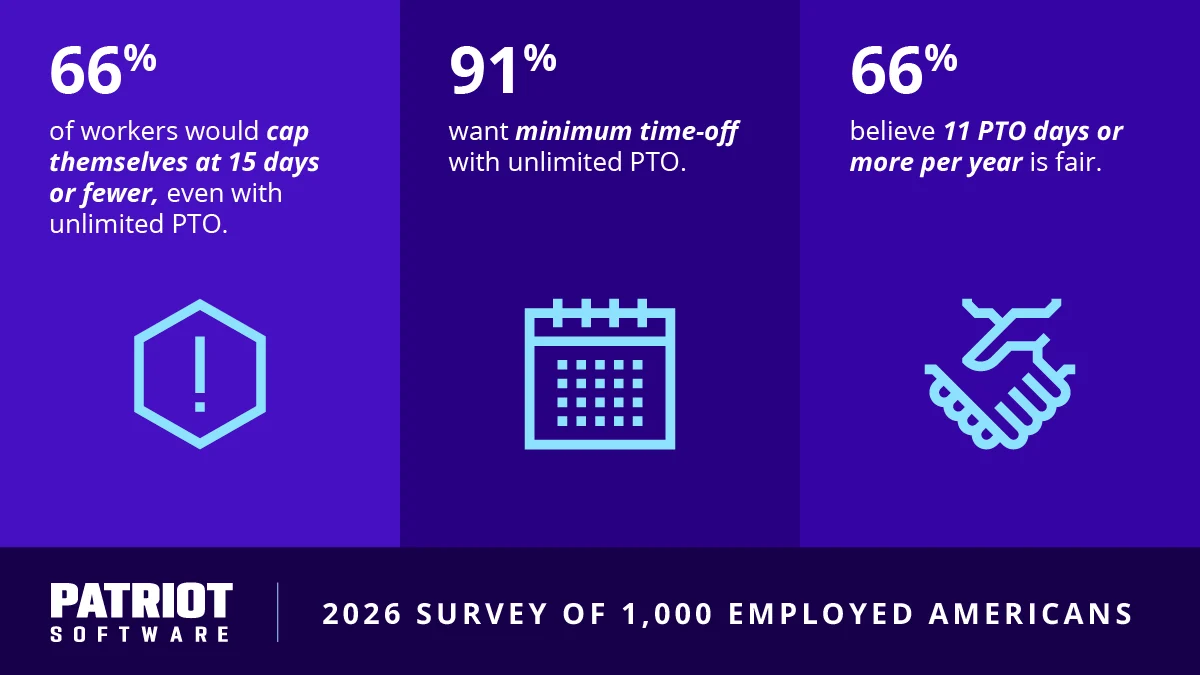
The landscape of American employment is currently undergoing a period of profound reevaluation, particularly concerning the balance between professional obligations and personal recovery. A comprehensive national survey of 1,000 employed Americans, conducted by Canton, Ohio-based Patriot Software, has brought to light a complex web of confusion, cultural anxiety, and generational friction regarding paid time off (PTO) policies. The findings suggest that while modern benefit packages—such as unlimited PTO—are intended to offer greater flexibility, they often result in employees taking significantly less time off than those with traditional, capped policies. This phenomenon, driven by a lack of clarity and a pervasive "guilt culture" in the workplace, highlights a growing disconnect between corporate policy and employee experience.
The survey results underscore a critical reality in the modern workforce: the mere existence of a benefit does not guarantee its utilization. Patriot Software’s data indicates that employees are frequently paralyzed by the ambiguity of their company’s leave policies. Instead of using objective guidelines, many workers look to the behavior of their managers and the unspoken norms of their office culture to determine how much leave is truly "acceptable." Consequently, the flexibility that was marketed as a perk has, in many instances, become a source of stress and professional uncertainty.
The Evolution of Leave Policies in the American Workplace
To understand the current state of PTO confusion, it is necessary to examine the historical trajectory of leave policies in the United States. Unlike many other industrialized nations, the U.S. does not have a federal mandate requiring employers to provide paid vacation time. The Fair Labor Standards Act (FLSA) of 1938 established the 40-hour workweek and overtime pay but remained silent on the issue of paid leave. For decades, the standard model was a "siloed" approach, where employees were granted a specific number of days for vacation, a separate bank for sick leave, and occasionally personal days.
In the early 2000s, businesses began shifting toward "consolidated PTO," merging all leave types into a single bucket to simplify administration. By the mid-2010s, particularly within the technology sector, "unlimited PTO" emerged as a prominent trend. Companies like Netflix and HubSpot popularized the idea that as long as work was completed, the amount of time taken off was irrelevant. However, as the Patriot Software survey illustrates, this transition has not been seamless. The removal of hard limits has inadvertently removed the "permission" to take time off, leading to a psychological phenomenon where employees feel they must prove their dedication by remaining at their desks.
The Unlimited PTO Paradox and Workplace Anxiety
One of the most striking findings from the Patriot Software study is the "unlimited PTO paradox." When policies are designed without specific caps, employees often default to taking the minimum amount of time possible to avoid appearing uncommitted. The survey revealed that without a defined "allowance," workers experience heightened anxiety about how their absence will be perceived by leadership and peers.
This anxiety is not unfounded. The data suggests that workplace culture and management behavior are the primary drivers of PTO usage. If a manager rarely takes time off or sends emails during their own vacation, employees receive a silent but powerful signal that "unlimited" does not actually mean "flexible." CEO of Patriot Software, Kyle Dreger, emphasized this dynamic, noting that the success of a PTO policy is contingent upon mutual respect and trust. “Encouraging PTO use comes down to two things: employers who respect their team’s time enough to say ‘step away,’ and employees who trust their workplace enough to actually do it,” Dreger stated.
The survey found that when flexibility lacks clarity, it ceases to be a benefit. Employees expressed a desire for clear benchmarks—essentially wanting to know exactly how much time they can take without risking their standing in the company or their future career progression.
Generational Divides and the Changing Philosophy of Work
The Patriot Software survey also highlighted significant generational divides in how PTO is perceived and utilized. These differences reflect broader shifts in the American philosophy of work, ranging from the "live to work" mentality of older generations to the "work to live" approach increasingly adopted by younger workers.
Baby Boomers and Gen X employees, who entered the workforce during eras of different economic pressures, often view PTO as something that must be earned through long-term loyalty and consistent presence. In contrast, Millennials and Gen Z workers are more likely to view time off as a fundamental component of mental health and overall well-being. However, despite this shift in perspective, younger workers are often the most susceptible to the "guilt" associated with taking leave, fearing that their shorter tenure makes them more replaceable.
Furthermore, the survey analyzed responses by income and gender, revealing that financial strain plays a significant role in PTO decisions. For many hourly workers or those in lower-income brackets, taking time off—even when "paid"—can be complicated by the loss of potential overtime or the fear that their absence will lead to a reduction in future hours. In some cases, employees reported taking unpaid leave because they were confused about how to accrue or request their paid benefits, leading to unnecessary financial hardship.
Supporting Data: The Cost of Unused Vacation
The findings from Patriot Software align with broader economic data regarding American work habits. According to the U.S. Bureau of Labor Statistics (BLS), while approximately 77% of private-industry workers have access to paid vacation, a substantial portion of that time goes unused every year. Research from organizations like Travel Association’s "Project: Time Off" has historically shown that Americans leave hundreds of millions of vacation days on the table annually.
The implications of this unused time are significant. From a health perspective, the lack of recovery time contributes to burnout, which the World Health Organization (WHO) has recognized as an occupational phenomenon. From a corporate perspective, burnout leads to decreased productivity, higher turnover rates, and increased healthcare costs. The Patriot Software survey suggests that the "confusion" surrounding PTO is a direct contributor to this burnout cycle, as employees are effectively working more than they are contractually required to, simply because they do not understand their own benefits.
Official Responses and the Need for Policy Clarity
In response to these findings, HR experts and industry leaders are calling for a more transparent approach to benefits communication. The consensus among management consultants is that "flexibility" must be paired with "guidelines."
Patriot Software’s Content Manager, Rachel Blakely-Gray, noted that the data points toward a need for simplified administrative tasks and better communication tools. The company, which provides accounting and payroll solutions for businesses with up to 500 employees, advocates for cloud-based systems that allow employees to see their leave balances and request time off with minimal friction.
Industry reactions to the survey suggest that "Unlimited PTO" may need to be rebranded or restructured as "Minimum PTO" policies. Some forward-thinking companies have begun implementing mandatory minimums—requiring employees to take at least two or three weeks off per year—to ensure that the "unlimited" nature of the policy does not result in zero usage.
Broader Impact and the Future of Employee Benefits
The broader implications of the Patriot Software survey extend beyond the HR department. As the U.S. labor market remains competitive, the ability to effectively manage and communicate PTO policies will become a key differentiator for talent acquisition and retention. Employees are increasingly prioritizing transparency and "psychological safety" when choosing an employer.
The study also suggests that the "financial strain" mentioned by respondents is a symptom of a larger issue: the complexity of payroll and benefits administration in small to mid-sized businesses. When policies are poorly documented or difficult to access, the resulting confusion creates an environment of distrust.
Looking ahead, the trend toward more integrated HR and payroll software may provide a solution. By automating the tracking of accruals and providing clear, real-time data to both employers and employees, businesses can reduce the "cultural anxiety" identified in the survey. However, technology alone is not a panacea. As Kyle Dreger pointed out, the human element—leadership that actively encourages disconnection—remains the most critical factor.
Methodology and Scope
The insights provided by Patriot Software are based on a rigorous methodology. The survey polled 1,000 employed adults across the United States, ensuring a diverse sample size that accounts for various industries and regions. Participants were asked a series of questions focusing on:
- The structure of their current PTO policy (accrual, lump sum, or unlimited).
- Their expectations of fairness regarding leave requests.
- Their behavior and psychological state when operating under unlimited policies.
- Experiences with unpaid leave and the reasons for choosing it over paid options.
The data was then cross-referenced by demographic factors including age, income level, and gender to identify the specific trends and divides reported in the study.
Conclusion
The Patriot Software survey serves as a wake-up call for American employers. In an era where work-life balance is at the forefront of the national conversation, the survey reveals that many employees are still struggling to navigate the basic terms of their employment. Whether through generational differences in work ethic or the unintended consequences of "unlimited" flexibility, the American worker is currently caught in a state of PTO paralysis.
For businesses to truly support their workforce, they must move beyond vague promises of flexibility and provide the clarity, trust, and cultural permission necessary for employees to truly "step away." Without these elements, PTO remains a benefit in name only, contributing to a culture of burnout rather than a culture of productivity.