Julia Chirkova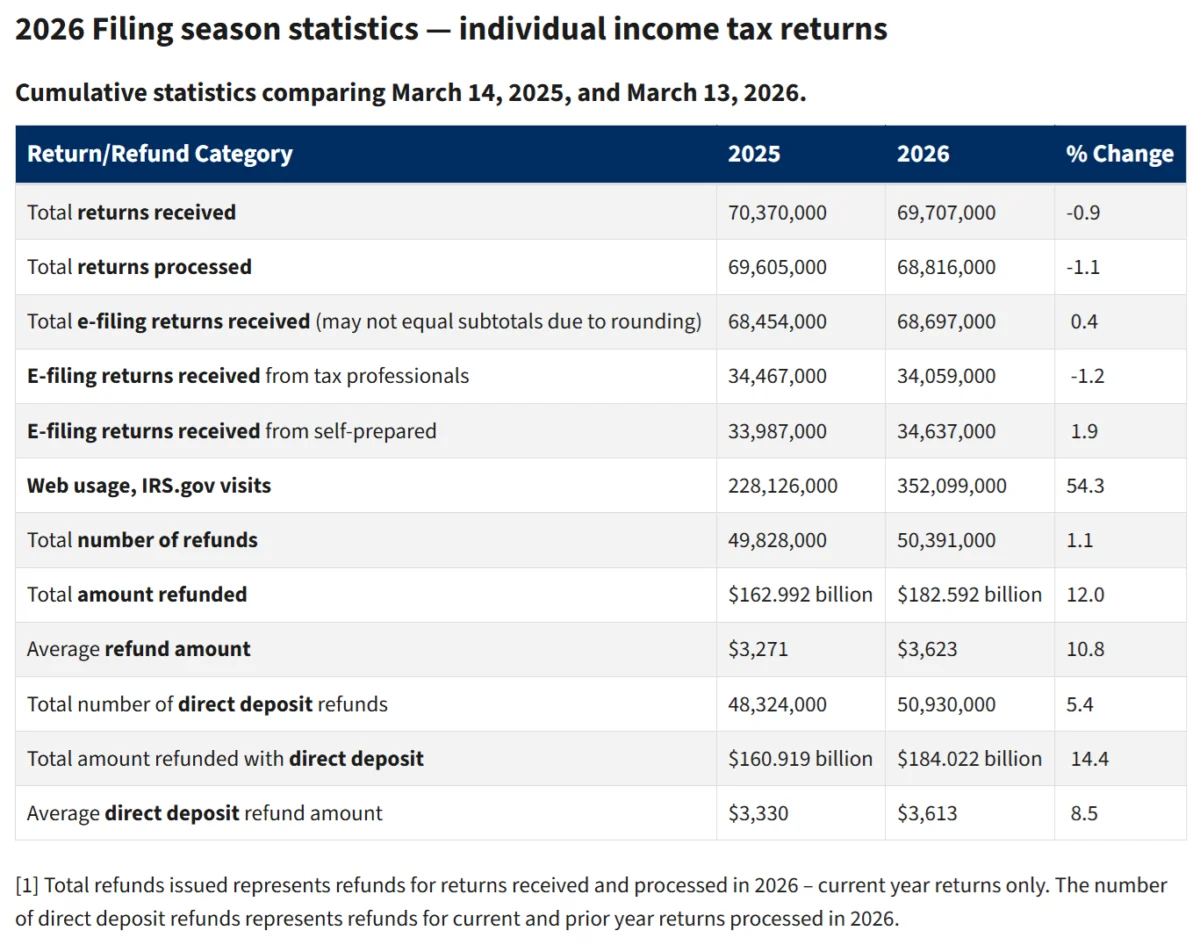
New data released by the Internal Revenue Service (IRS) indicates a substantial increase in the average tax refund for the 2026 filing season, offering welcome financial relief to millions of American taxpayers. As of the week ending March 13, 2026, the average refund has reached $3,623, marking an impressive 10.8% surge compared to the $3,271 average observed at the same point in the prior year. This translates to an additional $352 per filer, a notable uptick that has been a consistent trend throughout the current filing period.
The upward trajectory of tax refunds is not merely a statistical anomaly but a reflection of evolving tax policies and their impact on individual taxpayers. The IRS has diligently processed a significant volume of returns, with approximately 69.7 million filed by March 13, 2026. While this volume is marginally lower than the 70.4 million returns received by the same date in 2025, the aggregate amount of money being returned to taxpayers has seen a considerable increase. To date, the IRS has issued a staggering $182.6 billion in refunds, a substantial rise from the $163 billion disbursed by the same juncture in the 2025 tax season.
Direct Deposit Surges Highlight Efficiency and Speed
For the majority of taxpayers who opt for direct deposit – the most common and efficient refund method – the news is equally positive. The average direct deposit refund for the 2026 filing season currently stands at $3,613, an 8.5% increase over the previous year. This acceleration in direct deposit refunds is further underscored by a robust 14.4% year-over-year increase in the total amount refunded through this channel. This suggests not only larger individual payouts but also a smoother and potentially faster processing of these funds directly into taxpayers’ bank accounts. The IRS’s ongoing efforts to modernize its systems and encourage electronic filing and refund methods appear to be yielding tangible benefits for taxpayers seeking timely access to their financial returns.
Underlying Factors Driving the Refund Increase
The substantial rise in average tax refunds is directly attributable to a series of key policy changes that took effect for the 2025 tax year. Among the most impactful are enhancements to the Child Tax Credit, which has been expanded to provide greater financial support to families. Additionally, taxpayers are benefiting from increased standard deductions, offering a larger portion of income that is shielded from taxation. Furthermore, new deductions have been introduced for tips and overtime pay, providing further avenues for tax relief for specific segments of the workforce.
These legislative adjustments were anticipated to result in a significant financial boost for American households. In the lead-up to the current filing season, White House Press Secretary Karoline Leavitt had projected that refunds would be "the largest ever," citing the passage of the "One Big Beautiful Bill" on July 4, 2025. During a press briefing on December 11, 2025, Leavitt had further elaborated, suggesting that Americans could expect an additional $1,000 in their tax refunds. While the current average increase of $352 per filer has not yet reached that specific projection at this stage of the tax season, the overall trend indicates a substantial positive impact on taxpayer finances. The discrepancy between the projection and the current average may be attributed to the distribution of benefits across various income levels and tax situations, with some taxpayers likely experiencing larger increases than others.

Filing Season Snapshot: Volume and Projections
As of March 13, 2026, the IRS had received approximately 69.7 million tax returns. This volume is remarkably consistent with the 70.4 million returns processed by the same date in the previous year, representing a difference of less than 1%. This stability in filing volume suggests that the underlying taxpayer behavior and participation in the tax system remain largely unchanged.
With the federal filing deadline of April 15 rapidly approaching, the IRS anticipates a significant surge in both the number of returns filed and the total amount of refunds issued in the coming weeks. Historically, the period leading up to the deadline is characterized by a heightened volume of filings as taxpayers finalize their tax obligations. This increased activity is expected to further drive up the overall refund totals, potentially bringing them even closer to or exceeding earlier projections. The IRS has reiterated its commitment to timely processing of all returns, encouraging taxpayers to file as soon as possible to ensure they receive their refunds without undue delay.
Historical Context of Tax Season Trends
The IRS filing season is a critical period for millions of Americans, serving as a significant source of financial liquidity. Tax refunds, in essence, represent overpayments of taxes throughout the year, either through withholding from paychecks or estimated tax payments. The size of these refunds can be influenced by a multitude of factors, including economic conditions, legislative changes, and individual taxpayer circumstances such as deductions, credits, and investment income.
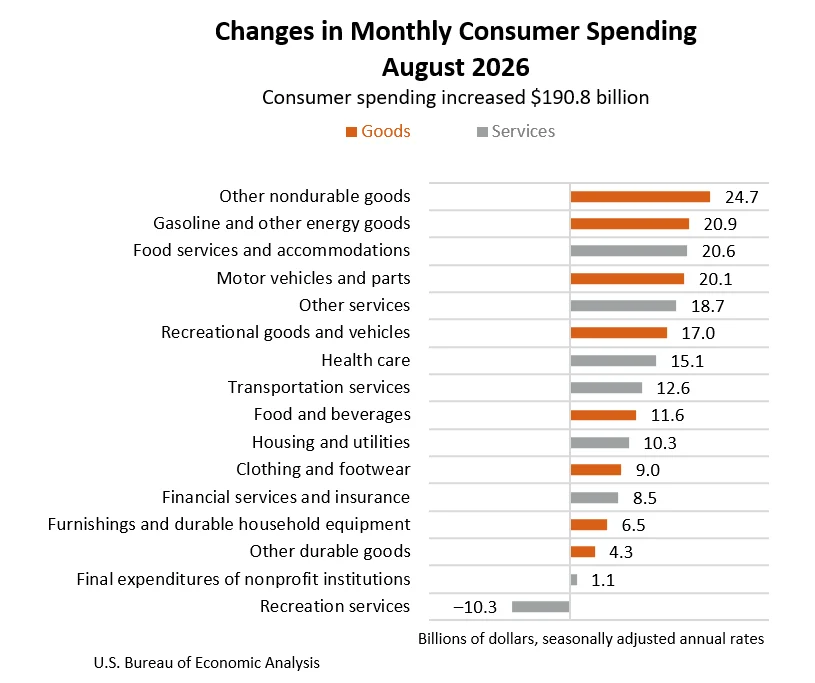
Historically, tax refunds have played a vital role in consumer spending and household financial management. A larger refund can provide a much-needed boost for individuals and families, enabling them to pay down debt, make essential purchases, invest, or save for future goals. The consistent year-over-year increase observed in the 2026 filing season, particularly in contrast to periods of economic uncertainty or less favorable tax policies, highlights the significant impact that governmental fiscal measures can have on individual financial well-being.
The current increase can be viewed within the broader context of economic policy initiatives aimed at stimulating household income and consumption. By providing larger refunds, the government seeks to inject capital into the economy, potentially boosting demand for goods and services. This approach is often employed during periods where there is a focus on supporting middle- and lower-income households, who tend to allocate a larger portion of their refund towards immediate needs and discretionary spending.
Analysis of Policy Implications and Economic Impact

The enhanced tax refunds for the 2026 filing season are a direct consequence of deliberate policy decisions designed to provide financial relief and potentially stimulate economic activity. The expansion of the Child Tax Credit, for instance, directly targets families, aiming to alleviate the financial burden of raising children and potentially encouraging greater participation in the workforce. Increased standard deductions offer a broad-based benefit, simplifying the tax filing process for many and reducing their overall tax liability.
The introduction of new deductions for tips and overtime pay recognizes the evolving nature of work and aims to ensure that workers in these categories are not disproportionately burdened by taxes. These specific provisions can have a localized impact, providing significant benefits to individuals in industries reliant on tips or those who consistently work overtime.
The aggregate effect of these policy changes, as reflected in the increased refund amounts, suggests a deliberate effort to redistribute wealth and support household financial stability. From an economic perspective, larger tax refunds can lead to increased consumer spending, which is a significant driver of economic growth. This influx of disposable income can benefit businesses across various sectors, from retail to services.
However, it is also important to consider the broader fiscal implications. While beneficial for taxpayers, increased refunds represent a reduction in government revenue. Policymakers must balance the benefits of taxpayer relief and economic stimulus with the need for fiscal responsibility and long-term budgetary sustainability. The projections made by White House officials, while optimistic, also underscore the administration’s focus on utilizing tax policy as a tool for economic management.
The IRS’s role in this process is paramount. Efficient and accurate processing of tax returns and timely disbursement of refunds are crucial for maintaining public trust and ensuring that the intended benefits reach taxpayers as effectively as possible. The continued emphasis on direct deposit and electronic filing reflects a strategic effort to streamline operations, reduce costs, and enhance the taxpayer experience.
Looking Ahead: The Remainder of the Filing Season
As the April 15 deadline draws nearer, the volume of tax filings and the total amount of refunds issued are expected to continue their upward trend. Taxpayers who have not yet filed are encouraged to do so promptly to avoid potential penalties and to benefit from the current refund levels. The IRS has a dedicated website and resources available to assist taxpayers with filing their returns and answering any questions they may have.
The data from the 2026 filing season provides a compelling snapshot of the impact of recent tax legislation on American households. The significant increase in average tax refunds underscores the effectiveness of these policy changes in providing financial relief and potentially stimulating the economy. While the exact trajectory of the remaining filing season is subject to various factors, the current trends suggest a financially beneficial period for a considerable number of taxpayers.