Julia Chirkova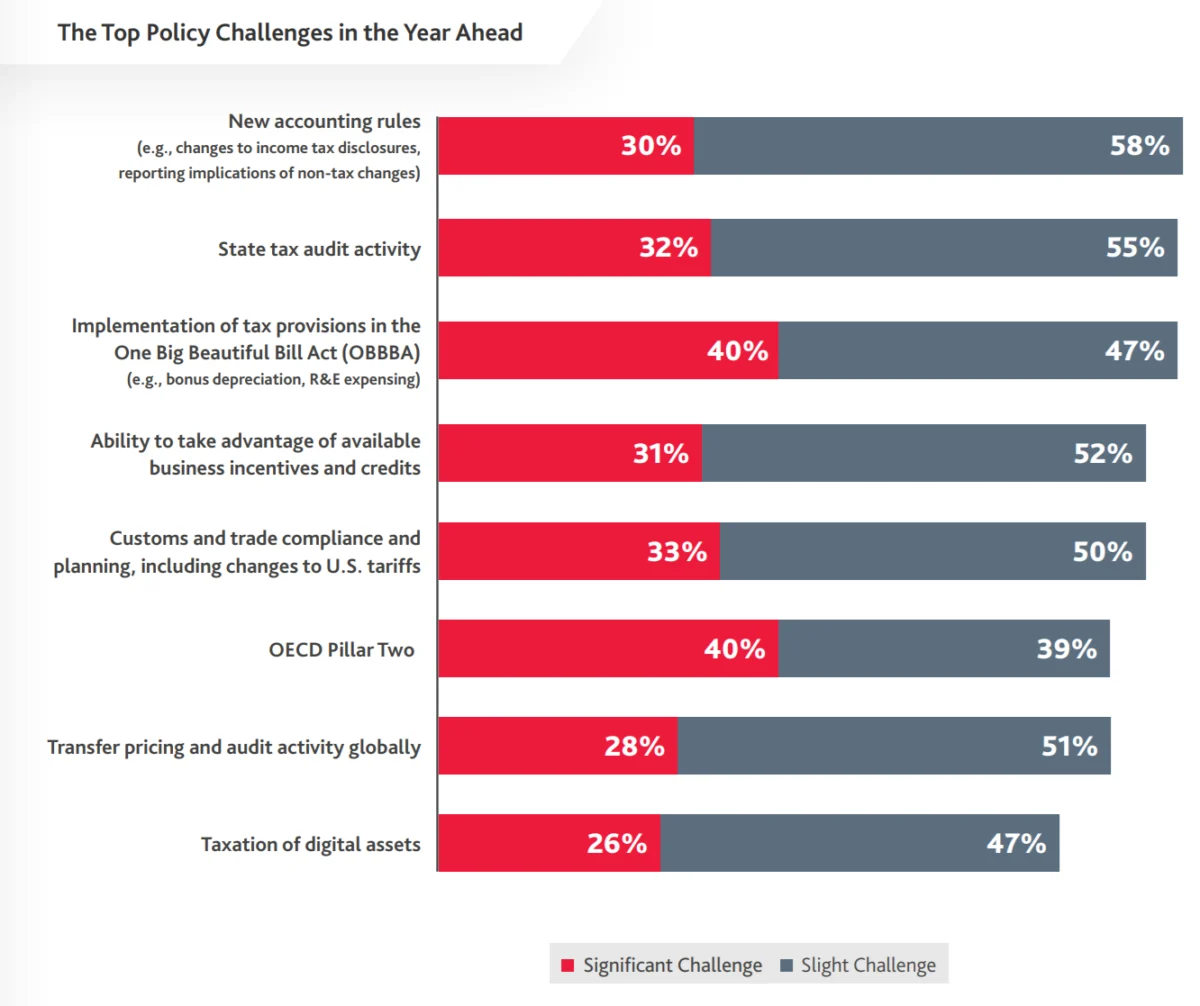
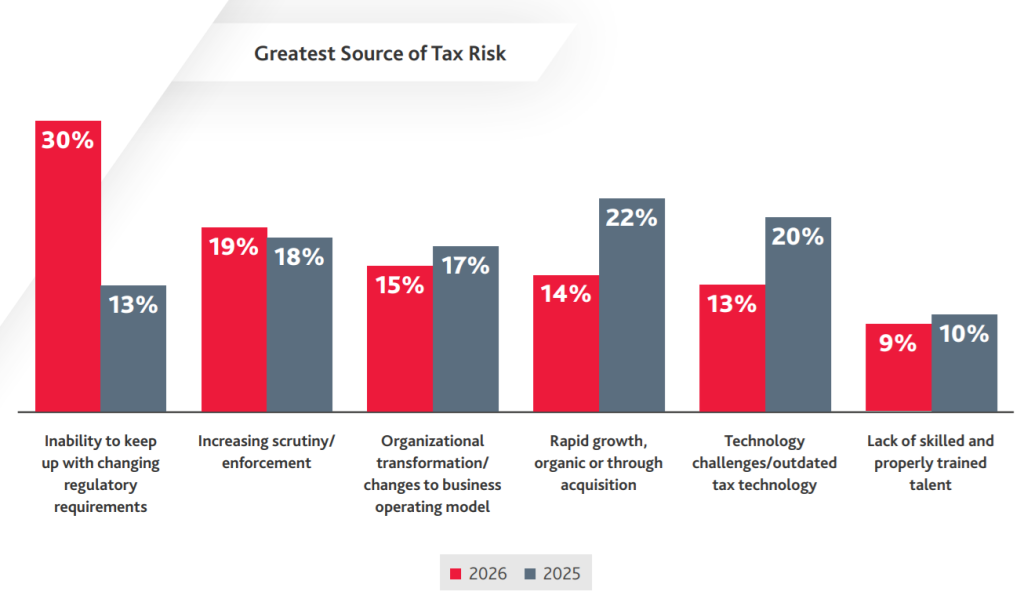
Senior corporate tax leaders are flagging an escalating threat to their organizations: the sheer inability to keep pace with the relentless evolution of tax regulations. A comprehensive survey by BDO USA, a prominent accounting firm, reveals that this regulatory churn has emerged as the paramount tax risk for the next twelve months, cited by a significant 30% of respondents. This figure represents a dramatic surge from just 13% who identified the same concern in the previous year, underscoring a rapidly intensifying challenge.
This growing apprehension surrounding regulatory complexity is inextricably linked to a tangible increase in overall tax burdens. A striking 82% of companies reported a rise in their total tax liability over the past year, indicating that the intricate web of changing rules is not merely a compliance hurdle but a direct driver of increased financial obligations.
"Regulatory change is not just a compliance challenge; it is a direct driver of rising tax costs, as new rules expand what is taxable and drive up the cost of compliance," BDO USA stated in its seminal report, the 2026 Tax Strategist Survey. "When multiple jurisdictions change at once, the risk and cost compound." This sentiment is particularly poignant for businesses operating across state lines within the United States. The report highlights the creation of a complex "patchwork of requirements" stemming from fifty distinct states and myriad local jurisdictions, each with its own disparate rules and timelines.

The fiscal pressures faced by individual states are a significant catalyst for this evolving tax landscape. Many states are actively decoupling from federal tax provisions to bolster their own revenue bases, leading to increased audit activity and further compounding compliance burdens. "Differing interpretations of economic nexus, including where a company has employees, houses inventory, or conducts sales, add further layers of operational complexity, as does the need to apportion income across states," the report elaborates, painting a clear picture of the intricate operational challenges faced by tax departments.
The survey, which canvassed 300 senior tax leaders within middle-market organizations in early 2026, also sheds light on a critical gap in corporate preparedness. A mere 38% of companies have established formal processes for cross-functional teams to engage with the tax function on matters with potential tax implications. This lack of integrated communication can significantly hinder tax leaders’ ability to proactively mitigate financial risks, build organizational resilience, and deliver essential strategic guidance.
The Evolving Role of the Tax Leader
Mathew DeMong, national managing principal of tax at BDO USA, emphasized the strategic pivot of the tax function. "The pace of regulatory change, global economic shifts, and business transformation has made tax one of the most strategically important functions in an organization," DeMong stated. "The opportunity is real, but so is the risk: without the right processes, infrastructure, and organizational integration, tax’s impact remains person-dependent and reactive. Leaders who institutionalize the tax function across the enterprise will be better positioned to bring a total tax approach to every business decision."
Despite the mounting complexities, tax leaders continue to demonstrate their value as strategic advisors within their organizations. The survey findings indicate a sustained, and in some areas, increasing, level of involvement in critical business decisions. Ninety-four percent of tax leaders reported being consulted before business decisions are made, a four-percentage-point increase from the previous year. Notably, involvement in strategic transactions, such as mergers and acquisitions, saw a significant nine-point jump, while engagement in organizational risk management rose by five points.
This enhanced influence underscores a broader industry recognition that tax considerations are no longer confined to the finance department. "The shift in focus reflects a growing recognition that tax risk—such as transparency and reputation concerns, audits, and noncompliance—is enterprise risk, not simply a finance function issue," the report articulates. This paradigm shift necessitates a more holistic and integrated approach to tax strategy.
Navigating a Complex Policy Landscape
The BDO USA report delves into several key areas, including operating models, technology investments, and the multi-layered regulatory environment at the state, federal, and global levels. The survey highlights the persistent challenges posed by tariff volatility, the implementation of new legislative frameworks like the "One Big Beautiful Bill Act," ongoing global tax reforms, and the rapid acceleration of technological advancements. These factors collectively contribute to an environment where staying ahead of compliance requirements is an increasingly formidable task.
The implications of this evolving landscape are profound. Companies that fail to adapt their internal processes and technological infrastructure to the demands of modern tax compliance risk facing significant financial penalties, reputational damage, and missed strategic opportunities. The increasing interconnectedness of global economies and the ever-present specter of regulatory divergence mean that a proactive and integrated tax strategy is no longer a luxury but a fundamental necessity for business survival and growth.
The Imperative for a Total Tax Approach
DeMong further elaborated on the path forward: "Tax leaders have proven that they belong in the rooms where enterprise decisions are made. Now, the question will be whether they can sustain that influence. This means mandating a total tax approach that embeds tax technology and processes across functions and building operating models that are positioned for what’s next." This call for a "total tax approach" signifies a strategic imperative to integrate tax considerations into the very fabric of business operations, moving beyond a reactive compliance model to one that is proactive, strategic, and value-generating.

The survey data, while painting a picture of increasing challenges, also points to an opportunity for organizations to elevate their tax functions from a cost center to a strategic partner. By fostering better cross-functional collaboration, investing in appropriate technology, and embracing a holistic view of tax risk and opportunity, companies can better navigate the complexities of the modern tax environment and ensure their long-term financial health and competitive advantage.
The findings of the 2026 Tax Strategist Survey serve as a critical wake-up call for corporate leadership. The era of siloed tax departments and reactive compliance is rapidly drawing to a close. The future belongs to organizations that embrace a proactive, integrated, and strategically aligned tax function, capable of anticipating and adapting to the ever-shifting sands of global taxation. This requires a commitment to organizational change, investment in robust technological solutions, and a fundamental rethinking of how tax considerations are woven into the entire business decision-making process. The stakes are high, and the rewards for those who successfully navigate this complex landscape are substantial.