Candice Horbacz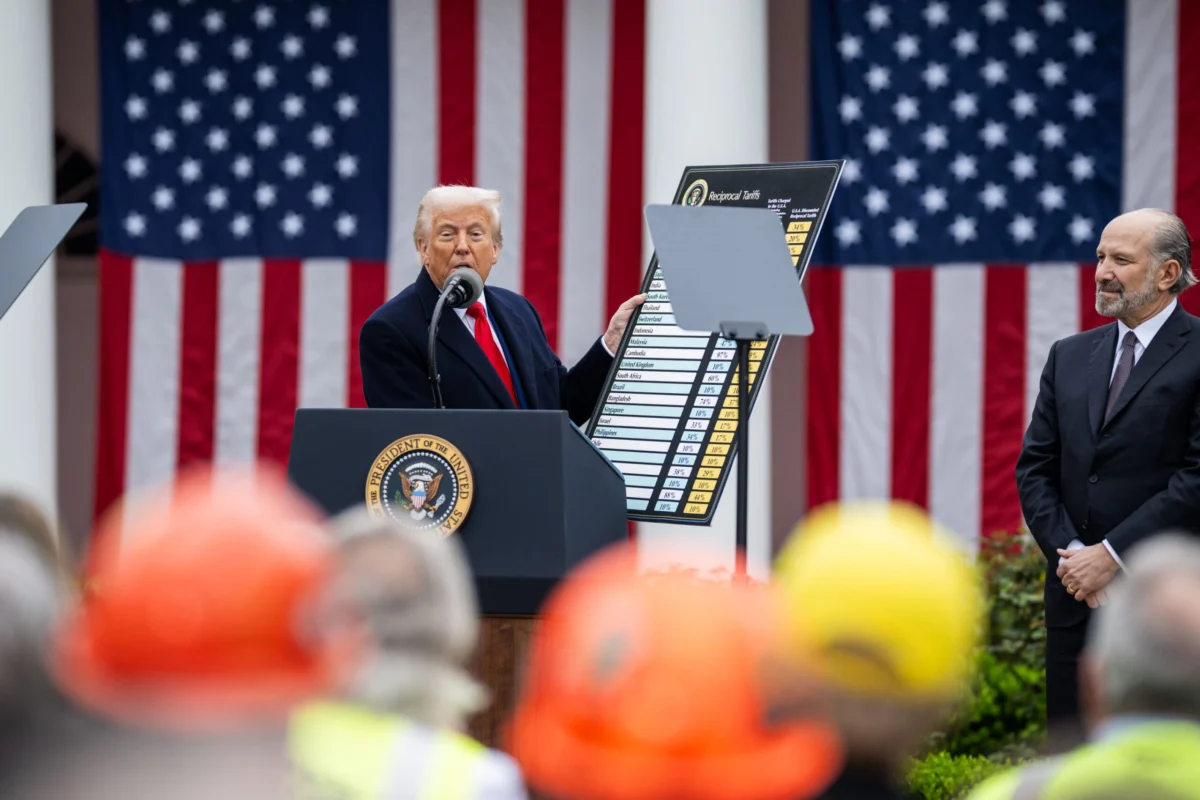
One year after President Trump proclaimed April 2 as "Liberation Day" for US trade, inaugurating a new tariff regime intended to reshape global commerce, a comprehensive review of economic data indicates that the administration’s ambitious promises largely failed to materialize. The core premise, that the United States would simply mirror the tariffs imposed by its trading partners, was quickly complicated by implementation, leading to an unpredictable landscape of trade barriers that ultimately contributed to higher domestic prices, stifled investment, and a negligible impact on federal debt, according to independent economic analyses and official government statistics. This policy, which at its peak led to the highest tariff rates since 1911, was projected to generate a $3.2 trillion tax hike over a decade, yet its actual revenue generation fell far short of projections, and its legal basis was ultimately overturned by the Supreme Court.
Background to "Liberation Day": The Genesis of an "America First" Trade Policy
The "Liberation Day" announcement on April 2, 2025, marked a significant escalation in the Trump administration’s "America First" trade agenda, which had been a cornerstone of his political platform since 2016. Driven by a philosophy that perceived existing international trade agreements as detrimental to American industry and employment, the administration sought to renegotiate or unilaterally alter trade relationships. Prior to this, specific tariffs on steel and aluminum imports (under Section 232 of the Trade Expansion Act of 1962, citing national security concerns) had already signaled a more aggressive stance. However, "Liberation Day" represented a broader, more systemic shift. President Trump articulated a simple vision: the U.S. would implement tariffs equivalent to those levied by its trading partners, aiming to create a level playing field and encourage domestic production. This was presented as a strategic move to correct perceived imbalances and force other nations to reduce their own trade barriers against American goods. The rhetoric surrounding this initiative promised a renaissance of American manufacturing, a surge in foreign investment, and a significant boost to federal coffers, even suggesting that foreign entities would bear the cost of these new taxes.
A Tumultuous Timeline of Tariff Implementation and Legal Challenge
The journey from the "Liberation Day" announcement to its eventual legal unraveling was marked by frequent policy shifts and intense economic turbulence.
- April 2, 2025: President Trump officially declares "Liberation Day," announcing the intent to impose reciprocal tariffs using authorities under the International Emergency Economic Powers Act (IEEPA). This marked a significant departure from traditional trade policy tools and immediately drew scrutiny from legal scholars and international trade experts.
- Days Following the Announcement: The initial implementation proved anything but simple. An immediate and aggressive escalation ensued, particularly with China, leading to a temporary tariff rate of 125 percent on certain Chinese goods for a month. During this period, the combined effect of IEEPA and Section 232 tariffs pushed the overall U.S. applied tariff rate to an unprecedented 21.5 percent.
- Mid-2025 to Late 2025: The policy became characterized by extreme volatility. Over 50 distinct changes were implemented, including rate increases, decreases, new product exemptions, and the inclusion of previously unaffected goods. This dynamic environment created immense uncertainty for businesses, making long-term planning exceedingly difficult. By the end of 2025, after multiple rounds of exemptions, the scope of IEEPA tariffs had narrowed, affecting only 42 percent of U.S. imports, and the applied tariff rate had fallen to 13.6 percent from its peak.
- February 2026: The legal foundation of the "Liberation Day" tariffs crumbled. The Supreme Court ruled that the authority under which President Trump imposed these tariffs – the IEEPA – did not, in fact, authorize their implementation. This landmark decision effectively invalidated a significant portion of the administration’s trade policy, highlighting the legal overreach inherent in its approach. The ruling led to the cessation of these specific tariff collections, although other tariffs imposed under different authorities (like Section 232) continued.
The constant flux in tariff policy, often communicated through presidential tweets and ad-hoc announcements rather than established regulatory processes, fueled an environment of unpredictability that many economists and industry leaders warned would deter investment and disrupt supply chains.
Promises Unfulfilled: Dissecting the Economic Realities
One year after the bold declarations, a detailed examination of economic indicators reveals a stark contrast between the administration’s aspirations and the actual outcomes.
Were the Tariffs Truly Reciprocal?
The fundamental premise of "Liberation Day" – that tariffs would simply mirror those of trading partners – was swiftly disproven by the actual methodology employed. Instead of analyzing observed foreign trade barriers or tariff schedules, the United States Trade Representative’s office converted each country’s bilateral goods trade balance into a synthetic tariff rate, with a minimum of 10 percent. This arbitrary calculation bore no direct relation to the actual trade barriers imposed by other nations.
Economists universally criticized this approach, pointing out that a trade deficit does not inherently signify unfair trade practices or high foreign tariffs. For instance, a country might have a trade surplus with the U.S. due to competitive advantages or consumer preferences, not necessarily because it has prohibitive tariffs. International bodies, including the World Trade Organization (WTO), also raised concerns about the U.S. approach, with many trading partners, such as the European Union, Canada, Mexico, and China, responding with retaliatory tariffs on American goods. These counter-tariffs often targeted key agricultural products and manufactured goods, inflicting significant economic pain on specific U.S. sectors and exporters, further undermining the notion of a simple, reciprocal trade adjustment.
Did Investment and Jobs Pour into the United States?
President Trump repeatedly claimed that the tariffs would trigger a massive inflow of foreign direct investment (FDI) and a rebirth of American industries, creating millions of jobs. He spoke of $6 trillion, then up to $18 trillion, in new foreign investment. However, macroeconomic data tells a different story.
In 2025, total FDI into the United States amounted to $288.4 billion. This figure is not only orders of magnitude smaller than the President’s claims but also fell below the average of $320.7 billion recorded over the preceding 10 years. It was also lower than annual totals observed in 2021 ($405.5 billion), 2022 ($338.4 billion), 2023 ($297.4 billion), and 2024 ($292.3 billion). While some individual firms or countries made vague pledges of increased U.S. investment, these commitments did not translate into a broad, measurable surge in aggregate FDI flows. The policy uncertainty generated by constantly shifting tariff rates and coverage likely played a significant role in deterring new capital formation, as businesses hesitated to commit to long-term investments in an unpredictable trade environment.
Similarly, the manufacturing sector, which was a primary focus of the "America First" agenda, did not experience the promised job boom. Instead, manufacturing employment continued its pre-existing trend of gradual decline, losing approximately 89,000 jobs between April 2025 and February 2026. This trend suggests that the tariffs, rather than stimulating a rebirth, either had no discernible positive effect or exacerbated existing challenges, possibly due to increased input costs for manufacturers relying on imported components or reduced export opportunities due to retaliatory tariffs. Business groups, such as the National Association of Manufacturers, frequently voiced concerns about the negative impact of tariffs on their members’ ability to compete globally and maintain domestic employment.
Did the Tariffs Make the Federal Government Wealthier?
A central promise of the tariff regime was its potential to generate substantial federal revenue, contributing to a reduction in the national debt. President Trump often invoked the late 19th century, when high tariffs led to budget surpluses, suggesting a similar outcome. Historical context, however, is crucial: in the 1880s, federal spending averaged under 3 percent of GDP, and tariffs were the primary source of revenue. By 2025, federal spending had ballooned to roughly 23 percent of GDP, and the revenue structure had fundamentally shifted with the advent of income and payroll taxes. The tariffs of the 1880s, mathematically, could not fund the scale of modern government.
Despite administration predictions, such as Peter Navarro’s estimate of $600 billion per year, or President Trump’s assertion that tariffs would "direct hundreds of billions of dollars and even trillions of dollars into our Treasury," actual revenue generation fell far short. Before the Supreme Court ruling, the IEEPA tariffs generated approximately $166 billion in payments. Total customs duties from January through December 2025 amounted to $264 billion, representing only 4.9 percent of total federal tax receipts for the calendar year. Moreover, the net revenue generated is even less, as tariffs mechanically reduce revenue from income and payroll taxes by increasing costs for businesses and consumers, thereby dampening economic activity and taxable income. While tariffs did contribute to federal revenue, the amount was marginal in the context of the national budget, and the federal debt continued its upward trajectory under President Trump, demonstrating that the tariffs were ineffective in significantly addressing fiscal challenges.
Did Tariffs Affect Prices and Employment?
Perhaps one of the most contentious claims was that tariffs would be paid by foreign countries and would ultimately lead to lower consumer prices due to increased domestic competition. This assertion contradicted fundamental economic principles, which dictate that tariffs are taxes on imports, legally paid by the importer, but economically borne by a combination of importers, downstream businesses, final consumers, and, to a lesser extent, foreign sellers.
The evidence from the past year strongly indicates that the tariffs were passed on to the U.S. economy, resulting in higher prices for both businesses and consumers. Federal Reserve Chair Jerome Powell explicitly attributed much of the remaining inflation during this period to tariffs, stating, "These elevated readings largely reflect inflation in the goods sector, which has been boosted by the effects of tariffs." Research from the Pricing Lab at Harvard estimated that through October 2025, tariff pass-through to retail prices reached 24 percent, cumulatively contributing 0.76 percentage points to the Consumer Price Index (CPI) inflation. Both imported goods and their domestic substitutes saw price increases, suggesting that domestic producers also leveraged the absence of cheaper imports to raise their own prices.
The Kansas City Fed’s initial research, despite inherent uncertainties, suggested that the tariffs likely reduced employment growth in 2025. Firms faced with increased import costs or reduced demand due to higher prices may have responded by slowing hiring or, in some cases, laying off workers to manage operational expenses. Further research from the Federal Reserve indicated that the price pressure from tariffs developed gradually, with retailers slowly adjusting prices over time, possibly due to the same policy uncertainty that dampened investment and hiring. The "hidden tax" of tariffs thus became a tangible burden on American households and businesses, contrary to the administration’s assurances.
Broader Impact and Implications for Future Trade Policy
The year following "Liberation Day" offers critical lessons for policymakers considering future trade actions. The experience highlighted the complex, often counterintuitive, effects of protectionist measures in a deeply interconnected global economy. Beyond the direct economic metrics, the tariffs strained relationships with key allies and trading partners, leading to a fragmented global trade landscape. Industries reliant on global supply chains, from automotive to electronics, faced unprecedented disruption, forcing costly reconfigurations and sometimes leading to reduced competitiveness.
The legal challenge and subsequent Supreme Court ruling on the IEEPA authority also underscored the importance of established legal frameworks and international norms in trade policy. The attempt to bypass traditional trade authorities for such a broad economic intervention faced significant judicial scrutiny, ultimately affirming the limits of executive power in trade matters.
As policymakers evaluate potential future trade restrictions under alternative authorities, the outcomes of the "Liberation Day" experiment provide an invaluable context. The evidence strongly suggests that unilateral tariff actions, particularly those based on flawed economic premises and implemented with high volatility, are unlikely to deliver on promises of economic liberation, job creation, or fiscal benefits. Instead, they risk imposing significant costs on domestic consumers and businesses, disrupting global trade, and undermining the very economic stability they aim to protect. The legacy of "Liberation Day" serves as a cautionary tale, emphasizing the need for carefully considered, data-driven, and legally sound approaches to international trade.