Lana Rhoades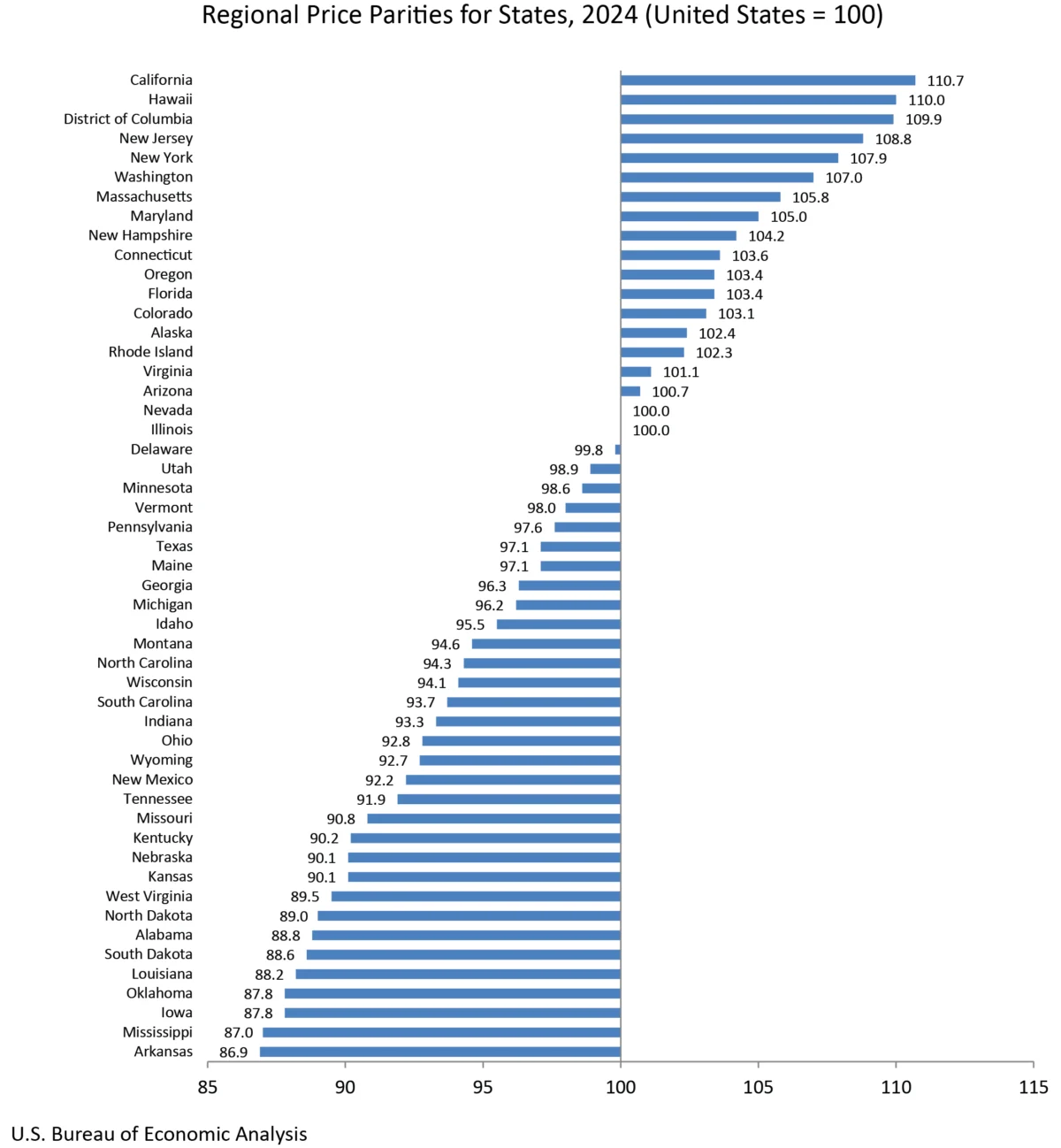
The U.S. Bureau of Economic Analysis (BEA) today unveiled its latest comprehensive annual statistics, offering a detailed look at the economic landscape of all 50 states and the District of Columbia for 2024. The release includes crucial data on real personal consumption expenditures (PCE), real personal income, and regional price parities (RPPs), providing a nuanced understanding of economic activity and price variations across the nation. This release also incorporates significant revisions to historical data from 2008 to 2023, reflecting a commitment to data accuracy and completeness.
Key Trends Emerge in 2024 Economic Performance
The 2024 data reveals a generally positive trend in economic activity across most of the United States, with a majority of states experiencing growth in both real personal consumption expenditures and real personal income. However, the magnitude of this growth, and in some instances its very presence, varied significantly from state to state, underscoring the diverse economic conditions that persist within the nation.
Real Personal Consumption Expenditures Show Broad-Based Growth
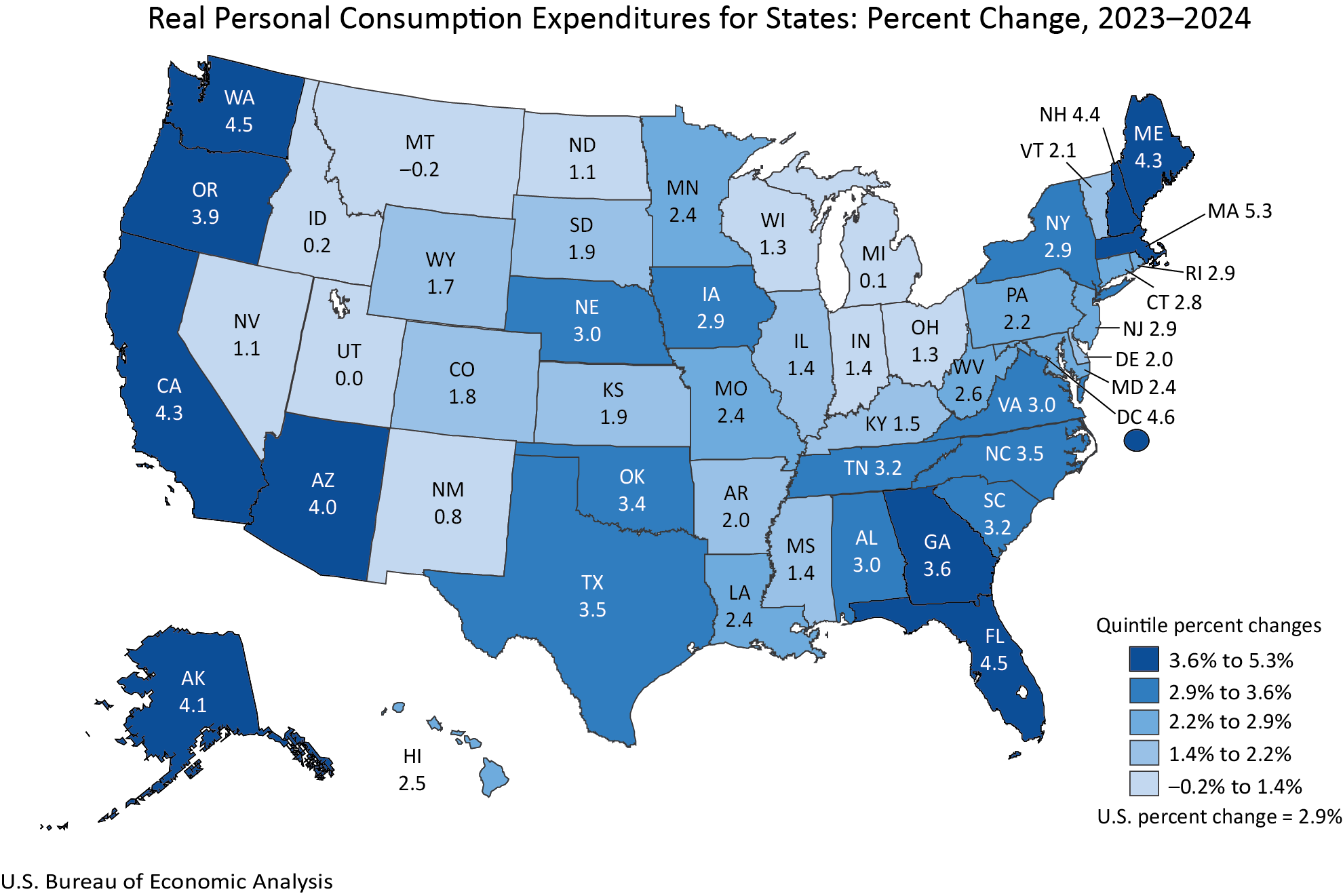
A striking 48 states and the District of Columbia witnessed an increase in real personal consumption expenditures (PCE) in 2024. Real PCE, which measures the inflation-adjusted value of goods and services purchased by individuals, serves as a vital indicator of consumer demand and overall economic vitality. The national average for real PCE growth stood at a robust 2.9 percent for the year.
Leading the nation in this metric was Massachusetts, which recorded an impressive 5.3 percent surge in real PCE. This significant expansion suggests a strong and active consumer base in the Commonwealth, potentially driven by factors such as robust employment, wage growth, or increased confidence in the state’s economic outlook.
Conversely, Montana experienced a slight contraction in real PCE, with a decrease of 0.2 percent. While a modest decline, it stands in contrast to the broader upward trend and warrants further examination of the specific economic drivers within the state. The difference between the highest and lowest performing states highlights the uneven distribution of economic benefits and consumer spending power across the country.
The BEA’s analysis further clarifies that current-dollar PCE, which reflects nominal spending without inflation adjustment, increased by 5.6 percent nationwide. This growth outpaced the national PCE price index, which rose by 2.6 percent. This differential indicates that a portion of the nominal spending increase was indeed due to real growth in consumption, rather than solely inflation. Understanding this distinction is crucial for policymakers and businesses aiming to gauge the true health of consumer demand.
Real Personal Income Demonstrates Widespread Gains
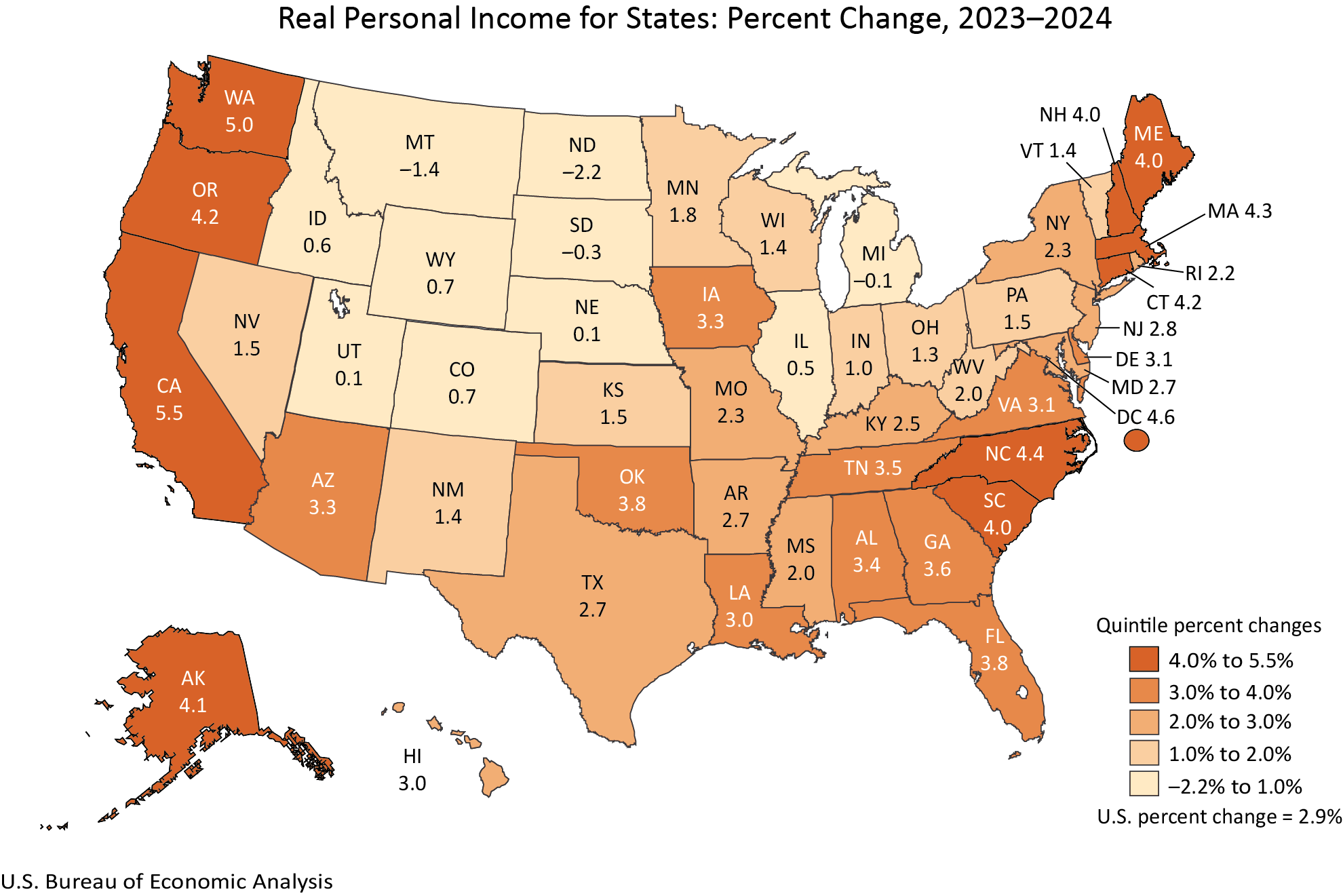
Parallel to the growth in consumer spending, real personal income also saw widespread increases in 2024. Forty-six states and the District of Columbia reported gains in real personal income, a key measure of individuals’ purchasing power after accounting for inflation.
California emerged as the top performer in real personal income growth, achieving a remarkable 5.5 percent increase. This substantial rise suggests a favorable economic environment for residents in the Golden State, likely fueled by strong job creation and income augmentation.
At the other end of the spectrum, North Dakota experienced a decline of 2.2 percent in real personal income. This contraction, while also a deviation from the national trend, could be influenced by sector-specific economic shifts or broader market forces affecting the state’s primary industries.
Nationally, real personal income increased by 2.9 percent in 2024. Similar to PCE, current-dollar personal income saw a more substantial rise of 5.6 percent, outpacing the national PCE price index of 2.6 percent. This indicates that, on average, individuals’ incomes grew at a pace that allowed for increased real purchasing power.
Understanding Regional Price Parities (RPPs)
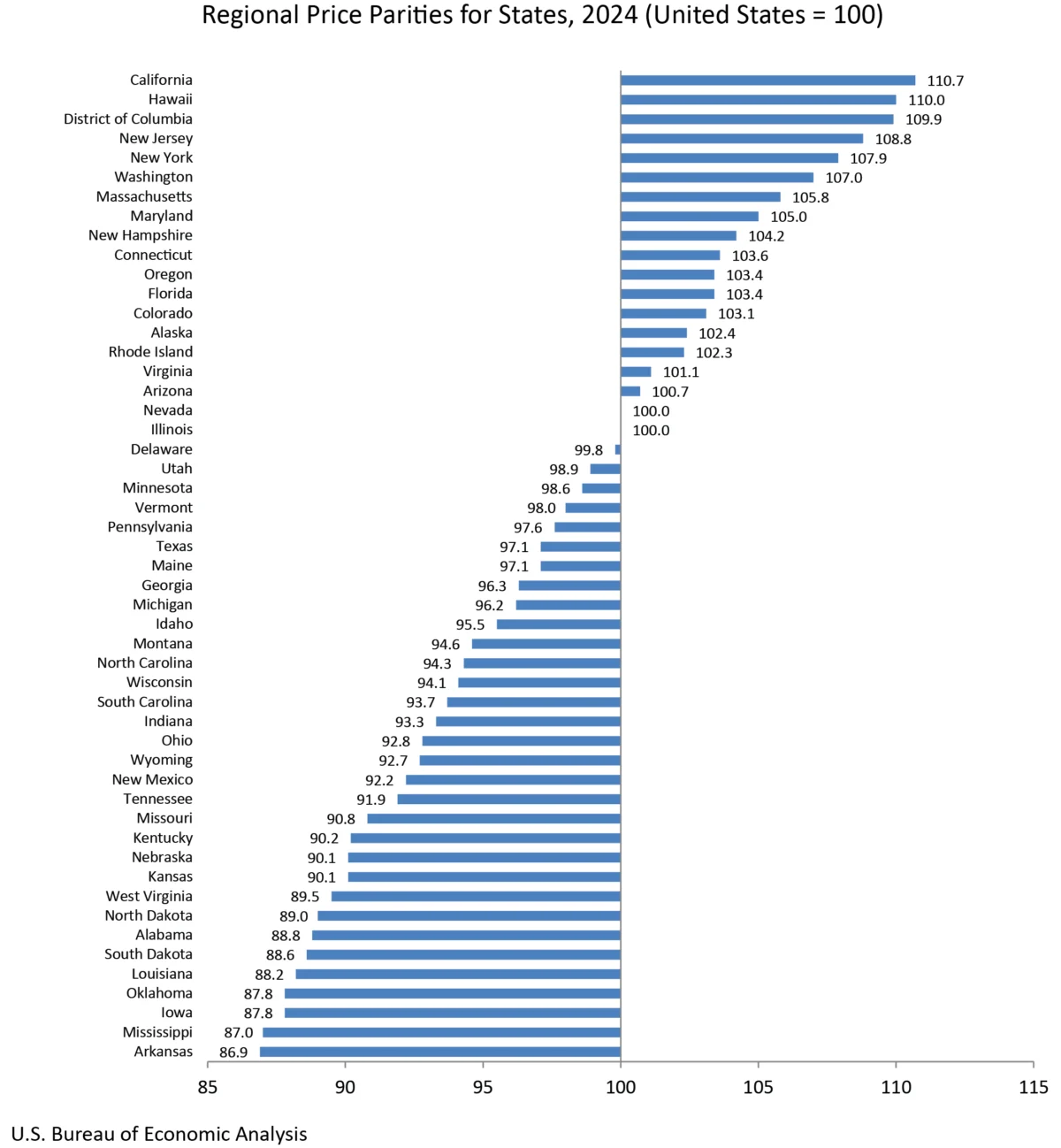
The BEA’s release also sheds light on regional price parities (RPPs), an essential component for accurately comparing economic well-being across different geographic areas. RPPs measure the differences in price levels between states for a given year, expressed as a percentage of the national average price level. They allow for a more accurate comparison of the real value of income and consumption by accounting for variations in the cost of living.
The "all items RPP" encompasses all consumption goods and services, including housing rents. Housing costs are frequently identified as a significant driver of differences in RPPs across states. For instance, states with higher housing expenses will naturally have higher RPPs, meaning a dollar of income or spending will purchase less in those areas compared to states with lower housing costs. This metric is vital for understanding the true purchasing power of an individual’s income in different parts of the country.
The BEA’s interactive data application provides access to metropolitan area RPP statistics, offering a more granular view of price variations within states. This information is invaluable for individuals and businesses making location-based decisions, helping them to understand the cost implications of living and operating in specific urban centers.
Revisions and Data Updates: Enhancing Economic Insights
A significant aspect of today’s release is the comprehensive revision of annual estimates for real PCE and real personal income by state, extending back to 2008. These revisions are a standard practice for the BEA, aimed at incorporating the most up-to-date and detailed source data available. This meticulous process ensures that the economic statistics released are as accurate and complete as possible, reflecting a more precise picture of past economic performance.
The updated historical data aligns with the BEA’s annual updates of the National Income and Product Accounts (NIPA) and GDP by industry statistics, which were released on September 25, 2025. This synchronized release schedule ensures consistency and comparability across various key economic indicators.
Furthermore, the BEA has released new estimates for real per capita PCE and real per capita personal income for 2024. These per capita figures, calculated using U.S. Census Bureau population data, provide an important perspective on the average economic well-being of individuals within each state, adjusting for population size. The per capita estimates are available for the period 2020 through 2024.
Shifts in Data Presentation and Discontinuation of Metro-Area Statistics
In a notable procedural change, the BEA has announced the discontinuation of publishing statistics for metropolitan statistical areas and their constituent metropolitan and nonmetropolitan portions, effective with the 2024 data release. While state-level data for real PCE and real personal income will continue to be published, the more granular metro-area breakdowns will no longer be a standard feature of the regular news releases. Regional price parities, however, will continue to be published for both state and local areas, offering some level of localized price variation data. This change aims to streamline data dissemination and focus resources on core state-level aggregates. A dedicated FAQ on the BEA website provides further details and explanations for this transition.
Additionally, the BEA has updated its presentation of data. While tables were previously embedded within news releases, they are now exclusively available through the BEA’s online Interactive Data Application. This move is intended to reduce redundancy, enhance efficiency, and direct users to a more comprehensive and flexible platform for data exploration. The interactive application allows for customization of data tables, inclusion of full time series, and easy downloading in various formats, including PDF, Excel, and CSV. This shift encourages data users to engage directly with the BEA’s most robust data resources.
Broader Implications and Economic Analysis
The data released today provides critical insights for a wide range of stakeholders, from federal and state policymakers to businesses, researchers, and individual consumers.
Policy Implications
For policymakers, the state-level data on real PCE and real personal income offers a granular view of economic disparities and growth engines across the country. This information is crucial for designing targeted economic development strategies, fiscal policies, and social programs. For instance, states exhibiting strong real income growth might be able to sustain or even expand public services, while those with declining real incomes may need to explore measures to stimulate economic activity and support their residents. The RPP data is particularly important for understanding the real impact of federal and state programs, ensuring that benefits are assessed in terms of their actual purchasing power in different regions.
Business and Investment Decisions
Businesses can leverage this data to inform strategic decisions, such as site selection for new facilities, market analysis for product launches, and understanding consumer spending patterns. States with robust real PCE growth may present more attractive markets for consumer-facing businesses, while those with strong real income growth could indicate a growing labor pool and increased demand for higher-value goods and services. The RPP data also plays a role in assessing the cost of doing business and the real wages that can be offered to employees in different locations.
Consumer Understanding
For individuals, this data offers context for understanding their own economic situation relative to others across the country. It can help in making informed decisions about relocation, budgeting, and long-term financial planning, especially when considering the cost of living variations highlighted by the RPPs. The distinction between nominal and real income and spending is vital for consumers to grasp their true purchasing power.
Looking Ahead: The Future of Economic Data Releases
The BEA has indicated that the 2024 data released today will be superseded by new estimates for 2025, scheduled for release on December 10, 2026. This regular cycle of data updates ensures that economic statistics remain current and reflective of ongoing economic trends. The original data featured in today’s release will be archived and accessible through BEA’s Data Archive, providing a historical record for researchers and analysts.
The next release, on December 10, 2026, will present the 2025 real personal consumption expenditures and real personal income by state. This consistent schedule allows for ongoing monitoring and analysis of economic performance at the state level, providing a vital framework for understanding the dynamic U.S. economy. The BEA’s commitment to producing and disseminating timely and accurate economic data remains a cornerstone of informed economic policy and public understanding.