Nila Kartika Wati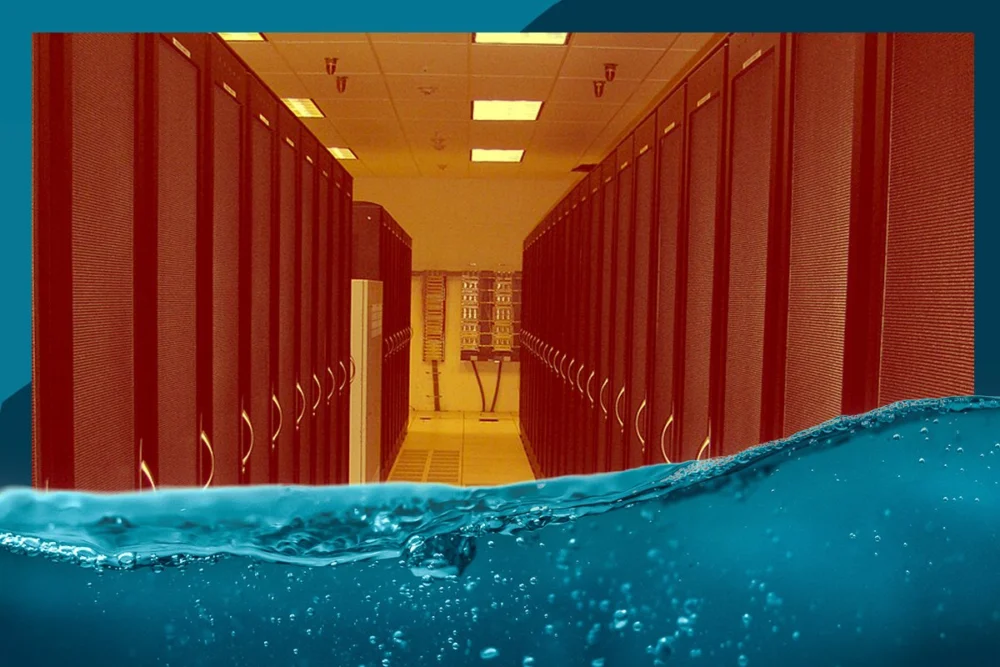
In October 2025, the national environmental advocacy group Food & Water Watch formally issued a call for a nationwide moratorium on the approval and construction of new large-scale data centers, citing an urgent need for comprehensive data regarding the industry’s impact on power grids and public water supplies. This demand for a pause in development comes at a critical juncture as the federal government and private sector accelerate the deployment of generative artificial intelligence (AI) technologies. The moratorium request is driven by two primary factors: the rapid implementation of the Trump Administration’s AI Action Plan and a persistent lack of transparency from "Big Tech" corporations regarding the actual energy and water consumption of their facilities. While data centers have served as the backbone of the digital economy for decades, the transition from traditional cloud storage to resource-heavy AI modeling has created an unprecedented demand for natural resources that many experts believe is unsustainable.
The Evolution of Data Infrastructure and the AI Surge
To understand the current environmental friction, it is necessary to distinguish between traditional data centers and the new generation of "hyperscale" facilities. For much of the 21st century, data centers were designed to handle general computational tasks such as hosting websites, managing databases, and facilitating cloud services. These facilities primarily utilized central processing units (CPUs), which are versatile but relatively energy-efficient compared to the hardware required for modern machine learning.
The rise of generative AI has fundamentally altered this landscape. AI data centers rely on specialized hardware known as AI accelerators or graphics processing units (GPUs). Unlike CPUs, which handle tasks sequentially, GPUs process vast amounts of data simultaneously, a requirement for training large language models (LLMs). This intensive workload generates extreme thermal output. According to industry analysis from McKinsey & Company, hyperscale centers used for AI modeling often require double the power density of traditional centers. As these facilities scale up to meet global demand, they frequently extract more resources—both electrical and aqueous—than local infrastructure was originally designed to provide.
Masheika Allgood, an AI ethicist and founder of AllAI, argues that the current construction boom is less about public utility and more about a corporate race for market dominance. Allgood suggests that the rush to build is outpacing the development of regulatory frameworks designed to protect communal resources.
The Thermodynamics of Cooling: Air vs. Liquid Systems
The primary environmental concern regarding data centers is not merely the electricity they consume, but the water required to prevent their processors from melting. Traditional data centers utilized sophisticated air-conditioning systems, organizing server racks into "hot" and "cold" aisles. In these configurations, cool air is circulated through the front of the racks, and the resulting heat is vented out through return ducts. While energy-intensive, these systems often had minimal direct water impact.
However, the heat generated by AI chips—which can reach temperatures of up to 194 degrees Fahrenheit per chip—has rendered traditional air cooling insufficient for hyperscale deployments. When hundreds of thousands of these chips are packed into a single facility, liquid cooling becomes the only viable thermal management solution. This has led to the adoption of two primary methods: evaporative cooling and closed-loop systems.
In evaporative cooling, water is applied to a heat-exchange surface, and the resulting evaporation carries the heat away. While effective, this water is lost to the atmosphere and cannot be easily recovered for local use. Closed-loop systems are often marketed as a more sustainable alternative. These systems utilize two interconnected pipe loops. The first loop carries cool water or chemical refrigerants directly through the server racks to extract heat. This heat is then transferred via a heat exchange unit to a second loop, which carries the thermal energy to an external cooling tower.
Critics like Allgood point out that the term "closed-loop" can be a form of corporate "greenwashing." While the primary loop recirculates water, the secondary heat exchange loop almost always relies on evaporative cooling to dump the heat into the environment. Consequently, the system still results in significant water loss. Furthermore, some systems utilize liquid coolants containing per- and polyfluoroalkyl substances (PFAS), often called "forever chemicals." The potential for these chemicals to leak into local groundwater or for "spent" cooling water to be discharged into municipal sewers remains a point of significant concern for environmental scientists.
Quantifying the Thirst of the Digital Frontier
The scale of water consumption within the U.S. data center industry is staggering. A 2024 report from the Lawrence Berkeley National Laboratory revealed that in 2023 alone, U.S. data centers consumed approximately 17 billion gallons of water for direct cooling. Hyperscale facilities accounted for 84 percent of that total, or roughly 15 billion gallons. Projections indicate that if the current rate of construction continues, cooling-related water consumption could reach 33 billion gallons annually by 2028.
These figures, however, only represent direct usage. When accounting for the "indirect" water consumption required to generate the massive amounts of electricity these centers pull from the grid, the number rises exponentially. Estimates suggest that U.S. data centers were indirectly responsible for the consumption of more than 211 billion gallons of water through thermoelectric power production in 2024.
Despite these figures, corporate sustainability reports often paint a more optimistic picture. Microsoft, for instance, announced a "zero-waste" cooling solution in 2024, claiming its closed-loop systems would reduce water usage by 39 percent. Yet, the company’s own 2024 Environmental Sustainability Report showed its annual water consumption exceeding two billion gallons. Similarly, Google’s 2024 Environmental Report listed its data center water consumption at over six billion gallons for the previous year. Allgood notes that these reports often omit the water lost in the secondary heat exchange process, leading to what she describes as a "deceiving" narrative regarding the industry’s environmental footprint.
The Great Lakes Basin: The New Industrial Target
As water scarcity becomes a more pressing issue in the American Southwest and other drought-prone regions, Big Tech has increasingly turned its attention to the Great Lakes Basin. The region is attractive to developers due to its naturally cooler climate—which reduces the need for active cooling—and its proximity to the world’s largest source of surface freshwater.
The Great Lakes provide drinking water to more than 40 million people across the United States and Canada. However, the influx of data centers threatens to strain both surface water and local aquifers. A report commissioned by the Joyce Foundation, in collaboration with the Great Lakes Indian Fish and Wildlife Commission and several universities, found that nearly every state in the Great Lakes region is already facing groundwater shortages in specific locales.
The expansion of data centers in this region is expected to disproportionately impact Indigenous communities and low-income residents. In Michigan, residents already pay some of the highest water rates in the nation. In early 2025, the Great Lakes Water Authority announced a significant rate hike for the 2026 fiscal year, a move that met with fierce public opposition. Advocates argue that while officials often discuss water access from a "business standpoint"—ensuring corporations have the gallons they need to operate—the "community standpoint" of affordability and long-term availability is frequently sidelined.
Legal Challenges and the Path Forward
The pushback against the rapid expansion of AI infrastructure is increasingly moving into the courtroom. Organizations such as the NAACP, Earthjustice, and the Southern Environmental Law Center have begun threatening or filing lawsuits over the unpermitted use of resources and the installation of high-emission energy turbines used to power these facilities.
The call for a moratorium by Food & Water Watch is centered on the principle of informed consent. The organization argues that the public should not be forced to gamble with its primary water sources while tech companies withhold specific data on their resource extraction. The proposed pause would allow for independent environmental impact studies that are not funded or directed by the technology industry.
As the federal government continues to push for American leadership in AI through the AI Action Plan, the tension between technological progress and environmental preservation is reaching a breaking point. Advocates like Allgood emphasize that communities do not need to be experts in thermodynamics to demand protection. The strategy moving forward involves using the legal system to compel transparency. As Allgood stated, the goal of litigation is often to gain the information that companies refuse to provide voluntarily, ensuring that the "future of America" promised by Big Tech does not come at the cost of the nation’s most fundamental natural resources.
The outcome of this struggle will likely determine the geographic and environmental landscape of the United States for decades to come. Whether the Great Lakes become the next "Silicon Basin" or a protected sanctuary for public health depends on how strictly regulators are willing to monitor the "thirst" of the artificial intelligence revolution.