admin
admin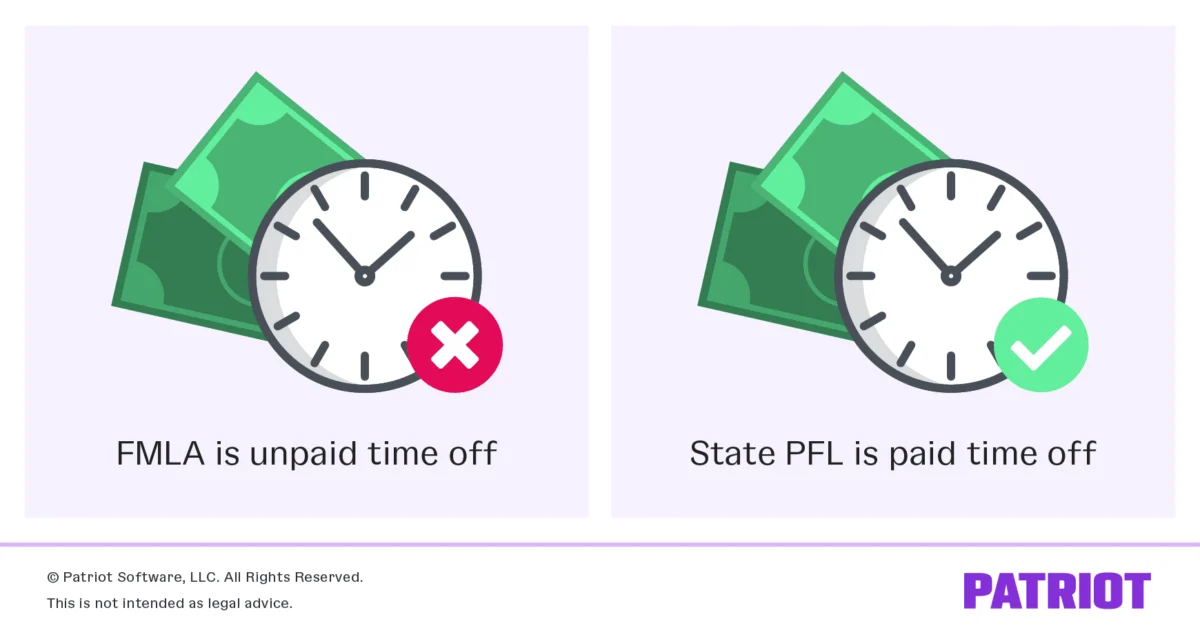
According to the most recent data from the U.S. Bureau of Labor Statistics (BLS), a significant but still minority portion of American workers—27.5%—currently have access to paid family leave. This statistic underscores a crucial disparity in workforce benefits, prompting critical questions for businesses and individuals alike: Do your employees have this vital benefit? If your operations span states that have enacted paid family leave laws, the answer for many should indeed be affirmative.
Paid family leave (PFL), often referred to as paid family and medical leave (PFML), represents a progressive policy designed to provide employees with financial support during significant life events that necessitate time away from work. While the federal Family and Medical Leave Act (FMLA) has provided job-protected, unpaid leave for decades, PFL initiatives at the state level address the critical gap of wage replacement, ensuring that workers do not face an impossible choice between their family’s well-being and their economic stability. Understanding the intricacies of these state-mandated programs, how they compare to federal provisions, and the responsibilities they place on employers is paramount for navigating today’s evolving employment landscape.
The Evolution of Leave Policies: From Unpaid to Paid
The concept of family and medical leave gained national recognition with the passage of the Family and Medical Leave Act (FMLA) in 1993. FMLA, a landmark federal law, mandates that covered employers provide eligible employees with up to 12 weeks of unpaid, job-protected leave per year for specific family and medical reasons. These reasons include the birth or adoption of a child, caring for a spouse, child, or parent with a serious health condition, or a serious health condition that renders the employee unable to perform their job. While FMLA was revolutionary in safeguarding employment during critical periods, its unpaid nature often posed an insurmountable financial barrier for many working families, particularly those living paycheck to paycheck.
This inherent limitation of FMLA spurred a movement at the state level to implement paid leave programs. The argument for paid leave is rooted in several social and economic imperatives: promoting gender equality by supporting mothers and fathers in caregiving roles, improving public health outcomes by allowing individuals to recover from illness or care for sick family members without financial stress, and enhancing workforce retention and productivity. Proponents argue that paid leave is not merely a social benefit but an economic investment that strengthens families, businesses, and the broader economy.
California led the nation in 2002 by enacting the first statewide paid family leave program, setting a precedent for other states to follow. Its success demonstrated the viability and benefits of such a system, slowly but steadily building momentum for similar legislation across the country. The distinction between federal and state laws is crucial: FMLA offers job protection without pay for larger employers, whereas state PFL laws provide partial wage replacement and often cover a broader range of employers and employees. State PFL programs are designed to complement, rather than replace, federal FMLA protections.
Defining Paid Family Leave: What It Entails
Paid Family Leave (PFL) or Paid Family and Medical Leave (PFML) is a state-mandated social insurance program that offers eligible employees partial wage replacement when they need to take time off work for specific qualifying family or medical reasons. These reasons typically include:
- Bonding with a new child: This covers the birth of a child, adoption, or foster care placement.
- Caring for a family member with a serious health condition: This usually includes spouses, domestic partners, children, parents, and sometimes grandparents, grandchildren, or siblings.
- Managing one’s own serious health condition: This covers illnesses or injuries that prevent an employee from working, distinct from routine paid sick leave.
- Addressing military exigencies: Certain situations arising from a family member’s active duty or call to active duty in the armed forces.
It is critical to differentiate PFL from other forms of paid leave, particularly paid sick leave. While both provide paid time off, paid sick leave is generally intended for short-term illnesses, doctor’s appointments, or minor caregiving needs. PFL, by contrast, is for more extended, significant life events, often requiring weeks or months of leave. Several states have distinct paid sick leave laws that operate independently of their PFL programs, further complicating the compliance landscape for employers.
Funding Mechanisms: A Shared Responsibility
The funding models for state PFL programs vary but typically involve contributions from employees, employers, or a combination of both, collected through payroll taxes. These contributions are directed into a state-managed fund, from which eligible employees receive benefits.
- Employee-Funded Models: In states like California, New Jersey, and New York, the program is primarily or entirely funded by employee payroll deductions.
- Employer-Funded Models: Washington D.C. stands out with an employer-only contribution model.
- Joint Contribution Models: A growing number of states, including Colorado, Delaware, Maine, Maryland, Massachusetts, Minnesota, Oregon, and Washington, utilize a shared contribution model where both employees and qualifying employers contribute to the fund. The specific rates and thresholds for employer contributions can vary significantly by state.
In states with "voluntary" PFL laws, employers are not mandated to participate in a state program but can choose to offer paid family leave benefits through private insurance carriers. This offers flexibility but can lead to inconsistencies in coverage across the workforce.
A Chronology of State PFL Enactments
The trajectory of paid family leave legislation in the U.S. demonstrates a clear and accelerating trend towards mandatory, statewide programs.
- 2002: California ignited the movement, becoming the first state to implement a paid family leave program.
- 2009: New Jersey followed, integrating PFL with its existing temporary disability insurance program.
- 2014: Rhode Island launched its Temporary Caregiver Insurance (TCI) program, a component of its temporary disability insurance.
- 2016: New York enacted its PFL program, known for its robust benefits and employee-funded model.
- 2017: Washington joined the ranks, with contributions beginning in 2019 and benefits in 2020.
- 2018: Massachusetts passed its comprehensive PFML law, with contributions starting in 2019 and benefits in 2021.
- 2019: Connecticut enacted its PFMLA, with contributions beginning in 2021 and benefits in 2022.
- 2020: Colorado passed the FAMLI Act, with contributions starting in 2023 and benefits in 2024.
- 2021: Oregon launched its PFMLI program, with contributions beginning in 2023 and benefits in 2023.
- 2022: Maryland passed its PFML law, with contributions set to begin in 2025 and benefits in 2026. Delaware also enacted the Healthy Delaware Families Act, with employer contributions starting in 2025 and benefits in 2026.
- 2023: Maine signed its PFML program into law, with payroll contributions beginning in 2025 and benefits in 2026. Minnesota enacted its comprehensive PFML program, with contributions and benefits scheduled to begin in 2026.
- 2024: Virginia enacted a PFML law in April, with payroll contributions set to begin in April 2028 and benefits by December 2028.
This timeline illustrates a significant acceleration in PFL adoption, particularly in the latter half of the 2010s and early 2020s, indicating a growing recognition of its importance among state legislatures.
![States With Paid Family Leave [+ Chart]](https://www.patriotsoftware.com/wp-content/uploads/2019/06/paid-family-leave-1.jpg)
Key Features and Variations Across State Programs
While the core principle of paid family leave remains consistent, the specific details—such as eligibility requirements, benefit duration, wage replacement rates, and contribution structures—vary significantly from state to state.
For instance, California’s PFL program, funded solely by employees through the State Disability Insurance (SDI) program, offers up to eight weeks of benefits with a wage replacement rate of 60-70%. New York’s PFL, also employee-funded, provides up to 12 weeks of leave at 67% of the employee’s average weekly wage, capped at 67% of the state’s average weekly wage.
In contrast, states like Massachusetts and Washington, which employ a joint contribution model, have different contribution rates based on employer size and provide varying benefit durations and wage replacement percentages. Massachusetts offers up to 26 weeks of combined family and medical leave, with a wage replacement rate that can go up to 80% for lower-income workers. Washington provides up to 12-16 weeks, with a wage replacement rate between 50-90%.
Newer programs, such as those in Colorado, Oregon, and Minnesota, reflect similar trends towards comprehensive coverage and joint funding. Colorado’s FAMLI program, for example, allows up to 12 weeks of leave (plus an additional 4 weeks for complications during pregnancy or childbirth) with a progressive wage replacement rate up to 90%.
These variations highlight the complexity for multi-state employers who must navigate a patchwork of regulations. Furthermore, some cities, like San Francisco, have their own paid family leave ordinances that might supplement or differ from state laws, adding another layer of compliance.
Implications and Analysis: A Dual Perspective
The expansion of paid family leave carries significant implications for both employees and employers, as well as for the broader economy.
For Employees: PFL offers crucial financial security, allowing individuals to take necessary time off for caregiving or personal health without suffering severe economic hardship. This leads to improved physical and mental health outcomes, reduced stress, and greater work-life balance. It particularly benefits women, who disproportionately bear caregiving responsibilities, by helping to maintain their attachment to the workforce and reducing the gender wage gap. Labor advocates consistently champion PFL as a fundamental right that supports working families and promotes equity.
For Employers: Initially, some business groups expressed concerns about the administrative burden and potential costs associated with PFL programs. However, as more states implement these laws, many employers are recognizing the tangible benefits. PFL can significantly boost employee morale, improve retention rates, and reduce turnover costs, as employees are less likely to leave a job if they can access paid leave. It also enhances a company’s reputation as a supportive workplace, aiding in recruitment efforts in a competitive labor market. The consistency and predictability of state-mandated programs can also simplify benefits administration compared to ad-hoc, voluntary policies. Businesses, especially small and medium-sized enterprises, find that participating in a state-run social insurance program often provides a more cost-effective solution than offering private, self-funded paid leave benefits.
Economic Impact: Beyond individual benefits, PFL programs have broader economic advantages. Studies have suggested that PFL can increase labor force participation, particularly among mothers, leading to a larger and more stable workforce. It can reduce reliance on public assistance programs, as families are better able to manage financial shocks. The increased stability and health of the workforce can also contribute to overall economic productivity and consumer spending. Policymakers often frame PFL as a key component of a robust social safety net and a modern economic policy.
Compliance and Best Practices for Employers
Given the complex and evolving landscape of paid family leave laws, employers, especially those operating across multiple states, must remain vigilant in their compliance efforts.
- Stay Informed: Regularly monitor updates from state labor departments regarding new laws, changes to existing regulations, contribution rates, and eligibility criteria.
- Understand Funding Mechanisms: Accurately calculate and remit payroll contributions (whether employee-only, employer-only, or joint) to the appropriate state funds.
- Update Policies: Ensure company leave policies are aligned with state and federal requirements, clearly outlining employee rights and employer responsibilities.
- Notify Employees: Fulfill notification requirements, which often include posting notices in the workplace and providing written information to new hires and employees requesting leave.
- Integrate with Other Leave: Understand how state PFL interacts with federal FMLA and other state-mandated leaves (e.g., paid sick leave) to ensure proper coordination and prevent stacking of benefits beyond legal limits.
- Leverage Technology: Utilize robust payroll and HR software solutions that can automate the calculation and withholding of state-mandated PFL premiums, simplifying compliance and reducing the risk of errors.
The journey towards comprehensive paid family leave access in the United States is still underway. While a federal PFL program remains a subject of ongoing debate, the accelerating pace of state-level enactments clearly signals a national shift in understanding the vital role paid leave plays in supporting a healthy, productive workforce and resilient families. As more states embrace these progressive policies, employers and employees alike will continue to adapt to a landscape that increasingly prioritizes both economic security and family well-being.
This article has been updated from its original publication date of June 17, 2019, to reflect the dynamic legislative changes in paid family leave across the United States. This content is for informational purposes only and is not intended as legal advice; for specific guidance, please consult a qualified legal professional.