admin
admin
The minister’s housing allowance, often referred to as a parsonage allowance or clergy housing exclusion, represents a unique and long-standing provision within the U.S. federal tax code, specifically designed to address the distinct compensation structure of ordained, licensed, or commissioned ministers. This allowance permits qualifying ministers to exclude a designated portion of their income, used for housing expenses, from federal income tax. Understanding the nuances of this provision is crucial for both clergy and the religious organizations employing them, as it impacts financial planning, payroll management, and overall compliance with Internal Revenue Service (IRS) regulations. The allowance covers a broad spectrum of housing costs, including rent or mortgage payments, property taxes, utilities, insurance, and even furnishing and repair expenses. However, this exclusion is not absolute and is subject to stringent rules regarding eligibility, designation, and substantiation.
Historical Context and Legislative Intent of the Housing Allowance
The concept of a special housing provision for ministers is deeply rooted in American tax history, predating many modern tax codes. Its origins can be traced back to the Revenue Act of 1921, which introduced a tax exclusion for "the rental value of a dwelling house and appurtenances thereof furnished to a minister of the gospel as part of his compensation." This initial provision was later codified and expanded, eventually becoming Section 107 of the Internal Revenue Code (IRC), titled "Rental value of parsonages."
The legislative intent behind this allowance was multifaceted. Historically, ministers often lived in church-owned parsonages, and the value of this housing was not considered taxable income. As the practice evolved, and ministers began owning or renting their own homes, the allowance was adapted to ensure equitable treatment. Lawmakers recognized the unique nature of ministerial work, which often entails being on-call 24/7, living within or near the congregation, and accepting salaries that may not always align with the demands of their professional roles or the cost of living. The allowance was seen as a way to support religious leaders, enabling them to maintain suitable housing while dedicating themselves to their ministries, often serving communities with limited financial resources.
The provision aims to level the playing field between ministers who receive a parsonage (which is tax-exempt) and those who receive a cash allowance to secure their own housing. Without this provision, ministers receiving cash for housing would face a higher taxable income, potentially reducing their net pay compared to those living in church-provided homes. This historical continuity and intent highlight the allowance’s role as a mechanism to support the ecclesiastical function and ensure the financial viability of ministerial service across various denominations.
Defining the "Minister" for Tax Purposes: Beyond the Title
One of the most critical aspects of claiming the housing allowance is satisfying the IRS definition of a "minister of the gospel." This is not merely a titular designation but requires an individual to perform specific sacerdotal functions that distinguish them from other church employees. The IRS generally looks for individuals who are:
- Ordained, Licensed, or Commissioned: This formal recognition by a religious body is a primary indicator.
- Administering Sacraments: This includes rituals such as baptism, communion, or marriage.
- Conducting Worship: Leading regular worship services, delivering sermons, and presiding over religious ceremonies.
- Performing Ecclesiastical Functions: This can involve leading a church, performing pastoral care, or managing the spiritual aspects of a religious organization.
- Having a Recognized Standing: Being considered a religious leader by their denomination or organization.
It is imperative to note that a job title alone, such as "Youth Director" or "Music Leader," does not automatically confer ministerial status. For instance, a youth director who primarily organizes social events and administrative tasks, without being ordained, licensed, or performing sacerdotal duties, would not qualify. Conversely, a youth pastor who is formally ordained, regularly preaches, performs baptisms, and offers pastoral counseling to young congregants would likely meet the criteria.
The same principle applies to associate pastors. An associate pastor who is ordained or licensed, regularly leads worship, preaches, offers spiritual guidance, and participates in the administration of sacraments would typically qualify. However, an associate pastor whose duties are primarily administrative or purely secular would not. The IRS emphasizes the nature of the duties performed over the specific job title. This rigorous interpretation is vital for churches to correctly classify their staff and for ministers to ensure they meet the legal requirements for the housing allowance.
The Mechanics of Exclusion: Calculating the Taxable and Non-Taxable Portions
For qualifying ministers, the housing allowance offers a significant tax advantage by allowing them to exclude a portion of their income from federal income tax. However, this exclusion is capped, and ministers can only exclude the lowest of the following three amounts:
- The amount officially designated by the church or employing organization as a housing allowance: This designation must be made in advance and in writing by the church’s governing body (e.g., board of elders, deacons, or trustees). It cannot be retroactive.
- The actual expenses incurred for housing: This includes mortgage payments (principal and interest), rent, property taxes, homeowner’s or renter’s insurance, utilities (electricity, gas, water, internet), repairs, maintenance, and even the cost of furnishings. Ministers must meticulously track and document these expenses.
- The fair rental value of the home (furnished, plus utilities): This refers to what the home would rent for on the open market, including the cost of furnishing it and the associated utilities. This amount can be determined by consulting local real estate agents or appraisers.
To illustrate with an example more complex than the simple one provided:
Consider a qualifying associate pastor who earns an annual salary of $60,000.
- The church designates $28,000 as a housing allowance for the year.
- The pastor’s actual housing expenses for the year amount to $27,000 (including mortgage, taxes, utilities, insurance, and minor repairs).
- A local real estate appraisal estimates the fair rental value of the pastor’s furnished home, including utilities, to be $30,000 per year.
In this scenario, the pastor can exclude $27,000 from their federal income tax. This is because $27,000 is the lowest of the three figures ($28,000 designated, $27,000 actual expenses, $30,000 fair rental value). The remaining $33,000 of their salary ($60,000 – $27,000) would be subject to federal income tax. If the actual expenses had been, say, $29,000, then the excludable amount would be the designated $28,000, as that would be the lowest. Any amount designated but not spent on qualified housing expenses, or exceeding the lowest of the three criteria, becomes taxable income. This meticulous calculation underscores the importance of accurate record-keeping and proper designation.
Navigating the Dual Tax Landscape: Income Tax vs. Self-Employment Tax
While the housing allowance offers a significant federal income tax exclusion, it is crucial to understand that it is generally not exempt from Social Security and Medicare taxes. For most ministers, these taxes are paid through the Self-Employment Contributions Act (SECA) tax, rather than the Federal Insurance Contributions Act (FICA) tax that applies to most employees.
Ministers are typically considered self-employed for Social Security and Medicare tax purposes, even if they receive a W-2 from their church. This means they are responsible for both the employer and employee portions of Social Security and Medicare taxes, which combined amount to 15.3% on net earnings from self-employment (12.4% for Social Security up to an annual limit, and 2.9% for Medicare with no limit). The housing allowance, though excluded from income tax, is included in the calculation of net earnings from self-employment for SECA tax purposes.
There is an exception: ministers can apply for an exemption from self-employment tax if they are conscientiously opposed to public insurance because of their religious beliefs, or if they are opposed to accepting public insurance benefits. This exemption is not easily granted and requires a formal application (IRS Form 4361) and approval from the IRS. It’s a permanent and irrevocable decision for most ministers. For the vast majority of clergy, the housing allowance provides income tax relief but does not reduce their obligation for self-employment taxes. This distinction is often a source of confusion and requires careful attention during tax preparation.
Strict Compliance: Essential Requirements for a Valid Housing Allowance
The IRS enforces strict requirements for a housing allowance to be considered tax-exempt. Non-compliance can lead to the disallowance of the exclusion, resulting in unexpected tax liabilities for the minister.
- Minister Qualification: As previously detailed, the individual must meet the IRS definition of a "minister of the gospel," performing sacerdotal and ecclesiastical functions.
- Advance Designation: The housing allowance must be formally designated in advance and in writing by the church or religious organization. This designation should occur before the compensation is earned. Retroactive designations are not permitted. A common practice is for the church board to pass a resolution annually, specifying the housing allowance amount for each qualifying minister for the upcoming year.
- Specific Dollar Amount: The designation must clearly state a specific dollar amount for the housing allowance. Vague language, such as "all housing expenses" or "an unspecified portion of salary for housing," is insufficient and can lead to disqualification. The church should communicate this amount to the minister.
- Minister’s Detailed Records: While ministers do not submit their housing expense records to the church, they are legally obligated to maintain meticulous documentation for their own tax purposes. This includes receipts, mortgage statements, utility bills, insurance premiums, and any other records substantiating their actual housing expenses. They should also retain documentation supporting the fair rental value estimate of their home. These records are crucial in the event of an IRS audit.
- Accurate Payroll Integration: Churches must accurately reflect the housing allowance in their payroll processes. When running payroll, the church should:
- Designate the housing allowance as a separate component of the minister’s total compensation.
- Exclude the designated housing allowance amount from the minister’s taxable wages for federal income tax withholding purposes.
- Include the housing allowance amount in the minister’s total compensation for calculating self-employment taxes (if applicable).
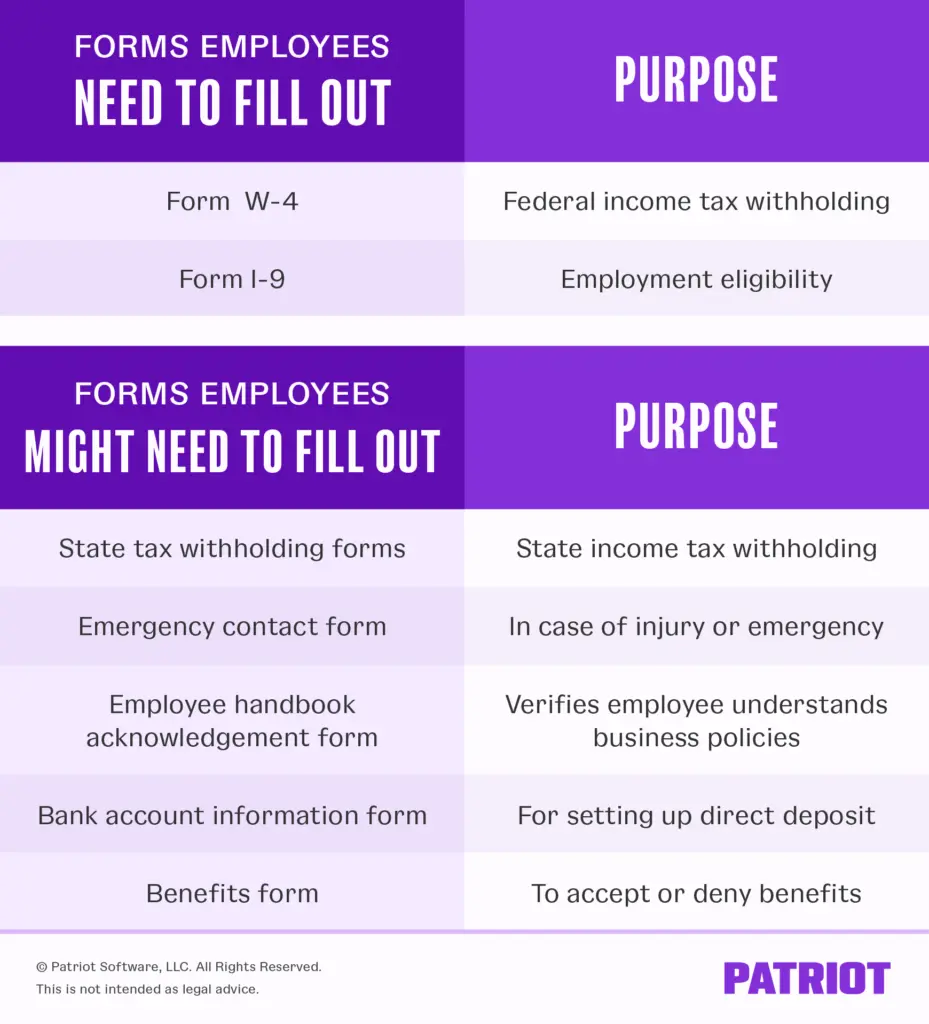
- Report the housing allowance on Form W-2 (Box 14, labeled "Housing Allowance") or provide a statement if the minister is treated as a contractor.
Utilizing specialized church payroll software or services can significantly streamline these complex calculations and ensure compliance, reducing the risk of errors for both the church and the minister.
Legal Battles and Constitutional Debates: The Ongoing Scrutiny
The minister’s housing allowance has been a recurring subject of legal challenge, primarily from organizations advocating for a strict separation of church and state. Critics argue that the allowance constitutes an unconstitutional government subsidy to religion, violating the Establishment Clause of the First Amendment.
One of the most prominent legal challenges came from the Freedom From Religion Foundation (FFRF), which initiated lawsuits arguing that IRC Section 107(2) (the cash allowance provision) unconstitutionally favored ministers over other taxpayers. In Freedom From Religion Foundation v. Mnuchin (formerly FFRF v. IRS), the Seventh Circuit Court of Appeals ultimately ruled in favor of the housing allowance in 2019, reversing a district court decision that had found it unconstitutional. The appellate court found that the allowance was consistent with the historical context of tax exemptions for religious organizations and did not establish religion or excessively entangle government with religion.
Proponents of the allowance, including various religious organizations and legal groups, argue that it is a neutral provision that accommodates religion without endorsing it. They contend it is akin to other employer-provided housing benefits (e.g., for military personnel, university presidents) that receive similar tax treatment. They also emphasize its historical precedent and its role in supporting the financial stability of clergy, particularly those in denominations that traditionally offer lower salaries. Despite the Seventh Circuit’s ruling, the debate over the constitutionality of the housing allowance continues in public discourse and remains a point of scrutiny for tax policy reformers.
Economic and Social Implications: Supporting the Clergy and Religious Institutions
The housing allowance has profound economic and social implications for both individual ministers and the broader religious landscape.
For ministers, the allowance can significantly increase their net disposable income. By reducing their federal income tax burden, it frees up financial resources that can be directed towards other living expenses, savings, or investments. This is particularly vital for clergy who often receive modest salaries, especially in smaller congregations or non-profit ministries. In high-cost-of-living areas, the housing allowance can make the difference between a minister being able to afford to live in the community they serve or being forced to commute from a more affordable, distant location. This proximity is often crucial for pastoral care and community engagement.
For religious institutions, the housing allowance is a powerful tool for recruitment and retention. Churches can offer a more attractive compensation package, even with limited budgets, knowing that a significant portion of the minister’s salary designated for housing will be tax-advantaged. This helps churches attract qualified clergy and reduces turnover, fostering stability within congregations. It also supports the tradition of ministers living among their congregants, reinforcing community ties and accessibility. Without this allowance, churches might struggle to find and keep ministers, especially in areas where housing costs are exorbitant, potentially impacting their ability to provide religious services and community outreach.
The allowance also implicitly acknowledges the unique professional demands placed upon clergy, where their home often serves as an extension of their ministry, used for counseling, meetings, or hospitality. This blurring of professional and personal space further justifies the special consideration for housing costs.
The Future of Clergy Housing Allowance: Ongoing Discussions and Outlook
Despite its long history and recent legal affirmations, the minister’s housing allowance is not immune to future scrutiny. As tax laws evolve and debates over church-state separation persist, the provision could face further challenges or legislative amendments. Tax reform discussions often include calls to simplify the tax code and eliminate what some perceive as special interest exemptions.
For now, the allowance remains a vital component of clergy compensation in the United States. Religious organizations and ministers must stay informed about current IRS regulations, maintain meticulous records, and ensure strict compliance to fully benefit from this provision. The emphasis on proper designation, substantiation, and understanding the distinction between income tax and self-employment tax obligations cannot be overstated. As the religious landscape continues to adapt, the financial mechanisms supporting its leaders will undoubtedly remain a topic of ongoing importance and discussion.
In conclusion, the minister’s housing allowance is a complex but significant tax provision that offers substantial financial relief to qualifying clergy. Rooted in historical precedent and designed to support the unique role of ministers, it requires careful adherence to IRS guidelines. While it has faced and continues to face legal and constitutional challenges, its current standing provides a crucial benefit for ministers and the religious institutions they serve, enabling them to sustain their vital work within communities across the nation.