Candice Horbacz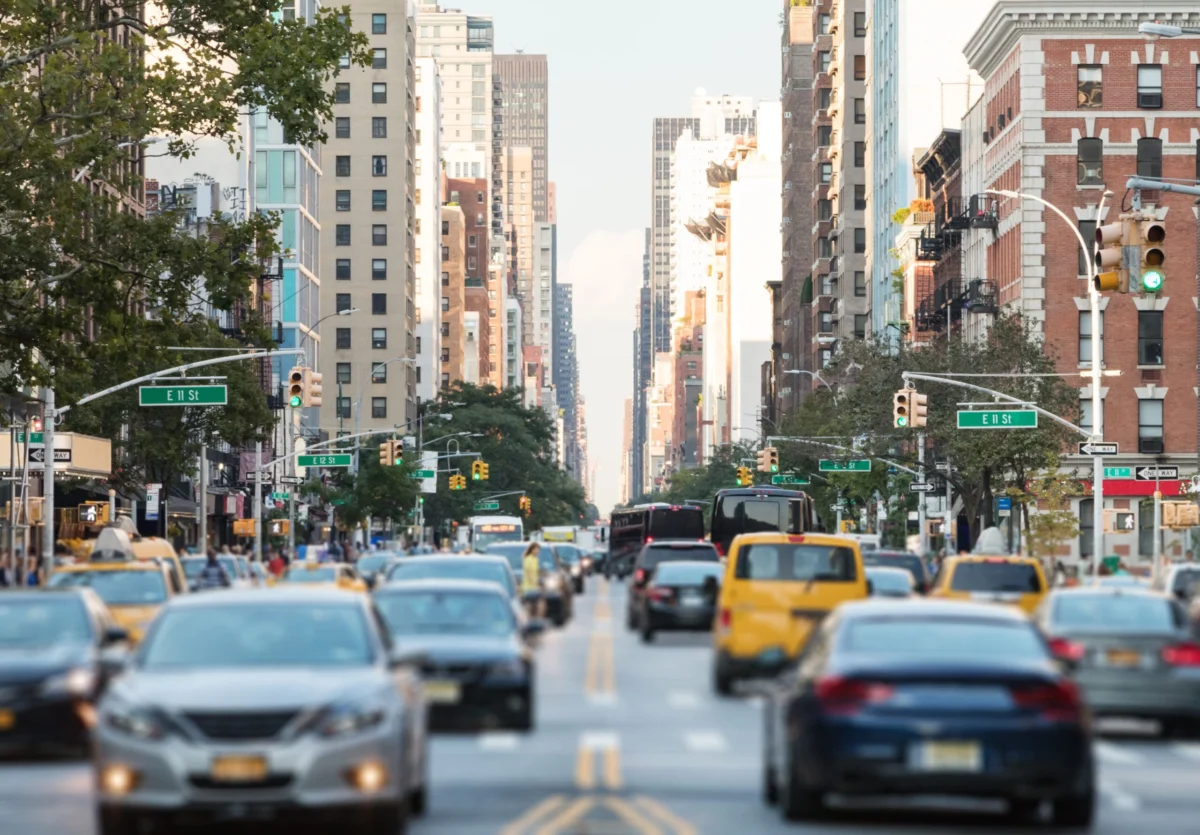
New York City, a metropolis long synonymous with its iconic skyline and notoriously gridlocked streets, embarked on a transformative urban policy in January 2025: a comprehensive congestion pricing program. This initiative, the first of its kind in the United States, was designed to tackle the city’s crippling traffic, alleviate the Metropolitan Transportation Authority’s (MTA) severe financial deficit, and usher in a new era of sustainable urban mobility. Initial data from the MTA’s First Evaluation Report indicates significant achievements, including reduced traffic, increased transit ridership, and vital revenue generation, even as the program navigates persistent legal challenges.
A City in Crisis: The Impetus for Change
For years leading up to the program’s implementation, New York City faced an escalating crisis on multiple fronts. In 2024, the city earned the dubious distinction of having the worst traffic congestion in the United States, with the average driver enduring a staggering 102 hours of delays annually. This wasn’t merely an inconvenience; it represented a substantial economic drain, impacting productivity, commerce, and quality of life for millions. The economic cost of congestion, factoring in lost time, wasted fuel, and increased operational expenses for businesses, was estimated to be in the billions of dollars annually. Deliveries were delayed, emergency services faced critical impediments, and the city’s air quality suffered under the constant exhaust fumes.
Concurrently, the MTA, the lifeblood of New York’s public transit system, found itself in a dire financial predicament. Operating the nation’s largest subway and commuter rail network, the MTA reported an alarming deficit of $8.3 billion in 2024. This fiscal distress was exacerbated by a vicious cycle: as the MTA struggled to maintain service quality and reliability due to funding shortfalls, commuters increasingly abandoned public transit in favor of personal vehicles. This shift further depressed MTA revenues while simultaneously intensifying traffic congestion for drivers, creating a self-reinforcing downward spiral that threatened the city’s economic vitality and environmental health. The MTA’s infrastructure, much of it over a century old, desperately needed modernization and expansion, a capital undertaking that required significant and stable funding sources. The prospect of fare hikes or service cuts loomed large, threatening to further alienate ridership.
The Blueprint: International Inspiration and Strategic Design
Faced with this dual challenge, New York City looked to international precedents for a solution. Congestion pricing, a system where drivers are charged a fee for entering designated high-traffic zones, had proven successful in major global cities such as Singapore, Milan, and London. These cities had demonstrated that such a mechanism could effectively manage traffic demand, generate revenue for public transit improvements, and encourage a shift towards more sustainable modes of transportation. The concept, though debated for decades in New York, gained critical momentum as the traffic and transit crises deepened.
After years of legislative debate, environmental reviews, and public consultations, New York City’s congestion pricing program officially launched in January 2025. The core of the initiative involves charging drivers a $9 daily fee for entering the Congestion Relief Zone (CRZ), which encompasses Manhattan south of 60th Street, excluding the West Side Highway and FDR Drive. The overarching goals were clear: raise substantial revenue to support the MTA’s capital plan and operational needs, while simultaneously incentivizing commuters to utilize alternative transportation options like subways, buses, and commuter rail, thereby reducing vehicular congestion within the CRZ. The program was carefully crafted to balance revenue generation with traffic reduction, aiming for a measurable improvement in both economic efficiency and urban livability.
Operational Mechanics: A Seamless System
To ensure efficiency and minimize disruption, the MTA designed the Congestion Tolling program to integrate seamlessly with existing infrastructure. Entries into the CRZ are tracked primarily through E-ZPass, the electronic toll collection system widely used across the Northeast. Complementing E-ZPass is a sophisticated network of over 1,400 license plate scanners strategically positioned at entry points to the CRZ. This dual system automates compliance and significantly reduces the need for physical toll booths, thus preventing bottlenecks at the zone’s perimeter. Drivers without an E-ZPass are billed via mail based on license plate recognition.
The fee structure for the congestion toll is nuanced, reflecting an attempt to differentiate impacts and manage various vehicle types. Large trucks and sightseeing buses, which contribute disproportionately to congestion and infrastructure wear, face the highest charge at $21.60 per entrance. Motorcycles are charged $4.50. For the vast majority of private vehicles, the standard fee is $9, applied a maximum of once per day. However, taxis and rideshare vehicles, which contribute significantly to circulating traffic, operate under a different model, being charged per entrance at a lower rate: $0.75 for taxis and $1.50 for rideshare vehicles. This per-trip charge for ride-hailing services aims to curb the proliferation of empty or lightly occupied vehicles traversing the CRZ.
Furthermore, the program incorporates dynamic pricing based on the time of day to better manage peak demand. During peak periods, defined as 5 a.m. to 9 p.m. on weekdays and 9 a.m. to 9 p.m. on weekends, drivers are charged the full toll. During off-peak hours, a substantial 75 percent discount is applied, encouraging some drivers to shift their travel times to less congested periods, thereby further optimizing traffic flow throughout the day. This tiered pricing strategy is a key component in the program’s ability to reallocate traffic demand.
Economic Rationale: Beyond Simple Tolls
The implementation of congestion pricing is rooted in fundamental economic principles, serving two primary functions beyond merely raising revenue. First, the toll acts as a user fee. Similar to other road use charges, the fee partially offsets the wear and tear that vehicles inflict on the city’s extensive road infrastructure. Maintaining and repairing bridges, tunnels, and streets within such a dense urban environment is an incredibly costly endeavor, and revenues from the congestion toll contribute directly to these essential infrastructure investments. This ensures that those who utilize the infrastructure directly contribute to its upkeep, promoting a more equitable distribution of costs.
Second, and perhaps more critically, the toll functions as a Pigouvian tax. Named after economist Arthur Pigou, a Pigouvian tax is designed to correct negative externalities, which are costs imposed on third parties by an economic activity. In this context, driving in congested areas creates significant negative externalities, primarily in the form of traffic delays for other drivers and increased air pollution for all residents. By charging drivers a fee for these external harms, the congestion toll forces them to internalize these previously unpriced costs into their decision-making process. This economic incentive encourages drivers to reconsider unnecessary trips, opt for public transit, or travel during off-peak hours, ultimately leading to a reduction in overall congestion and its associated environmental burdens. The market, in essence, is nudged towards a more socially optimal outcome.
Early Triumphs: A Transformative First Year
The initial results of New York City’s congestion pricing program, as detailed in the MTA’s First Evaluation Report, have been overwhelmingly positive, demonstrating its effectiveness in achieving its stated goals. Comparing data from 2024 (pre-implementation) to 2025 (post-implementation), the report revealed a significant transformation in urban mobility:
- Reduced CRZ Traffic: Vehicle entries into the Congestion Relief Zone decreased by an impressive 11 percent. This reduction translates directly into fewer cars on the streets of Lower and Midtown Manhattan, easing the pressure on the city’s notoriously crowded arteries.
- Increased Public Transit Ridership: Mirroring the decrease in private vehicle usage, public transit ridership saw a corresponding increase of 9 percent. This vital shift indicates that the program is successfully encouraging commuters to utilize the MTA’s subway and bus networks, reinforcing the sustainability goals of the initiative.
- Faster Vehicle Speeds: A direct consequence of reduced congestion, average vehicle speeds within the CRZ increased by 4.6 percent. More dramatically, speeds on critical crossings into Manhattan, such as bridges and tunnels, saw an astounding 23 percent increase. This improvement not only benefits drivers who still choose to enter the zone but also streamlines commercial deliveries and essential services.
- Improved Emergency Response Times: Perhaps one of the most impactful, yet often overlooked, benefits has been the improvement in emergency medical service (EMS) response times. Studies estimate a 5-6 percent reduction in EMS response times, equating to 63 to 70 seconds saved. In situations where "time is tissue," these seconds can be the difference between life and death, underscoring the program’s tangible public health benefits.
- Traffic Reallocation: The dynamic pricing structure has also proven effective in reallocating traffic. The only hours that saw an increase in vehicle travel in 2025 compared to 2024 were those immediately before and after the peak toll period, suggesting that some drivers are strategically shifting their travel times to take advantage of off-peak discounts.
- Substantial Revenue Generation: Financially, the program has been a robust success for the MTA. During its first year of operation, the Congestion Relief Zone Tolling recorded an average monthly revenue of $55 million. This consistent revenue stream has been instrumental in allowing the MTA to bond an estimated $15 billion for its crucial capital plan. This funding is earmarked for vital infrastructure projects, including signal modernization, accessibility upgrades, new subway cars, and expansion projects, all essential for improving the reliability and capacity of the transit system.
Navigating the Legal Landscape: A Battle for the Future
Despite its operational successes, New York City’s congestion pricing program has not enjoyed a perfectly smooth ride. Shortly after its launch, the initiative faced significant federal legal challenges, highlighting the contentious nature of such a pioneering policy in the American context.
In February 2025, Sean Duffy, then Secretary of Transportation, initiated efforts to withdraw federal approval and funding for the program. This culminated in a lawsuit alleging that the program had violated various federal restrictions and environmental regulations. The legal battle quickly escalated, drawing national attention and pitting federal authorities against local and state entities. Opponents of the program, including Secretary Duffy, argued that it disproportionately burdened outer-borough residents, low-income drivers, and commuters from neighboring states, while also questioning the thoroughness of its environmental impact assessments. Environmental justice advocates and trucking associations were among those who voiced concerns about potential adverse impacts on specific communities and industries.
As of the latest reports, the case remains ongoing. However, the court has issued an order rejecting initial federal attempts to halt the program, allowing it to continue operating while the legal process unfolds. The case is currently awaiting a hearing by the 2nd Circuit Court of Appeals, signaling a prolonged legal struggle that could set important precedents for future urban policies across the nation. This legal uncertainty, while not stopping the program, adds a layer of complexity and risk to its long-term stability.
Voices from the City: Stakeholder Reactions
The implementation and early success of congestion pricing have elicited a range of reactions from various stakeholders across New New York City and beyond.
MTA officials have consistently lauded the program, emphasizing its critical role in stabilizing the authority’s finances and enabling long-overdue capital investments. "This revenue is not just a number; it’s the lifeblood that allows us to modernize our aging infrastructure, improve service, and ensure a reliable transit system for millions," stated an MTA spokesperson in a recent press briefing, highlighting the direct link between the tolls and tangible improvements for commuters.
City officials, including the Mayor’s office and the Department of Transportation, have focused on the broader quality-of-life and environmental benefits. "Fewer cars mean cleaner air, quieter streets, and a more pedestrian-friendly city," commented a city council member, "This program is a bold step towards a greener, more sustainable New York." Business improvement districts in the CRZ have reported mixed reactions, with some businesses noting improved delivery times and easier access for customers using public transit, while others express concerns about potential deterrents for customers driving into Manhattan.
Opponents, however, remain vocal. Representatives from outer-borough communities argue that the toll places an unfair burden on residents who have limited public transit options for their commutes into Manhattan. "This is a tax on working families," asserted a community activist, "It forces people who have no other choice to pay more just to get to their jobs." Trucking associations have also voiced strong opposition, warning of increased operational costs that could be passed on to consumers. Secretary Duffy’s legal challenge reflects a broader federal concern about the program’s potential to create economic barriers and its compliance with national regulatory frameworks.
Commuters themselves present a diverse perspective. Many public transit users express relief at the improved subway and bus services funded by the tolls, alongside a noticeable reduction in platform crowding during peak hours. Drivers who continue to enter the CRZ acknowledge the cost but often concede the benefit of reduced travel times. Those who have switched to public transit speak of the financial savings and reduced stress of their commute.
Broader Implications and National Scrutiny
New York City’s congestion pricing experiment is more than just a local policy; it serves as a critical data point for urban planning and transportation policy across the United States. Its early success has already inspired proposals for similar programs in other major American cities, including Los Angeles and Washington, D.C., both grappling with their own severe traffic issues and public transit funding gaps.
However, the unique profile of New York City raises questions about the direct applicability of its model to other American urban centers. NYC stands apart with its unparalleled population density, its extensive and sprawling mass transit system that serves millions daily, and one of the world’s densest concentrations of jobs in Lower and Midtown Manhattan. These characteristics make it particularly well-suited for a congestion pricing model, as there are viable public transit alternatives for a significant portion of the population.
Many other American cities face a different reality. In the post-pandemic era, with the rise of remote work, many downtowns are struggling to attract businesses and workers back into their central cores. Implementing a congestion pricing scheme in a city with less robust public transit infrastructure or a less dense job market could potentially exacerbate these challenges, deterring economic activity and impacting businesses that rely on vehicular access. For these cities, a nuanced approach, perhaps focusing on different types of road use charges or targeted incentives, might be more appropriate.
Nevertheless, New York’s positive experience provides invaluable insights into the feasibility, operational mechanics, and potential benefits of congestion pricing. It offers a tangible case study for policymakers considering how to manage urban traffic, fund critical infrastructure, and promote environmental sustainability. The ongoing legal battles and the diverse reactions from stakeholders also highlight the complexities and political hurdles inherent in such transformative policies. As New York City continues to refine and defend its program, the eyes of urban planners, economists, and environmentalists across the nation will remain fixed on the Big Apple, watching closely to see if its bold experiment can indeed pave the way for a new paradigm in American urban mobility. The future of sustainable cities may well depend on lessons learned from this groundbreaking initiative.