Candice Horbacz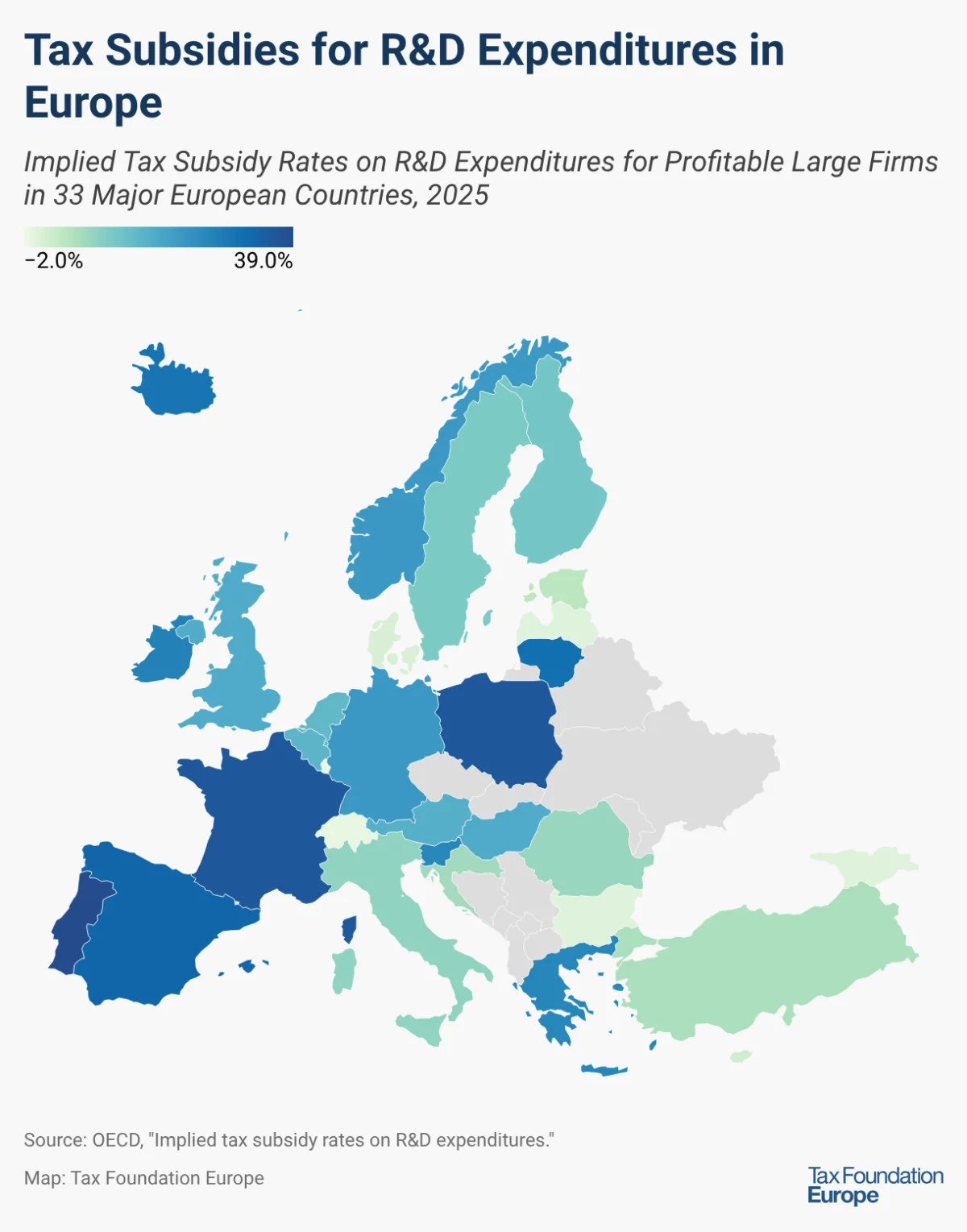
An extensive analysis of implied tax subsidy rates for large profitable firms engaged in research and development (R&D) activities across major economies reveals a profound disparity in governmental support, with rates ranging dramatically from a mere 1 percent in Denmark to a substantial 39 percent in Portugal. This significant variance underscores the diverse strategic approaches nations employ to stimulate innovation and enhance economic competitiveness, according to recent data compiled by organizations like the OECD and highlighted by tax policy think tanks. The findings provide critical insights for policymakers, businesses, and economic observers into the global landscape of R&D incentivization, indicating differing levels of commitment and effectiveness in fostering a vibrant innovation ecosystem through fiscal means.
A Diverse Landscape of Innovation Incentives Across Europe
The study identifies Portugal as the most generous among countries offering notable R&D tax relief, with an implied subsidy rate of 39 percent. This robust support positions Portugal as a highly attractive jurisdiction for companies seeking to minimize the tax burden on their innovation investments. Following closely are France and Poland, both providing the second and third most substantial relief after Portugal, with an identical implied tax subsidy rate of 36 percent. These figures suggest a deliberate policy choice in these nations to actively encourage R&D expenditure, likely aiming to drive technological advancement, create high-skill jobs, and secure a competitive edge in global markets. The mechanisms typically involve generous tax credits, super-deductions, or accelerated depreciation for R&D-related expenditures, effectively reducing the net cost of innovation for corporations.
Conversely, the data highlights several countries where R&D tax relief for large profitable firms is notably less generous. Denmark stands out with the lowest implied subsidy rate among countries granting relief, at just 1 percent. Cyprus follows closely at 2 percent, and Estonia at 4 percent. These low rates suggest that while these countries may acknowledge the importance of innovation, their primary method of support might lie in alternative mechanisms, such as direct grants, institutional funding for research, or a broader focus on a generally favorable business environment rather than specific R&D tax incentives. It’s also possible that their tax systems are designed to be more neutral, with fewer targeted breaks.
A distinct group of countries, including Bulgaria, Georgia, Latvia, Luxembourg, Malta, and Switzerland, demonstrate no significant expenditure-based R&D tax relief. This absence does not necessarily imply a lack of innovation policy but rather indicates that specific tax-based incentives for R&D expenditures are not a prominent feature of their fiscal frameworks. These nations may rely on other policy levers, or their overall tax rates and regulatory environments are deemed sufficiently attractive to foster innovation without explicit R&D subsidies. For example, Luxembourg and Switzerland are known for their highly competitive corporate tax rates and robust financial sectors, which might implicitly support R&D without the need for targeted relief.
The average implied subsidy rate for profitable large firms across the 33 major European countries with available data is projected to be 16 percent in 2025. This average serves as a crucial benchmark, illustrating the typical level of R&D tax support within the continent. The wide dispersion around this average underscores the varied economic priorities and fiscal capacities among European nations, as well as their differing philosophies on government intervention in private sector innovation.
Benchmarking Against Global Giants: US and China
Beyond Europe, the analysis provides valuable comparative data with two of the world’s largest economies: the United States and China. The United States currently grants a subsidy rate of 7 percent to large profitable firms. This figure, while below the European average, represents a significant recent increase, reflecting a notable policy shift that will be explored further. In stark contrast, China offers a substantially higher subsidy rate of 32 percent. China’s aggressive incentivization of R&D through its tax system aligns with its national strategic goals of becoming a global leader in technological innovation and advanced manufacturing. This high subsidy rate demonstrates a clear governmental commitment to fostering indigenous innovation and attracting foreign R&D investment, positioning China as a formidable competitor in the global innovation landscape. The disparity between China and the U.S. highlights the different national strategies in leveraging fiscal policy for technological leadership, influencing where multinational corporations choose to locate their research and development activities.
Tailored Support: Nuances for SMEs and Loss-Making Firms
The OECD’s comprehensive data also extends to implied tax subsidy rates for loss-making firms and for small and medium-sized enterprises (SMEs), recognizing that different types of businesses and financial situations warrant distinct policy considerations. It’s a common observation that most countries covered in the analysis provide the same expenditure-based R&D tax relief to both large firms and SMEs. This uniform approach simplifies administration but may not always address the unique challenges faced by smaller enterprises.
However, several notable exceptions exist where policies are specifically tailored. France, particularly in the case of loss-making firms, along with Germany, Iceland, and the Netherlands, are relatively more generous to SMEs than to large firms. This differential treatment is often justified by the recognition that SMEs typically face greater financial constraints, higher risk aversion, and more limited access to capital for R&D investments. By offering enhanced incentives, these countries aim to lower the barrier to entry for innovation among smaller businesses, which are often vital sources of disruptive technologies and job creation. Such generosity can take the form of higher tax credit rates, more favorable deduction thresholds, or specific programs designed to support the initial stages of R&D within SMEs.
Conversely, Croatia presents a unique scenario, offering slightly higher relief to large firms than to SMEs. This approach might reflect a strategy to support established industrial R&D or to attract significant foreign direct investment in large-scale research projects, perhaps assuming that larger firms have a greater capacity for high-impact innovation or can more readily absorb the administrative complexities of claiming incentives.
The financial health of a firm also significantly influences the effective subsidy rate. R&D tax incentives often include provisions for refunds and carryover mechanisms, which change the implied tax subsidy rates for loss-making firms relative to profitable firms. While these provisions are crucial for ensuring that even unprofitable innovative companies can benefit from R&D support, they often result in lower average implied tax subsidy rates for loss-making firms. This is because the immediate cash benefit of a tax deduction or credit is less pronounced for a firm not currently paying taxes. While refunds provide immediate cash, and carryovers allow future tax reductions, they may not offer the same immediate financial uplift as a deduction against current profits, leading to a "discounted" value for loss-making entities, both for SMEs and large firms. The design of these provisions is a critical element of R&D tax policy, aiming to balance fiscal prudence with the need to support innovation across all stages of a company’s life cycle.
Recent Policy Shifts and Their Economic Rationale (2024-2025)
The period spanning 2024 and 2025 has witnessed several significant changes in R&D tax subsidy policies across various nations, reflecting dynamic economic environments and evolving policy priorities. These adjustments highlight governments’ responsiveness to competitive pressures and their commitment to strengthening national innovation ecosystems.
In Europe, Lithuania and the Slovak Republic implemented changes that indirectly boosted their R&D tax incentives. Both countries raised their corporate tax rates starting in 2025. While seemingly counterintuitive, an increase in the corporate tax rate effectively enhances the value of preferential R&D deductions. A deduction reduces taxable income, and the higher the tax rate, the greater the absolute tax saving derived from that deduction. Consequently, Lithuania saw its implied subsidy rate for large profitable firms rise from 31 percent to 34 percent, and the Slovak Republic experienced an increase from 28 percent to 33 percent. These shifts illustrate how broader tax policy adjustments can have a ripple effect on specific incentives, making them more attractive without direct changes to the R&D provisions themselves. The rationale behind such corporate tax rate adjustments often involves balancing fiscal revenue needs with broader economic competitiveness strategies.
The Netherlands took a more direct approach, explicitly raising tax credit rates for in-scope R&D activities. This proactive policy decision led to a substantial increase in its implied subsidy rate, climbing from 31 percent in 2024 to 35 percent in 2025. Such a targeted increase signals a clear intent from the Dutch government to intensify its support for research and development, aiming to maintain and enhance its position as an innovation hub within Europe. This could be a response to increasing global competition for R&D investment or part of a broader strategy to foster specific high-tech sectors.
Across the Atlantic, the United States enacted a crucial policy reversal that significantly impacted its R&D tax landscape. The U.S. scrapped controversial temporary R&D amortization requirements that had been in effect since 2022 and restored its pre-2022 expensing regime. Prior to 2022, companies could immediately deduct (expense) their R&D costs in the year they were incurred. The 2022 change mandated that these costs be amortized, or spread out, over five years for domestic R&D and 15 years for foreign R&D, significantly delaying the tax benefit and increasing the immediate cost of R&D. The restoration of full expensing, combined with existing R&D tax credits, dramatically raised the implied subsidy rate for large profitable firms in the U.S. from a low of 3 percent to a more competitive 7 percent. This policy change was widely advocated by the business community and innovation advocates, who argued that the amortization requirement acted as a significant disincentive for domestic R&D investment. The reversal demonstrates a commitment to fostering innovation and supporting American competitiveness, acknowledging the critical role of immediate tax benefits in investment decisions.
The Strategic Imperative: Why Countries Invest in R&D Incentives
The widespread adoption of R&D tax incentives by governments worldwide is rooted in a fundamental economic rationale: addressing market failures and harnessing the positive externalities of innovation. Research and development activities often generate benefits that extend far beyond the innovating firm itself, spilling over to competitors, related industries, and the broader economy in the form of new knowledge, technologies, and processes. These "knowledge spillovers" mean that the social return on R&D investment is typically higher than the private return, leading firms to underinvest in R&D from a societal perspective if left solely to market forces.
Governments intervene through R&D tax incentives to bridge this gap, encouraging businesses to increase their expenditure on research and development activities to a socially optimal level. The overarching goals are multifaceted:
- Stimulating Economic Growth: Innovation is a primary driver of long-term economic growth, leading to higher productivity, new industries, and improved living standards.
- Creating High-Value Jobs: R&D typically involves highly skilled labor, fostering employment in scientific, engineering, and technical fields.
- Enhancing National Competitiveness: Countries with strong innovation ecosystems are better positioned to compete globally, attract foreign direct investment, and develop leading-edge industries.
- Addressing Societal Challenges: R&D can lead to breakthroughs in areas like healthcare, clean energy, and environmental sustainability.
The evolution of R&D support has seen a shift from direct grants, which can be bureaucratic and require extensive government oversight, towards more generalized tax-based incentives. Tax incentives offer firms greater autonomy in their R&D choices and can be more predictable, providing a clearer framework for investment planning. This strategic imperative underlies the diverse, yet common, efforts to foster an environment conducive to innovation through fiscal policy.
Navigating the Challenges: Policy Design and Effectiveness
While R&D tax incentives offer significant benefits, their implementation is not without challenges and criticisms. Policymakers frequently grapple with the complexities of designing effective and efficient incentive schemes that truly target genuine innovation and provide positive spillovers to the wider economy.
One primary challenge lies in defining and identifying "qualified expenditures." Distinguishing between routine operational improvements and truly innovative R&D activities can be difficult, leading to disputes between firms and tax authorities. This ambiguity can result in increased administrative and compliance costs for both the government, which must audit claims, and businesses, which must meticulously document their R&D activities. The risk of "deadweight loss" also looms large, where subsidies are granted for R&D that would have occurred anyway, leading to an inefficient allocation of public funds and increased fiscal losses without generating additional innovation.
Critics also point to the potential for "fiscal losses" if incentives are overly generous or poorly targeted. This necessitates a careful balancing act for governments between stimulating innovation and maintaining fiscal prudence. Furthermore, R&D tax incentives can sometimes create unintended distortions in the economy, favoring certain types of R&D or industries over others, even if those others might offer significant societal benefits.
An alternative perspective, often advanced by economists and tax policy experts, suggests that policymakers could often support innovation at a lower revenue cost by improving the general tax treatment of the risky investment that innovative firms undertake, rather than providing R&D-specific preferences. This approach advocates for a more neutral tax system that allows businesses to:
- Fully recover their capital costs: This means allowing immediate expensing or accelerated depreciation for investments in equipment, software, and other capital assets essential for R&D.
- Offset their operating losses: Innovative firms, especially startups, often incur losses in their early stages. Allowing them to fully carry forward or carry back these losses to offset future or past profits provides crucial liquidity and reduces the financial risk of innovation.
The argument for these general tax treatments is that they are less distortionary, simpler to administer, and support a broader range of productive investments, including R&D, without requiring complex definitions of "innovation." This debate – between specific, targeted R&D incentives and broader, more neutral tax reforms – continues to be a central theme in discussions about optimal innovation policy.
Broader Implications for Global Innovation and Economic Policy
The disparities and trends in R&D tax subsidies have profound implications for global innovation, corporate investment strategies, and international tax competition. For multinational corporations, the varying subsidy rates can be a significant factor in determining where to locate R&D facilities, influencing investment flows and the geographic distribution of technological advancements. A country with more generous incentives may attract a greater share of R&D spending, potentially leading to a "race to the top" in terms of innovation support among nations.
The ongoing adjustments in policies, such as the U.S. restoring R&D expensing or European nations increasing their rates, underscore the dynamic nature of this competition. Governments are constantly evaluating their policies to ensure they remain attractive and effective in fostering innovation in an increasingly globalized and technology-driven economy. The role of international organizations like the OECD in collecting and standardizing this data becomes even more critical, providing benchmarks and fostering best practices among member states.
Looking ahead, the evolving landscape of global challenges, including climate change, digitalization, and public health crises, will likely place even greater demands on innovation. Policymakers will face continuous pressure to design agile and responsive tax policies that not only encourage R&D but also align with broader societal goals. The debate between targeted incentives and general tax neutrality will continue, with the ultimate aim of maximizing the societal benefits of innovation while ensuring fiscal sustainability and administrative efficiency. The complex interplay of national interests, economic theory, and practical implementation will continue to shape the global environment for R&D investment for years to come.