Nila Kartika Wati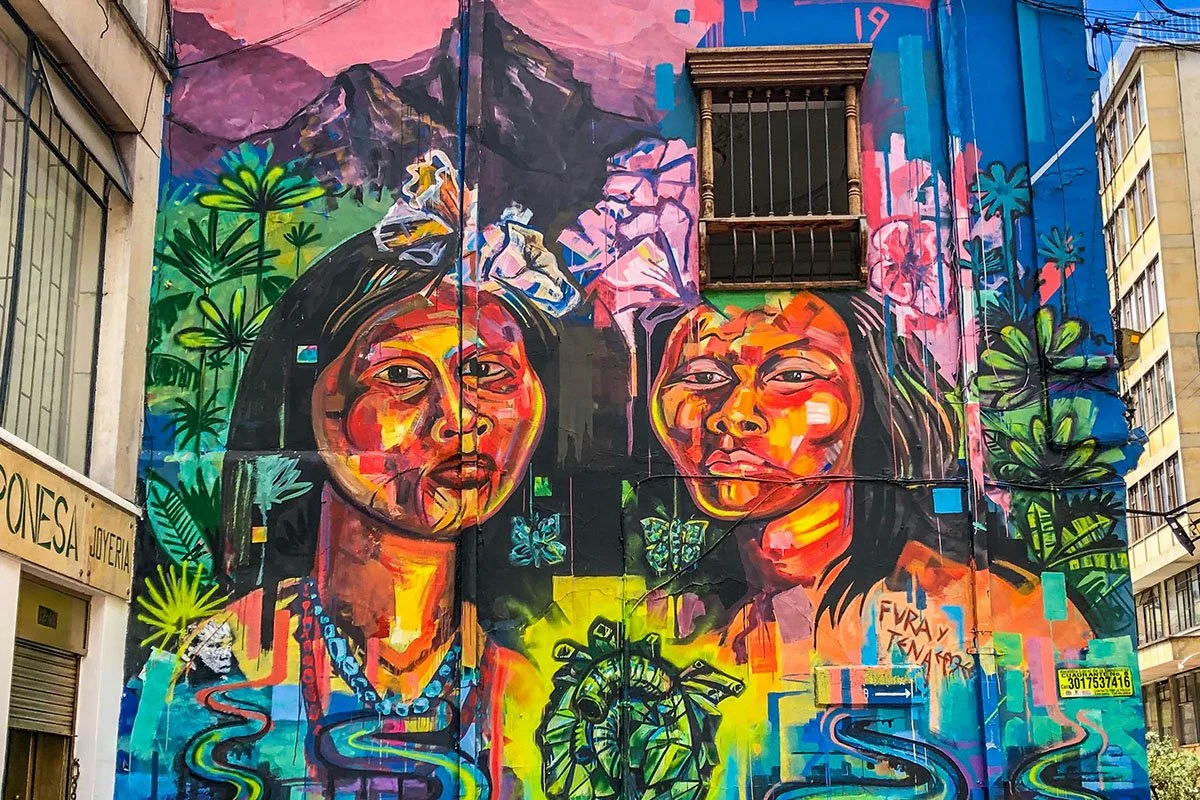
The traditional perception of Colombia, often filtered through the lens of international news cycles and sensationalized media, frequently reduces the nation’s complex social fabric to a binary of drug trafficking and violent crime. However, a profound internal shift is redefining the country’s transnational identity, led not by political elites, but by a collective of mothers from the nation’s most marginalized peripheries. This movement, rooted in the concept of berraquera—a colloquial Colombian term denoting an indomitable spirit and relentless courage—is dismantling decades of state-sponsored erasure and challenging the reductionist narratives imposed by the global North. By transforming private grief into a formidable tool for public political agency, these women are providing a universal model for non-violent resistance and radical resilience.
The Socio-Political Origins of Maternal Activism in Colombia
To understand the emergence of the "Searching Mothers," one must examine the dark period of Colombian history between 2002 and 2008. During this era, the nation was gripped by the "False Positives" scandal (falsos positivos), a systemic human rights atrocity where members of the Colombian National Army murdered civilians and presented them as guerrilla combatants killed in action. These extrajudicial killings were incentivized by a state policy that rewarded military units with promotions, vacation time, and monetary bonuses based on "body counts."
According to the Special Jurisdiction for Peace (JEP), the transitional justice mechanism established by the 2016 Peace Accord, at least 6,402 civilians were victims of these state-sponsored murders. The majority of these victims were young men from impoverished backgrounds, specifically targeted because their social invisibility made them "expendable" in the eyes of the perpetrators. It was from the municipality of Soacha, a densely populated and economically marginalized area on the outskirts of Bogotá, that the first collective of mothers rose to challenge the official state narrative.
Chronology of the Struggle for Truth
The timeline of this maternal resistance began in late 2008, when several families in Soacha reported the disappearance of their sons. Within weeks, the bodies of these young men were discovered in mass graves in Ocaña, Norte de Santander—hundreds of miles away from their homes. The military initially labeled them as "insurgents killed in combat."
Refusing to accept the criminalization of their children, the Mothers of Soacha (MAFAPO) began a decades-long crusade for justice. By 2010, their advocacy had gained enough momentum to force the Colombian judiciary to open investigations into military commanders. However, the most significant turning point occurred following the 2016 Peace Agreement between the Colombian government and the FARC-EP. This agreement led to the creation of the Truth Commission and the JEP, providing a formal platform for the mothers to confront the military.
In a landmark series of hearings in 2021 and 2022, high-ranking military officials finally admitted to the systematic nature of the killings. In a 2025 interview, Ana Páez, one of the leading voices of the searching mothers, noted that these confessions were a "painful victory." She emphasized that the primary goal was never just legal retribution, but the restoration of their children’s dignity: "We truly cleared the names of our children… Now we want the truth, but a truth with dignity."
Symbolic Practices and the Body as a Site of Resistance
The methodology of Colombian maternal activism is characterized by its use of "embodied" and symbolic practices. These strategies are designed to reclaim public spaces and force the state to acknowledge the presence of the victims. These practices draw a direct parallel to the Mothers of the Plaza de Mayo in Argentina, who famously wore white headscarves (originally made from their children’s diapers) to protest the "disappearances" during the military dictatorship of the 1970s.
In Colombia, the Mothers of Soacha have utilized several unconventional mobilization strategies:
- The Boots Outside Congress: In a poignant reference to how their sons were often found wearing military boots on the wrong feet (a sign of the rushed staging of crime scenes), the mothers placed hundreds of boots in front of the Colombian Congress. This visual intervention served as a direct indictment of the legislative and military apparatus.
- The "Madres Terra" Series: This photographic initiative involved mothers partially burying their own bodies in the earth. The symbolism suggests that while the state attempted to hide their children in the ground, the mothers remain rooted in that same soil, refusing to let the memory of the dead be erased.
- The Logic of Affection: By centering their activism on the identity of "motherhood," these women transitioned from the private, domestic sphere into the public, political sphere. This shift allowed them to operate in repressive environments where traditional political dissent was often met with lethal force.
Institutional Recognition and "Las Cuchas Tienen Razón"
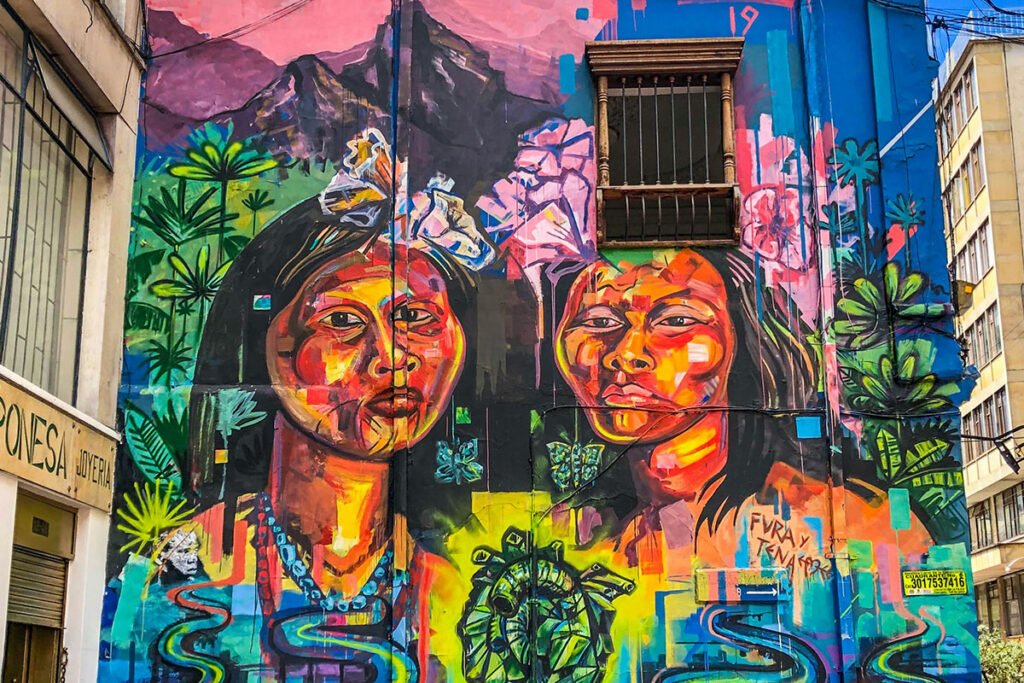
The impact of this activism has recently culminated in official institutional recognition. The phrase "Las Cuchas tienen razón" (The "Old Ladies" are right) has transformed from a grassroots slogan into a recognized historical truth. In a landmark ruling, the Colombian Constitutional Court ordered the protection of a mural bearing this slogan, categorizing it as a vital expression of historical memory.
The court’s decision underscores a shift in the Colombian legal paradigm. It acknowledges that the preservation of memory is not merely a social preference but a fundamental right for victims of armed conflict. This legal backing serves as a safeguard against "denialism"—the attempt by certain political sectors to downplay or deny state responsibility for the "False Positives."
Intersectionality and the Geography of Marginalization
The resilience of the Searching Mothers is inextricably linked to their intersectional identities. These women exist at the crossroads of geographic isolation, economic deprivation, and gender-based marginalization. However, the very structures of violence that sought to silence them provided the "fuel" for their resistance.
The systemic violence of the Colombian conflict often forced these women into cycles of revictimization, yet it also fostered a unique form of communal solidarity. Their activism is not merely about individual cases; it is a collective struggle for social transformation. By organizing from the margins, they have created a "bottom-up" approach to civic health. As noted by the #WeTheCivic initiative, understanding the true health of a democracy requires looking away from official corridors of power and toward the voices that institutional structures have attempted to erase through "systematic amnesia."
Global Implications: A New Paradigm for Colombia
The legacy of the Searching Mothers offers a universal model of civil resistance that is adaptable to various global regimes and contexts. Their success demonstrates that the "logic of affection"—the use of maternal love as a political force—can destabilize authoritarian narratives and overcome fear.
For the international community, the Colombian experience serves as a corrective to colonialist and reductionist views of Latin America. The country’s greatest contribution to global consciousness is not the sensationalized history of its oppressors, but the radical resilience of its communities. This "berraquera" is now being exported as a legacy of resistance, proving that historical struggle can be transformed into a lifeline for democracy.
The broader implications of this movement suggest that:
- Grassroots mobilization possesses the power to break down authoritarian narratives. No wall built on deception can withstand the persistent demand for historical truth.
- Memory is a form of counter-power. In the face of state-sponsored erasure, the act of remembering becomes a radical political act.
- Dignity is the ultimate goal of justice. For the mothers, legal convictions are secondary to the social and historical "clearing of names."
Conclusion: Reclaiming the Narrative
As Colombia continues its arduous journey toward a lasting peace, the Searching Mothers remain the moral compass of the nation. They have proven that the dignity of a people cannot be eclipsed by state violence or social stigma. Their story is a reminder that in any context, raising one’s voice is not only necessary but transformative.
By recentering the narrative on the margins, Colombia is redefining itself. It is no longer just a land of conflict, but a land of berraquera—a territory where mothers turned the ashes of their grief into a beacon of truth for the rest of the world. This history of resistance, shared with the broader Latin American experience, reveals a fundamental truth: the continent has continually overcome authoritarianism by turning its historical struggles into its greatest strength. The "Untold Story of Latin American Resistance" is finally being told, and it is being written by those who were once dismissed as insignificant.