Nila Kartika Wati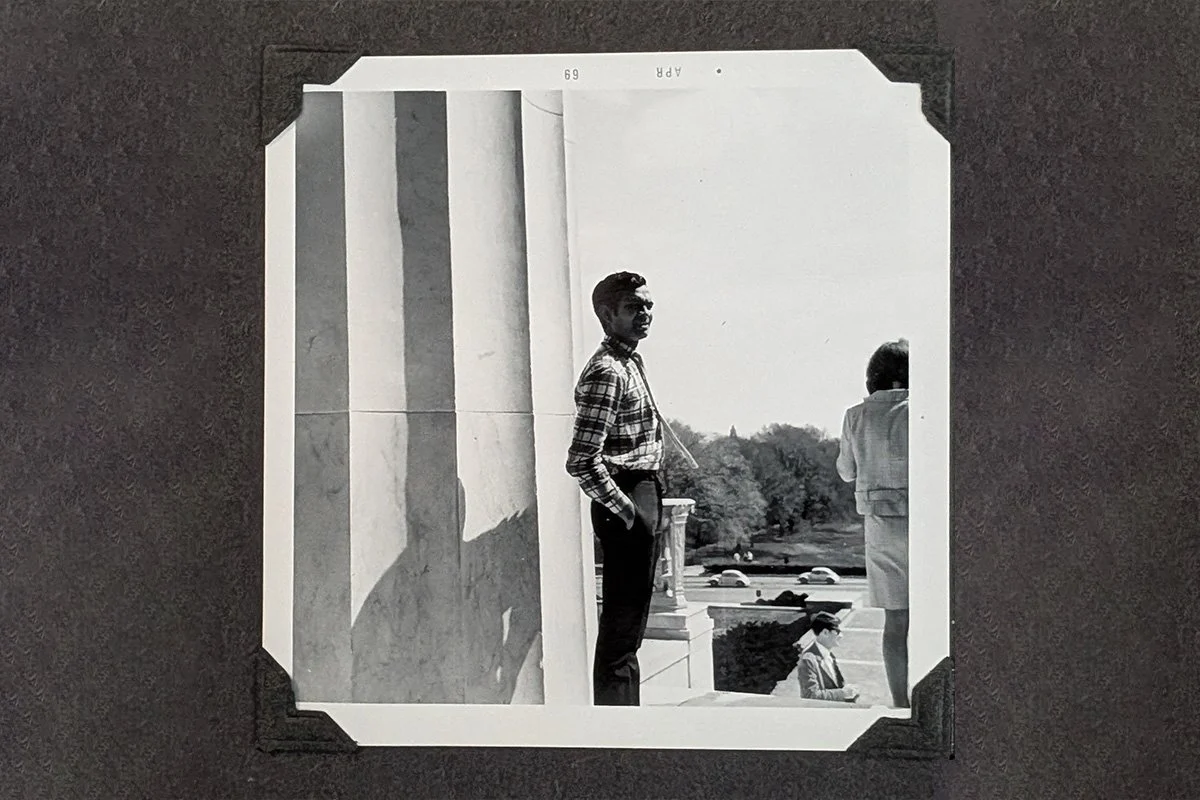
The intersection of migration, historical dispossession, and the burgeoning movement for racial repair has created a complex landscape for modern American identity, particularly for the post-1965 immigrant diaspora. In recent years, the discourse surrounding reparations for slavery and Jim Crow has expanded beyond a Black-White binary to include the voices of Asian American leaders and descendants of global colonial systems. This evolution asks fundamental questions about what it means to belong to a nation whose opportunities were carved out by the struggles of others. By examining the parallels between South African land exclusion, the American Civil Rights Movement, and the persistence of the Indian caste system, a clearer picture emerges of the "keys" handed to new citizens—and the responsibilities that come with them.
The Architecture of Exclusion and the Legacy of Apartheid
The modern struggle for equity often begins with the physical landscape. In Cape Town, South Africa, the "Southern Suburbs" remain a poignant example of how historical policy dictates contemporary access. Three decades after the 1994 general election—the first in which South Africans of all races were permitted to vote—the spatial legacy of Apartheid remains largely intact. During the Apartheid era (1948–1994), the Group Areas Act of 1950 forcibly removed non-White residents from "leafy" urban centers, designating them as White-only zones.
Today, private gates and barbed-wire fences continue to restrict access to natural landmarks and trails, often requiring specific "keys" or codes held by residents of these historically privileged neighborhoods. While the legal framework of Apartheid has dissolved, the economic and geographic barriers persist. This phenomenon is not unique to South Africa; it serves as a global metaphor for "borrowed access," where visitors or new residents benefit from the beauty of a place without necessarily bearing the historical scars of its dispossession. The fundamental question for the modern observer remains: What is the duty of those who enjoy the privileges of a system built on the exclusion of others?
The 1965 Immigration Act and the Debt to Civil Rights
To understand the trajectory of the South Asian diaspora in the United States, one must look to the legislative shifts of the mid-1960s. Before 1965, U.S. immigration policy was governed by the National Origins Formula, which heavily favored immigrants from Northern and Western Europe while effectively barring those from Asia and Africa. The passage of the Immigration and Nationality Act of 1965 (the Hart-Celler Act) fundamentally altered the nation’s demographic makeup.
However, historians and policy analysts note that the 1965 Act did not happen in a vacuum. It was a direct byproduct of the momentum generated by the Black-led Civil Rights Movement. The moral pressure exerted by the Civil Rights Act of 1964 made the discriminatory quotas of the immigration system untenable on the global stage. Consequently, the "American Dream" achieved by many Indian American families—characterized by high-level engineering degrees, government research grants, and the growth of clean-tech industries—was made possible by a door forced open by Black activists.
Data from the U.S. Census Bureau illustrates the impact of this shift. In 1960, there were fewer than 13,000 Indian immigrants in the U.S. By 2023, that number had grown to over 2.8 million, with the community becoming one of the most economically successful ethnic groups in the country. This success, while built on hard work and individual merit, is inextricably linked to public investment and the legislative victories of the 1960s.
The Evolution of the Reparations Movement
As the conversation around racial justice matures, the movement for reparations has transitioned from a fringe activist demand to a structured policy debate. Central to this movement is the legacy of Congressman John Conyers, who in 1989 introduced H.R. 40, a bill to establish a commission to study and develop reparation proposals for African Americans. For decades, the bill languished in Congress, but it provided the intellectual and political scaffolding for today’s movement.
The historical basis for reparations extends back to the 18th century. One of the earliest successful cases was that of Belinda Sutton, an enslaved woman in Massachusetts. In 1783, Sutton petitioned the Massachusetts General Court for a pension from the estate of her former enslaver, Isaac Royall Jr. Her victory remains a foundational precedent for the argument that labor stolen through bondage creates a financial and moral debt that the state is obligated to recognize.
Currently, the movement is seeing a surge in philanthropic support and local government action. In 2020, California became the first state to form a Reparations Task Force, which released a comprehensive report in 2023 detailing the systemic harms of housing discrimination, mass incarceration, and the racial wealth gap. The task force estimated that the historical "wealth gap" in California alone could justify hundreds of billions of dollars in redress.
The Role of Philanthropy and "Double Innocence"
For Asian American leaders within the nonprofit sector, the reparations movement presents a unique challenge of identity and accountability. Many philanthropic organizations are now directing capital toward Black-led movements for racial repair. This shift has prompted a period of introspection for non-Black people of color who facilitate these resources.
A common psychological barrier identified by sociologists is the concept of "double innocence." This occurs when immigrants distance themselves from the harms of their adopted country by claiming they arrived "after the fact," while simultaneously distancing themselves from the harms of their country of origin by claiming they are "no longer of that place."
In the context of the South Asian diaspora, this often manifests as a refusal to engage with the history of the caste system. Just as the U.S. has struggled with the legacy of slavery, India and its diaspora continue to grapple with caste-based discrimination. The belief that caste is a "thing of the past" is frequently contradicted by the lived experiences of Dalit (formerly "untouchable") communities both in India and abroad. The 2023 legislative debates in California over a bill to ban caste discrimination highlighted how these ancient hierarchies can be transplanted into modern corporate and social environments.
Intergenerational Responsibility and the Practice of Repair
The process of "repair" is increasingly viewed not just as a financial transaction, but as a practice of "thick belonging." This involves moving beyond a thin sense of gratitude for a new country and toward a robust responsibility for its history.
Case studies of "settler" descendants in the U.S. provide a roadmap for this work. Some descendants of slaveholding families have begun the process of tracing their lineage to identify Black relatives who share their DNA and surnames. These efforts often lead to direct financial redress and the establishment of "repair circles," where families collectively decide how to interrupt the transmission of generational wealth built on exploitation.
For the immigrant professional, this practice of repair might include:
- Historical Literacy: Acknowledging the specific Black-led movements that enabled their migration and citizenship.
- Caste Accountability: Confronting the "stainless steel cups" of social exclusion within their own cultural traditions and ensuring that diaspora spaces are inclusive of all backgrounds.
- Philanthropic Integrity: Ensuring that the flow of capital toward racial justice movements is not merely performative but is directed by the communities most impacted by historical harm.
Analyzing the Implications for National Identity
As the United States approaches its 250th anniversary, the "Declaration of Interdependence" is emerging as a competing narrative to traditional American exceptionalism. This framework suggests that no group’s success is entirely self-made and that the nation’s integrity depends on its ability to reconcile with its foundational contradictions.
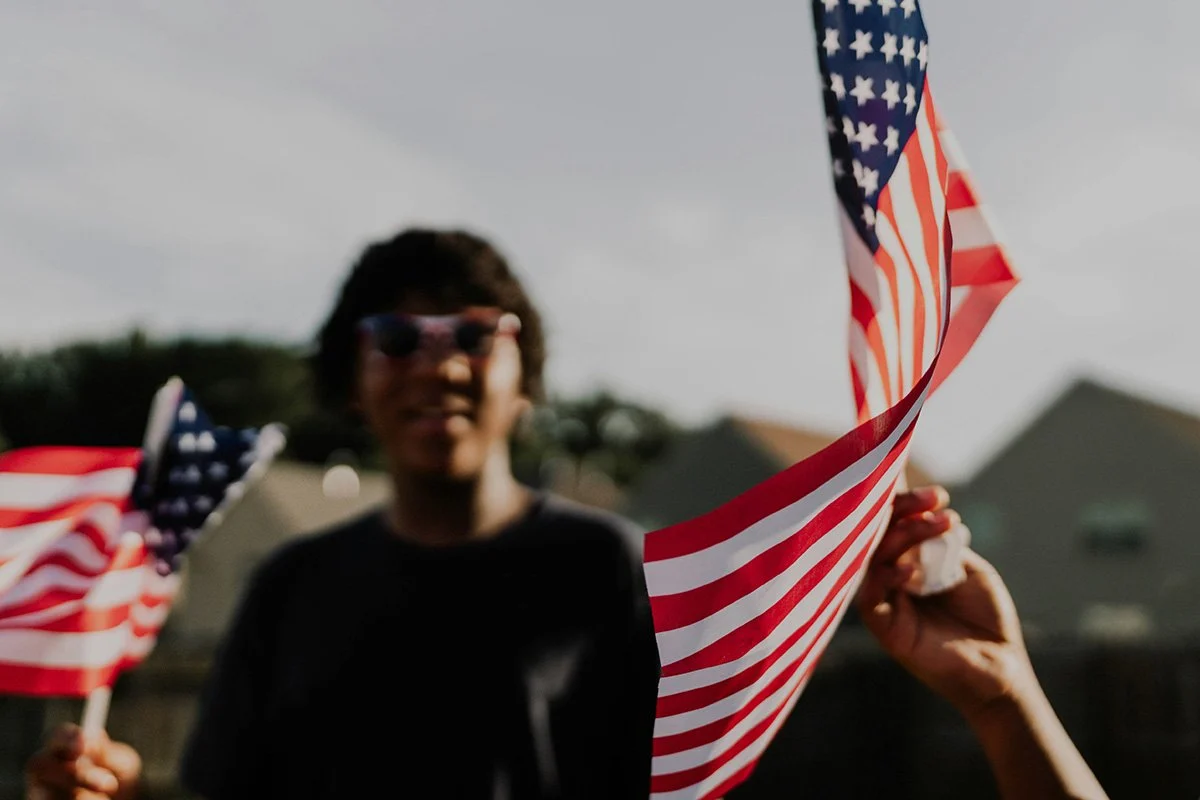
The broader impact of this shift is visible in the way Independence Day is observed. Rather than a monolithic celebration of 1776, many communities are using the holiday to reflect on Frederick Douglass’s 1852 speech, "What to the Slave is the Fourth of July?" and to engage in "quilting" traditions—the act of taking torn, disparate scraps of history and stitching them into a functional, beautiful whole.
Ultimately, the "keys" handed to the modern immigrant—education, citizenship, and economic opportunity—are not merely rewards for personal effort. They are inheritances that carry a charge. Whether in the shadow of the redwoods in California or the pine-covered trails of Cape Town, the path to true belonging is paved with the recognition of what is owed to the past. By rejecting the "double innocence" of migration and embracing a "thicker belonging," the diaspora can play a vital role in the global movement for racial and social repair, ensuring that the doors opened in the 20th century remain open for all in the 21st.