Nila Kartika Wati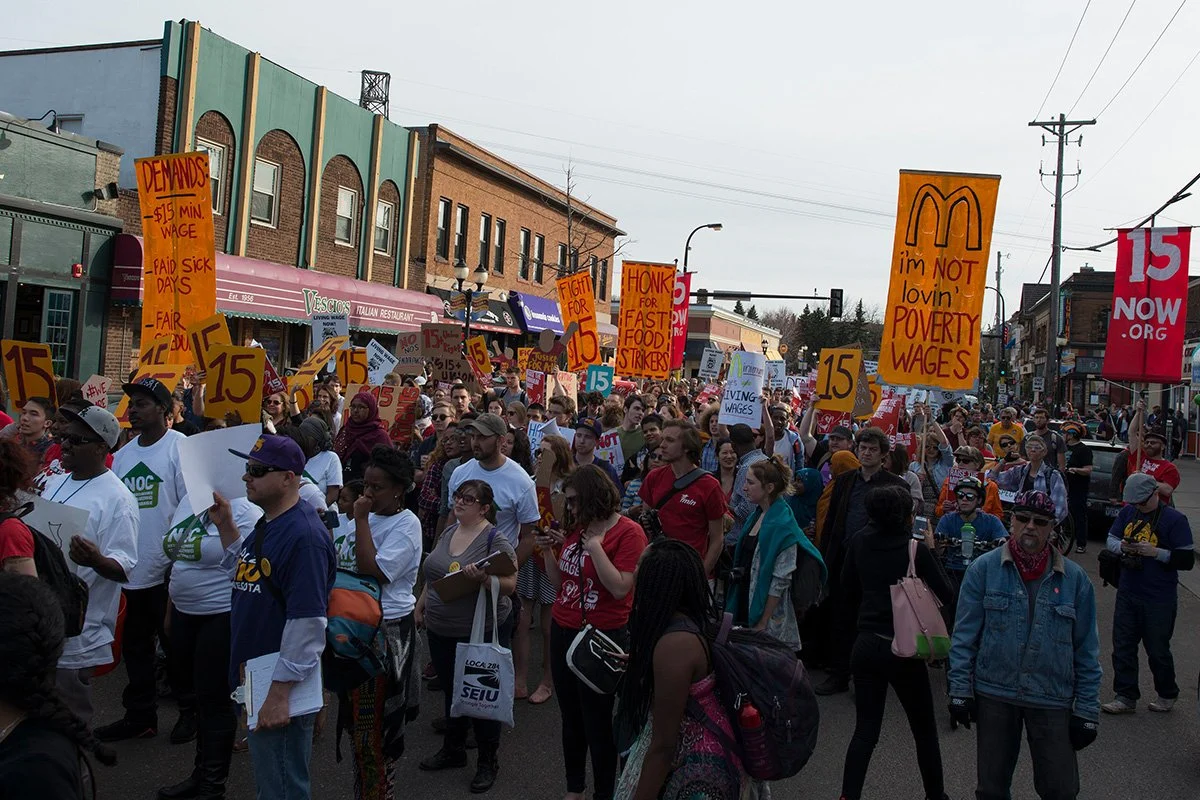
The landscape of American labor economics underwent a fundamental shift in November 2012 when 200 fast-food workers in New York City walked off their jobs, demanding a $15 hourly wage and the right to form a union. At the time, the federal minimum wage stood at $7.25—a rate that had remained unchanged since 2009—and the prospect of more than doubling it was widely dismissed by economists, politicians, and media pundits as an economic impossibility. Today, that "impossible" demand has become a baseline for wage policy across fifteen states and hundreds of municipal jurisdictions, fundamentally altering the financial trajectory for millions of low-wage workers while highlighting the intensive capital requirements of modern social movements.
The Genesis of a National Movement
In the autumn of 2012, the United States was still grappling with the sluggish recovery following the Great Recession. National economic discourse was dominated by concerns over federal deficits and debt ceilings rather than wage appreciation. Against this backdrop, employees from global giants such as McDonald’s, Burger King, and KFC organized a series of one-day strikes. These workers, including vocal leaders like Alvin Major—a father of three then earning $7.25 at a Kentucky Fried Chicken outlet—argued that the existing wage floor was insufficient to cover basic necessities such as rent, groceries, and childcare.
The initial reaction from the political establishment was largely dismissive. While Senator Tom Harkin and Representative George Miller had introduced legislation to raise the federal minimum to $10.10, even that modest proposal struggled to gain traction in a divided Congress. The "Fight for $15" was viewed as an outlier, a radical demand that ignored the prevailing economic orthodoxy of the era. However, the movement’s strategy relied not on legislative lobbying in Washington, but on direct action and the mobilization of workers in the service economy, which was the fastest-growing sector of the U.S. labor market.
A Chronology of Expansion and Legislative Adoption
Following the 2012 walkouts, the movement experienced a rapid geographic and sectoral expansion. By 2013, strikes had spread to Chicago, Detroit, and Seattle. The momentum shifted from the streets to the halls of government in 2014 when Seattle became the first major city to pass a $15 minimum wage ordinance. This victory served as a proof of concept, demonstrating that the demand was politically viable at the local level.
The year 2015 marked a watershed moment for the movement. New York Governor Andrew Cuomo and California Governor Jerry Brown, both of whom had expressed initial skepticism regarding the $15 floor, signed landmark legislation to phase in the wage increase across their respective states. These executive actions signaled that the movement had moved from the fringes of labor activism to the center of Democratic Party policy. By the 2020 presidential election cycle, every major Democratic candidate had endorsed a $15 federal minimum wage, and the demand had been formally integrated into the national party platform.
The Economic Architecture of Organizing
While the public narrative of the Fight for $15 often focuses on grassroots courage, the movement’s success was also the result of a massive, sustained financial investment. The Service Employees International Union (SEIU) provided the institutional backbone for the campaign, committing unprecedented resources to a movement that offered no immediate guarantee of traditional union membership growth.
Between 2015 and 2019, the SEIU invested approximately $50 million annually to sustain and scale the movement across dozens of cities. This financial commitment was not without internal controversy. Some union leaders questioned the wisdom of allocating such vast sums to organize fast-food workers—who are notoriously difficult to unionize due to high turnover and franchise structures—while existing union members in sectors like home care and nursing homes were also struggling with low wages.
However, the leadership maintained that raising the floor for the lowest-paid workers would create a "rising tide" effect, strengthening the bargaining position of all service workers. This strategic bet yielded significant returns. By 2021, a report from the National Employment Law Project (NELP) estimated that 26 million workers had secured a total of $150 billion in cumulative raises as a direct or indirect result of the movement’s pressure. This suggests a return on investment that far exceeds typical philanthropic or political spending.
Quantifying the Impact: Data and Corporate Realignment
The influence of the Fight for $15 extended beyond legislative chambers and into corporate boardrooms. Facing both public pressure and a tightening labor market, major employers began to voluntarily adopt the $15 floor.
- Amazon: In 2018, the tech and retail giant raised its starting wage to $15 for all U.S. employees, a move that impacted over 250,000 workers.
- Target: The retailer reached its $15 goal in 2020.
- Disney: Following negotiations with its various unions, Disney implemented a $15 floor at its Florida and California parks.
- Sam’s Club and Costco: These warehouse clubs have since pushed their starting wages to $15 or higher to remain competitive.
According to the U.S. Bureau of Labor Statistics (BLS), the service sector has seen some of the most significant wage growth in recent years. However, the BLS also reports a troubling counter-trend: the share of economic output going to labor relative to capital has recently reached record lows. This indicates that while nominal wages have risen, they have not necessarily kept pace with corporate profits or the overall productivity of the American workforce.
The Living Wage Gap: $15 in the Post-Pandemic Economy
Despite the historic gains of the last decade, the economic reality of 2024 has presented new challenges that threaten to erode the movement’s victories. High inflation in the post-pandemic era, particularly in the costs of housing and food, has shifted the definition of a "living wage."
Data from the MIT Living Wage Calculator reveals a stark reality: a $15 hourly wage is no longer sufficient for a single adult working 40 hours a week to cover basic needs in any U.S. state. In high-cost areas like New York City, San Francisco, or Boston, the estimated living wage for a single adult now exceeds $25 per hour. For families with children, the gap is even wider. Consequently, workers in several sectors have begun demanding—and in some cases winning—wages closer to $20 or $25 per hour. In California, for example, a new law recently raised the minimum wage specifically for fast-food workers to $20 per hour, acknowledging that the original $15 target had been overtaken by the cost of living.
Structural Hurdles and the "And a Union" Mandate
The original slogan of the movement was "Fight for $15 and a Union." While the first half of that demand saw unprecedented success, the second half remains largely unfulfilled. The U.S. labor law framework continues to present significant obstacles to collective bargaining in the service industry.
The franchise model, prevalent in the fast-food industry, allows parent corporations to distance themselves from the labor practices of individual store owners. This "fissured workplace" makes it difficult for workers to negotiate with the entities that actually control the economic levers of the business. Furthermore, weak enforcement of existing labor protections allows some employers to discourage organizing efforts with relatively low risk of significant legal penalties.
This structural stagnation explains why widespread wage increases have not automatically translated into a surge in union density. Without a formal union contract, workers lack a permanent mechanism to negotiate for health benefits, predictable scheduling, and further wage adjustments as inflation persists.
Broader Implications for Philanthropy and Social Change
The trajectory of the Fight for $15 offers a profound lesson for the world of social change and philanthropy. The movement succeeded because it was backed by "patient capital"—large-scale, long-term funding that remained committed even when victory seemed unlikely.
Modern social change funding is often fragmented and cautious, with donors seeking immediate, measurable outcomes. The Fight for $15 suggests that transformative change requires a different approach:
- Early Investment: Funding must be available before a movement reaches a tipping point or gains a public mandate.
- Scale: Significant financial resources are required to build the infrastructure, train the leaders, and sustain the media presence necessary to shift national discourse.
- Risk Tolerance: Organizations must be willing to invest in strategies that may not lead to traditional growth (like new union members) but serve a broader mission of economic justice.
As the U.S. continues to face historic levels of wealth inequality, the lessons of Alvin Major and the 200 workers who walked out in 2012 remain relevant. The movement proved that regular people can push the boundaries of the politically possible, provided they have the organizational and financial support to sustain the struggle. However, with the cost of living continuing to rise and the labor-capital divide widening, the need for another era of massive investment in worker-led movements appears more urgent than ever. The success of the past decade is not a finish line, but a blueprint for the challenges that lie ahead in the pursuit of a truly equitable economy.