Layla Zulfa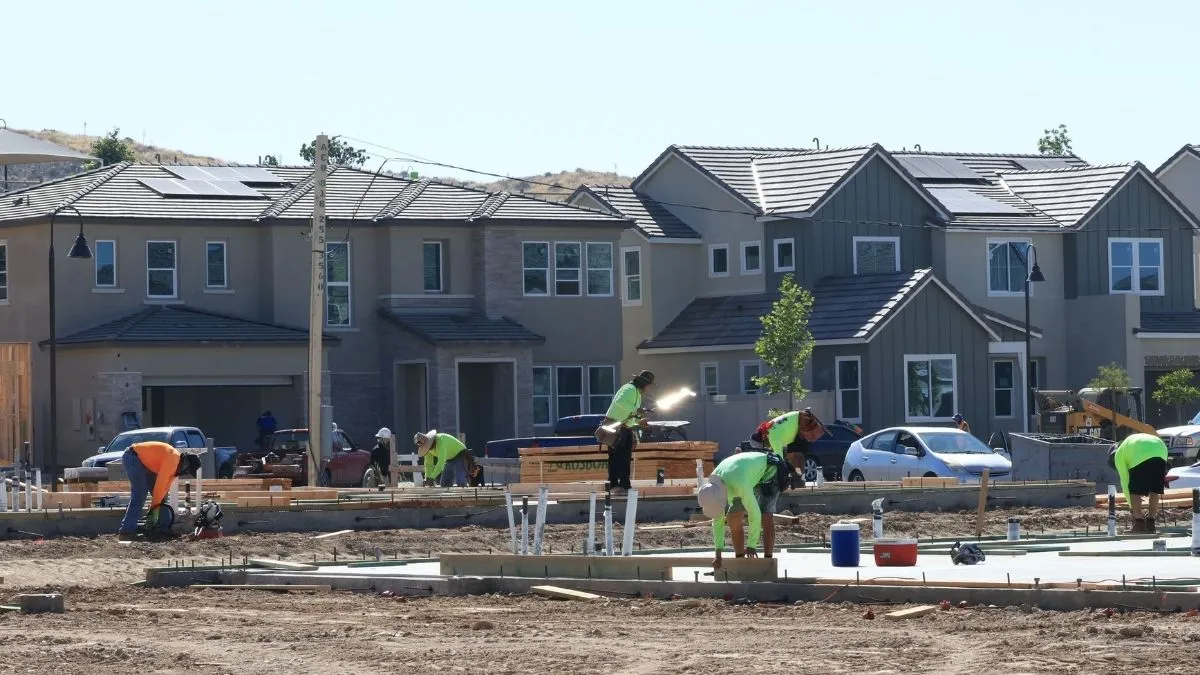
The U.S. homebuilding industry is grappling with unprecedented labor shortages and operational chaos due to a significant escalation in U.S. Immigration and Customs Enforcement (ICE) operations across various local markets. Recent weeks have seen a dramatic surge in workplace raids and increased scrutiny of construction sites, leaving builders struggling to staff projects, pushing construction timelines to their limits, and exacerbating existing business headwinds. This unfolding crisis, detailed in a three-part series, begins by examining the immediate disruptions caused by these enforcement initiatives, with subsequent parts exploring potential policy solutions, domestic labor development, and the broader business impacts on homebuilding firms.
A stark illustration of the escalating situation occurred earlier this week at a construction site in Martinsburg, West Virginia. According to an anonymous homebuilding executive with regional operations, the site was “swarmed” by ICE agents employing drones and battering rams, resulting in the detention of approximately 30 construction workers. The executive described the event as deeply unsettling for the field personnel, noting the aggressive tactics employed by agents, including threats to force entry if doors were not opened. This incident, characterized as the most aggressive enforcement seen in the region, is not an isolated event but rather part of a months-long pattern of intensified ICE activity that has become increasingly noticeable in West Virginia’s Eastern Panhandle since the spring.
The impact of these raids has been profound. Builders in affected areas report that construction crews are increasingly hesitant to report for work, fearing detention or harassment. This reluctance stems from a growing climate of fear and uncertainty, particularly among workers of Hispanic origin or those who speak Spanish. Even workers with legal status are reportedly being detained for extended periods if they cannot immediately produce documentation, leading to widespread anxiety. The executive noted that enforcement efforts have ramped up significantly in the last two to three weeks, describing the situation as "very, very bad" and the worst they have experienced.
ICE Arrests Reach Record Highs Amidst Increased Enforcement
The intensified enforcement activity is not confined to West Virginia. New data from the Deportation Data Project at UC Berkeley and UCLA reveals that July 2026 set a record for ICE arrests, with 49,571 individuals detained. This figure represents a substantial increase from the preceding months, which saw around 30,000 arrests per month following a temporary dip after high-profile encounters in Minneapolis. The passage of a nearly $70 billion immigration enforcement bill by the U.S. Senate on June 5 is widely seen as a catalyst for this surge, pushing June’s monthly arrest total to 43,021 before July’s record-breaking numbers. ICE has reportedly set a target of 2,000 arrests per day, suggesting that monthly totals may continue to climb.
The residential construction sector, which relies heavily on immigrant labor, with immigrants comprising approximately 25% of the workforce according to the Home Builders Institute, has become a frequent target. This heightened enforcement comes at a time when the industry is already facing a significant labor deficit. The impact of these operations, however, is not uniformly distributed across the country. While some homebuilding leaders report no discernible increase in ICE raids in their markets, others in states like Texas, West Virginia, Idaho, and Pennsylvania are experiencing severe disruptions.
A pattern has emerged where ICE operations are disproportionately concentrated in states or jurisdictions where local law enforcement agencies actively cooperate with ICE through programs like the 287(g) agreement, which allows for the delegation of immigration enforcement authority to state and local police. This collaboration amplifies the reach and frequency of enforcement actions.
The raids are creating a pervasive atmosphere of fear. Builders report that workers, particularly those of Hispanic descent, are often subjected to profiling and harassment, whether on job sites or during their commutes. The detention of legal residents and even U.S. citizens for failing to have immediate documentation, alongside the wrongful detention of office workers of Hispanic origin visiting construction sites during raids, further contributes to this anxiety. Consequently, construction workers are increasingly reluctant to work in heavily affected areas, shrinking an already tight labor pool. This scarcity drives up labor costs and leads to significant construction delays, placing additional strain on builders already navigating rising costs and affordability challenges for homebuyers. In response, builders in some markets are resorting to informal communication channels like group texts and email threads to share information and developments regarding ICE activity.
"It’s Close to Crippling the Trade Base" in West Virginia
In West Virginia’s Eastern Panhandle, the intensified ICE enforcement began around April and has since escalated to a point where it is severely disrupting the construction labor force. The executive described how local sheriffs, state labor board officials, IRS field agents, and ICE agents are coordinating efforts, leveraging the 287(g) program. Initially, raids were conducted in new-home subdivisions almost weekly. More recently, enforcement has expanded to include checkpoints at state borders and major intersections, where individuals perceived as Hispanic and driving work vehicles are being stopped.
The consequences have been immediate and severe. In the past 30 days, framing costs for the executive’s operations have tripled as workers from neighboring states like Maryland and Virginia have refused to travel into the Eastern Panhandle. Delivery drivers are reportedly turning back at the West Virginia state line, unwilling to enter the region or charging exorbitant fees for doing so. To fill the void, some local contractors are bringing in workers from distant states like Florida and Minnesota, incurring substantial costs for lodging, per diems, and even renting non-construction vehicles to minimize the risk of workers being stopped.
The shortage has particularly impacted trades such as concrete, siding, and framing. The executive reported having "15 to 20 houses sitting in foundations that I couldn’t get framers on for over a month and a half," highlighting the significant delays in new home starts. This situation, driven by targeted and consistent ICE raids, has placed immense pressure on the local homebuilding market, with the executive stating it is "close to crippling the trade base" and questioning the long-term viability of building in the state under current conditions. Profitability is directly threatened when builders cannot secure the necessary manpower to complete projects.
Similar impacts are being felt in South Central Pennsylvania, affecting cities like Harrisburg, Carlisle, Gettysburg, and York, where the executive also has operations. One project in Southern Pennsylvania has reportedly been subjected to raids every two weeks for several months. While enforcement remains aggressive in certain Pennsylvania areas, the dispersed nature of development means the frequency is lower compared to the concentrated Eastern Panhandle of West Virginia. Enforcement in neighboring Maryland and Virginia is reported to be less frequent, primarily occurring in rural counties with local law enforcement cooperation.

"All of our Masonry Crews Have Quit, with Almost No Notice"
A division president at another homebuilder with West Virginia operations, who also requested anonymity, stated that ICE operations have "effectively shut down housing in the panhandle." The fear extends to workers with legal status, who are increasingly turning down jobs in West Virginia in favor of less risky opportunities in Maryland or Virginia. These workers, often based in neighboring states, are reportedly refusing assignments in West Virginia due to the significant risk of being detained for extended periods.
Trades that work outdoors and are more visible, such as masonry, concrete, and landscaping, are among the most affected. However, all trades are experiencing disruptions. "We have lost the ability to have any regularity. All of our masonry crews have quit almost apologetically, but with almost no notice, and it has ground new starts to a halt," the division president explained. This halt in new construction is occurring despite a surge in demand for housing in the Eastern Panhandle, driven by individuals seeking more affordable options compared to the expensive suburbs of Maryland and Virginia. Berkeley County, for instance, saw a 14.3% population increase between 2020 and 2025.
Builders are struggling to meet this demand, with one company’s monthly starts plummeting from 10-18 homes under normal conditions to approximately one start per month. The inability to finish and close homes already under construction due to the scarcity of masonry and concrete crews is also a major concern. Forecasts for home closings have been sharply reduced, with many deals now at risk of falling through. Buyers are left in limbo, unable to ascertain when their homes will be ready for occupancy.
Local homebuilders are communicating regularly about the issue and have engaged with state government officials, including the governor’s chief of staff and the attorney general’s chief of staff, as well as the Department of Labor. However, these efforts have yielded little tangible action, with officials expressing understanding but offering no concrete solutions.
"It Feels Like a Form of Profiling and Harassment" in Idaho and Texas
The impact of ICE raids varies geographically. Homebuilder associations in states like Indiana, Arizona, and Kansas City report no recent increase in enforcement. However, in Idaho, a shift is being observed. Steve Martinez, a national state delegate with the Idaho Home Builders Association and President of Tradewinds General Contracting, noted a rise in ICE operations in Idaho over the past couple of months, stating, "it does feel like Idaho has now hit that radar." He perceives these actions as potentially constituting "a form of profiling and harassment," particularly when individuals who "just look the part" are targeted.
Ken Burgess, a lobbyist for the Idaho Home Builders Association and the Building Contractors Association of Southwestern Idaho, indicated that ICE operations affecting homebuilders in Idaho seem to have intensified in August. Construction site raids in Boise-area communities like Emmett, Nampa, and Eagle have recently gained local media attention.
Texas and Florida were identified as major hotspots for ICE operations in July. A single week saw approximately 1,600 frontline workers detained in the San Antonio area, contributing significantly to the nearly 50,000 ICE arrests nationwide in July. In Texas, some builders and contractors report that recent arrests have been indiscriminate, affecting both documented and undocumented workers. Nicholas Riley, owner of Driftwood Builders Roofing, operating primarily in the Austin area, noted that his main crew leader has become reluctant to take jobs in San Antonio due to concerns about being stopped or detained. Some of Riley’s legally documented workers have been temporarily detained, causing scheduling delays and significant distress.
"A Bidding War" for Scarce Labor Emerges in Texas
Mario Guerrero, Executive Director of the South Texas Builders Association and owner of Rich Heritage Construction, has been vocal about the ramifications of ICE raids in Texas’s Rio Grande Valley for over a year. He has observed a significant surge in raids on job sites, particularly after the passage of the new funding bill in June, leading to a "skyrocketing" fear among workers. Builders in major Texas markets like Houston, Austin, and San Antonio are experiencing this surge, though many are hesitant to speak out due to the sensitivity of the issue.
Guerrero recounted instances where bricklayers with valid work documentation were arrested, and a project manager who was a U.S. citizen was detained during a site visit. While Guerrero and many in the South Texas Builders Association support efforts to deport criminals and secure the border, they are united in their concern over the impact of ICE operations on the local homebuilding community. An immigration forum hosted by the association aimed to address these concerns, as they believe their issues are not being adequately addressed.
In many Texas markets, the average build time for homes has roughly doubled due to the severely constrained labor pool. Guerrero warned that this situation could lead to more companies becoming unprofitable and ultimately going out of business. A senior manager at a large homebuilder in Austin, who requested anonymity, confirmed an increase in ICE raids in Central Texas, with both undocumented and legally present workers fearing detention. Even the loss of a few assistant laborers can significantly reduce a crew’s capacity, leading to a "bidding war" among builders for available workers, extending construction timelines and increasing costs.
Framing, roofing, landscaping, painting, masonry, and electrical crews are among the most affected trades. While new construction in Austin has recently tapered due to an oversupply, the cost of building has escalated. The manager reported a 25% to 50% jump in framing labor costs alone in the past month, translating to an additional $2,000 to $5,000 per home. With buyers already struggling with affordability, builders may be forced to absorb these increased costs. Representatives from Texas homebuilding organizations recently met in Washington D.C. for a hearing on immigration enforcement, where the administration reiterated its commitment to continued and intensified enforcement efforts as a key part of its platform.