Layla Zulfa
The reverse mortgage industry is experiencing a significant downturn, with Home Equity Conversion Mortgage (HECM) endorsements plummeting in February and continuing a broader trend of reduced activity. This contraction has led to the lowest monthly HECM issuance figures in years, raising concerns among industry analysts about the segment’s future trajectory and the growing influence of proprietary products.
February’s Sharp Drop in HECM Endorsements Signals Broader Industry Weakness
February witnessed a stark 20.7% decrease in HECM endorsements, with the total number of loans reaching just 1,821. While the shorter calendar month of February typically contributes to a dip in endorsements, industry experts suggest that the magnitude of this decline points to deeper systemic pressures affecting sales volume. Reverse Market Insight (RMI), a leading analytics firm for the reverse mortgage sector, highlighted that this drop follows two consecutive months of weaker production, indicating a sustained period of slowdown.
The firm offered several potential contributing factors, including the brief government shutdown that occurred early in February. This shutdown, though short-lived, may have disrupted the workflow and processing times for HECM applications, leading to fewer endorsements being finalized within the month. However, RMI emphasized that the ongoing industry weakness is a more significant underlying concern.
"Overall industry weakness continues to remain a concern, and the short shutdown early in the month is another possible reason, but it also brings to mind a larger issue that non-HECM reverse mortgage loans are nibbling at the edges of HECM volume more directly these days than ever before," RMI commented. This statement alludes to the increasing market share and attractiveness of proprietary reverse mortgage products, which are not subject to the same federal regulations as HECMs.
Adding to the concern, New View Advisors, another prominent industry data provider, reported that February’s endorsement count of 1,821 is the lowest since the nascent stages of the COVID-19 pandemic. In April 2020, at the height of the initial pandemic-induced uncertainty, HECM endorsements stood at 1,601. This comparison underscores the severity of the current downturn, suggesting that market conditions have become as challenging as they were during the early days of the global health crisis.
The lack of readily available, comprehensive public data on proprietary reverse mortgage products further complicates a complete understanding of the market dynamics. Analysts often rely on anecdotal evidence and observed market trends to assess the impact of these alternative offerings on the dominant HECM segment.
Regional Performance Reflects Widespread Decline
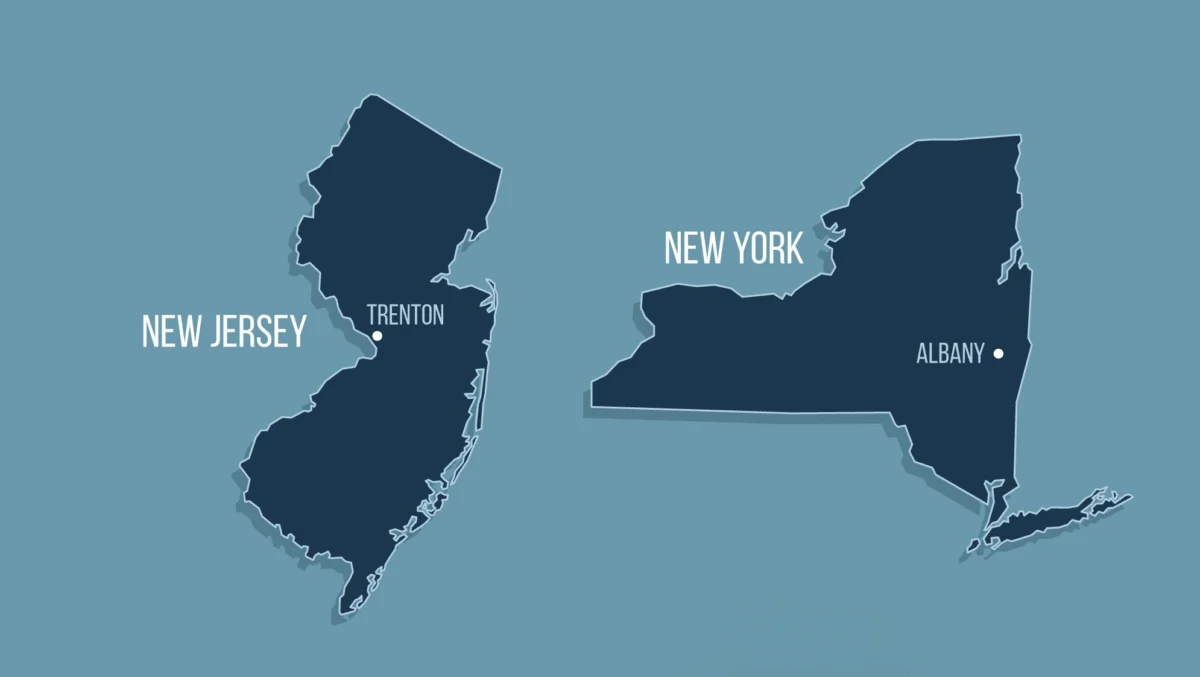
The downturn in HECM endorsements was not confined to a single region; all areas of the country experienced a decline in February. However, some regions fared better than others in mitigating the losses. The New York/New Jersey region demonstrated the most resilience, recording a minimal 1% decrease in endorsements, resulting in 100 loans. Following closely, the Midwest saw a 3.3% reduction, with 174 loans endorsed.
In stark contrast, other regions experienced more substantial contractions. All remaining geographical areas reported declines of at least 11.4%. The Northwest/Alaska region was particularly hard-hit, with a significant 37.4% drop in HECM endorsements. This uneven regional performance may be attributable to a variety of local economic factors, varying levels of housing market activity, and the specific strategies of lenders operating in those areas.
Top Lenders See Reduced Endorsement Volumes
The impact of the industry slowdown was also evident among the nation’s largest HECM lenders. All of the top 10 lenders reported a decrease in their endorsement totals for February. Finance of America, a consistent leader in the HECM market, experienced the smallest decline within this group, with a 8.5% reduction in endorsements, totaling 364 loans. Longbridge Financial followed with a 9% decrease, reaching 304 loans. The remaining eight of the top lenders experienced more significant drops, with declines ranging from 15.9% to as high as 49.6%. This widespread reduction in volume among major players further validates the pervasive nature of the current market contraction.
HMBS Issuance Hits Multi-Year Lows
Complementing the decline in HECM endorsements, the issuance of HECM Mortgage-Backed Securities (HMBS) also saw a notable dip in February. New View Advisors reported that HMBS issuance fell to $431 million for the month. This figure represents a $103 million decrease from January’s revised total of $534 million and is $39 million lower than the $470 million issued in February of the previous year (2025).
The number of HMBS pools issued also declined, with 66 pools securitized in February, five fewer than in January. This reduction in issuance volume is historically significant. The $431 million total marks the lowest monthly issuance recorded in the past two years, the second lowest since 2014, and the third lowest since 2009, according to New View Advisors’ data. This indicates a substantial slowdown in the securitization of HECM loans, a key component of the reverse mortgage market’s liquidity.
Key Issuers Show Varied Performance Amidst Decline
Among the leading HMBS issuers, Finance of America again took the top spot, but with a reduced volume. The company issued $140 million in February, a $15 million decrease from its January total of $155 million. Longbridge Financial followed with $104 million, a more substantial month-over-month decline of $38 million. Mutual of Omaha Mortgage issued $83 million, down $12 million from January, while PHH Mortgage Corp. saw its issuance fall to $66 million, a monthly drop of $23 million.
Analysis of HMBS Issuance Components
Delving deeper into the HMBS issuance data, original, or first participation, production totaled $260 million in February. This represents a significant decline of $97 million from January’s $357 million and is $43 million below the $303 million recorded in February 2025. This segment of issuance, which represents new loans being pooled, is crucial for the ongoing origination activity in the reverse mortgage market.
Over the first two months of 2026, Finance of America led first participation issuance with $179 million. Longbridge followed with $165 million, Mutual of Omaha with $120 million, and PHH with $85 million.
The data also revealed insights into the composition of HMBS pools. Of the 66 pools issued in February, 16 were first participation pools, and a larger proportion, 48, were tail pools. Tail pools consist of subsequent participations rather than entirely new loans, indicating a portion of the securitization activity involves existing loans being added to or restructured within existing pools. Tail issuance totaled $169 million, compared to $176 million in January.
Furthermore, the data highlighted the continued utilization of Ginnie Mae’s flexibility in pool size. Twenty-one pools had balances of less than $1 million, demonstrating issuers’ use of Ginnie Mae’s provision that allows for pools as small as $250,000. This flexibility can be beneficial for managing liquidity and catering to a wider range of loan sizes. Additionally, $49.7 million in participations pooled during the month involved multiple participations from the same loan. This practice, permitted under guidance issued in 2023, allows for greater flexibility in structuring securitized products.
The data used for this analysis was meticulously compiled by New View Advisors, drawing from both publicly available Ginnie Mae data and proprietary industry sources, providing a comprehensive view of the reverse mortgage securitization market.
Broader Implications and Future Outlook
The sustained decline in HECM endorsements and HMBS issuance raises critical questions about the future of the reverse mortgage market. The increasing competitiveness of proprietary products, coupled with potential shifts in consumer demand and regulatory landscapes, could continue to exert pressure on the HECM segment.
Industry stakeholders are likely to be closely monitoring the performance of non-HECM products and their impact on overall market share. Lenders may need to adapt their strategies to navigate these evolving market dynamics, potentially by offering a wider range of products or focusing on specific borrower segments.
The data also underscores the importance of understanding the nuances of HMBS issuance, particularly the distinction between first participation and tail pools, as well as the impact of Ginnie Mae’s flexible pooling guidelines. These factors play a crucial role in the liquidity and functioning of the secondary market for reverse mortgages.
As the reverse mortgage industry navigates this period of contraction, a clear understanding of the underlying causes and potential future trends will be essential for all participants, from originators and servicers to investors and policymakers. The coming months will likely provide further clarity on whether this downturn represents a temporary market adjustment or a more significant, long-term shift in the reverse mortgage landscape.