Layla Zulfa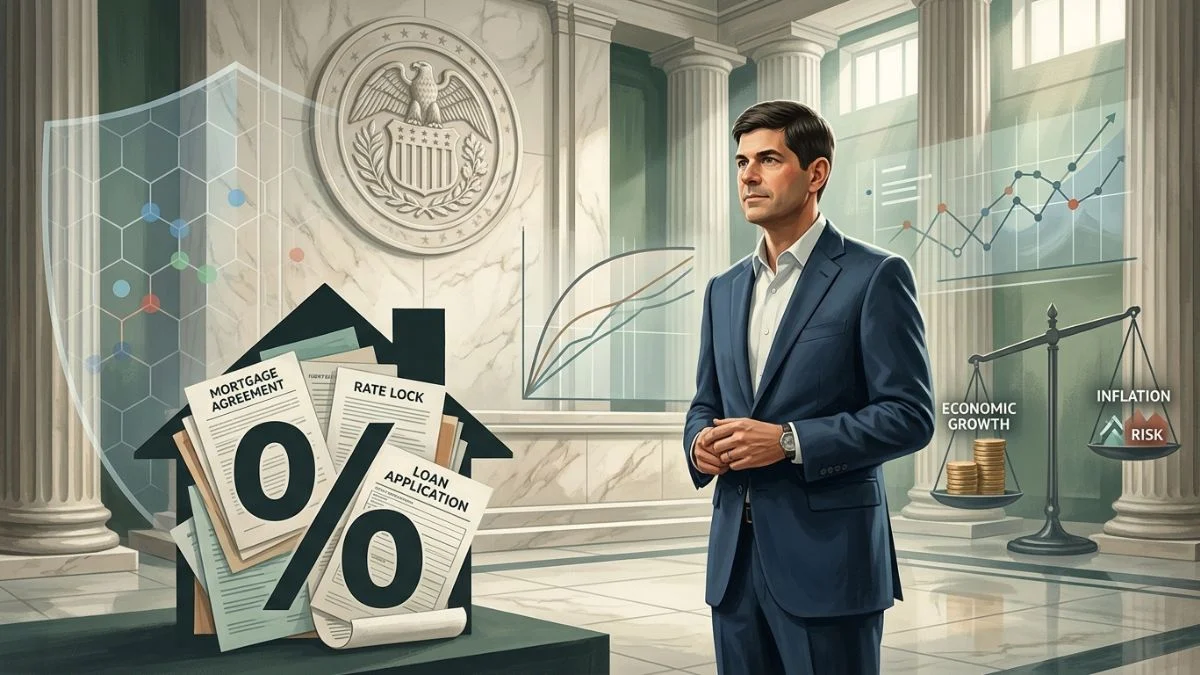
Federal Reserve Chair Kevin Warsh delivered his closely watched address at the annual Jackson Hole Economic Symposium today, an event that has historically served as a platform for significant pronouncements on monetary policy. While the precise details of Warsh’s internal deliberations remain private, an analysis of his public statements and the prevailing economic indicators suggests a strong inclination towards supporting an interest rate increase should inflation data fail to show marked improvement and labor market conditions remain robust. This nuanced stance comes as the Federal Reserve navigates a complex economic environment influenced by geopolitical tensions and evolving trade dynamics.
The prevailing sentiment from Warsh’s remarks indicates a conditional hawkishness. The core takeaway is that if inflation does not recede as anticipated and the labor market continues to demonstrate resilience, Warsh is prepared to vote in favor of raising the benchmark federal funds rate. This position underscores the Federal Reserve’s dual mandate of maintaining price stability and fostering maximum employment, with current data points suggesting that achieving the former may necessitate a tightening of monetary policy.
A point of concern for market observers, and implicitly for Warsh himself, is the potential for market perception to diverge from the Fed’s policy intentions. Should a consensus emerge within the Federal Open Market Committee (FOMC) to implement a rate hike, Warsh’s adherence to such a decision, even if it aligns with his data-driven analysis, could be misconstrued by financial markets. In such scenarios, there is a risk that Warsh could be perceived as aligning with political pressures rather than purely economic fundamentals. This perception could lead markets to pivot their focus towards other influential figures within the Fed, such as Fed Governor Beth Hammack, potentially impacting the established channels of communication and market confidence in the central bank’s independence and decision-making process. However, based on his recent address, the immediate outlook suggests Warsh will align with a majority vote to hike rates if the necessary economic conditions are met.
The market’s reaction to this prospect has been relatively muted, largely because the longer end of the yield curve has already priced in a scenario of further rate increases. The current yield on the 10-year U.S. Treasury, hovering around 4.72%, reflects this anticipation. This suggests that while the Federal Reserve’s policy adjustments are a significant factor, other macroeconomic forces are also at play in shaping interest rate expectations. The critical question for investors and policymakers alike is to identify these fundamental drivers and understand their potential impact on future rate movements.
Geopolitical Instability: The Iran Conflict and its Economic Repercussions
A primary factor contributing to the hawkish stance among Federal Reserve officials, including those who may influence Warsh’s vote, is the ongoing conflict in Iran. This geopolitical flashpoint has become a significant talking point, directly impacting energy markets and, consequently, inflation expectations. For any prospect of lower interest rates and improved inflation data to materialize, a de-escalation or resolution of the Iran conflict is deemed essential. The current situation, with oil prices remaining elevated above the $82 mark, fuels anxieties among Fed hawks. The fear of further escalation in the region directly translates into concerns about sustained upward pressure on oil and diesel prices, which can have a broad ripple effect across the economy, increasing transportation costs and the price of goods and services.
Historically, economic analyses have linked fluctuations in oil prices to broader inflationary trends. Former President Trump’s economic agenda often emphasized the impact of falling oil prices on overall price levels. A sustained period of oil prices within the $67-$82 range is often cited as conducive to more stable inflationary conditions. While current prices are only slightly above this range, the mere threat of further conflict escalation and the absence of a diplomatic resolution continue to inject an element of uncertainty, prompting the Fed to maintain a more vigilant and potentially hawkish posture. The persistent geopolitical tension in the Middle East serves as a tangible reminder of external shocks that can disrupt economic stability and complicate the Federal Reserve’s efforts to achieve its inflation targets.
Trade Wars and Tariffs: A Drag on Consumer Spending and Inflation
Another critical element influencing the Federal Reserve’s policy outlook is the ongoing trade war and its associated tariff policies. A recent paper published by the Federal Reserve analyzed the impact of the 2025 tariffs on the U.S. economy by examining transaction data from over 125,000 American households. The findings indicated that tariffs were passed through to retail prices, leading to an increase of 15-20% in the prices of affected goods. More significantly, households responded by reducing their spending on these items by 4%, a decline that was three to four times greater than the direct price increase. This suggests a substantial dampening effect on consumer demand, a key engine of economic growth.
At the beginning of the year, the Federal Reserve had projected that it could accommodate the inflationary effects of trade-war measures and still implement two to three rate cuts, supported by a softening labor market. However, the worsening inflation data, even before the intensification of the Iran conflict, forced a reassessment. The recent initiation of a trade war with Canada, a major trading partner for the United States, adds another layer of complexity. Such actions are unlikely to be viewed favorably by Fed hawks, as they directly counteract efforts to control inflation. The Federal Reserve’s primary objective is to bring Personal Consumption Expenditures (PCE) inflation back towards its 2% target. The current inflationary pressures, exacerbated by trade policies and the absence of significant disinflationary factors, such as those observed in the shelter component of the Consumer Price Index (CPI), make this task considerably more challenging. Without a concerted effort from the administration to ease trade tensions and their inflationary consequences, the Fed’s path to achieving its inflation goals becomes steeper.
Labor Market Resilience: A Crucial Indicator for Monetary Policy
The resilience of the U.S. labor market remains a pivotal factor in the Federal Reserve’s monetary policy deliberations. Fed hawks and the broader FOMC have, in recent statements, indicated a degree of comfort with low job growth, particularly in the context of a labor force that is not expanding at a rapid pace. This perspective has been acknowledged by the bond market, which has adjusted yields accordingly. The current unemployment rate stands at 4.1%, and jobless claims data continues to register at historically low levels, signifying a tight labor market.
Any significant shift in these labor market dynamics could alter the calculus for some Federal Reserve members, potentially leading them to withhold support for further rate hikes. If labor market conditions were to soften, such as an increase in unemployment or a surge in jobless claims, it could create room for a reduction in yields, as the market might anticipate a less hawkish monetary policy stance. The current strength of the labor market, however, provides a solid foundation that allows the Fed to consider tightening policy without immediate fears of triggering a severe downturn. The interplay between inflation and employment remains the central challenge for the Fed, and the labor market’s performance will continue to be scrutinized for any signs of weakness that might necessitate a more accommodative policy.
Conclusion: Navigating Economic Crosscurrents
While this analysis acknowledges a personal perspective on Fed Chair Kevin Warsh’s leadership, the objective observation from his recent Jackson Hole address is that he appears to grasp the concerns driving the hawkish sentiment within the Federal Reserve. His willingness to align with a unanimous vote for a rate hike, should the economic data warrant it, suggests a commitment to the Fed’s mandate. However, the broader market narrative and the ultimate direction of interest rates are less about any single individual at the Fed and more about the confluence of critical economic factors.
Two of the three key concerns outlined – the Iran conflict and the trade war – fall within the purview of the current administration’s policy decisions. These are areas where proactive measures could significantly influence the trajectory of inflation and, consequently, the Federal Reserve’s policy response. The third factor, labor market data, while influenced by broader economic conditions, also reflects domestic policy impacts. Therefore, substantial work lies ahead for policymakers to address these intertwined issues if the objective is to achieve a sustained reduction in interest rates and foster a more stable economic environment. The Federal Reserve’s ability to navigate these complex challenges will be a defining characteristic of its stewardship in the coming months.