Layla Zulfa
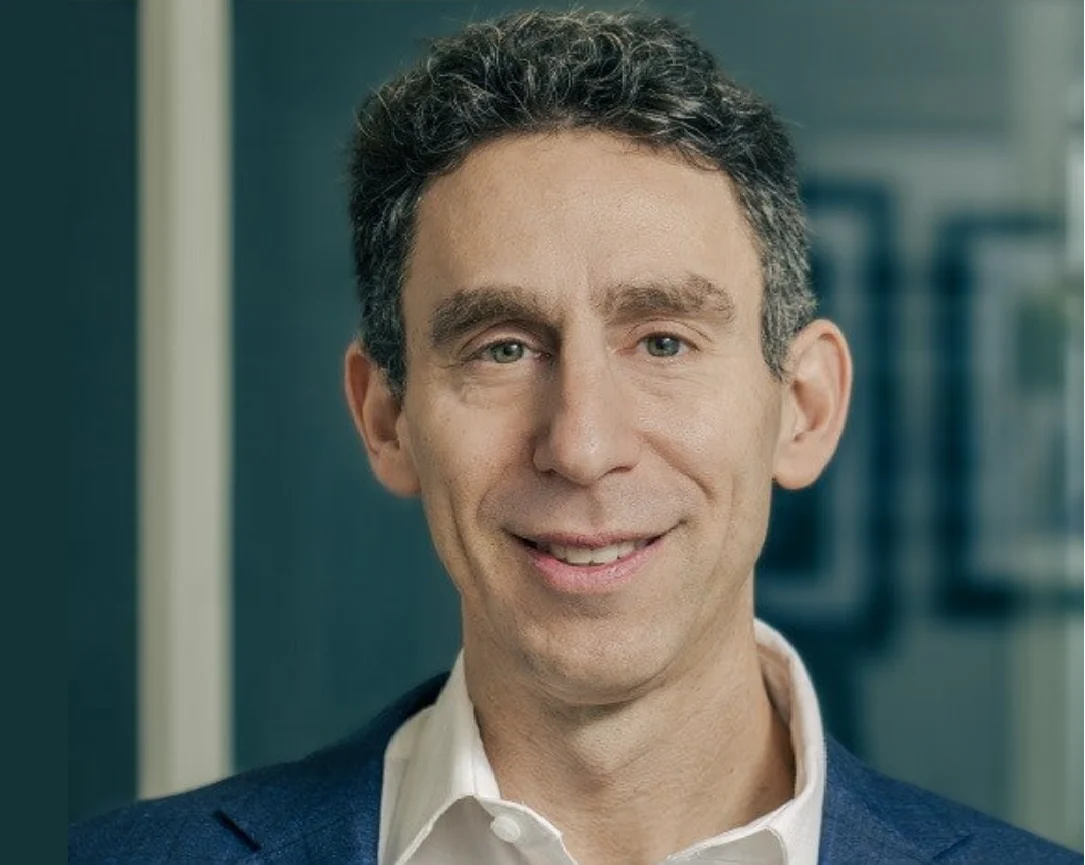
Federal Reserve Chairman Kevin Warsh delivered a notably hawkish message on inflation at the prestigious Jackson Hole Economic Policy Symposium on Friday, signaling to a room filled with central bankers, policymakers, and market participants that recent consumer price data has not yet demonstrated the "meaningful improvement" in underlying trends necessary to reach the Federal Reserve’s stated inflation target. His remarks, delivered at the annual gathering hosted by the Federal Reserve Bank of Kansas City, suggested a persistent concern that current monetary policy may not be sufficiently restrictive to decisively restore price stability.
"We must be confident that underlying inflation is moving to our objective, clearly and at sufficient speed. Otherwise, we have work to do," Warsh stated, underscoring the gravity of the inflation challenge. He reaffirmed the Federal Reserve’s commitment to its 2% inflation goal, as measured by the Personal Consumption Expenditures (PCE) price index, characterizing it as "a firm, fixed target." However, Warsh placed significant emphasis on the central bank’s accountability for the protracted period of elevated inflation, stating, "responsibility for 65 months of sustained, elevated inflation sits squarely with the central bank." This assertion implies a potential reassessment of the current stance of monetary policy, with the possibility that further tightening may be required.
The implications of Warsh’s pronouncements were swiftly felt across financial markets. Data from CME Group’s Fed Watch tool indicated a significant uptick in the implied probability of a 25-basis-point interest rate hike at the Federal Reserve’s September meeting. By Friday morning, this probability had climbed to 55.7%, a substantial increase from 35.4% the previous day, as traders recalibrated their expectations for future monetary policy actions. This market reaction highlights the sensitivity of financial asset prices to signals from the Federal Reserve, particularly concerning the path of interest rates.
Inflation Remains a Persistent Concern
A core element of Warsh’s hawkish stance was his detailed examination of the breadth of price increases within the PCE basket. He highlighted that, over the past 12 months, 54% of the 199 individual components of the PCE price measure had experienced price gains exceeding 3%. While this figure represents a decline from the post-pandemic peak of approximately 77%, it remains considerably higher than the average of roughly 32% observed in the two decades preceding the COVID-19 pandemic. This broad-based inflation suggests that price pressures are not confined to a few isolated sectors, making them more entrenched and challenging to dislodge.
The PCE index itself was reported to be running at 3.7% year-over-year. Warsh emphasized that measures designed to capture underlying trend inflation – those that exclude volatile, one-off price fluctuations – have shown only modest progress over the last two years. This suggests that the persistent inflation is not merely a statistical anomaly but a more deeply rooted economic phenomenon.
Regarding inflation expectations, Warsh acknowledged that medium-term measures currently appear stable. However, he issued a cautionary note, drawing on historical economic patterns. "The thing about market measures of inflation expectations in economic history is that they tend to look strong and durable until they don’t," he observed. This implies a recognition that even seemingly anchored expectations can quickly shift if inflation proves more persistent than anticipated. Furthermore, Warsh indicated that he is closely monitoring the recent uptick in commodity prices, identifying it as a potential upside risk to the inflation outlook. Surges in the cost of raw materials can often filter through to consumer prices, creating further inflationary headwinds.
Warsh’s assessment of the broader economy painted a picture of resilience, even in the face of higher interest rates. He described labor markets as stable, with solid output and a notable acceleration in business capital expenditures. For companies listed on the S&P 500, profits have seen substantial growth, exceeding 20% over the past year. Real consumer spending has demonstrated its ability to withstand multiple economic shocks, and credit and loan markets have shown "few signs of policy restraint." This robustness in economic activity could be interpreted as providing the Federal Reserve with the latitude to maintain a restrictive monetary policy stance without triggering a severe downturn.
"Certain sectors – like housing and agriculture – are showing strains. But on balance, I would be hard pressed to describe broad financial conditions as restrictive," Warsh stated. He added, "I believe the labor markets are consistent with full employment." This perspective suggests that while some sectors are experiencing the intended effects of tighter monetary policy, the overall economy remains strong enough to absorb further restrictive measures if necessary to achieve the inflation target.
Examining the Policy Framework
In addition to his inflation concerns, Warsh reiterated his long-held views on the Federal Reserve’s policy framework. He maintains that the central bank’s dual mandate of maximum employment and price stability does not inherently work at cross-purposes. He also argued that while unconventional monetary policy tools might be appropriate during genuine crises, they "should otherwise be used sparingly, if at all." This suggests a preference for traditional monetary policy instruments, such as interest rate adjustments, as the primary means of managing the economy.
Warsh also underscored the importance of paying closer attention to the role of money creation by the central bank and the broader financial system in understanding inflation pressures and assessing financial conditions. This implies a belief that the supply of money and credit plays a critical, though perhaps underappreciated, role in shaping economic outcomes.
Concluding his remarks, Warsh advocated for a more disciplined and less voluble approach to central bank communication. "Finally, a quieter Fed, more purposeful in its communications, is better able to meet its objectives," he asserted. This sentiment suggests that clearer, less frequent signals from policymakers could contribute to anchoring inflation expectations more effectively and reducing excessive market volatility. He concluded by stating, "I stand here today committed to a discipline, not to a decision," signaling a dedication to the principles of sound monetary policy rather than to specific predetermined actions.
Background and Context: The Jackson Hole Symposium
The Jackson Hole Economic Policy Symposium, officially known as the Annual Meeting of the Economic Policy Panel, is a high-profile event convened each year by the Federal Reserve Bank of Kansas City in Jackson Hole, Wyoming. It serves as a crucial forum for central bankers, economists, academics, and financial market participants from around the globe to discuss pressing economic issues and exchange perspectives on monetary policy.
The symposium has a long history, dating back to 1978, and has become a significant platform for central bank leaders to articulate their views and signal future policy directions. Speeches delivered at Jackson Hole often carry considerable weight, influencing market sentiment and policy expectations. Previous remarks by Federal Reserve chairs at this venue have been instrumental in shaping economic discourse and market movements. The choice of Jackson Hole, with its scenic and relatively secluded setting, is intended to foster candid and in-depth discussions away from the immediate pressures of daily financial news cycles.
This year’s symposium took place against a backdrop of persistent inflation that has challenged central banks worldwide. Following a period of exceptionally low interest rates and substantial fiscal stimulus in response to the COVID-19 pandemic, many economies have experienced a resurgence of inflation. Central banks, including the Federal Reserve, have responded with a series of aggressive interest rate hikes to cool demand and bring inflation back to their target levels. However, the pace of disinflation has been uneven, and concerns remain about the potential for inflation to become more entrenched. The discussions at Jackson Hole were therefore keenly focused on the appropriate path forward for monetary policy in an environment of elevated inflation and slowing, but still resilient, economic growth.
The Fed’s Inflation Mandate and Tools
The Federal Reserve operates under a dual mandate from Congress: to promote maximum employment and price stability. Price stability is generally understood as maintaining low and stable inflation. The Federal Open Market Committee (FOMC), the Fed’s primary monetary policymaking body, has explicitly stated its inflation target of 2% over the longer run, as measured by the annual change in the PCE price index.
To achieve its objectives, the Fed primarily utilizes monetary policy tools, the most prominent of which is the federal funds rate. By adjusting the target range for this key interest rate, the Fed influences borrowing costs throughout the economy, affecting everything from mortgage rates to business investment. In recent years, the Fed has also employed unconventional tools, such as quantitative easing (QE) and forward guidance, particularly in response to major economic shocks like the 2008 financial crisis and the COVID-19 pandemic.
The current challenge for the Fed is to navigate the delicate balance between ensuring inflation returns to its 2% target and avoiding a recession. A premature easing of monetary policy could risk reigniting inflation, while maintaining overly restrictive conditions for too long could lead to an economic downturn and job losses. Warsh’s comments suggest that, in his view, the balance of risks still leans towards the need for continued vigilance on the inflation front.
Broader Economic Implications and Future Outlook
Chairman Warsh’s hawkish remarks and the subsequent market reaction underscore the ongoing uncertainty surrounding the future trajectory of inflation and monetary policy. The persistence of elevated inflation, even with some moderating signs, necessitates a careful and data-dependent approach from the Federal Reserve.
The implications for financial markets are significant. If the Fed continues on a path of potential further rate hikes, it could lead to higher borrowing costs for consumers and businesses, potentially slowing economic growth and impacting asset valuations. Conversely, if inflation proves more stubborn than anticipated, or if the economy shows renewed signs of overheating, the Fed might be compelled to raise rates even higher or keep them elevated for an extended period.
The resilience of the U.S. economy, as described by Warsh, provides a degree of comfort for policymakers, suggesting that the economy may be better equipped to withstand higher interest rates than in previous cycles. However, the specific mention of strains in sectors like housing and agriculture highlights that the impact of monetary policy is not uniform across all parts of the economy. These sectors are particularly sensitive to interest rate changes, and their performance can serve as early indicators of broader economic trends.
The focus on the breadth of inflation and the stability of medium-term expectations will remain critical. Should a wider array of price increases become entrenched, or if market expectations of future inflation begin to drift higher, it could necessitate a more forceful response from the Fed. Warsh’s emphasis on the central bank’s responsibility for inflation outcomes signals a willingness to take decisive action if the current policy stance proves insufficient.
Looking ahead, the Federal Reserve will be closely scrutinizing incoming economic data, particularly on inflation, employment, and consumer spending, to inform its policy decisions. The Jackson Hole symposium has served as a reminder that the fight against inflation is far from over, and that the Federal Reserve remains committed to its price stability mandate, even if it requires further tightening of monetary policy. The clarity and purposefulness of the Fed’s communication, as advocated by Warsh, will be crucial in guiding market expectations and fostering an environment conducive to achieving sustainable economic growth and stable prices.