Candice Horbacz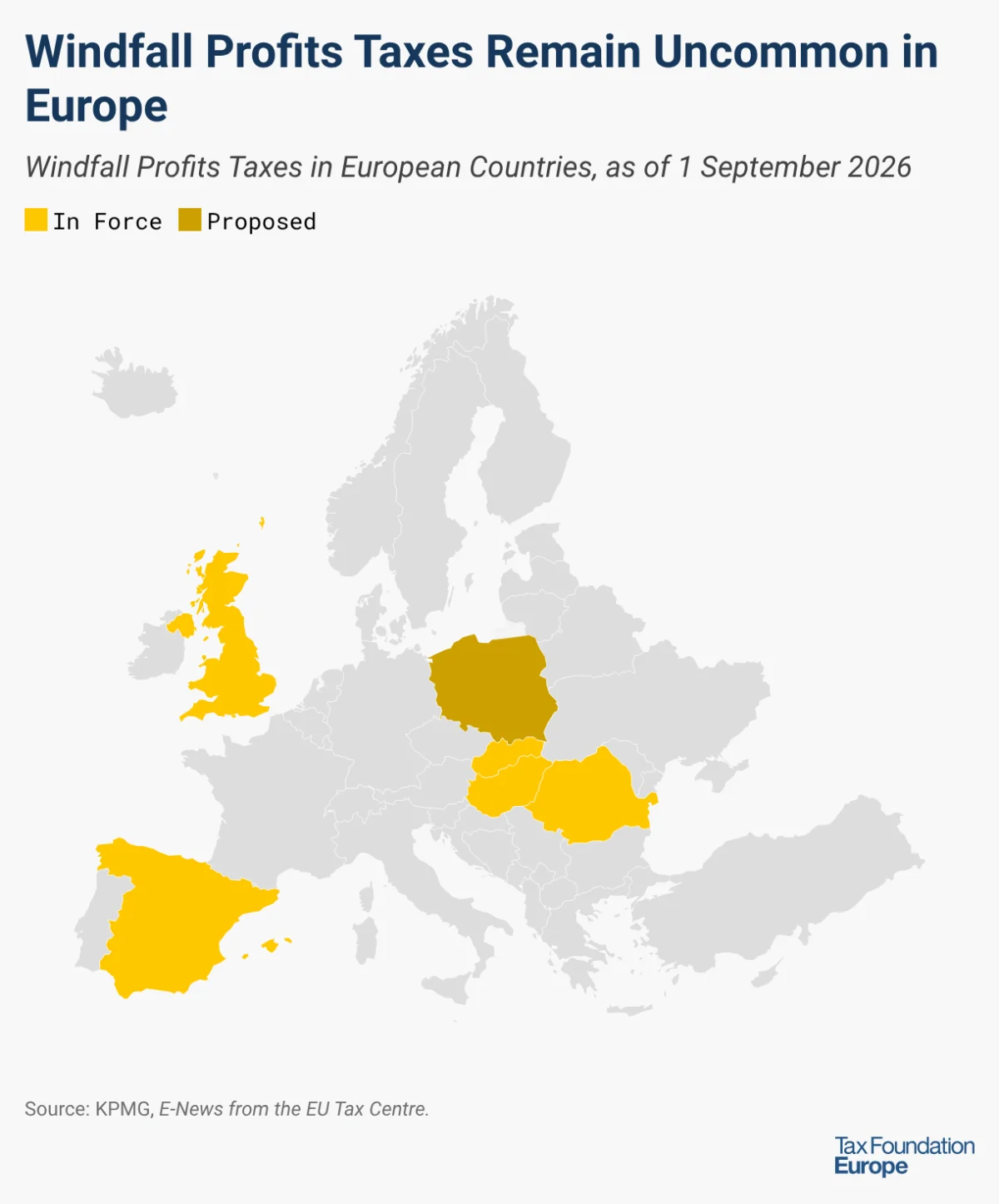
As the European Union economy navigates its intricate recovery from the profound energy price shock triggered by Russia’s full-scale invasion of Ukraine in February 2022, renewed geopolitical tensions in the Middle East are once again sending ripples through global energy markets. These recent disruptions are constraining oil and gas supplies, inevitably driving up energy prices across the continent. In response, the concept of windfall profit taxes—a one-time levy on companies or industries that experience large, unexpected profits due to exceptional economic conditions—has resurfaced as a primary tool for policymakers seeking to mitigate the impact of market volatility on consumers and industries.
The Genesis of Europe’s Windfall Tax Push: A Response to Crisis
The impetus for a coordinated European approach to windfall taxes emerged sharply in the wake of Russia’s invasion of Ukraine. The conflict drastically altered global energy dynamics, leading to unprecedented surges in natural gas and crude oil prices. European households faced soaring utility bills, and businesses grappled with escalating operational costs, threatening economic stability and social cohesion. Against this backdrop of energy insecurity and cost-of-living crises, the idea of taxing the "excess profits" of energy companies, which benefited from the sudden price spikes, gained significant political traction.
As early as March 2022, the European Commission, recognizing the urgency of the situation, outlined its "REPowerEU communication." This strategic document aimed to reduce Europe’s reliance on Russian fossil fuels and recommended that Member States temporarily impose windfall profits taxes on all energy providers. The Commission’s vision for such measures was clear: they should be technologically neutral, non-retroactive, and carefully designed to avoid distorting wholesale electricity prices or long-term market trends, thereby preserving investment incentives for energy transition.
The recommendations quickly translated into concrete action. By October 2022, the Council of the European Union reached a pivotal agreement to impose an EU-wide "solidarity contribution" on fossil fuel companies, encompassing the oil, gas, coal, and refining sectors. While broadly aligned with the Commission’s intent, the Council’s design diverged in some specifics. Concurrently, a cap was instituted on market revenues for electricity generators utilizing infra-marginal technologies—such as renewables, nuclear, and lignite—which produce electricity at a cost below the prevailing market price, further solidifying the EU’s two-pronged approach to capturing unexpected gains.
Ambitious Targets and Disparate Realities: The Revenue Story
The EU’s projections for these combined policies were ambitious. It was anticipated that the solidarity contribution and the revenue cap would jointly generate approximately €140 billion. Of this substantial sum, €25 billion was specifically earmarked from the oil and gas sectors through the solidarity contribution. The ultimate goal was to channel these revenues back into the economy, partially offsetting the crushing burden of high energy bills for households through "non-selective and transparent measures supporting all final consumers." This direct redistribution was intended to demonstrate solidarity and alleviate immediate financial pressures across the bloc.
However, the reality of implementation across the diverse landscape of EU Member States proved more complex than the initial projections suggested. According to a 2025 European Commission report evaluating the solidarity contribution, between 2022 and 2023, 16 of the 27 Member States directly applied the solidarity contribution as stipulated, while another eight opted to implement an equivalent national measure, tailoring the mechanism to their specific legal and economic frameworks.
Despite the broad adoption, significant discrepancies emerged in reported revenues. While the total collected for fiscal years 2022 and 2023—€26.15 billion—slightly exceeded the €25 billion estimate, a closer look reveals a patchwork of engagement and effectiveness. Three countries—Luxembourg, Latvia, and Malta—reported having no in-scope companies within their borders, thus contributing no revenue. More strikingly, Finland, Lithuania, and Sweden reported zero revenues from this policy to the European Commission, with no further public data available to explain this outcome. Cyprus, notably, never formally adopted the regulation. Furthermore, Croatia, which implemented a broader windfall tax applicable to all sectors of its economy, did not report any revenues specifically attributable to the EU’s solidarity contribution, making direct comparison challenging.
Consequently, out of the 27 EU Member States, comprehensive revenue data on the solidarity contribution or an equivalent measure is available for only 19. This fragmented picture underscores the challenges of implementing harmonized economic policies across a diverse union. Moreover, the Commission’s report highlighted a critical finding: the revenues generated from the solidarity contribution accounted for a mere 7 percent of the total cost of energy support measures implemented by Member States, which collectively amounted to a staggering €340 billion. This stark contrast suggests that while the windfall tax served as a symbolic and partial response, it was far from a comprehensive solution to the energy crisis’s financial fallout.
Beyond the EU, the United Kingdom, though no longer a Member State, also moved to implement its own windfall profits tax in 2022, exclusively targeting companies engaged in oil and gas extraction within its jurisdiction. This mirrored the broader European sentiment that energy companies benefiting from crisis-driven price hikes should contribute more to national coffers.
Shifting Sands: From Energy to Finance and Persistent Extensions
As global energy prices gradually declined from their 2022 peaks and the exceptional profits of oil, gas, and coal sectors began to normalize, some European countries started to shift the focus of their windfall tax mechanisms. This evolution saw the scope of these taxes extending beyond traditional energy producers to encompass the banking and financial sectors. Currently, Hungary, Romania, Slovakia, and Spain have broadened their windfall profits taxes to cover these new domains. The rationale for this shift often centers on the idea that banks, too, can experience "windfall" profits, particularly during periods of rising interest rates, which can boost net interest income.
However, the application of windfall taxes across Europe is far from uniform. They differ significantly in their structural design, the industries targeted, and their tax rates, which range from a modest 0.5 percent in Romania to a proposed 60 percent in Poland. This diversity highlights the lack of a standardized European approach and the inherent complexities of tailoring such taxes to individual national economies.
A critical point of contention and concern among economists and policymakers is the design of these taxes. Many of the proposed and enacted measures are not, in a strict sense, "proper" windfall profits taxes. They often extend beyond merely taxing genuinely unexpected, supernormal profits. For oil and gas companies, European countries generally followed the EU regulation’s definition of the tax base: the difference between current profits and profits generated over a baseline period. However, critics argue that these "incremental profits" are not necessarily excess or supernormal returns, and a poorly designed windfall tax could effectively translate into double taxation of regular, expected profits, thereby penalizing normal business operations and future investments.
Furthermore, in some countries, the tax base is not designed to exclusively capture profits directly attributable to spikes in energy and oil prices. A tax levied on electricity sold above an arbitrarily determined price, as implemented in most European countries, or on total sales, as seen in Spain, often more closely resembles an excise tax or a revenue cap rather than a true windfall profits tax. This lack of precision can lead to unintended consequences, distorting market signals and disproportionately affecting certain players.
The Banking Sector: A New Front for Windfall Taxes and ECB Concerns
The extension of windfall taxes to the banking sector has introduced a fresh set of challenges and drawn sharp criticism from key financial institutions. Such taxes, critics argue, not only reduce the amount of available capital within banks but also restrict their capacity to build reserves and respond effectively to unforeseen financial crises. This could have systemic implications, potentially destabilizing the financial sector. Moreover, the imposition of these taxes might deter investors, thereby increasing the cost of capital for banks and potentially hindering long-term economic growth by reducing credit availability for businesses and households. In the event of an economic recession, a rise in loan defaults would already negatively impact bank profits, making an additional windfall tax particularly punitive.
The European Central Bank (ECB) has been particularly vocal in its objections to windfall taxes imposed on banks. It raised concerns about such measures in Spain, as well as previous iterations in Lithuania and Italy. The ECB’s primary worry is that these taxes could reduce credit supply, making it harder for businesses and consumers to access loans, and critically, undermine banks’ resilience during an economic downturn. Maintaining robust capital buffers in the banking sector is paramount for financial stability, and arbitrary taxes on profits can directly compromise this objective.
The Peril of Permanence: When Temporary Measures Endure
A fundamental principle underpinning the EU regulation on windfall profits taxes was their temporary nature. The regulation explicitly states that such measures should be "limited and tied to a specific crisis situation." However, this temporary intention has been challenged by political realities and the persistent appeal of these revenue streams. Hungary, Slovakia, and Spain, for instance, have maintained their windfall taxes into 2026, with some measures even scheduled to remain in force through 2027. The United Kingdom, which initially implemented its windfall profits tax on fossil fuel companies in 2022, controversially extended its application to 2030, transforming a crisis response into a long-term fiscal policy. Even more starkly, Romania’s windfall tax on banks has been made permanent, completely discarding the temporary rationale.
While other countries have terminated the tax as originally intended, new proposals continue to emerge. Poland and Portugal currently have windfall tax proposals awaiting parliamentary approval, indicating a continued appetite for these measures despite their known drawbacks. The transformation of temporary crisis measures into semi-permanent or permanent fixtures raises significant concerns about regulatory predictability, investment certainty, and the potential for long-term economic distortions.
Flawed Design and Far-Reaching Implications
The cumulative experience with windfall profits taxes across Europe has brought to light numerous design flaws and their far-reaching implications. Research conducted by the European Parliament indicates that, historically, such taxes have a demonstrable negative effect on investment. This finding is particularly pertinent in the current context, where significant investment is required for Europe’s green energy transition. The Spanish former tax and the British current tax, for example, have been criticized for threatening and actively deterring domestic renewable energy investments. By creating uncertainty and reducing the profitability of long-term projects, these taxes can inadvertently undermine the very goals of energy security and climate action that Europe is striving to achieve.
While some of these windfall taxes have indeed achieved their immediate revenue goals, their broader impact has been less benign. They have been shown to distort markets by penalizing domestic production, reducing crucial investment in green energy, and punitively targeting specific industries without a sound, economically justified tax base. In a globalized economy that demands competitive investment environments, such policies can make European markets less attractive, potentially pushing capital and innovation elsewhere.
Lessons Learned and a Path Forward
The European journey with windfall profit taxes since 2022 offers crucial lessons for future crisis responses. In the face of ongoing supply shortages and the imperative for energy security and decarbonization, policymakers must critically evaluate the efficacy and long-term consequences of such measures. The temptation to resort to seemingly quick and easy revenue solutions during crises is strong, but the evidence suggests that poorly designed windfall taxes can create more problems than they solve.
Temporary crisis measures should not become the new normal. Instead, the focus should shift towards principled tax reforms that provide a stable, predictable, and fair source of revenue over the long term. This would involve designing tax systems that encourage investment, foster innovation, and support economic growth, rather than creating disincentives and market distortions. As Europe continues to navigate geopolitical uncertainties and the complex transition to a sustainable energy future, clarity, consistency, and a forward-looking approach to taxation will be paramount to ensuring both economic resilience and environmental progress.