Candice Horbacz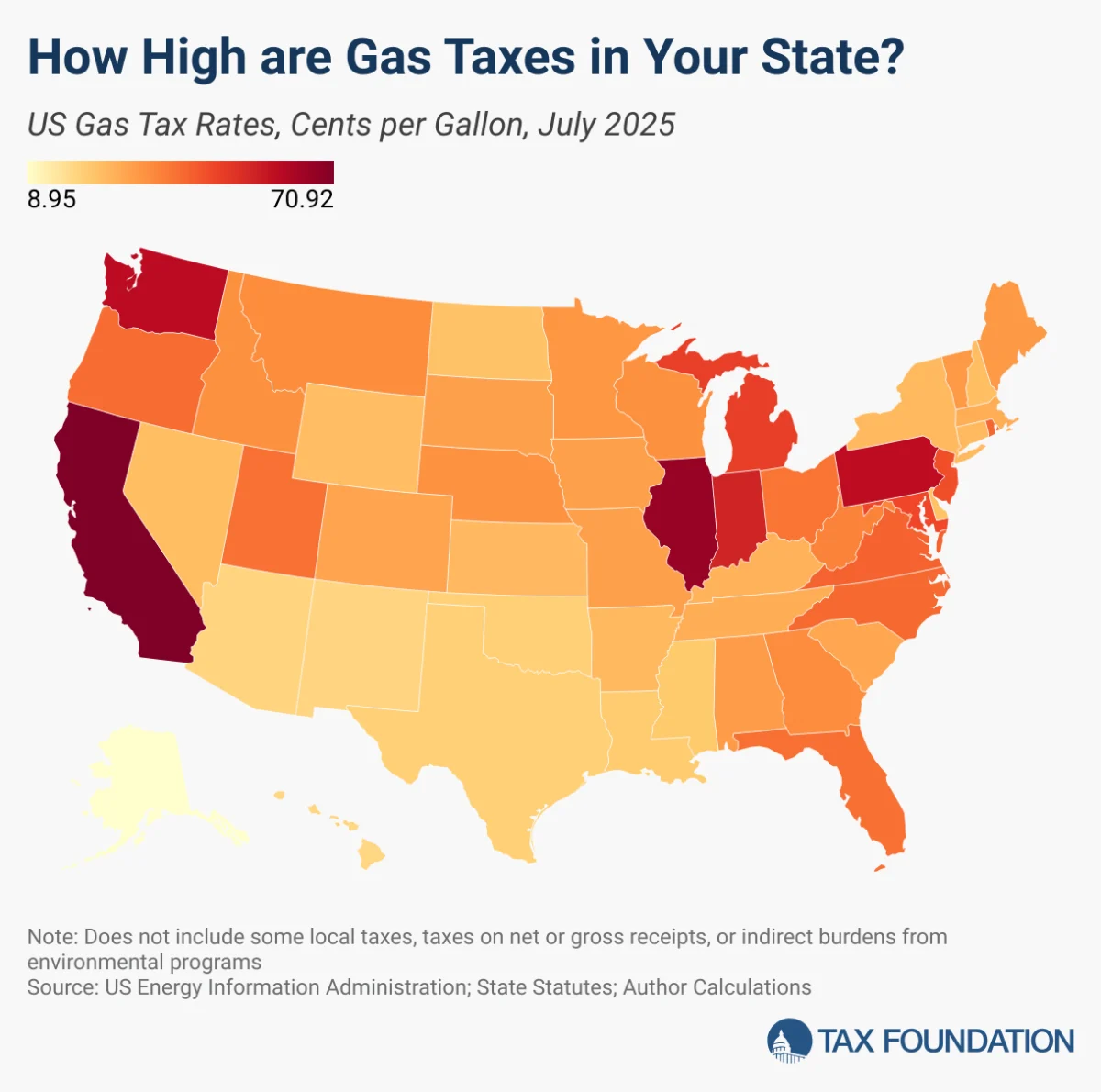
Gas taxes represent a fundamental aspect of American life, directly influencing the finances of most citizens and serving as a critical mechanism for funding the nation’s vast transportation infrastructure. These levies are designed as a user fee, a charge imposed by the government to cover the costs of services directly benefiting those who use them. In the context of driving, this means drivers contribute funds specifically earmarked for the construction, maintenance, and repair of the roads, bridges, and other vital transportation networks they utilize daily. This user-fee model ensures that the financial burden for maintaining public goods like roadways falls primarily on those who derive direct benefit, rather than being dispersed through broader-based taxes that might impact individuals who do not use these services. The principle behind this structure is to create a direct link between usage and funding, a model particularly effective for transportation services.
A Patchwork of State-Level Taxation
The method and magnitude of fuel taxation vary significantly across the United States, creating a complex and often disparate financial landscape for drivers. States employ several approaches to levy taxes on gasoline, with the most common being a per-gallon excise tax collected at the pump. This fixed-rate tax is applied to each gallon purchased, regardless of the fluctuating market price of fuel. However, many states augment this primary excise tax with additional charges. Some states incorporate general sales taxes, which are ad valorem taxes, meaning they are calculated as a percentage of the fuel’s price. This makes the tax burden directly sensitive to the market price of gasoline, increasing automatically when prices rise. Other states impose taxes on wholesalers or retailers, which are subsequently passed on to consumers in the form of higher pump prices. Beyond these primary tax structures, most states also levy various supplementary fees, such as those for underground storage tanks or environmental clean-up initiatives, further contributing to the total price drivers pay. The cumulative effect of these diverse taxes and fees results in a substantial difference in the overall tax burden on gasoline from one state to another.
For instance, California currently levies the highest gasoline tax rate in the nation, standing at 73.6 cents per gallon (cpg). This is closely followed by Illinois at 70.4 cpg and Indiana at 63.1 cpg, demonstrating a concentrated burden in some of the country’s most populous states. Conversely, Alaska imposes the lowest gas tax rate at a mere 8.95 cpg, a significant departure from the national average. Hawaii follows with 18.5 cpg, and New Mexico with 18.9 cpg, showcasing the vast disparity in state-level taxation. It is crucial to note that these published state rates often do not encompass all charges. They typically exclude certain local taxes, the economic impact of state-specific environmental programs and regulations like cap-and-trade carbon policies or low carbon fuel standards, and certain taxes levied on gross receipts, all of which can significantly inflate the final price at the pump.
The Rising Influence of Environmental Policies on Fuel Costs
In recent years, the landscape of fuel taxation has become increasingly complex due to the integration of environmental programs and regulations. These policies are distinct from traditional user fees, as their primary aim is not merely to generate revenue for road maintenance but to influence consumer behavior by discouraging the consumption of fossil fuels and reducing greenhouse gas emissions. While not always labeled as direct "taxes" at the pump, these initiatives inevitably increase the cost of gasoline for drivers.
The challenge lies in accurately quantifying the marginal impact of these environmental programs on the per-gallon price of fuel. Estimates can vary substantially depending on the methodology and the entity conducting the analysis. State environmental agencies, for example, often project lower impacts compared to independent economic analyses. Furthermore, the nature of some programs, such as cap-and-trade systems, involves fluctuating prices for carbon credits, leading to a variable impact on gas prices over time.
California stands as a prime example where environmental policies exert a considerable influence on fuel costs. The state’s Legislative Analyst’s Office (LAO) has estimated that California’s cap-and-trade program, designed to limit and put a price on carbon emissions, increases gas prices by approximately 23 cpg. Adding to this, the state’s Low Carbon Fuel Standard (LCFS), a program mandating a reduction in the carbon intensity of transportation fuels, has seen its stringency increase. While the California Air Resources Board (CARB) had previously anticipated the LCFS to raise gas prices by as much as 52 cpg in 2026, more recent estimates from the California Energy Commission (CEC) suggest a more conservative impact of 19 cpg. When combined with direct state taxes, the cumulative burden of these programs and taxes totals approximately $1.156 per gallon in California, making it one of the most expensive states for fuel.
Washington State’s Climate Commitment Act, a comprehensive cap-and-invest program, similarly aimed to reduce emissions but faced scrutiny over its potential impact on fuel prices. Initially, it was projected to raise gas prices by 44 cpg at carbon prices lower than those observed in recent auctions. However, the state’s Department of Ecology now claims a more modest impact, attributing 7.2 cpg to the Clean Fuel Standard and an additional 5.16 to 15.5 cpg from the cap-and-invest program. These discrepancies highlight the difficulty in forecasting and measuring the real-world effects of such complex market-based environmental mechanisms.
Oregon’s Department of Environmental Quality has estimated its Clean Fuels Program to have increased gas prices by about 9.35 cpg in 2025. The state’s newer Climate Protection Program, while recently implemented, has not yet had its potential effect on gas prices formally estimated. However, given that its cost of carbon is notably higher than that of other states, the program’s burden is likely to be substantial, assuming it withstands ongoing legal challenges.
New Mexico also joined the trend, initiating its Clean Transportation Fuel Program in April 2026. Still under development, the program’s ultimate impact on gas prices will hinge on the fluctuating cost of associated carbon credits. While the New Mexico Environment Department asserts that the program does not levy a direct tax or fee at the pump, it acknowledges that increased fuel costs are an inevitable outcome, mirroring the effects observed in other states with similar policies. Regardless of whether these environmental initiatives are structured as direct carbon taxes, fuel standard mandates, or cap-and-trade systems, their overarching effect is a measurable increase in the price of gasoline.
Local Levies and Unique Tax Structures
Beyond state-level excise and environmental taxes, drivers often face additional costs from local jurisdictions and unique state tax formulations that further complicate the fuel pricing structure. While many states prohibit localities from levying their own gasoline taxes, some grant this authority, leading to significant additional costs.
Hawaii provides a striking example, where local taxes can surpass the state’s excise tax. In Maui, for instance, local levies can add up to an extra 24 cpg, making a substantial difference in the final price. Nevada also features notable local-level taxes, compounded by automatically increasing levies from the Regional Transportation Commission’s Fuel Revenue Indexing. These mechanisms result in additional charges of 39.8 cpg in Clark County and a remarkable 67.8 cpg in Washoe County. In the latter, the local tax alone exceeds the third-highest state tax rate nationally, underscoring the profound impact local policies can have.
Furthermore, a few states implement taxes as a percentage of gross receipts on fuel sales, which are challenging to convert into a straightforward per-gallon rate. Connecticut’s Petroleum Products Gross Earnings Tax, levied at 8.1 percent on wholesalers, is the highest of its kind. While the Connecticut Department of Revenue estimates its application to diesel fuel adds approximately 20.9 cpg, a precise per-gallon estimate for gasoline remains elusive. These varied and often less transparent tax structures mean that the total tax burden on fuel can be considerably higher than what state-level figures alone suggest.
Economic Headwinds: Inflation, Geopolitics, and the Debate over Gas Tax Holidays
The cost of gasoline is not solely determined by taxes and fees; global economic factors and geopolitical events play a significant role. Recent years have seen substantially elevated gas prices compared to previous periods, largely driven by supply-side factors, including geopolitical tensions and conflicts that disrupt global oil markets and supply chains. For example, conflicts in oil-producing regions can lead to heightened uncertainty and reduced supply, driving up crude oil prices globally.
These higher market prices have a compounding effect in states that impose ad valorem, or price-based, gas taxes. In such states, like Indiana, the tax burden automatically increases as the price of gasoline rises, even if the per-gallon rate remains unchanged. This mechanism means that consumers effectively pay more in taxes during periods of high prices, without any legislative action to raise tax rates.
In response to periods of high fuel prices, there is often public and political pressure for temporary relief measures, such as gas tax holidays. These policies, which temporarily suspend state (and sometimes federal) gas taxes, gained popularity during recent surges in prices. While seemingly offering immediate relief to consumers, such holidays are widely criticized by economists and transportation experts as an inefficient and often counterproductive approach.
The primary criticisms against gas tax holidays include:
- Inefficiency in Consumer Relief: A significant portion of the tax cut may not be fully passed on to consumers, instead being absorbed by retailers or wholesalers, leading to minimal savings at the pump.
- Failure to Address Root Causes: Gas tax holidays do not tackle the underlying supply-demand imbalances or geopolitical factors that drive high prices.
- Artificial Subsidization of Consumption: By making fuel temporarily cheaper, these holidays can inadvertently encourage increased consumption precisely when supply is tightest, potentially exacerbating price pressures in the long run.
- Exacerbating Infrastructure Funding Issues: Road user fees, including gas taxes, already struggle to cover the escalating costs of maintaining and expanding transportation infrastructure. A holiday further depletes these dedicated funds, forcing states to either defer critical maintenance or shift the financial burden to less appropriate, more general revenue sources like income or sales taxes. This undermines the user-fee principle and can lead to long-term infrastructure deficits.
Like state sales tax holidays, gas tax holidays offer short-term political appeal but often come at the expense of long-term fiscal stability and sound infrastructure planning.
The Road Ahead: Challenges to the Gas Tax and the Rise of VMT
The efficacy of the traditional per-gallon excise tax on fuels as a user fee for roads is steadily deteriorating. Several interconnected trends are eroding its revenue-generating capacity and undermining its core principle:
- Rise of Electric Vehicles (EVs): Electric vehicles, which consume no gasoline, contribute nothing to gas tax revenues. As EV adoption accelerates, a growing number of road users are effectively "free riders" on the system funded by gasoline purchasers.
- Improving Fuel Efficiency: Even internal combustion engine vehicles are becoming increasingly fuel-efficient, meaning drivers travel more miles per gallon. This reduces per-mile gas tax contributions, as less fuel is consumed for the same distance driven.
- Inflation: Many state gas tax rates are not indexed to inflation. Over time, the real value of these fixed-rate revenues diminishes, reducing their purchasing power for infrastructure projects, whose costs continue to rise.
Faced with this looming fiscal challenge, states are actively seeking alternative funding mechanisms. Most states have already implemented specific fees for electric vehicles, typically annual flat fees, to ensure EV drivers contribute to road maintenance. These fees aim to compensate for the lost gas tax revenue and ensure a more equitable contribution from all road users.
A more transformative solution gaining traction is the concept of Vehicle Miles Traveled (VMT) taxes. Instead of taxing fuel consumption, VMT taxes charge drivers based on the actual number of miles they drive. This model offers several compelling advantages:
- Neutrality: A VMT tax would eliminate the non-neutral treatment of vehicles with different fuel efficiencies and propulsion systems (gasoline, hybrid, electric), ensuring all drivers pay proportionally to their road usage.
- Direct Alignment: It directly aligns roadway revenues with expenditures, as the cost of maintaining roads is directly related to the wear and tear from vehicle miles traveled.
- Sustainable Funding: It provides a more stable and future-proof funding source for transportation infrastructure, independent of fuel type or efficiency improvements.
While VMT taxes present significant implementation challenges, including privacy concerns related to mileage tracking and the need for new administrative systems, several states, notably Oregon with its OReGO program, have launched pilot initiatives to explore their feasibility. These pilot programs are crucial for developing technologies and policies that can address concerns and pave the way for broader adoption. If properly calibrated and implemented, a VMT tax could fundamentally reshape how American roads are funded, ensuring that the burden of maintenance and construction equitably falls on those who use them, thereby securing the future of the nation’s transportation network.
Conclusion: Balancing Revenue, Environment, and Equity
The current system of fuel taxation in the United States is a multifaceted construct, evolving rapidly under the pressures of environmental mandates, technological advancements, and economic volatility. From the foundational per-gallon excise taxes designed as user fees for infrastructure to the increasingly complex environmental surcharges aimed at modifying behavior, and the localized levies that add hidden costs, the price at the pump reflects a tapestry of policy goals.
The ongoing debate surrounding gas tax holidays highlights the tension between providing immediate consumer relief and maintaining stable, dedicated funding for critical infrastructure. Simultaneously, the accelerating shift towards electric vehicles and improved fuel efficiency is eroding the traditional gas tax’s effectiveness, necessitating a profound rethinking of how transportation systems are financed.
As states grapple with these challenges, the conversation around Vehicle Miles Traveled (VMT) taxes and equitable EV fees signals a potential paradigm shift in road funding. The ultimate goal remains to create a sustainable, fair, and efficient system that ensures the continued solvency of transportation infrastructure, supports environmental objectives, and equitably distributes the costs among all who benefit from the nation’s extensive road network. The journey towards this optimized system is complex, requiring careful consideration of economic realities, technological possibilities, and public acceptance to forge a path that serves the interests of all Americans.