Nila Kartika Wati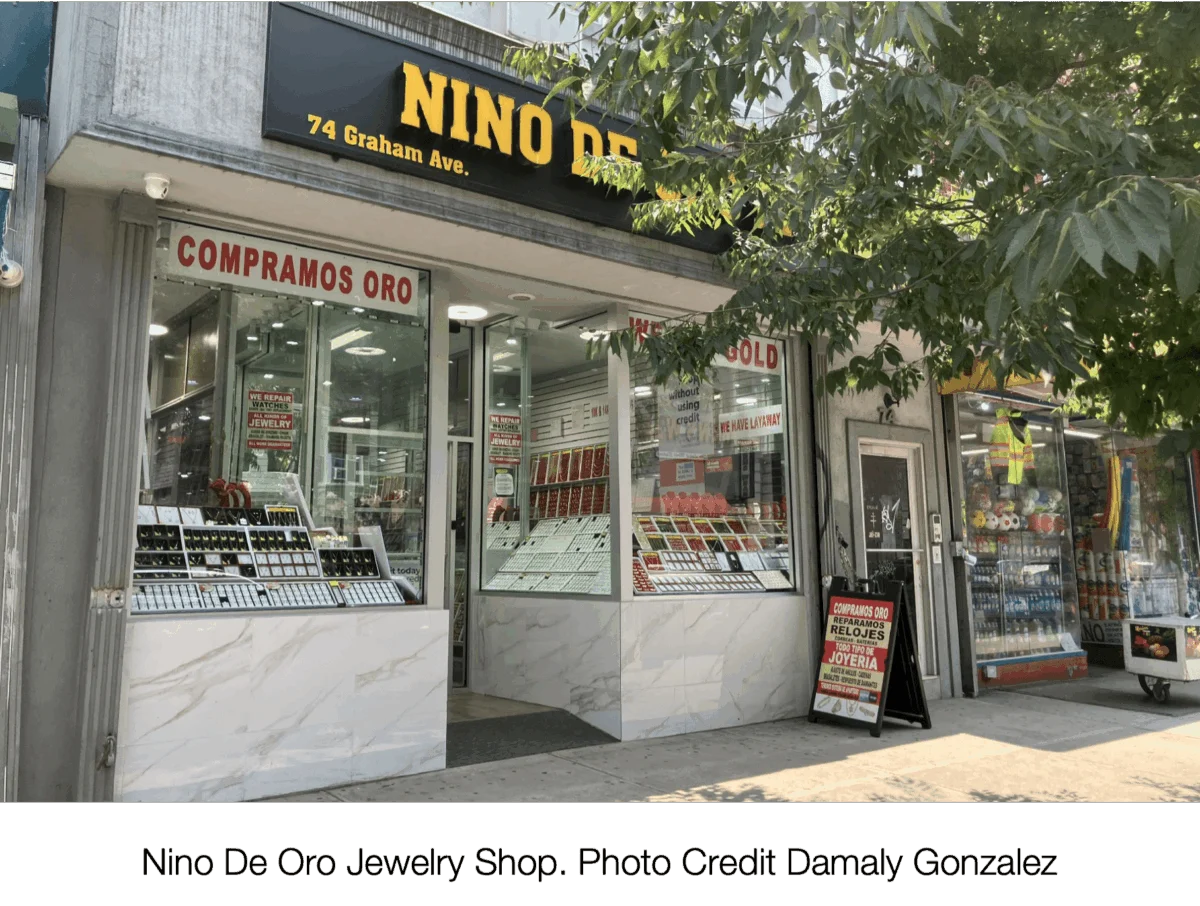
Inside Grand Jewelry Pawn Shop at 791A Grand Street, the rhythmic hum of Williamsburg’s gentrified streets fades, replaced by the hushed negotiations of survival. Arthur Abayev, the shop’s owner since 2006, often finds himself navigating the language of necessity. On a recent afternoon, a customer entered seeking to sell an item, speaking in Spanish. Abayev, though not a Spanish speaker, understood the intent immediately. This interaction is a microcosm of a larger, often overlooked reality in North Brooklyn: while the glass towers and high-end boutiques suggest a neighborhood transformed by wealth, a significant portion of the population remains tethered to a high-interest, short-term credit economy to meet basic needs.
The persistence of pawn shops in Williamsburg, Bushwick, and Bedford-Stuyvesant (Bed-Stuy) serves as a stark barometer for the limits of urban revitalization. Historically, these neighborhoods were defined as working-class enclaves, serving as gateways for Puerto Rican, Dominican, Italian, Polish, and Hasidic Jewish communities. Today, even as the Area Median Income (AMI) has surged and the "hipster" aesthetic has solidified into a permanent luxury market, the demand for immediate liquidity through the sale or collateralization of personal goods remains robust.
A Century of Informal Credit in North Brooklyn
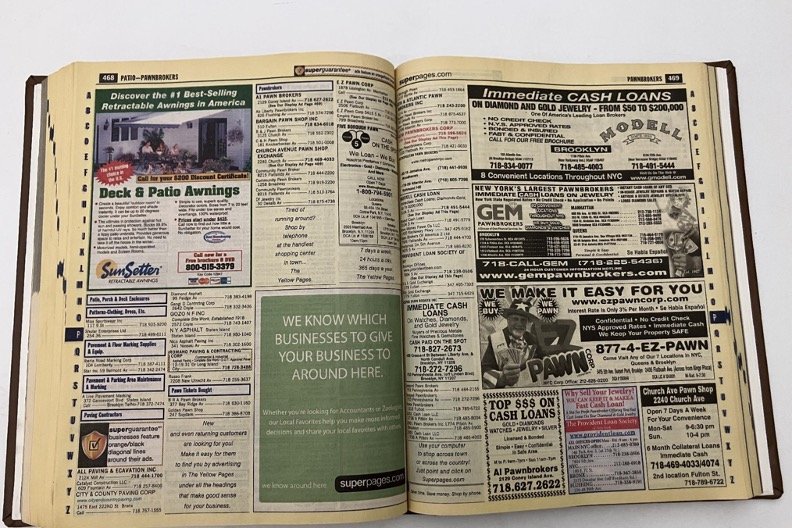
The history of pawn shops in the United States is deeply intertwined with the immigrant experience and the lack of access to traditional banking. In the early 20th century, these establishments acted as the "poor man’s bank." Archival records from the Central Brooklyn Public Library reveal a dense network of pawnbrokers that once lined the streets of Williamsburg. In the 1970s, three prominent shops operated on Grand Street alone: Acme Dunbar Pawnbrokers, Bruckheimer & Sons, and Kleinbaum Chas Estate.
Kleinbaum Chas Estate, a Jewish-owned business founded in 1900, was a fixture of the neighborhood for decades. Similarly, Bruckheimer & Sons strategically marketed their services to the Lithuanian immigrant community, placing advertisements in the newspaper Vienybė Lietuvninkų. These shops provided a vital service for residents who lacked the credit scores or steady payroll documentation required by commercial banks. They accepted everything from musical instruments and jewelry to furs and tools, offering small, high-interest loans that allowed families to bridge the gap between paychecks.
As the demographics of Williamsburg shifted in the late 1990s and early 2000s, many of these legacy businesses disappeared. The push-out of pawn shops over the last two decades is often cited by urban sociologists as a primary indicator of economic displacement. Shops like Brooklyn Pawn Broker at 799 Broadway and Bushwick Pawn Shop at 826 Flushing Avenue either closed or rebranded to survive. Crown Pawnbrokers at 74 Graham Avenue, which opened in 2011, eventually transitioned into Niño de Oro, a jewelry shop that focuses more on retail and buying gold than on the traditional lending model.
The Gentrification Paradox and Rising Costs
The transformation of Williamsburg is frequently hailed as a success story of urban planning and investment. However, data from the NYU Furman Center indicates that while the median household income in the Greenpoint/Williamsburg area has increased by over 45 percent since 2010, the poverty rate has not declined in tandem for longtime residents. Instead, the rising cost of living—driven by a 30 percent increase in average rent over the same period—has created a "gentrification paradox."
"Rents have gone up. People have changed here," Abayev noted. "A lot of people from the Midwest and from different countries have moved here. A lot of things have gone up in price, and people can’t afford it." Abayev observes that the struggle is no longer confined to specific ethnic or racial groups; it affects "regular people" across the spectrum who find themselves squeezed by the cost of basic necessities.
The surge in pawn shop usage is not unique to Brooklyn. Nationwide, pawn shops are experiencing a boom as Americans grapple with the highest inflation rates in forty years. According to industry reports, nearly 55 percent of Americans are living paycheck to paycheck, and for those without a safety net, a jewelry store that buys gold or a pawn shop that offers a loan is the only alternative to predatory payday lenders or eviction.
The Shift from Lending to Liquidation
In 2023, Abayev made a significant business decision: he stopped the traditional "pawning" aspect of his business. For years, he had functioned as a lender, holding items as collateral for short-term loans. However, the economic climate became so dire that his default rates skyrocketed. Approximately 85 percent of his customers used to be able to reclaim their items, but as the cost of living outpaced wage growth, more patrons were unable to pay back the interest and principal.
"I didn’t like it because people were blaming me for their arrests and jail time," Abayev explained, referring to the legal complications that arise when individuals default on loans or when the pressure of debt leads to desperate measures. He also noted the financial strain on his end; pawn shops often borrow from banks to fund their loans, and as interest rates rose, the margin for error narrowed. "I couldn’t keep up, and people were defaulting so badly that I didn’t want to deal with being a pawn shop anymore."
Now, Grand Jewelry Pawn Shop functions primarily as a buyer of luxury goods, diamonds, and electronics. The inventory reflects a shift in consumer habits. While older generations pawned family heirlooms, the modern customer often brings in technology. There has been a significant uptick in Apple products—iPhones and iPads—passing through Abayev’s doors. People purchase these items during periods of relative stability but are forced to liquidate them when rent, car notes, or utility bills become due.
Gaps in the Social Safety Net
The continued reliance on shops like Abayev’s highlights a significant gap in the services provided by community-based organizations (CBOs). Williamsburg and its surrounding areas are served by several prominent non-profits, including North Brooklyn Angels, Southside United H.D.F.C. (Los Sures), St. Nicks Alliance, and Build Up Justice. While these organizations provide essential services—ranging from soup kitchens and affordable housing advocacy to legal aid—they are often not equipped to handle the immediate, cash-in-hand needs of the working poor.
North Brooklyn Angels, for instance, operates a mobile soup kitchen that serves hundreds of hot meals daily. While this addresses food insecurity, it does not solve the problem of a resident needing $200 by tomorrow to prevent a utility shut-off. Similarly, St. Nicks Alliance provides workforce development and senior care, but these are long-term interventions.
A critical missing piece in the local ecosystem is a "rapid-response" emergency fund. Currently, New York City residents in financial crisis must navigate the "One Shot Deal" (OSD) process through the Human Resources Administration (HRA). The OSD is intended to cover one-time emergencies like rent arrears or utility bills, but the application process is notoriously slow and arbitrary, often taking months to process. For a father trying to provide for his children or a worker facing an immediate car repair, the weeks-long wait for a government check is an eternity. In those moments, the jewelry shop on Grand Street becomes the only viable option.
Demographic Realities and Recidivism
The demographics of those seeking quick cash at Abayev’s shop are predominantly male, though the racial and ethnic backgrounds vary widely. Many of these men are the primary earners for extended families, and their stories are often ones of self-sacrifice. "They needed money to take care of their children or their cousins or their family members," Abayev said. "It was always for helping them out. It was never for themselves."
There is also a darker side to this economic desperation. Abayev noted that some of his former customers were entangled in the criminal legal system. The lack of immediate economic support is a known driver of recidivism. In New York State, approximately 42 percent of individuals sentenced to probation are rearrested within three years, according to 2019 data from the Division of Criminal Justice Services. When individuals cannot find legitimate ways to bridge a $100 gap for groceries or rent, the risk of returning to informal or illegal economies increases.
Analysis of Broader Implications
The story of Grand Jewelry Pawn Shop is a cautionary tale about the limits of "neighborhood revitalization." When a neighborhood gentrifies, the rising property values and influx of high-income residents are often used as proxies for "progress." However, if the underlying economic fragility of the existing population is not addressed, that progress is merely a facade.
The disappearance of traditional pawn shops—and their replacement by shops that only buy items outright—indicates a transition from a "borrowing" economy to a "liquidation" economy. In a borrowing economy, residents have assets they can leverage and eventually recover. In a liquidation economy, they are forced to permanently part with their assets just to survive. This leads to a steady erosion of generational wealth among the working class, even as the neighborhood around them becomes more affluent.
As Williamsburg continues to evolve, the presence of businesses like Abayev’s remains a necessary, if uncomfortable, reminder of the city’s deep economic divides. The male customer looking to get a loan on his musical instrument represents a segment of the population that the new Brooklyn has failed to integrate. Until the social safety net can provide the same speed and accessibility as a corner pawn shop, the "two Brooklyns" will continue to exist side-by-side: one defined by the accumulation of luxury, and the other by the desperate sale of it.