Julia Chirkova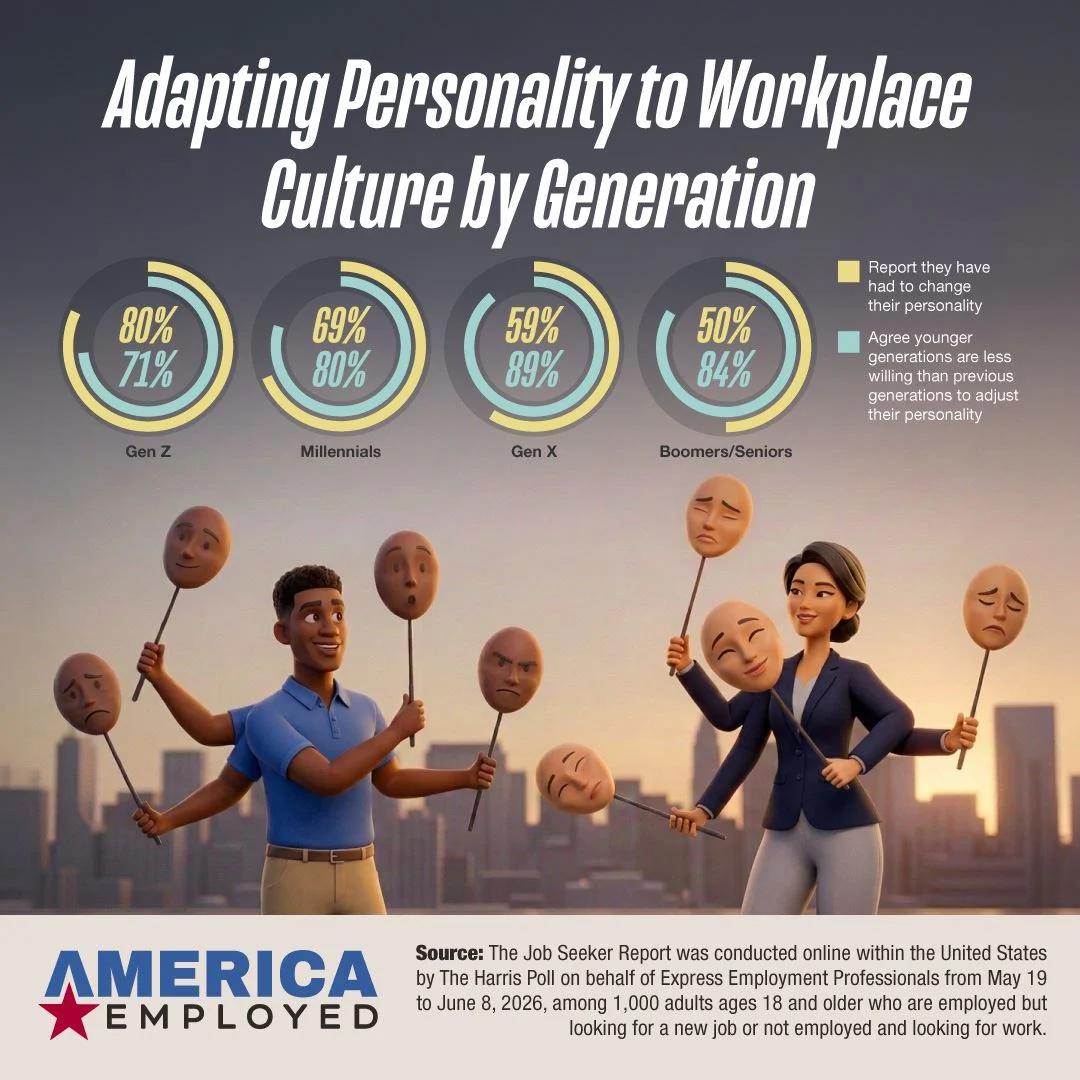
A recent survey by Express Employment Professionals, conducted in partnership with The Harris Poll, reveals a significant trend in the modern job market: job seekers increasingly feel the need to adapt their personalities to align with workplace culture, a practice that, while widely adopted, is viewed as unfair by a majority. Despite prevailing stereotypes, younger demographics, specifically Generation Z and Millennials, are at the forefront of this personality assimilation, reporting the highest rates of adaptation. This complex dynamic underscores a growing tension between organizational expectations for cultural fit and individual authenticity, with profound implications for career progression and employee well-being.
The survey data indicates that adapting one’s persona for professional settings is not merely an occasional occurrence but a pervasive reality for a substantial portion of the workforce. Two-thirds of job seekers (67%) acknowledge having modified aspects of their personality to better suit their professional environment. Furthermore, a striking 63% report a discernible difference between their personal and professional selves, suggesting a significant disconnect between their authentic identity and the persona they present at work. This phenomenon is particularly pronounced among younger job seekers, who are most likely to report both the pressure to adapt and the actual act of doing so.
The Ascendancy of Adaptability as a Professional Skill
The perception of personality adaptation as a critical component of professional success is firmly entrenched. An overwhelming 86% of job seekers now consider the ability to adjust their personality to workplace culture a core professional skill. This perspective is further reinforced by the belief that employees who are unwilling or unable to make these adjustments may have shorter tenures with their employers, with 83% subscribing to this view.
Beyond mere retention, personality also plays a pivotal role in how an individual’s performance is perceived and whether they are considered for advancement. The survey highlights a near-universal consensus on this matter: 94% of hiring managers and 91% of job seekers agree that personality influences performance evaluations. The impact on career trajectory is even more pronounced, with 99% of hiring managers and 90% of job seekers believing that a positive or approachable personality can significantly accelerate career advancement. This suggests that, in many organizations, a perceived alignment of personality with the dominant cultural mold can be a powerful, albeit sometimes superficial, driver of professional success.
However, this widespread expectation is not without its detractors. A significant segment of job seekers questions the meritocracy of such a system, with more than half (56%) asserting that personality has no bearing on an individual’s actual work performance or their capacity to excel in their role. This sentiment is particularly strong among younger generations, with 71% of Gen Z and 54% of Millennials expressing this view. This contrasts sharply with older generations, where 51% of Gen X and 36% of Baby Boomers and Seniors share this perspective. This generational divide points to a potential disconnect in how different age groups perceive the balance between authentic self-expression and the demands of professional conformity.
The Paradox of Personality: Generational Differences in Adaptation
Counterintuitively, the survey data challenges a common perception that younger employees are less inclined than their predecessors to modify their personalities to fit into a workplace. The findings indicate the opposite is true: Gen Z and Millennials are the most likely to report adapting their personalities to align with workplace culture. This suggests that these younger cohorts, often stereotyped as prioritizing individuality, are, in practice, navigating the pressures of professional assimilation more actively than older generations.
This finding can be contextualized by several factors. Younger workers are entering a job market that may be more competitive or where early career impression management is deemed crucial for long-term success. They may also be more attuned to the subtle cues and unspoken expectations that define workplace culture, driven by a desire to establish themselves and secure their professional footing. The prevalence of social media and online professional networks, where curated self-presentation is the norm, might also influence their approach to personal branding in the workplace.
Conversely, older generations, having potentially established more secure career paths and a stronger sense of professional identity, might feel less compelled to alter their core personalities. Their experience may have taught them that genuine contributions and demonstrated skills can often override the need for superficial persona adjustments.
The Gap in Workplace Guidance
Despite the pervasive pressure to adapt, a significant portion of the workforce feels unsupported in this endeavor. Only half of job seekers (50%) report that their current employer provides guidance on how to manage or develop their personality for a professional setting. This lack of formal support is more prevalent among older workers, with only 30% of Baby Boomers and Seniors and 39% of Gen X receiving such guidance. In contrast, Millennials (59%) and Gen Z (58%) are more likely to report receiving this type of support, though even for these younger groups, it falls short of a majority.
This disparity in guidance suggests that organizations are either implicitly expecting employees to self-manage this aspect of their professional development or are failing to provide adequate resources to help employees navigate these often-unwritten rules. The absence of clear guidance can lead to increased stress, uncertainty, and a sense of alienation for employees who are struggling to decipher and meet cultural expectations.
The Impact of Personality on Team Dynamics and Organizational Health
The survey also sheds light on how personality differences can profoundly influence team functionality and, by extension, organizational effectiveness. Anecdotal evidence from job seekers highlights both the positive and negative consequences of personality dynamics within teams. For instance, a calm and organized demeanor was cited as a key factor in reducing stress and enhancing collaboration during high-pressure situations, allowing teams to remain focused and productive.
Conversely, challenging personality clashes can have a detrimental impact. One job seeker described a defensive teammate whose behavior hindered open feedback and slowed decision-making processes. Another recounted experiences with an "extremely demanding and overbearing" colleague whose conduct contributed to employee attrition. These examples underscore the real-world consequences of personality mismatches and the importance of fostering environments where constructive interpersonal interactions are prioritized.
Expert Analysis and Recommendations
Bob Funk Jr., CEO, President, and Chairman of Express Employment International, offered a perspective that emphasizes the balance between organizational culture and individual authenticity. "Workplace culture should set expectations for how people treat one another, not prescribe who people have to be," Funk stated. He elaborated, "Shared values give people a foundation for how they work together while still allowing room for different personalities and ways of working. That requires flexibility from employers and employees alike. When both sides approach the workplace with respect and a willingness to adapt, people can be themselves while contributing to a culture where everyone can succeed."
Funk’s statement suggests a need for a paradigm shift in how organizations approach cultural fit. Instead of seeking a uniform personality mold, companies might benefit from cultivating environments that embrace diversity of thought and approach, provided these differences are expressed and managed respectfully. This would involve clearly articulating core values and expected behaviors related to respect, collaboration, and professionalism, rather than implicitly demanding conformity of personality.
Broader Implications for the Future of Work
The findings from the Express Employment Professionals-Harris Poll survey have significant implications for the future of work. The emphasis on personality adaptation, coupled with the perception of unfairness, raises questions about authenticity in the workplace and the potential for burnout or disengagement among employees who feel they must constantly perform a version of themselves.
The increasing prevalence of remote and hybrid work models further complicates this issue. While these models can offer greater flexibility, they can also create new challenges in assessing cultural fit and fostering authentic connections. Organizations will need to develop more sophisticated strategies for building inclusive cultures that value individual contributions while maintaining a cohesive team environment.
Furthermore, the data suggests a critical need for organizations to invest in leadership training and employee development programs that address interpersonal skills, conflict resolution, and effective communication. Providing explicit guidance on navigating workplace expectations and fostering a culture of psychological safety could empower employees to be more authentic while still contributing positively to the team.
The generational divide in perceptions and experiences also warrants attention. As Gen Z and Millennials increasingly form the core of the workforce, their expectations regarding authenticity and work-life balance will continue to shape organizational practices. Companies that fail to acknowledge and address these evolving perspectives risk losing talent and hindering their long-term success. Ultimately, fostering a workplace where individuals can thrive both professionally and personally, without sacrificing their core identity, will be a key differentiator in the competitive landscape of the future.