Candice Horbacz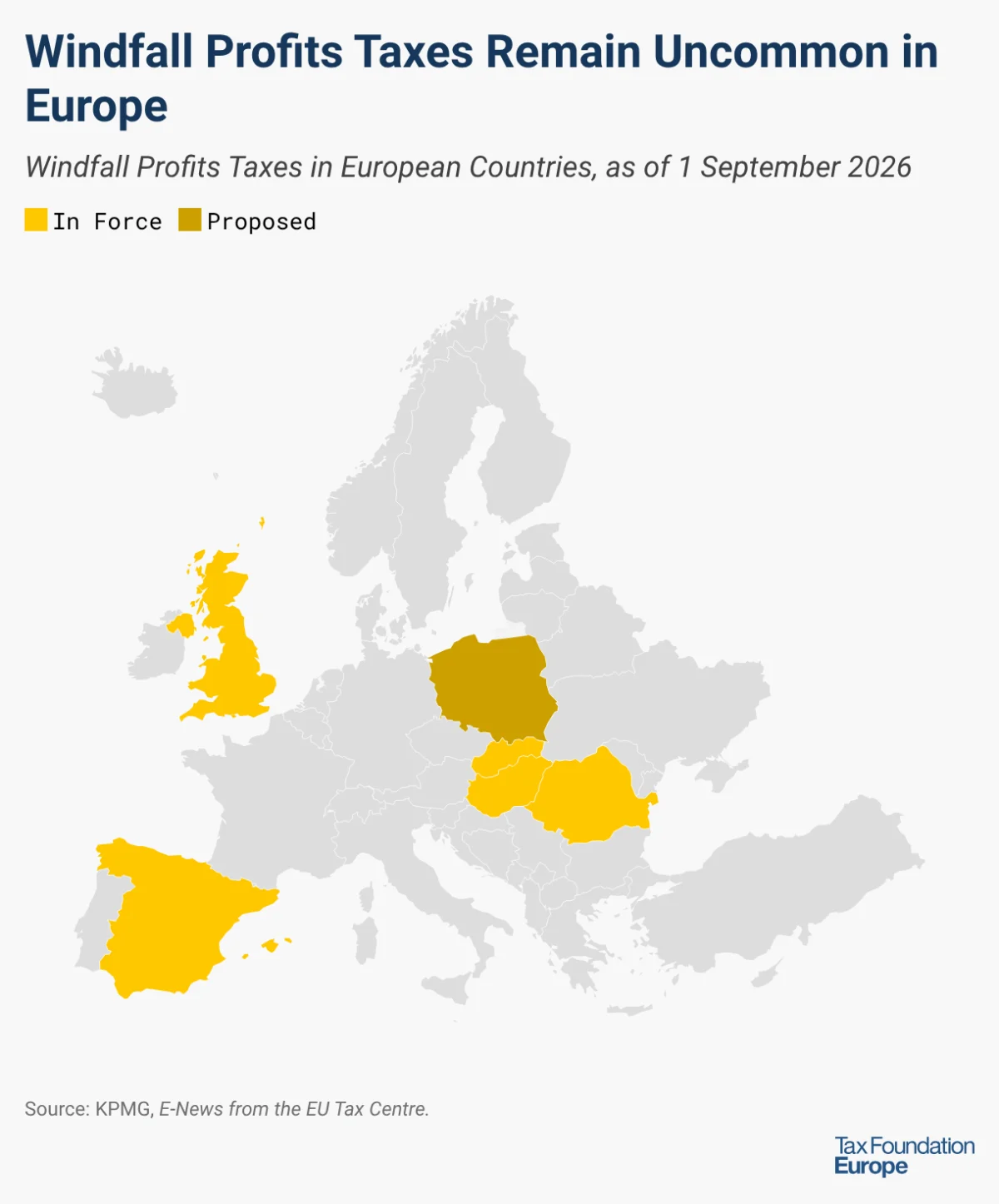
The European Union finds itself once again grappling with the complex issue of windfall profit taxes as renewed geopolitical tensions in the Middle East begin to constrain global oil and gas supplies, inevitably driving up energy prices. This echoes the profound energy price shock that followed Russia’s full-scale invasion of Ukraine in early 2022, a crisis that initially prompted widespread calls for extraordinary measures to mitigate economic fallout and provide relief to households and businesses. The resurfacing of this debate highlights the persistent challenges in designing effective, equitable, and economically sound responses to unforeseen market disruptions within a diverse economic bloc.
The Genesis of the Windfall Tax Debate: Responding to an Unprecedented Energy Crisis
The roots of the EU’s recent foray into windfall profit taxation can be traced directly to the tumultuous events of early 2022. Following Russia’s invasion of Ukraine in February 2022, Europe faced an unprecedented energy crisis. Russia, a major supplier of natural gas to the continent, significantly curtailed its exports, leading to a dramatic surge in wholesale gas prices. This, coupled with already rising global oil prices, pushed energy costs to historic highs, triggering inflation, impacting industrial output, and placing immense financial strain on European consumers. Crude oil futures soared above $100 per barrel, while European natural gas benchmarks reached multiple record peaks throughout the year.
In response to this escalating crisis, the European Commission, in March 2022, outlined its REPowerEU communication. This ambitious plan aimed to rapidly reduce the EU’s reliance on Russian fossil fuels and accelerate the transition to cleaner energy sources. As part of its immediate crisis response toolkit, the Commission recommended that Member States consider temporarily imposing windfall profits taxes on all energy providers. Crucially, these proposed measures were advised to be technologically neutral, non-retroactive, and designed to avoid distorting wholesale electricity prices or long-term market trends. The underlying principle was to capture "excess" profits that were not a result of increased efficiency or innovation, but rather a direct consequence of the geopolitical crisis and market volatility.
By October 2022, the Council of the European Union formalized a response, agreeing to impose an EU-wide "solidarity contribution" specifically targeting fossil fuel companies across the oil, gas, coal, and refining sectors. While sharing the objective of capturing unexpected profits, this design diverged somewhat from the Commission’s initial broader recommendation. Simultaneously, a cap was instituted on market revenues for electricity generators utilizing infra-marginal technologies, such as renewables, nuclear power, and lignite, which benefited from high electricity prices despite their lower operating costs not being directly tied to gas prices.
The EU anticipated that these two complementary policies – the solidarity contribution and the revenue cap – would collectively generate approximately €140 billion. Of this sum, an estimated €25 billion was expected to be collected from oil and gas companies through the solidarity contribution alone. The primary objective for these revenues was clear: to partially offset the soaring energy bills faced by households and businesses, framed as a "non-selective and transparent measure supporting all final consumers." This political commitment underscored the social dimension of the policy, aiming to redistribute profits perceived as unjust gains from a crisis directly back to those most affected.
Implementation and Discrepancies Across Member States
The practical implementation of the solidarity contribution and equivalent national measures revealed a complex and often inconsistent landscape across the 27 EU Member States. According to a 2025 European Commission report evaluating the solidarity contribution, between 2022 and 2023, 16 Member States formally applied the EU-wide solidarity contribution, while an additional eight adopted equivalent national measures. This demonstrates a broad, albeit not universal, buy-in to the principle of taxing crisis-driven profits.
However, the report also highlighted notable discrepancies and challenges in the actual collection of revenues. Three countries—Luxembourg, Latvia, and Malta—reported having no in-scope companies for the solidarity contribution. This could be attributed to their smaller energy sectors, specific national economic structures, or the absence of large-scale fossil fuel extraction or refining operations that would meet the threshold for the tax. While understandable for some smaller economies, it underscored the uneven applicability of the measure.
More significantly, three other Member States—Finland, Lithuania, and Sweden—reported zero revenues from this policy to the European Commission, with no other publicly available data clarifying their outcomes. This lack of reported revenue from countries with established energy sectors raises questions about the efficacy of implementation, potential definitional issues, or administrative hurdles in capturing the intended profits. It could also suggest that in these nations, the profits of eligible companies did not meet the thresholds for taxation, or that their national equivalent measures were designed differently, yielding no comparable revenue under the EU’s reporting framework.
Further complicating the picture, Cyprus never formally adopted the EU regulation, exercising its sovereign right not to implement the measure. Croatia, while implementing a windfall tax, applied it broadly across all sectors of its economy, rather than specifically targeting fossil fuel companies as per the EU’s solidarity contribution. Consequently, Croatia did not report any revenues specifically attributable to the energy sector under this policy, making direct comparisons difficult.
In total, out of the 27 EU Member States, only 19 provided revenue data on the solidarity contribution or an equivalent national measure. The aggregate revenue collected for fiscal years 2022 and 2023 amounted to €26.15 billion. While this figure slightly exceeded the initial €25 billion estimate for the fossil fuel sector, the Commission’s report delivered a sobering assessment of its overall impact. It revealed that these revenues accounted for a mere 7 percent of the total cost of energy support measures implemented by Member States, which collectively amounted to a staggering €340 billion. This indicates that while the windfall tax did contribute, its role in fully offsetting the unprecedented energy costs borne by governments and consumers was relatively modest.
Beyond the EU, the United Kingdom, which had left the bloc, also implemented its own windfall profits tax in 2022, known as the "Energy Profits Levy," exclusively targeting companies engaged in oil and gas extraction. This parallel action highlighted a broader political consensus across Europe regarding the perceived fairness of taxing exceptional profits in times of crisis.
Shifting Targets and Divergent Designs: The Evolution of Windfall Taxes
As energy prices gradually declined from their 2022 peaks and the profitability of the oil, gas, and coal sectors began to normalize, the focus of windfall profit taxation in some European countries underwent a significant shift. Several nations moved to extend the scope of these taxes beyond traditional energy producers, turning their attention to the banking and financial sectors. Currently, Hungary, Romania, Slovakia, and Spain have implemented or maintained windfall profit taxes covering these industries.
The rationale behind this shift often stemmed from the perception that banks were also generating "excess" profits, particularly in an environment of rising interest rates orchestrated by central banks to combat inflation. Higher interest rates typically lead to wider net interest margins for banks, as they can charge more for loans while deposit rates may lag. This created a new target for policymakers seeking to alleviate financial pressures on citizens and governments, and to maintain a sense of economic fairness.
However, the designs and rates of these evolving windfall taxes across Europe differ significantly, reflecting varied national economic priorities, legal frameworks, and political ideologies. Tax rates range from a relatively modest 0.5 percent in Romania to a proposed 60 percent in Poland, showcasing the wide disparity in policy approaches. This fragmentation complicates the single market and can create an uneven playing field for businesses operating across borders.
A fundamental critique leveled against many of these proposed and enacted measures is that they are not "proper" windfall profits taxes. Economists and tax experts argue that they often extend beyond merely taxing truly unexpected, supernormal returns generated purely by external market shocks. For oil and gas companies, the EU regulation defined the windfall tax base as the difference between current profits and profits generated over a baseline period. While this attempts to capture incremental gains, critics argue that these incremental profits are not necessarily "excess" or "supernormal" returns in an economic sense, and taxing them could, in effect, lead to double taxation of regular, albeit higher, profits.
Furthermore, in some countries, the tax base has been designed in a way that does not exclusively capture profits directly attributable to energy price spikes. For instance, a tax on electricity sold over an arbitrarily determined price, as implemented in several European nations, or a tax on total sales, as seen in Spain, more closely resembles an excise tax or a general revenue-raising measure rather than a targeted tax on genuine windfall profits. This lack of precise targeting can lead to unintended consequences and distort market signals.
Economic Concerns and Regulatory Pushback
The expansion of windfall taxes, particularly into the banking sector, has drawn significant economic concerns and regulatory pushback. In the banking industry, such taxes are argued to reduce the amount of available capital, which is crucial for banks to absorb losses and maintain financial stability. This restriction on capital can impair banks’ capacity to respond effectively to unforeseen financial crises, undermining their resilience in times of economic stress.
Moreover, the imposition of windfall taxes on banks can deter investors, raising the cost of capital for financial institutions. This, in turn, can hinder long-term economic growth by reducing the availability or increasing the cost of credit for businesses and individuals. In the event of an economic downturn or recession, a rise in loan defaults would naturally impact bank profits, and a pre-existing windfall tax could exacerbate these negative effects, further straining the financial system.
The European Central Bank (ECB), as the primary supervisor of the eurozone’s banking system, has voiced strong objections to windfall taxes imposed on banks in several countries, including Spain, as well as earlier measures in Lithuania and Italy. The ECB’s concerns primarily revolve around the potential for these taxes to reduce credit supply, which is vital for economic activity, and to weaken banks’ resilience during an economic downturn. Such interventions from a key regulatory body highlight the serious systemic risks perceived by financial authorities.
Beyond the banking sector, a significant concern across all industries targeted by windfall taxes is their intended temporary nature versus their actual longevity. The EU regulation explicitly stated that windfall profits taxes should be a temporary mechanism, with their duration "limited and tied to a specific crisis situation." However, the reality has often diverged from this principle. Hungary, Slovakia, and Spain, for example, continue to maintain such taxes in 2026, with some measures scheduled to remain in force through 2027. The United Kingdom, which implemented its windfall profits tax on fossil fuel companies in 2022, extended its application to 2030, a considerable departure from a "temporary" measure. Most strikingly, Romania’s windfall tax on banks was made permanent, effectively integrating a crisis-driven measure into the long-term tax structure. While some countries have terminated the tax as planned, the enduring nature of these measures in others raises questions about policy creep and the difficulty of rolling back crisis interventions once they are enacted. Furthermore, new windfall tax proposals in Poland and Portugal are currently awaiting parliamentary approval, indicating that the political appetite for such taxes persists.
Broader Implications and Lessons Learned
The flawed design and prolonged application of many of these windfall profits taxes have created significant problems in the countries that implemented them. Research by the European Parliament indicates that, historically, windfall taxes have tended to negatively affect investment. This is particularly critical in sectors requiring substantial long-term capital outlays, such as energy. The uncertainty introduced by such taxes, coupled with reduced profitability, can deter companies from making necessary investments in infrastructure, exploration, and, crucially, the green energy transition.
Indeed, specific examples underscore this concern. Both the former Spanish energy windfall tax and the current British Energy Profits Levy have been criticized for threatening and actively hindering domestic renewable energy investments. Companies, facing an unpredictable tax environment and potentially lower returns on investment, may choose to redirect capital elsewhere or delay projects crucial for achieving climate goals. This creates a paradox where taxes intended to alleviate a crisis, partially caused by fossil fuel dependence, inadvertently slow down the shift to sustainable alternatives.
While some of these windfall taxes have, in certain instances, met their immediate revenue targets, the broader economic and strategic costs appear substantial. Critics argue that they have distorted markets by penalizing domestic production, particularly in vital energy sectors, and have reduced the incentive for much-needed investment, including in green technologies. Moreover, the punitive targeting of specific industries, often without a truly sound or clear tax base, can erode investor confidence and create an unpredictable business environment.
In the face of recurring energy supply shocks and the ongoing imperative to transition to a sustainable energy future, policymakers are urged to learn from these past mistakes. The current resurgence of interest in windfall taxes due to Middle East tensions should prompt a re-evaluation of their utility and impact. Abandoning poorly designed windfall tax proposals that target specific industries and repealing existing ones is seen by many economists and industry leaders as a prudent step. Temporary crisis measures, however politically appealing in the short term, should not be allowed to become entrenched as the new normal. Instead, the focus should shift towards principled, comprehensive tax reforms that provide a stable, predictable, and fair source of revenue over the long term, fostering an environment conducive to investment, innovation, and sustainable economic growth across the European Union. The delicate balance between addressing immediate public needs and ensuring long-term economic stability remains the core challenge for European policymakers.