Candice Horbacz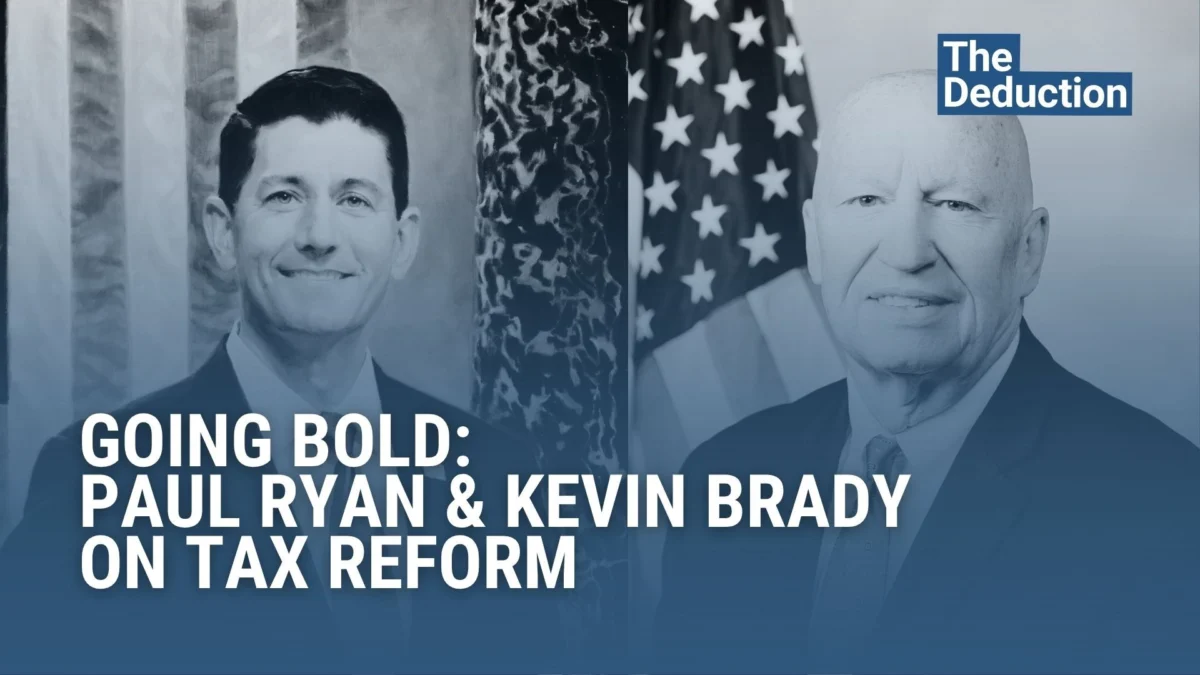
Ten years ago, a pivotal moment in American fiscal policy unfolded with the release of the “Better Way” Tax Plan, a comprehensive blueprint spearheaded by then-Speaker Paul Ryan and Ways and Means Chairman Kevin Brady. This ambitious proposal was not merely an academic exercise; it served as the foundational document that would ultimately be codified into the Tax Cuts and Jobs Act (TCJA) of 2017, marking the most significant overhaul of the U.S. tax code in over three decades. As the nation grapples with a soaring national debt, the looming insolvency of Social Security, and the intricate dance of tariffs reshaping the global economic landscape, the retrospective analysis of this landmark legislation, and the urgent need for future reforms, has taken center stage.
The Tax Foundation’s popular podcast, The Deduction, recently dedicated a special anniversary episode to this very topic. Hosted by Erica York and Kyle Hulehan, the episode provided a unique platform for the original architects of the "Better Way" plan to reflect on its intricate development, the strategic gambles they undertook, and the specific elements that did not come to fruition – notably, the controversial border adjustment tax. This deep dive offers invaluable insights into the economic repercussions observed over the past decade and critically examines the potential directions and challenges for the next wave of tax reform.
The Genesis of "A Better Way": A Nation Ripe for Reform
The journey to the "Better Way" Tax Plan began against a backdrop of increasing dissatisfaction with the complexity and perceived inefficiency of the existing U.S. tax code. For decades, policymakers and economists from across the political spectrum had acknowledged the need for reform, arguing that the system was uncompetitive on the global stage, burdened businesses with excessive compliance costs, and disincentivized domestic investment. By the mid-2010s, with the U.S. corporate tax rate among the highest in the developed world and an individual income tax system that had grown increasingly convoluted through various deductions and credits, the appetite for significant change was palpable.
Speaker Paul Ryan, a long-time advocate for fiscal responsibility and pro-growth economic policies, along with Chairman Kevin Brady, a seasoned legislator with deep expertise in tax policy, emerged as key figures in articulating a comprehensive vision for reform. Their "Better Way" agenda, unveiled in June 2016, was designed to be more than just a set of proposed tax cuts; it was framed as a holistic approach to modernize the U.S. economy, foster job creation, and enhance American competitiveness. The plan aimed to achieve several overarching goals: simplify the tax code, reduce marginal tax rates for both individuals and corporations, eliminate numerous loopholes, and encourage domestic investment by shifting towards a more territorial tax system.
Key proposals within the "Better Way" blueprint included a drastic reduction in the corporate income tax rate from 35% to 20%, a move intended to bring the U.S. closer to the OECD average and prevent corporate inversions. For individuals, the plan proposed consolidating the existing seven income tax brackets into three lower rates, significantly increasing the standard deduction, and repealing the alternative minimum tax (AMT) and the estate tax. Perhaps the most innovative and contentious proposal was the "border adjustment tax," a destination-based cash flow tax that would have exempted export revenues while disallowing the deduction for import costs. Proponents argued this would level the playing field for U.S. exporters, encourage domestic production, and generate substantial revenue, while opponents raised concerns about its potential impact on consumer prices and specific industries.
Chronology: From Legislative Blueprint to Landmark Law
The path from the "Better Way" plan’s conceptualization to the enactment of the TCJA was marked by intense political negotiation, economic analysis, and public debate.
- June 2016: Speaker Paul Ryan and Chairman Kevin Brady formally release the "Better Way" Tax Plan, signaling the Republican Party’s detailed vision for comprehensive tax reform ahead of the presidential election. The plan provides a unified framework for Republicans, contrasting sharply with the Democratic platform.
- November 2016: Donald Trump is elected President, campaigning heavily on promises of tax cuts and deregulation. His victory, coupled with Republican control of both the House and Senate, creates a political alignment conducive to enacting significant tax reform. The "Better Way" plan becomes a de facto starting point for the incoming administration’s tax agenda.
- April 2017: The Trump administration releases a one-page outline of its tax plan, echoing many themes from the "Better Way" but lacking detailed legislative language. This marks the beginning of formal engagement between the White House and Congress on the issue.
- September 2017: The "Big Six" (Treasury Secretary Steven Mnuchin, National Economic Council Director Gary Cohn, Speaker Paul Ryan, Senate Majority Leader Mitch McConnell, Ways and Means Chairman Kevin Brady, and Senate Finance Committee Chairman Orrin Hatch) release a nine-page framework for tax reform. This framework largely aligns with the "Better Way" but notably omits the controversial border adjustment tax, signaling its political infeasibility due to strong opposition from retailers and importers.
- November 2017: The House of Representatives passes its version of the Tax Cuts and Jobs Act. Shortly thereafter, the Senate Finance Committee advances its own version, which then passes the full Senate in early December after a marathon session of amendments and negotiations.
- December 2017: A conference committee reconciles the differences between the House and Senate versions. Key compromises include setting the corporate tax rate at 21% (rather than 20% as initially proposed), establishing a 20% deduction for qualified business income from pass-through entities, and capping the state and local tax (SALT) deduction at $10,000.
- December 22, 2017: President Trump signs the Tax Cuts and Jobs Act into law, marking the most sweeping change to the U.S. tax code since the Tax Reform Act of 1986.
The final TCJA embodied many of the core principles of the "Better Way" plan, including a significant reduction in the corporate tax rate to 21%, a territorial tax system for corporations, and adjustments to individual income tax rates and deductions. While the border adjustment tax was ultimately abandoned, the spirit of enhancing U.S. competitiveness and simplifying the code remained central to the enacted legislation.
Economic Impact and Analysis: A Decade of Hindsight
A decade after its conceptualization and more than five years after its implementation, the economic impact of the TCJA, rooted in the "Better Way" plan, remains a subject of ongoing debate and analysis. The original architects and proponents envisioned a surge in economic growth, business investment, and wage increases.
- GDP Growth: While the U.S. economy experienced robust growth in the years immediately following the TCJA’s passage (e.g., Q2 2018 saw a 4.2% annualized growth rate), attributing this solely to tax reform is complex. Other factors, such as deregulation and global economic conditions, also played a role. Most analyses suggest that the TCJA provided a modest boost to GDP growth in the short term, but the sustained, dramatically higher growth rates predicted by some proponents did not materialize. The Congressional Budget Office (CBO) and other non-partisan bodies had projected more modest long-term growth impacts.
- Business Investment: One of the primary goals was to stimulate business investment by lowering the cost of capital. Data indicates a noticeable, albeit temporary, uptick in business investment immediately after the TCJA. Capital expenditures by U.S. firms did rise, and there was evidence of repatriation of corporate profits held overseas, though the scale of new domestic investment stemming from these repatriated funds was less pronounced than anticipated by some. Many companies used the increased cash flow for stock buybacks and dividends, benefiting shareholders.
- Wage Growth and Job Creation: The TCJA was also heralded as a catalyst for higher wages and increased job opportunities. While unemployment rates reached historic lows in the pre-pandemic era and wage growth saw some acceleration, particularly for lower-income workers, disentangling the specific impact of tax cuts from broader economic trends (such as a tightening labor market) is challenging. Most economists agree that the TCJA contributed marginally to these positive trends but was not the sole or primary driver.
- National Debt and Federal Revenue: Perhaps the most significant and widely acknowledged consequence of the TCJA has been its impact on the national debt. The CBO consistently projected that the TCJA would add trillions to the national debt over the next decade, primarily due to the reduction in federal revenue. Actual federal revenue collections did fall short of pre-TCJA projections in the years immediately following its enactment, contributing to a widening budget deficit. The national debt, which was already a concern, accelerated its upward trajectory, now exceeding $34 trillion. This fiscal reality profoundly shapes the current discourse on future tax reforms.
- Income Inequality: Analyses by various think tanks and government agencies have shown that while all income groups saw some tax relief, a disproportionately larger share of the benefits flowed to corporations and higher-income individuals. The reduction in the corporate tax rate, the pass-through deduction, and changes to individual income tax brackets generally favored those at the top of the income distribution, potentially exacerbating existing wealth disparities.
The Bold Bets and Lessons Learned
Reflecting on the decade since the "Better Way" plan was unveiled, its architects, as inferred from discussions like The Deduction podcast, likely express a mix of pride in their achievements and candid acknowledgment of the unforeseen challenges and policy elements that did not achieve their intended effect.
The border adjustment tax (BAT) stands out as the quintessential "bold bet that didn’t pan out." Its inclusion in the "Better Way" plan was a genuinely innovative attempt to fundamentally restructure how the U.S. taxes trade. Its theoretical advantages were compelling: it aimed to eliminate the incentive for companies to move production overseas, encourage exports, discourage imports, and generate substantial revenue without directly raising tax rates. However, the proposal faced immense opposition from a broad coalition of industries, particularly large retailers and importers, who argued it would significantly increase their costs and, consequently, consumer prices. The complexity of its implementation and the uncertainty surrounding its economic effects ultimately proved too formidable for it to survive the legislative process. The lesson learned here is that while theoretically sound, radical departures from established tax norms, especially those with perceived immediate negative impacts on powerful constituencies, face an extremely uphill battle in a politically divided Congress.
Other "bold bets" included the sheer scale of the corporate rate reduction and the attempt at a comprehensive overhaul rather than piecemeal changes. The success in achieving a significant corporate rate cut to 21% is largely seen as a victory for American competitiveness. However, the architects might now reflect on the trade-offs, particularly the impact on the national debt, and ponder whether a different revenue-neutral approach could have been forged.
From a decade of hindsight, insights would likely include:
- The enduring power of special interests in shaping tax legislation.
- The difficulty of predicting precise behavioral responses to large-scale tax changes.
- The critical importance of public communication and building broad consensus for complex reforms.
- The need for continuous monitoring and adjustment of tax policy in a dynamic global economy.
Future of Tax Reform: Navigating New Challenges
As the U.S. looks forward, the need for another round of significant tax reforms is becoming increasingly apparent, driven by a confluence of pressing challenges that dwarf even those faced a decade ago.
- The National Debt Crisis: With the national debt now exceeding $34 trillion and projected to grow further, the fiscal sustainability of the U.S. is a paramount concern. Interest payments on the debt are rapidly becoming one of the largest federal expenditures, crowding out other vital investments. Any future tax reform will be scrutinized for its impact on the deficit, making revenue-neutrality or even revenue-enhancing measures politically difficult but fiscally necessary.
- Social Security Insolvency: The Social Security trust funds are projected to be depleted by the mid-2030s, at which point the program will only be able to pay out about 80% of promised benefits. This impending crisis necessitates a serious conversation about revenue generation (e.g., increasing the payroll tax cap, raising the payroll tax rate) or benefit reductions, both of which are politically fraught.
- The 2025 Fiscal Cliff: Crucially, many of the individual income tax provisions of the TCJA, including the lower individual rates, the increased standard deduction, and the pass-through deduction, are set to expire at the end of 2025. This "sunset provision" creates an enormous fiscal cliff, as their expiration would lead to a significant tax increase for many Americans. This looming deadline forces Congress to act, creating both an opportunity and a challenge for comprehensive reform. The political implications are immense, as allowing the provisions to expire would be unpopular, while extending them without offsetting revenue would further exacerbate the debt.
- Global Tax Landscape and Tariffs: The global economic environment has also evolved. The rise of tariffs as a tool of trade policy, as referenced in the original article, adds another layer of complexity. Furthermore, international efforts to harmonize corporate tax rates (e.g., the OECD’s global minimum tax initiative) mean that U.S. tax policy must constantly adapt to maintain competitiveness and prevent profit shifting.
- Political Polarization: The current political climate in Washington remains deeply polarized, making bipartisan consensus on complex issues like tax reform exceptionally difficult. Any proposed reforms will face intense scrutiny and likely strong opposition from one side or the other, demanding extraordinary political will and compromise.
Official Responses and Broader Implications
Inferred statements from key stakeholders underscore the gravity of the situation. From the perspective of the TCJA’s architects, figures like Paul Ryan and Kevin Brady would likely express a blend of pride in the economic stimulus and simplified code achieved by their plan, while also acknowledging the need for continued vigilance on fiscal responsibility. They might emphasize that the "Better Way" was a significant step, but not the final answer, and that future leaders must show similar courage in confronting new challenges.
Economists and policy analysts from institutions like the Tax Foundation would continue to provide objective, data-driven assessments. They might reiterate that while the TCJA offered some benefits, particularly in corporate competitiveness, its long-term fiscal impact necessitates a fresh look at revenue and spending. Their analysis would likely highlight the critical juncture of the 2025 sunsets as a make-or-break moment for U.S. fiscal policy.
Lawmakers on both sides of the aisle would offer differing perspectives. Republicans would likely advocate for making the TCJA’s individual provisions permanent, emphasizing the importance of low taxes for economic growth, while perhaps seeking new avenues for spending restraint. Democrats, conversely, might push for reforms that address income inequality, potentially by raising taxes on corporations and high-income earners, and advocate for more robust social safety nets funded by progressive taxation. The challenge for any administration will be to bridge these ideological divides and forge a path forward that addresses the nation’s fiscal realities without stifling economic dynamism.
In conclusion, the "Better Way" Tax Plan and its subsequent enactment as the TCJA 2017 stand as a testament to the ambition and complexity inherent in reforming a nation’s tax code. A decade later, its legacy is a mixed bag of some economic gains, significant fiscal challenges, and profound lessons learned about the intricate interplay of policy, politics, and economics. As the U.S. confronts an unprecedented national debt, the impending Social Security crisis, and the 2025 tax cliff, the call for "bold ideas and a serious look at the trade-offs they carry" resonates more powerfully than ever. The next chapter of U.S. tax reform will undoubtedly demand a nuanced understanding of past actions and a courageous vision for a sustainable and prosperous future.