Pevita Pearce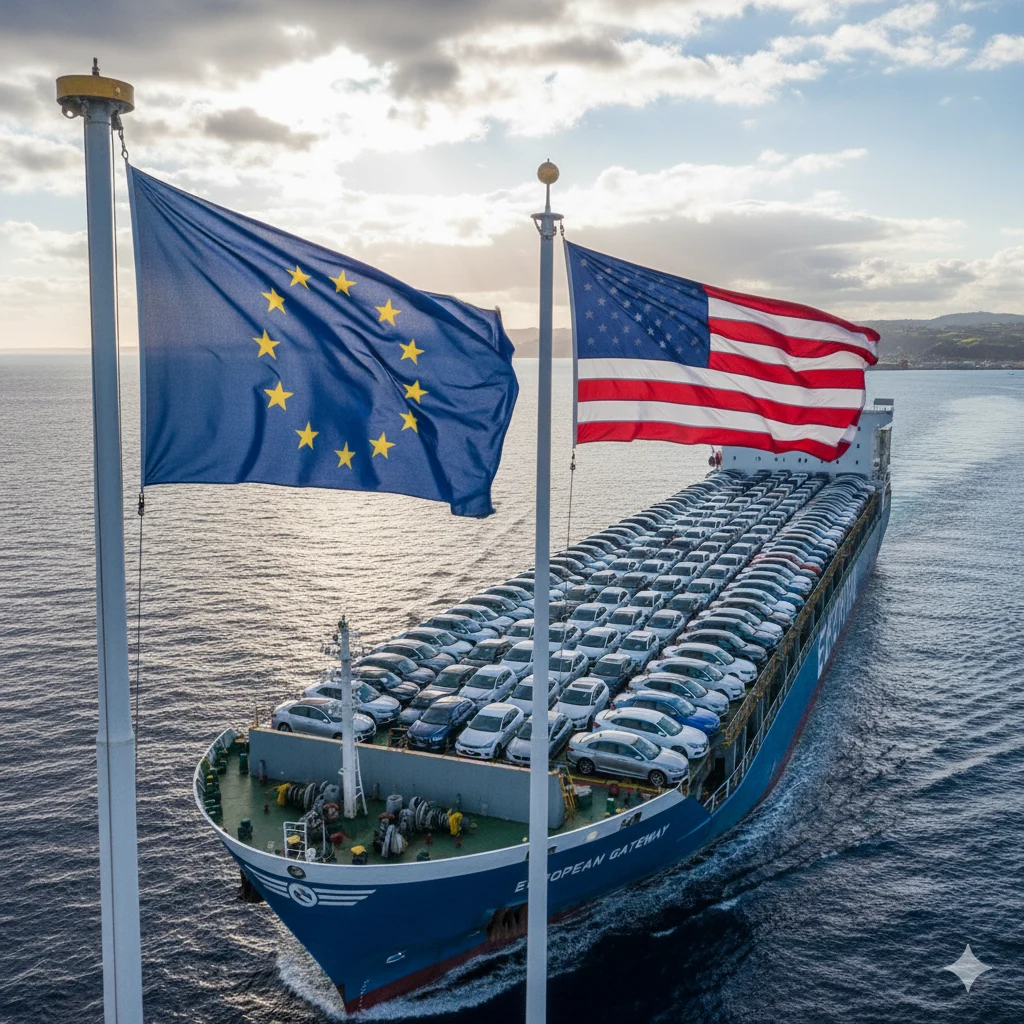
President Donald Trump has issued a stark warning to the European Union, threatening significant tariffs and a potential halt to trade on numerous goods if the bloc proceeds with a proposal to make Canada an associate member. The statement, made to reporters on Wednesday, signals a potential new front in the ongoing global trade disputes and raises concerns about the stability of established international economic relationships. The remarks come in response to a proposal by European Commission President Ursula von der Leyen to explore a closer partnership with Canada, a move seen by some as a strategic realignment of global trade dynamics.
The core of Trump’s threat revolves around his perception of the EU-Canada proposal as a "hostile act" towards the United States. "If they do that, if I think it’s at all a hostile act, I will put very serious tariffs or stop trading with Europe on many things," Trump stated. He further elaborated, "If Europe does that with a bad intention – if it’s a good intention, that’s fine – if it’s a bad intention, we’ll put very heavy tariffs on Europe." This rhetoric underscores a protectionist stance and a willingness to leverage economic pressure to shape international partnerships.
The proposal for Canada to become an associate member of the European Union was officially put forth by European Commission President Ursula von der Leyen during her State of the Union address in Strasbourg, France, on Wednesday. Canadian Prime Minister Mark Carney was in attendance and has been a key figure in discussions surrounding this potential partnership. Von der Leyen expressed her desire to work with Carney on the initiative, framing it as a means to strengthen transatlantic ties and bolster shared values in an increasingly complex geopolitical landscape.
In response to President Trump’s pronouncements, Olof Gill, a spokesman for the European Commission, issued a statement emphasizing that the proposed EU-Canada partnership is not intended to be adversarial. "As our President made clear yesterday, the proposed strengthening of our partnership with Canada is not against anyone else, but for our common strength," Gill stated, referencing von der Leyen’s address to the European Parliament. This carefully worded response aims to de-escalate the situation and reassure that the initiative is defensive rather than offensive in nature.
A Simmering Trade War Intensifies
President Trump’s latest remarks threaten to further inflame an already tense trade relationship between the United States and Canada. The two nations, historically close allies with deeply intertwined economies, have been engaged in a protracted trade dispute. Following the collapse of trade talks last month, the U.S. imposed tariffs amounting to 50% on approximately $20 billion worth of Canadian goods. Canada, in turn, retaliated with comparable levies on a range of U.S.-manufactured products. This tit-for-tat escalation has already created significant economic friction, impacting businesses and consumers on both sides of the border. The average value of goods traded daily between the U.S. and Canada historically exceeds $1.4 billion, highlighting the scale of their economic interdependence and the potential damage from sustained trade conflicts.
Adding to the immediate pressure, the U.S. president on Wednesday also moved to restrict Canadian goods from being included in federal government purchases, a move that fulfills a prior threat and further curtails market access for Canadian businesses. This action, while specific in its application, signals a broader willingness by the Trump administration to employ a range of punitive measures against its northern neighbor.
Canada’s Strategic Reorientation and EU Ambitions
Canada’s government has, in recent years, articulated a clear strategy to diversify its trade relationships beyond its dominant reliance on the U.S. market. This multi-year strategic shift aims to reorient trade flows more towards Europe and Asia, fostering stronger economic ties with a wider array of international partners. The potential EU associate membership represents a significant step in this direction, offering Canada enhanced access to the vast European single market and a platform for greater collaboration on shared economic and geopolitical interests.
However, the specifics of what an "associate member" status would entail for Canada remain largely undefined. Such negotiations could be protracted, potentially spanning several years, and would require the agreement of all EU member states. The economic implications of such a partnership are also subject to considerable uncertainty, encompassing potential benefits in terms of trade facilitation, investment, and regulatory alignment, as well as the challenges of adapting to EU standards and policies.
Carney’s Vision for Global Cooperation
Prime Minister Mark Carney, speaking to the European Parliament on Thursday, echoed themes from his earlier address at the World Economic Forum in Davos. He highlighted the increasing use of trade and supply chains as instruments of coercion by some nations, while simultaneously lamenting the weakening of global institutions. Carney’s message underscored the need for countries that share common values to strengthen their alliances and work collaboratively. He employed a powerful metaphor, stating, "This combination is a ferocious storm. A single tree will come down in it. A forest will not." This statement implicitly criticizes protectionist tendencies and advocates for collective action in the face of global challenges.
When directly questioned about President Trump’s remarks following his address, Carney maintained a firm stance. "No one is going to dictate our culture or with whom we can strike agreements internationally," he declared at a subsequent news conference. This assertion firmly pushes back against any perceived U.S. attempt to unilaterally influence Canada’s foreign policy and trade decisions, signaling a commitment to independent action.
Underlying Motivations and U.S. Trade Concerns
President Trump’s reaction to the EU-Canada proposal appears to stem from a broader concern that such a partnership could undermine U.S. economic interests and leverage. His characterization of Canada as a "terrible trade partner" reflects a persistent grievance that the U.S. has been disadvantaged in its trade dealings with its northern neighbor. This sentiment has been a driving force behind the administration’s broader "America First" trade agenda, which prioritizes bilateral deals and seeks to renegotiate existing agreements perceived as unfavorable.
The U.S. president’s optimism about resolving the trade dispute with Canada, expressed over the weekend, appears to be at odds with his current confrontational stance towards the EU-Canada proposal. While Trump indicated a potential deal was imminent, he provided no concrete details regarding a resumption of formal talks. This juxtaposition suggests a willingness to pursue multiple avenues of economic pressure simultaneously, aiming to extract concessions from both Canada and the EU.
The legal authority under which President Trump might impose new penalties on EU goods remains unclear. U.S. trade law provides various mechanisms for imposing tariffs, including those related to national security or unfair trade practices, but the specific justification for targeting goods based on a proposed associate membership is not immediately apparent. Such actions could face legal challenges and international scrutiny, potentially triggering retaliatory measures from affected trading partners.
Analysis and Potential Ramifications
The interplay between President Trump’s threats and the EU-Canada proposal introduces significant volatility into the global trade landscape. The EU’s move to deepen ties with Canada, while framed as a defensive measure and a strengthening of like-minded partnerships, is being interpreted by the U.S. administration as a strategic maneuver that could disadvantage American businesses. The potential for new tariffs on European goods, ranging from automobiles and machinery to consumer products, could have far-reaching consequences for both transatlantic trade and global supply chains.
The U.S. Chamber of Commerce, a prominent business advocacy group, has previously warned against the imposition of broad tariffs, citing their potential to harm American consumers and businesses through increased costs and reduced competitiveness. The imposition of such measures could also strain diplomatic relations between the U.S. and its key allies, potentially weakening the collective front against more challenging economic actors on the global stage.
The situation highlights a fundamental divergence in trade philosophy. The EU and Canada appear to be prioritizing the strengthening of multilateral partnerships and shared values in an era of increasing global uncertainty. Conversely, the Trump administration’s approach appears rooted in a more transactional and confrontational strategy, seeking to maximize perceived national advantage through unilateral action and economic leverage. The coming weeks and months will be crucial in determining whether these competing visions lead to further trade escalation or a diplomatic resolution that preserves stability and promotes international cooperation. The economic stakes are substantial, with billions of dollars in trade and the livelihoods of countless individuals dependent on the outcome of these complex negotiations and political pronouncements.