Pevita Pearce
A recent survey of over 1,000 U.S. employees has revealed a significant disconnect between the jobs advertised and the roles employees actually perform, with 18% reporting that their current positions have changed substantially or are entirely different from what they were initially hired to do. This pervasive issue extends beyond initial job descriptions, impacting daily expectations and hindering conversations about career advancement. The findings, detailed in the "Hiring Bait-and-Switch Report" commissioned by ResumeBuilder.com, shed light on a growing problem within the American workforce, potentially leading to widespread job dissatisfaction and a decline in employee morale.
The report, which surveyed a representative sample of U.S. workers, indicates that this misalignment is not a minor inconvenience but a substantial factor influencing employee experience. When asked about the accuracy of their current roles compared to what was promised during the hiring process, a notable percentage of respondents indicated a considerable gap. While the exact figures for this specific question were not fully detailed in the initial data, the overarching statistic of 18% experiencing significant changes underscores the breadth of the problem. This suggests that nearly one in five workers may be operating under a false premise regarding their employment, leading to a cascade of potential negative consequences.
The "Bait-and-Switch" Phenomenon in Modern Employment
The term "bait-and-switch" typically refers to deceptive marketing practices where a product or service is advertised with favorable terms, only for the consumer to discover the terms are not as advertised upon purchase. In the context of employment, this translates to job postings and interviews that highlight certain responsibilities, opportunities, and work environments, only for the reality of the role to diverge significantly once the employee is onboard. This can manifest in various ways, including a vastly different set of daily tasks, a less desirable work culture, or a lack of the promised growth opportunities.
The ResumeBuilder.com report suggests that this disconnect is a prevalent issue. The implications of such discrepancies are far-reaching. For employers, it can lead to higher employee turnover rates, increased recruitment costs, and a damaged reputation. For employees, it can result in frustration, burnout, decreased productivity, and a feeling of being undervalued. This report aims to quantify this phenomenon and understand its impact on the modern workforce.
Unclear Expectations and Stalled Career Progression
Beyond the initial job description, the "Hiring Bait-and-Switch Report" identifies a broader problem of unclear day-to-day expectations. Employees are struggling with a lack of definition in their immediate tasks and responsibilities, suggesting that communication breakdowns or shifting priorities are common within organizations. This ambiguity can create a stressful work environment, making it difficult for individuals to gauge their performance and feel a sense of accomplishment.
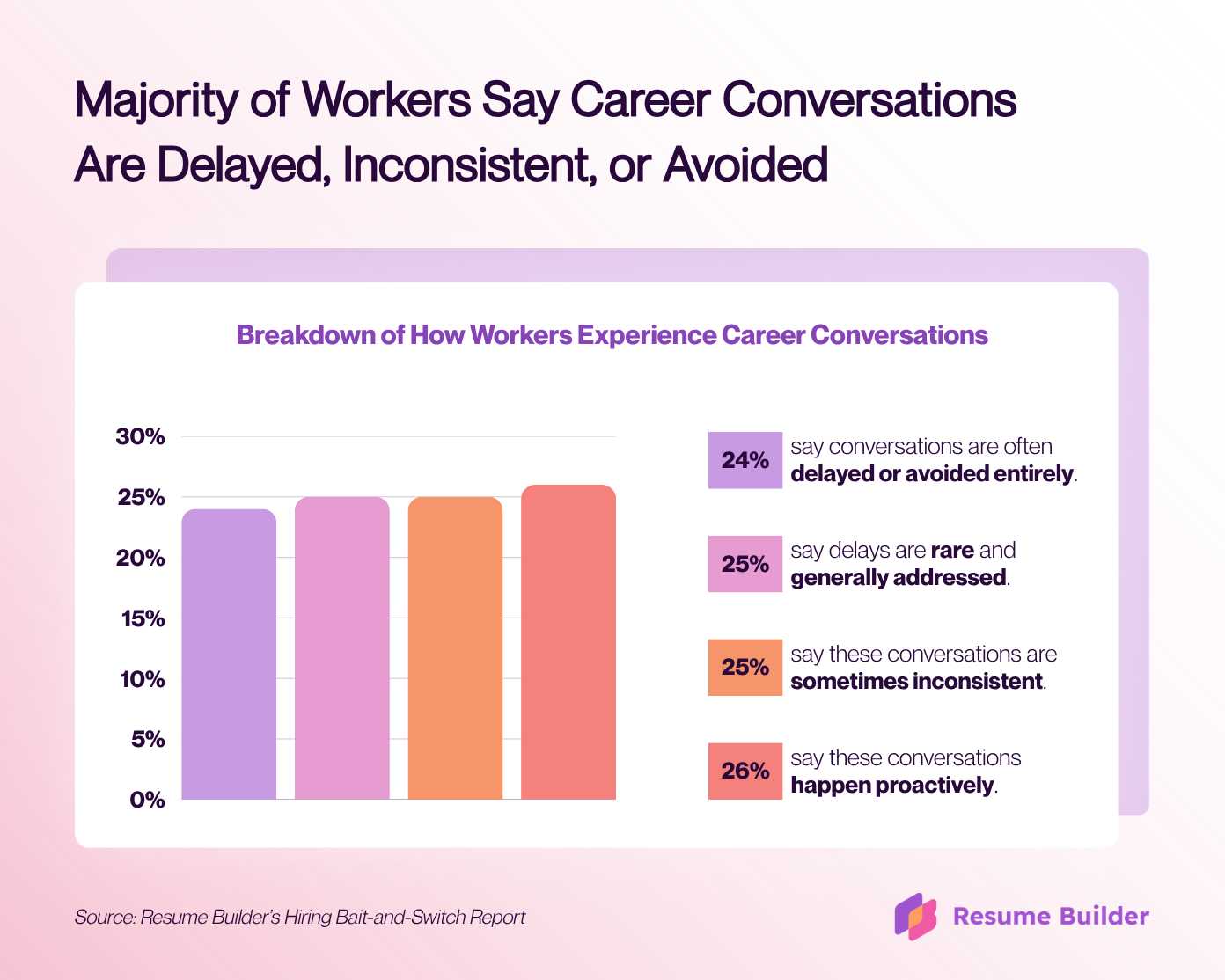
Furthermore, the report highlights a significant issue with career growth conversations. A substantial number of workers report that discussions about promotions, professional development, and long-term career paths are frequently delayed or outright avoided by their employers. This lack of proactive engagement from management regarding career progression can leave employees feeling stagnant and unmotivated. When individuals invest their time and effort into a role, they naturally seek avenues for advancement and growth. The absence of these opportunities can be deeply discouraging, leading to disengagement and a search for employment elsewhere.
The Toll on Employee Morale and Value Perception
The cumulative effect of these discrepancies—a job that doesn’t match the promise, unclear daily expectations, and stalled career growth—is a significant decline in employee morale. The report concludes that 30% of workers feel undervalued or not valued at all based on their contributions to the workplace. This is a critical statistic, as feeling appreciated and recognized is a fundamental driver of job satisfaction and employee loyalty. When employees perceive their efforts as unacknowledged or their contributions as insignificant, their motivation wanes, and their commitment to the organization diminishes.
Stacie Haller, Chief Career Advisor for ResumeBuilder.com, emphasized the gravity of this situation. "When someone accepts a new job, they are making a major decision that impacts their career trajectory and a significant amount of their time," Haller stated. "A major disconnect between the job description and the actual job can leave workers feeling misled and discouraged about their career path. Recognizing that disconnect early can help workers seek clarity about whether the role can be brought back in line with what was promised or begin making informed decisions about what comes next." Haller’s statement underscores the need for transparency and honest communication throughout the hiring process and beyond.
Context and Broader Implications
The findings of the "Hiring Bait-and-Switch Report" arrive at a time when the labor market has experienced significant shifts. Following periods of high demand for talent, many companies are now navigating economic uncertainties. This environment can sometimes lead to a temptation to fill positions with less regard for the long-term alignment of roles and employee expectations. However, the report suggests that such short-sighted practices can have detrimental long-term consequences for both employees and employers.

The implications of this trend extend beyond individual job satisfaction. A workforce that feels misled and undervalued is less likely to be innovative, productive, and engaged. This can impact an organization’s ability to achieve its strategic goals and maintain a competitive edge. Furthermore, widespread dissatisfaction can contribute to a more transient workforce, increasing recruitment and training costs for businesses. It also raises questions about the ethical responsibilities of employers to accurately represent job opportunities.
Potential Contributing Factors and Industry Responses
While the report does not delve deeply into the specific reasons behind these discrepancies, several factors could be at play. In a competitive job market, some recruiters or hiring managers might feel pressured to present roles in the most favorable light to attract candidates, potentially exaggerating responsibilities or downplaying challenges. Additionally, rapid organizational changes, such as restructuring or shifts in business strategy, can lead to roles evolving beyond their original scope without proper communication or redefinition.
The report calls for greater transparency and accountability from employers. This includes ensuring that job descriptions accurately reflect the day-to-day duties and responsibilities of a role, fostering open communication channels for employees to voice concerns about role alignment, and establishing clear pathways for career development and growth. For job seekers, the report implicitly advises a more thorough vetting process, encouraging candidates to ask detailed questions about daily tasks, team dynamics, and opportunities for advancement during interviews.
Looking Ahead: Addressing the Disconnect
The "Hiring Bait-and-Switch Report" serves as a critical reminder of the importance of aligning employee expectations with the realities of their jobs. As organizations strive to attract and retain top talent, fostering an environment of honesty, clarity, and growth is paramount. The data presented by ResumeBuilder.com highlights a systemic issue that requires attention from both employers and employees to ensure a more equitable and fulfilling employment landscape. Companies that prioritize transparency and invest in their employees’ development are likely to build more resilient, engaged, and successful workforces in the long run. The full report, available on ResumeBuilder.com, offers further insights into these critical workplace dynamics.